Chef Juliette
Omelette à l’Écossaise
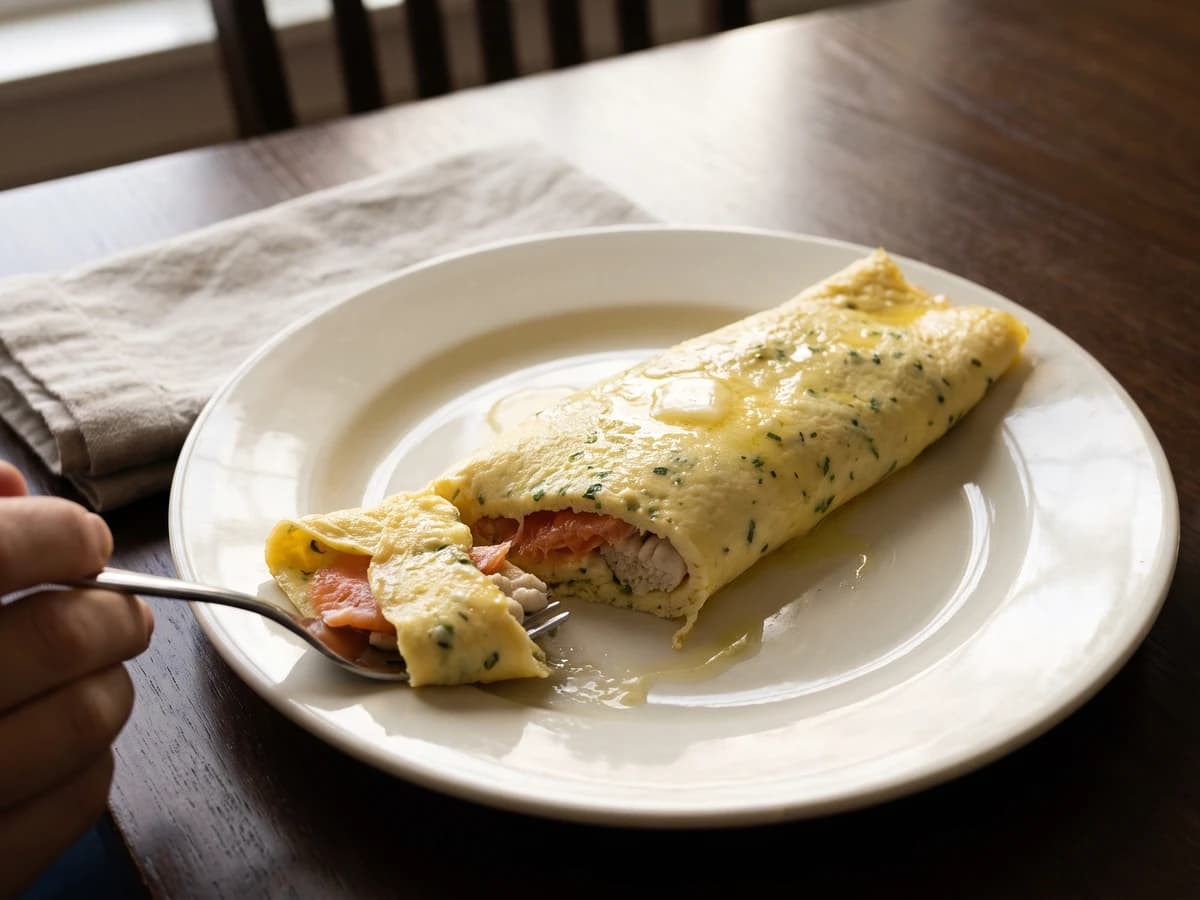
A creamy omelette aux fines herbes closes around smoked-salmon-wrapped herring milts, gently poached in butter. Have the filling ready, then roll the eggs while they still shine.
A cooking platform built around craft, culture, and the stories behind what we eat.
Created by Chef Juliette
Based on No. 537, Cold Eggs à la Reine, from Le Guide Culinaire (1907) by Auguste Escoffier
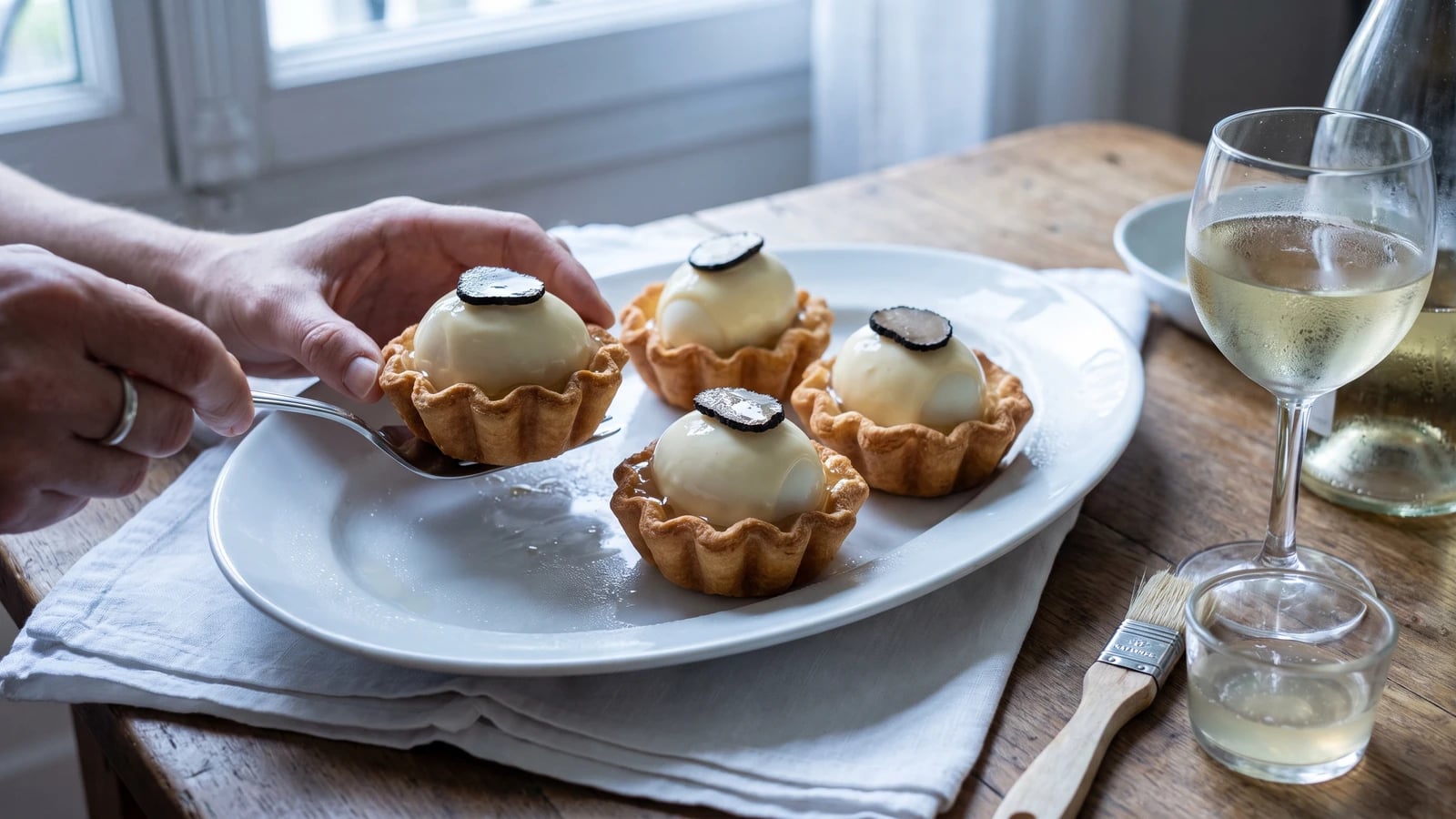
Cold soft-boiled eggs sit in brioche croustades lined with cayenne-warmed chicken mayonnaise, each crowned with black truffle and a glass-clear aspic sheen: a lesson in temperature, texture, and quiet precision.
Œufs froids à la reine (cold eggs in chicken-lined brioche shells) teach the cold kitchen's essential discipline: temperature is an ingredient. The mayonnaise, chicken, eggs, and aspic must all be cold, but the aspic must still flow. Let warm aspic touch the emulsion and it loosens; let cold aspic set in the bowl and it forms lumps. That is the one true thing to know before touching a pan.
The brigade entry assumed a garde-manger with cooled eggs ready, a saucier's clear stock never off the fire, a pastry station supplying identical cottage brioches, and a drying box keeping them crisp. For four servings, the honest home equivalents are finished Croûtes et Croustades (No. 2393) refreshed in a low oven, one chicken breast poached in good stock, a one-yolk mayonnaise, powdered gelatin, a refrigerator, and a fine brush. Batch service is scaffolding and goes. The soft egg, chicken mayonnaise, truffle, and repeated thin aspic glaze are the dish and stay. One cook, one stove, one evening.
Finished properly, each croustade is butter-gold and crisp beneath cool chicken mayonnaise, a tender egg, one dark slice of truffle, and a clear glaze that catches the light without becoming rubbery. Before you assemble, make certain the aspic is cool and fluid; that is the step that decides the finish.
Œufs froids à la reine belong to the Parisian repertoire of the cold buffet, where eggs were nested in individual croustades and protected with aspic so a composed dish could wait gracefully for service. In classical menu language, à la reine commonly joins pale poultry, rich sauce, and truffle; the title is a style marker, not reliable proof of dedication to one particular queen. The preparation moved naturally to the bourgeois dinner table because it could be assembled ahead, although its crisp brioche, soft egg, and transparent glaze still demand precision.
Quantity
4
preferably pasteurized
Quantity
4 individual Croûtes et Croustades (No. 2393)
hollowed and thoroughly dried
Quantity
1 small breast (about 6 ounces / 170 g)
Quantity
1½ cups (360 ml / 360 g)
preferably unsalted
Quantity
1½ teaspoons (7.5 ml / 5 g)
Quantity
2 tablespoons (30 ml / 30 g)
Quantity
1
Quantity
1 teaspoon (5 ml / 5 g)
Quantity
2 teaspoons (10 ml / 10 g)
divided
Quantity
¾ cup (180 ml / 165 g)
Quantity
¾ teaspoon (3.75 ml / 4.5 g)
divided
Quantity
1/16 teaspoon (0.3 ml / 0.1 g)
Quantity
1 small truffle (about ½ ounce / 15 g)
cut into 4 fine slices
| Ingredient | Quantity |
|---|---|
| large eggspreferably pasteurized | 4 |
| prepared cottage-brioche shellshollowed and thoroughly dried | 4 individual Croûtes et Croustades (No. 2393) |
| boneless, skinless chicken breast | 1 small breast (about 6 ounces / 170 g) |
| good chicken stockpreferably unsalted | 1½ cups (360 ml / 360 g) |
| unflavored powdered gelatin | 1½ teaspoons (7.5 ml / 5 g) |
| cold water | 2 tablespoons (30 ml / 30 g) |
| pasteurized large egg yolk | 1 |
| Dijon mustard | 1 teaspoon (5 ml / 5 g) |
| white wine vinegardivided | 2 teaspoons (10 ml / 10 g) |
| neutral sunflower or grapeseed oil | ¾ cup (180 ml / 165 g) |
| fine saltdivided | ¾ teaspoon (3.75 ml / 4.5 g) |
| cayenne pepper | 1/16 teaspoon (0.3 ml / 0.1 g) |
| preserved black trufflecut into 4 fine slices | 1 small truffle (about ½ ounce / 15 g) |
Put the chicken breast and stock in a small saucepan; the stock should nearly cover the meat. Bring it slowly to the barest simmer, cover, and poach gently until the centre reaches 165°F / 74°C, about 12 to 15 minutes. Lift out the chicken, cool it promptly, then refrigerate it. Strain the stock through a fine sieve lined with a dampened paper towel and measure 1 cup (240 ml / 240 g). Bloom the gelatin in the cold water for 5 minutes, pour the hot measured stock over it, and stir until completely dissolved. Season lightly with some of the salt, then refrigerate until cool but still fluid, checking after 20 minutes.
For œufs mollets, soft-boiled eggs with firm whites and creamy yolks, lower the four eggs into gently boiling water and cook for 6½ minutes. Transfer them immediately to an ice bath and leave them for 10 minutes, then peel carefully under cold water and refrigerate. If a little white tears, don't discard the egg. Place that side toward the croustade wall later, and the coating will conceal it.
Set the finished cottage-brioche Croûtes et Croustades (No. 2393) on a tray. If storage has softened them, refresh them in a 275°F / 135°C oven for 5 to 7 minutes, just until the inner walls feel dry rather than toasted hard. Cool them completely on a rack. The low oven replaces the brigade's drying box; filling a warm shell would melt the mayonnaise and spoil its crispness.
Whisk the egg yolk with the Dijon mustard, 1 teaspoon (5 ml / 5 g) of the vinegar, and a good pinch of the salt. Add the oil first by drops, whisking until the emulsion takes hold, then in a very thin stream until the mayonnaise stands in firm, glossy peaks. If it splits, stop. Ça se rattrape: put the reserved teaspoon of vinegar in a clean bowl, whisk in one teaspoon of the broken mayonnaise until smooth, then rebuild it gradually with the rest. If it never splits, whisk in the reserved vinegar at the end.
Mince the chilled chicken very finely with a knife, preserving a little texture rather than reducing it to paste. Fold in ⅓ cup (80 ml / 75 g) of the mayonnaise, the cayenne, and enough of the remaining salt to make the mixture taste properly seasoned when cold. Press a thin, even layer over the bottom and sides of each croustade, then settle one peeled egg upright in each shell. Handle them gently; the yolks remain soft.
Make certain the aspic is cool and fluid, roughly the texture of light oil. Whisk 3 tablespoons (45 ml / 45 g) into the remaining mayonnaise, one spoonful at a time, then chill it for 5 minutes, until it falls from the spoon in a thick ribbon. If it forms little gelatin lumps, hold the bowl over lukewarm water for a few seconds and whisk; if it pours too thinly, chill it for another 5 minutes. Coat each egg in a thin, even veil of the thickened mayonnaise.
Lay one fine truffle slice on each coated egg while the mayonnaise is still tacky, then chill for 15 minutes to set the surface. Keep the remaining aspic fluid, warming its bowl briefly over lukewarm water if it firms. With a fine brush, apply one very thin coat over each egg and truffle, chill for 5 to 10 minutes, and repeat twice. Thin coats give a clear gloss; one heavy coat gives a rubbery shell. The repeated glazing is not brigade scaffolding. It is the finish that defines the dish.
Chill the finished œufs froids à la reine for at least 1 hour, uncovered until the glaze is firm and then loosely covered. Arrange them on an oval platter lined with a folded white napkin, as the source directs. Take them from the refrigerator 10 minutes before serving so the chicken, egg, and truffle can speak clearly, but don't leave them at room temperature for more than 2 hours. Serve one per guest. À table!
1 serving (about 265g)
Culinary guides, cultural storytelling, and the editorial depth that makes cooking meaningful.
Discover Culinary ExplorerChef Juliette
A creamy omelette aux fines herbes closes around smoked-salmon-wrapped herring milts, gently poached in butter. Have the filling ready, then roll the eggs while they still shine.
Chef Juliette
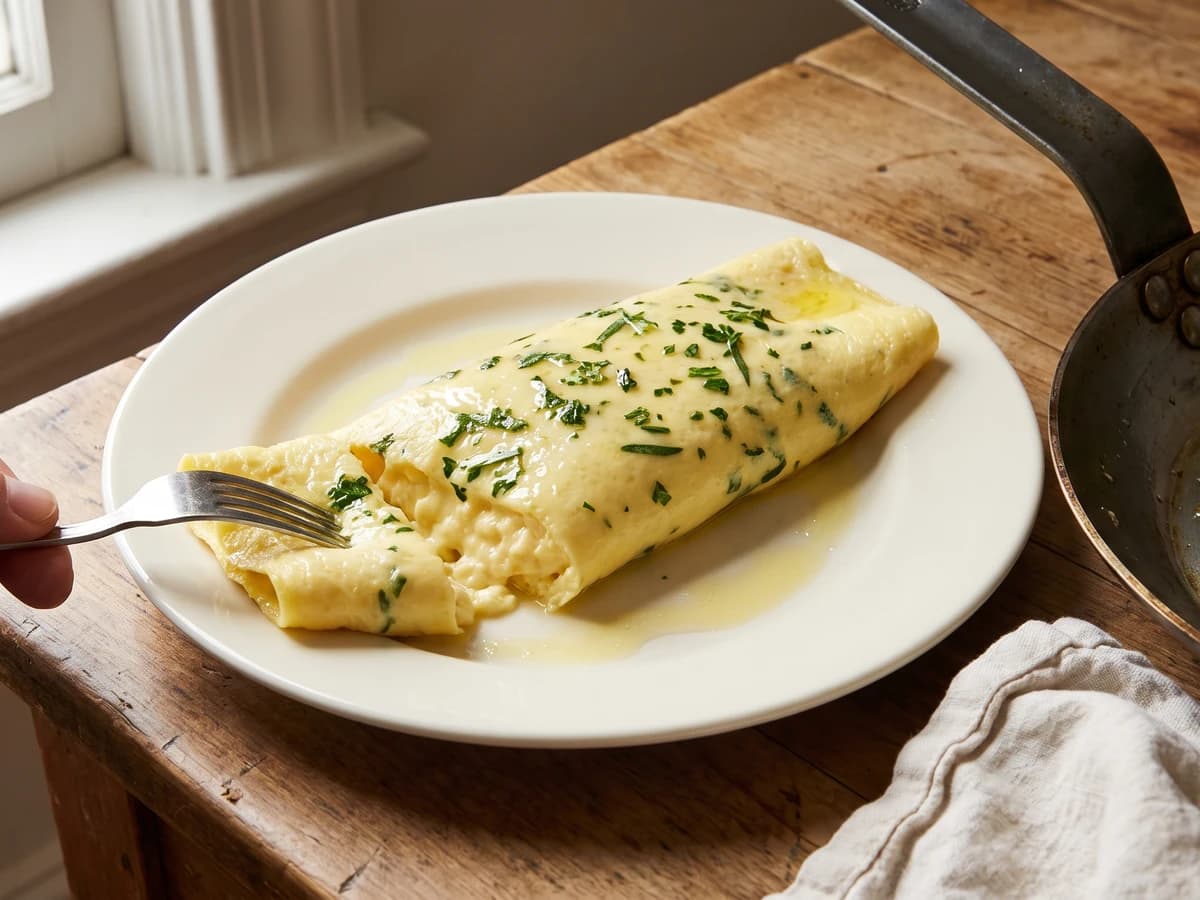
Four tender herbs, hot butter, and two eggs per pan: this rolled omelette teaches the quick hand and good judgment that keep the outside pale and the center creamy.
Chef Juliette
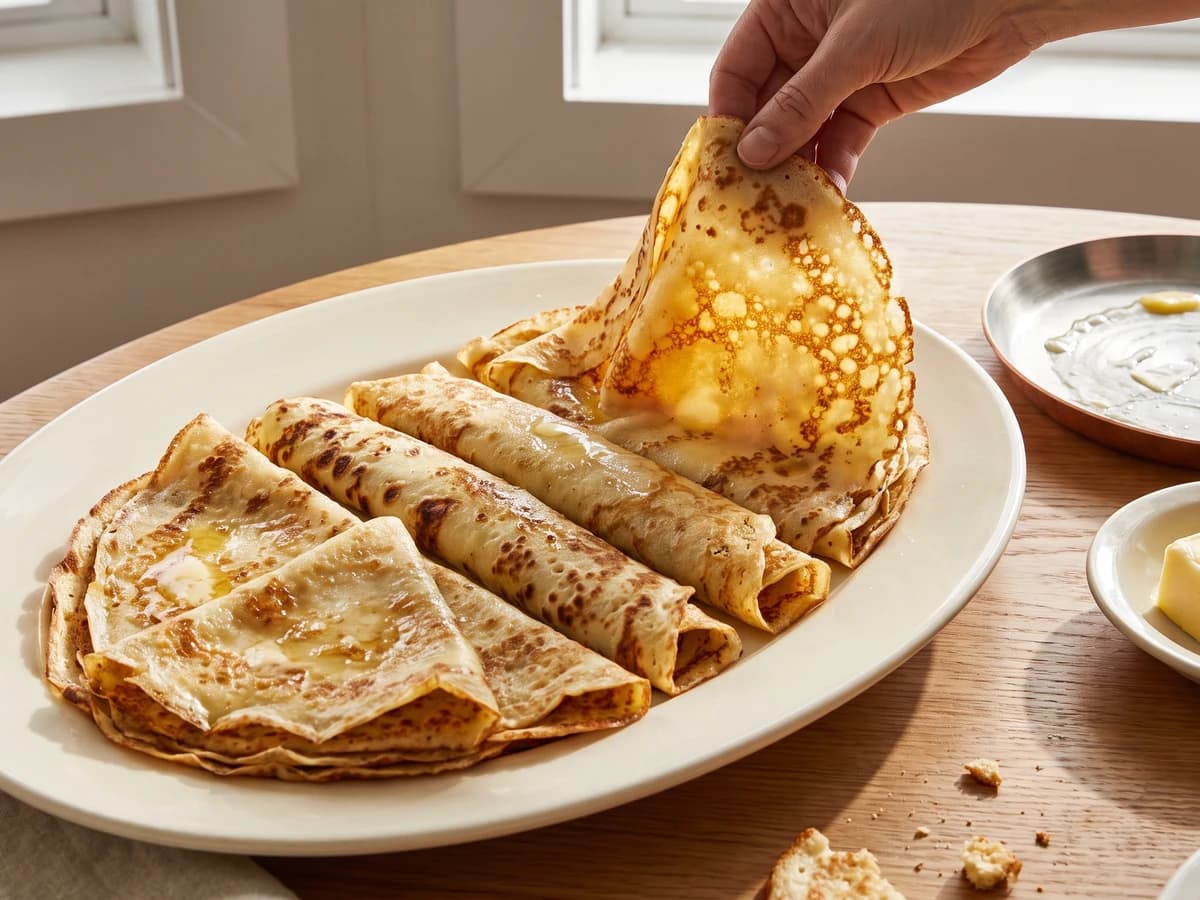
Four batters, one lesson: let the flour drink deeply before cooking, then spread the batter thinly in butter for crêpes and pannequets that bend without becoming tough.
Chef Juliette
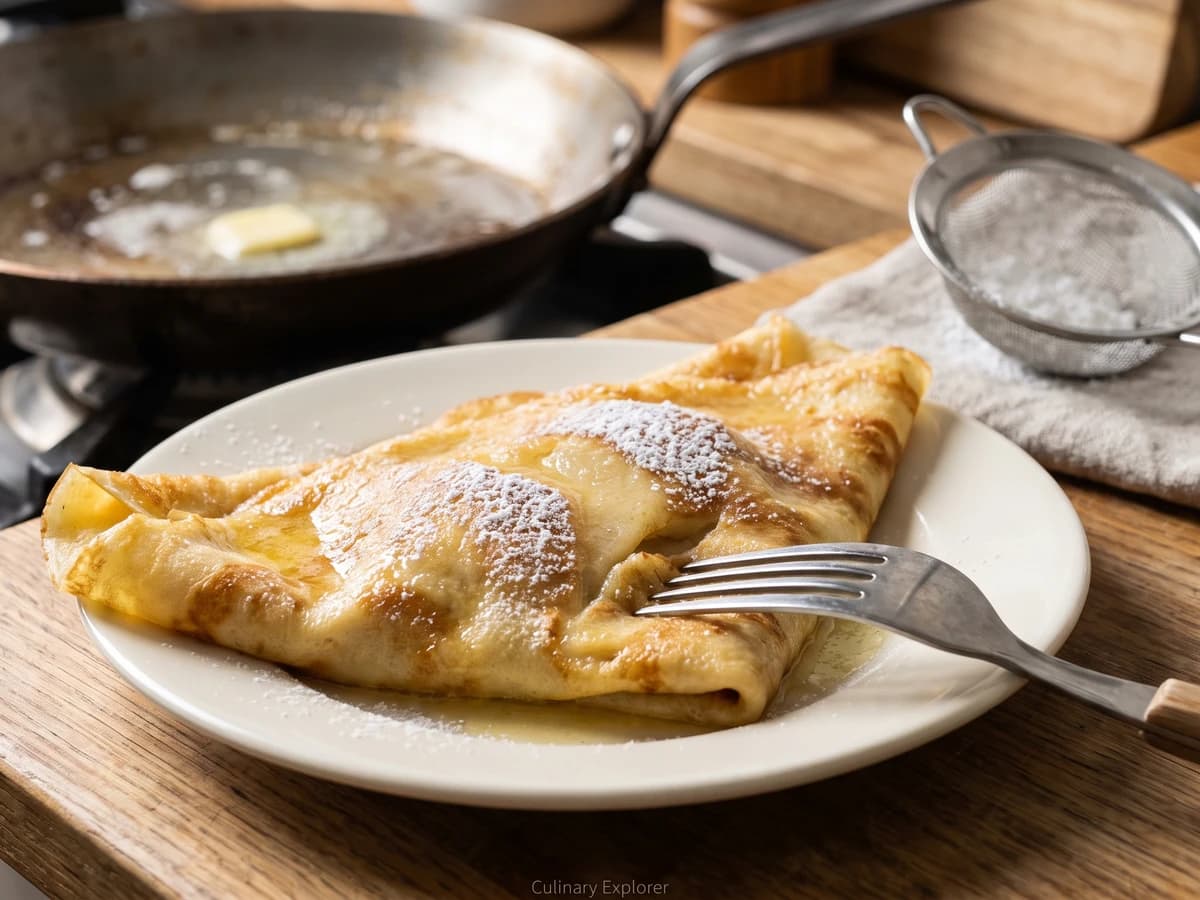
Crêpes au Couvent trap ripe Williams pear dice between two thin pours of sweet batter, then turn in one clean toss and reach the table butter-gold, powdered, and burning hot.