Chef Juliette
Omelette à l’Écossaise
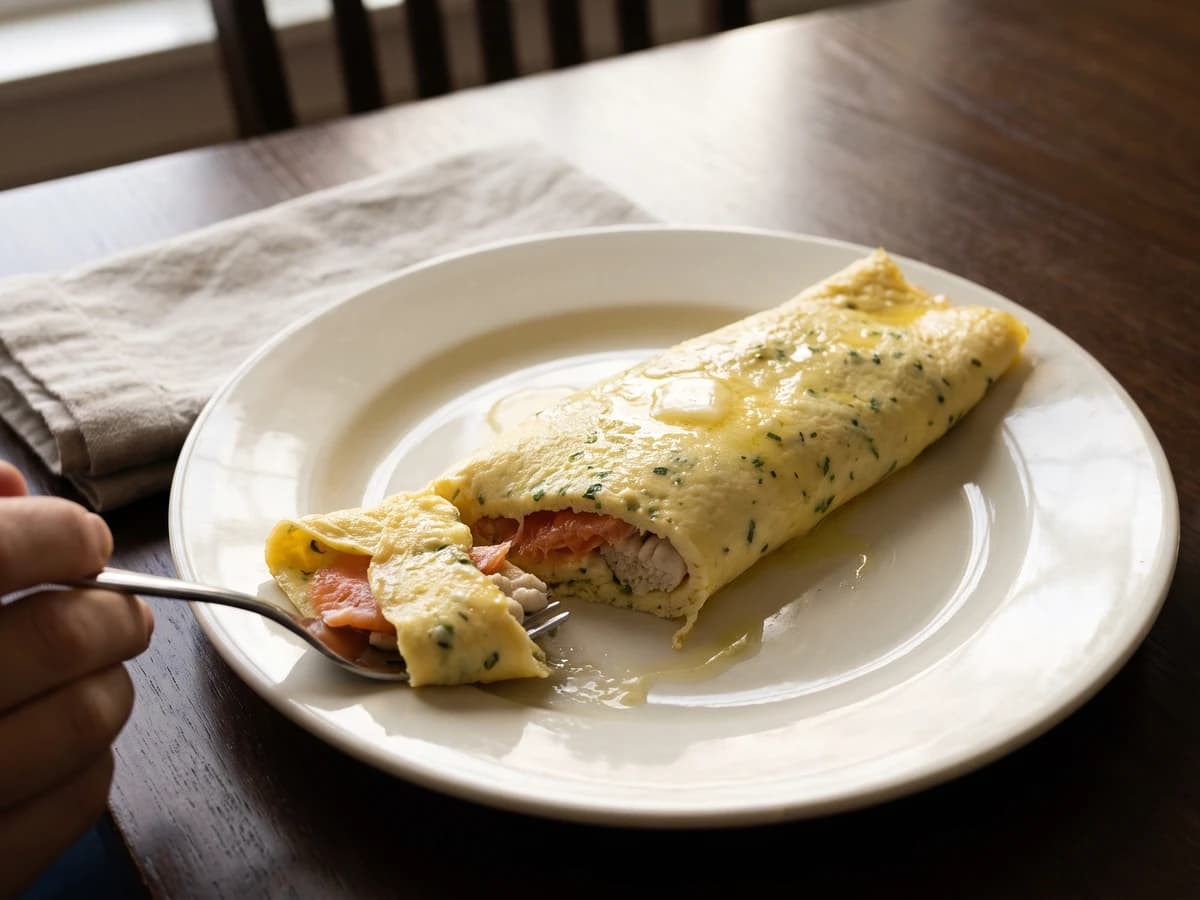
A creamy omelette aux fines herbes closes around smoked-salmon-wrapped herring milts, gently poached in butter. Have the filling ready, then roll the eggs while they still shine.
A cooking platform built around craft, culture, and the stories behind what we eat.
Created by Chef Juliette
Based on No. 532, Cold Eggs with Tarragon, from Le Guide Culinaire (1907) by Auguste Escoffier
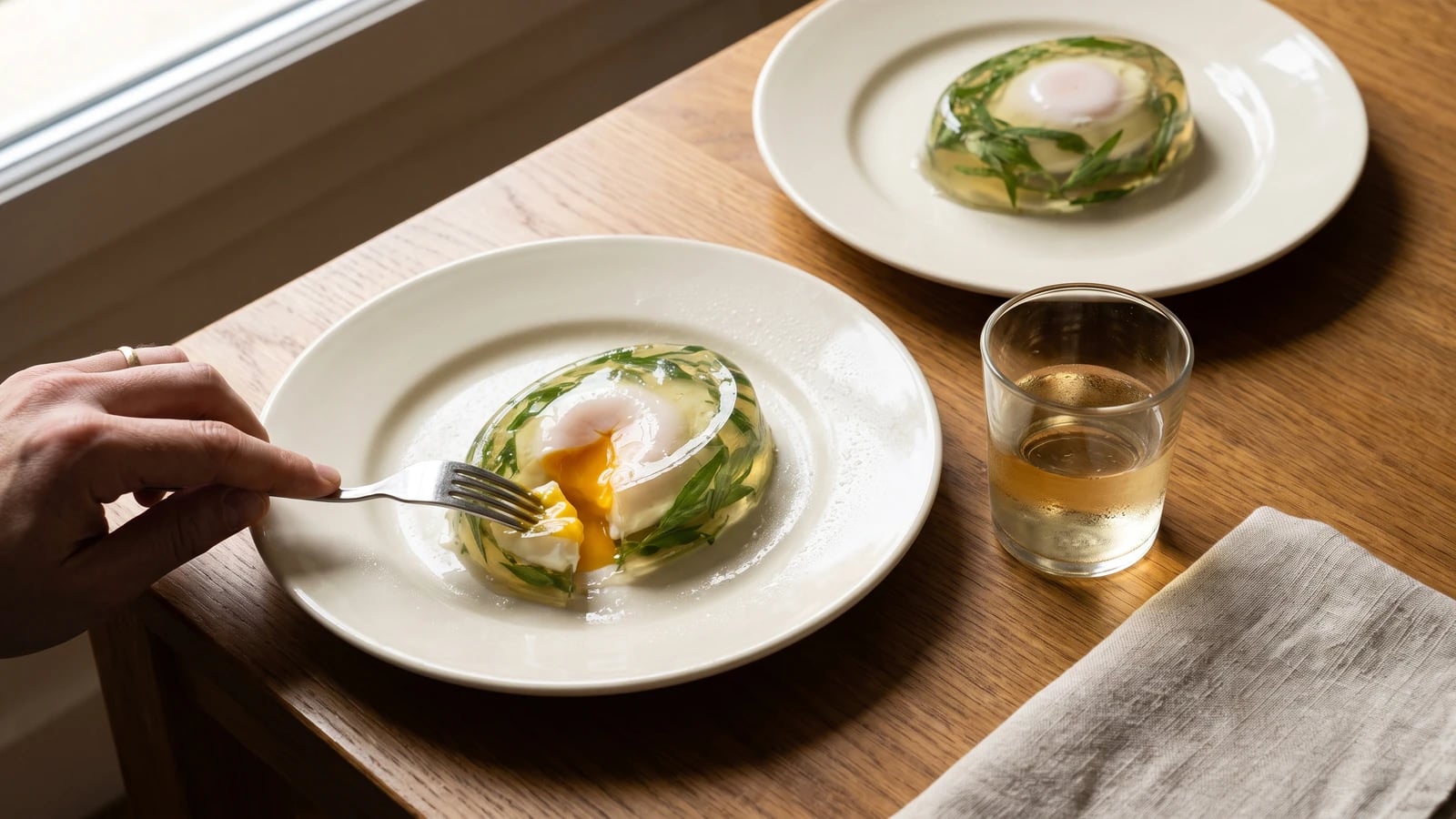
Cold poached eggs, tender at the white and softly set at the yolk, held in clear tarragon jelly: a poised make-ahead first course whose elegance depends on clarity, not ornament.
Œufs froids à l’estragon teaches the discipline of cold work: clarity is made before chilling, because the jelly reveals every cloudy drop, ragged white, and floating leaf. The one true thing to know before touching a pan is that every part must be cold and dry before it is enclosed. A warm egg loosens the gel, while a wet one keeps the jelly from clinging cleanly.
The old service assumed a garde-manger with clarified aspic ready, a stock never off the fire, and shelves of baba moulds, those small deep cylinders that release a neat individual serving. Your home version uses clear chicken stock, powdered gelatin, and four porcelain ramekins. The full clarification raft and brigade batch are scaffolding, so they go; the poached egg, blanched tarragon, and fine savory jelly remain because they are the dish. One cook, one stove, one evening.
You are after pale gold transparency, a green leaf held sharply in place, and an egg white tender enough to yield under the fork. The decisive step is patient layering: chill each veil of jelly until tacky before placing the next element.
Œufs froids à l’estragon belongs to the classical French garde-manger and the formal cold table, rather than to one provincial kitchen. The tarragon variation joined one of the national sauce repertoire’s defining herbs to the aspic methods of the grand cold buffet, then traveled easily to bourgeois tables through individual porcelain cocottes and tartlet crusts. The jelly is not mere decoration: it protects the egg from drying, carries the tarragon’s perfume, and makes graceful service possible well before the guests sit down.
Quantity
2 cups (480 ml / 480 g)
Quantity
6
Quantity
1 tablespoon (15 ml / 9 g)
Quantity
1/4 teaspoon (1.25 ml / 1.5 g), plus more if needed
Quantity
24, prepared according to Blanchings (No. 273)
Quantity
4
Quantity
1
in case a yolk breaks
Quantity
8 cups (1.9 L / 1.9 kg)
for poaching
Quantity
2 tablespoons (30 ml / 30 g)
Quantity
4 cups (950 ml / 950 g)
for chilling
Quantity
4, each about 3 inches (7.5 cm)
| Ingredient | Quantity |
|---|---|
| clear low-sodium chicken stock | 2 cups (480 ml / 480 g) |
| fresh French tarragon sprigs | 6 |
| unflavored powdered gelatin | 1 tablespoon (15 ml / 9 g) |
| fine sea salt | 1/4 teaspoon (1.25 ml / 1.5 g), plus more if needed |
| small fresh tarragon leaves | 24, prepared according to Blanchings (No. 273) |
| large pasteurized eggs | 4 |
| additional large pasteurized egg (optional)in case a yolk breaks | 1 |
| waterfor poaching | 8 cups (1.9 L / 1.9 kg) |
| white wine vinegar | 2 tablespoons (30 ml / 30 g) |
| ice waterfor chilling | 4 cups (950 ml / 950 g) |
| small baked savory tartlet crusts (optional) | 4, each about 3 inches (7.5 cm) |
Pass the cold chicken stock through a damp coffee filter or a fine sieve lined with doubled damp muslin, letting it drip without pressing. If your stock is already brilliantly clear, the fine sieve is enough. Sediment that looks harmless in liquid becomes conspicuous once suspended in jelly, so begin as cleanly as you mean to finish.
Pour 1/2 cup (120 ml) of the filtered stock into a heatproof bowl and sprinkle the gelatin evenly over it. Leave it for 5 minutes, until every granule is swollen. Warm the remaining 1 1/2 cups (360 ml) of stock with the tarragon sprigs and salt just until the edge begins to quiver, then remove it from the heat and infuse for 8 minutes. Strain the hot stock onto the bloomed gelatin and stir gently until perfectly dissolved. Do not boil gelatin, which weakens its set and dulls the stock. Taste while warm; it should seem one shade more seasoned than soup because cold mutes salt. Cool to room temperature, then refrigerate briefly until cold but still fluid.
Bring the poaching water and vinegar to the barest simmer in a wide pan, about 185°F (85°C), with only an occasional bubble breaking the surface. Crack one egg into a small fine-mesh sieve for 10 seconds so the loose white drains away, transfer it to a cup, and slide it gently into the water. Poach no more than two at once for 3 to 3 1/2 minutes, until the whites are set but tender and the yolks remain soft. Lift each egg into the ice water for 2 minutes, then place it on a towel-lined tray and chill for at least 20 minutes. Trim away ragged white with a small knife and blot every egg completely dry. If a white feathers, trim it once cold; if a yolk breaks, use the spare egg rather than hiding the damage under clear jelly.
Arrange four chilled 6-ounce (180 ml) porcelain ramekins or baba moulds on a tray. Spoon about 1 tablespoon (15 ml) of cold liquid jelly into each and chill for 10 to 15 minutes, until set but faintly tacky. Reach for the tarragon leaves prepared according to Blanchings (No. 273). Dip each leaf in a little liquid jelly, then place six against the bottom and lower sides of each mould, with their best surfaces facing outward. Seal them with another teaspoon of jelly and chill again. If the leaves float, the first layer was too soft; lift them out, chill the layer until tacky, and replace them. Ça se rattrape.
Place one chilled, dry poached egg in each mould with its smoothest face downward, since that side will be seen when unmoulded. Pour in enough cold fluid jelly to surround and cover the egg by about 1/4 inch (6 mm), pouring slowly down the side so the leaves stay in place. If the jelly begins setting in the jug, stand the jug in warm water for a minute and stir gently until fluid. If the decorative layer softens as you pour, stop and return the moulds to the cold before continuing. Cover once set and refrigerate for at least 4 hours, until the jelly is firm through the centre.
Chill four serving plates. Dip the base of one mould in warm, never hot, water for 3 to 5 seconds, loosen the rim with a damp fingertip, and invert it onto a plate. If it resists, repeat the dip for 2 seconds rather than forcing it. Serve directly on the chilled plate or set each portion on a small baked tartlet crust just before it reaches the table. The jelly should hold a clean outline and yield softly under the fork, revealing the tender egg beneath. À table!
1 serving (about 170g)
Culinary guides, cultural storytelling, and the editorial depth that makes cooking meaningful.
Discover Culinary ExplorerChef Juliette
A creamy omelette aux fines herbes closes around smoked-salmon-wrapped herring milts, gently poached in butter. Have the filling ready, then roll the eggs while they still shine.
Chef Juliette
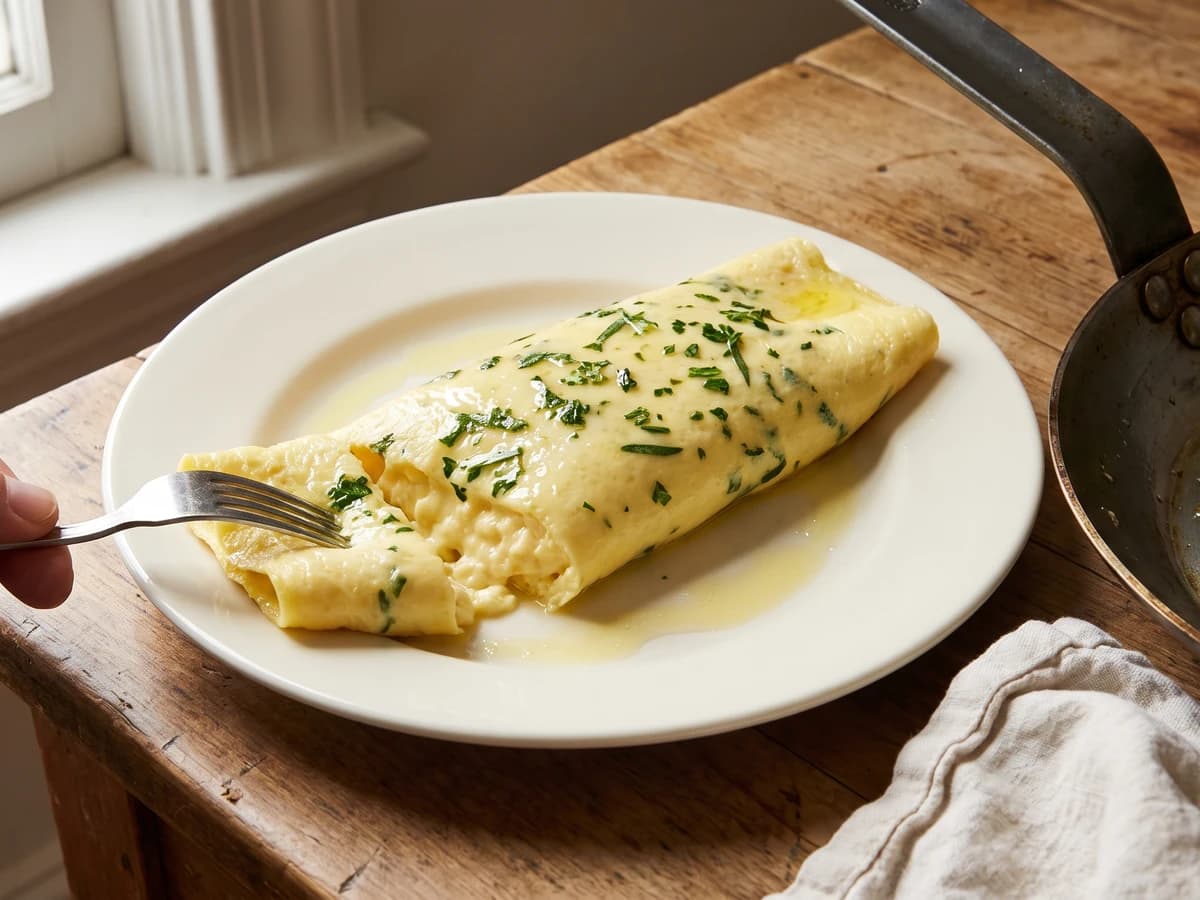
Four tender herbs, hot butter, and two eggs per pan: this rolled omelette teaches the quick hand and good judgment that keep the outside pale and the center creamy.
Chef Juliette
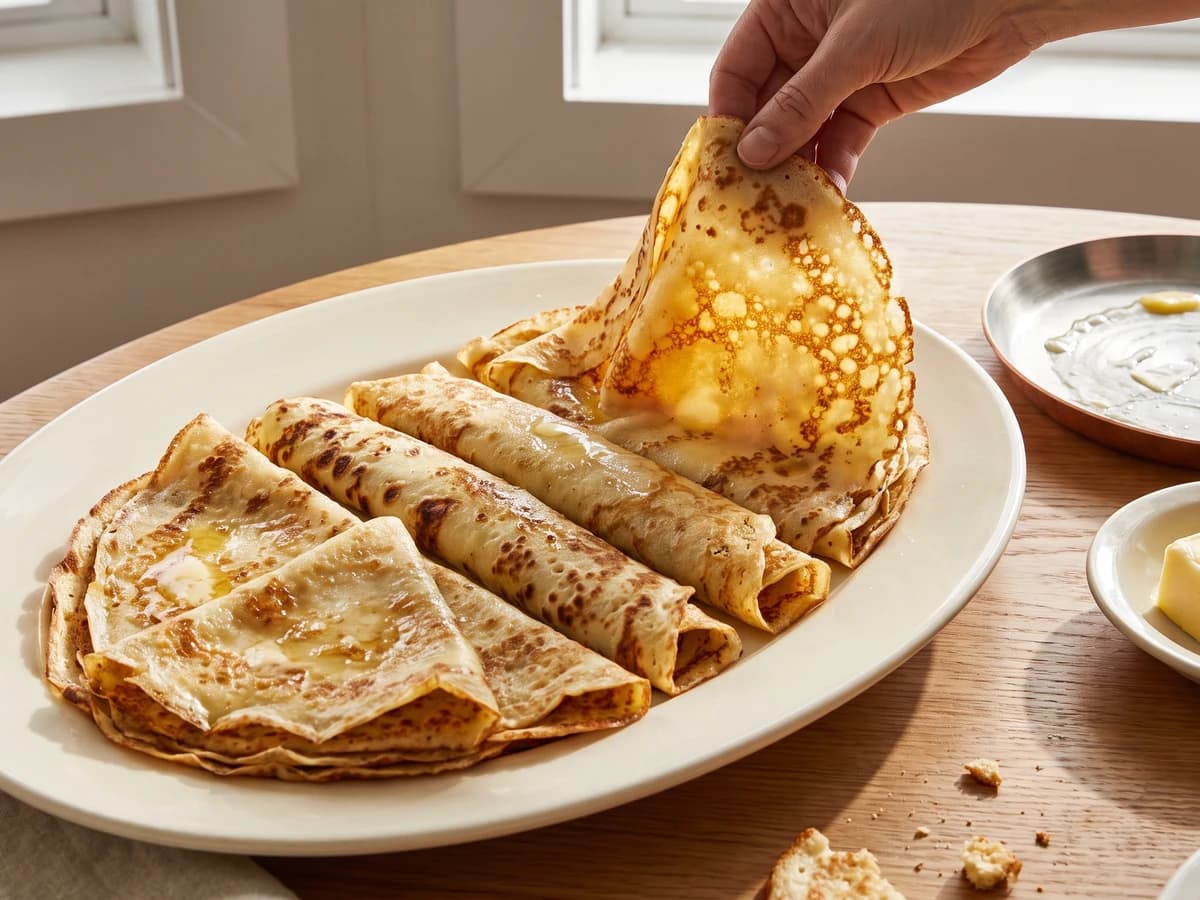
Four batters, one lesson: let the flour drink deeply before cooking, then spread the batter thinly in butter for crêpes and pannequets that bend without becoming tough.
Chef Juliette
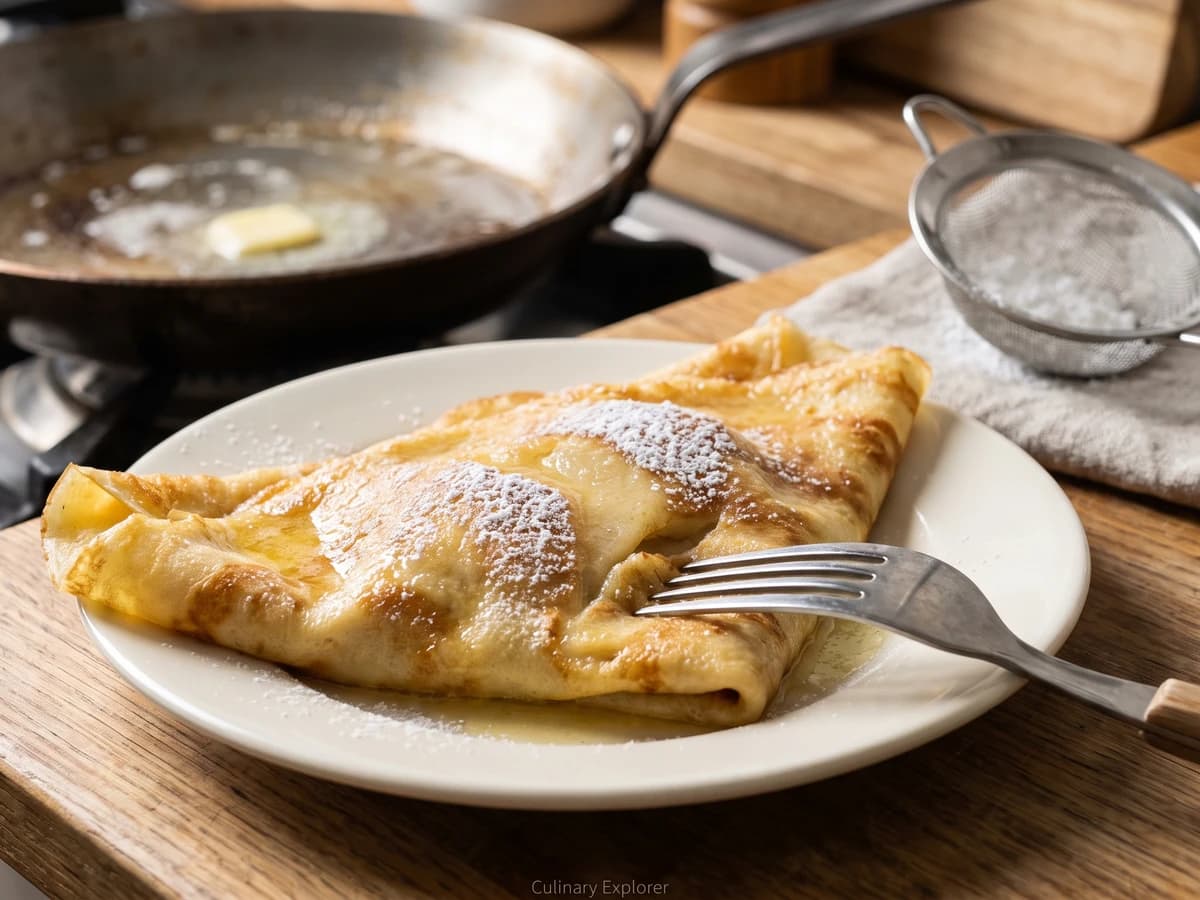
Crêpes au Couvent trap ripe Williams pear dice between two thin pours of sweet batter, then turn in one clean toss and reach the table butter-gold, powdered, and burning hot.