Chef Juliette
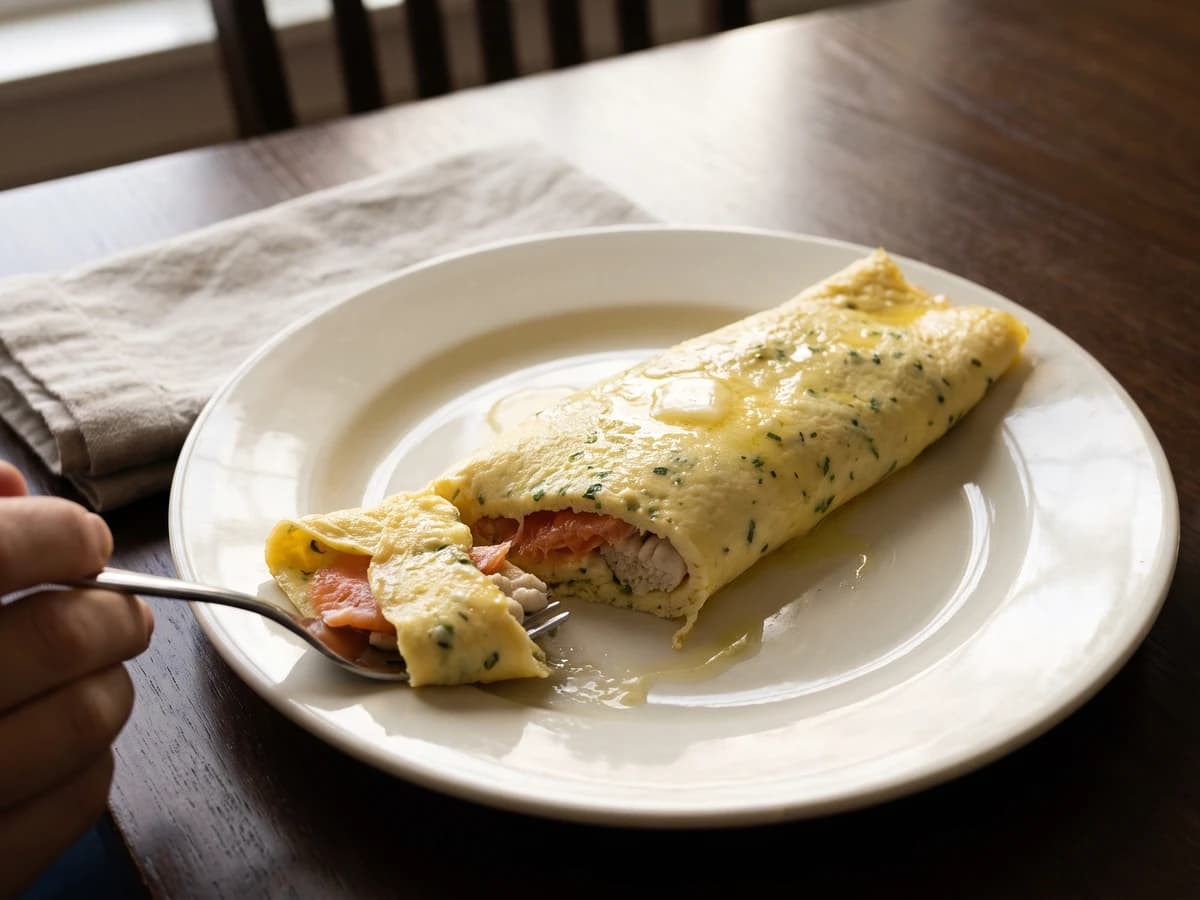
Omelette à l’Écossaise
A creamy omelette aux fines herbes closes around smoked-salmon-wrapped herring milts, gently poached in butter. Have the filling ready, then roll the eggs while they still shine.
A cooking platform built around craft, culture, and the stories behind what we eat.
Created by Chef Juliette
Based on No. 530, Cold Eggs Colbert, from Le Guide Culinaire (1907) by Auguste Escoffier
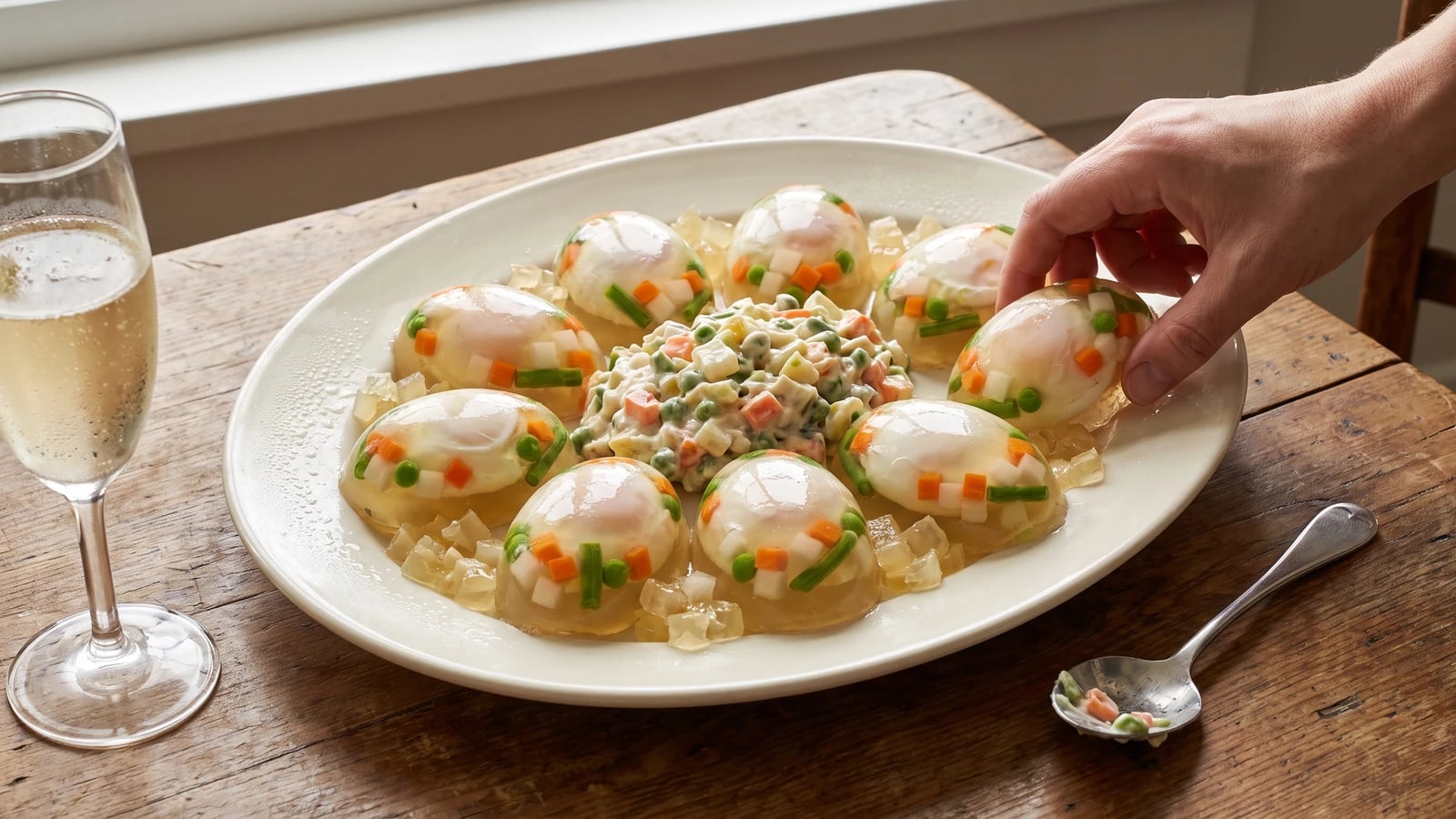
Cold poached eggs, bright vegetables, and pale aspic arranged like a draughtboard around a generous salad: a composed French first course whose success rests on a clean set and a confident unmoulding.
Œufs froids Colbert (cold poached eggs in draughtboard aspic) teaches the discipline of cold work: everything entering the jelly must be cold, dry, and deliberately placed. Warm egg melts the lining, wet vegetables cloud it, and weak aspic will not leave its mould cleanly. That is the one true thing to know before touching a pan.
The book assumed a garde-manger with a saucier at the elbow, pale jelly drawn from a stockpot never off the fire, ranks of little oval moulds, and tube cutters producing identical vegetables. A salamander has no work in this cold corner of the canon; labor and ready aspic were the luxuries. At home, clear chicken stock reinforced with measured gelatin, a paring knife, a plain piping tip, and eight small silicone moulds do the same work. I have scaled the dish to eight eggs for four, kept the separately cooked vegetables, draughtboard lining, white jelly, central salad, and chopped-jelly border, and removed only the brigade scaffolding. One cook, one stove, one evening.
The setting step decides the dish. Chill the eggs, vegetables, and moulds completely, then work with jelly that is cool and fluid. If the pattern begins to slide, stop and chill it until tacky before continuing. Patience here gives you clear domes, bright squares, and an unmoulding worth bringing whole to the table.
Œufs froids Colbert belongs to the Parisian grand-kitchen repertory of cold egg dishes, where poached eggs were set in aspic for composed hors d’œuvre and buffet service. Its draughtboard lining borrows the chartreuse manner of alternating separately cooked vegetables, the same visual grammar shown in Chartreuse de Ris de Veau (No. 1220), but reduces it to a small oval mould. Here Colbert names the completed arrangement, not a sauce poured over the egg, and the central vegetable salad keeps the dish firmly within the cold larder.
Quantity
3 cups (720 ml / 720 g)
chilled and thoroughly degreased
Quantity
2 tablespoons (30 ml / 18 g), plus 1 teaspoon (5 ml / 3 g) reserved if needed
divided
Quantity
8, plus 2 optional spares
Quantity
16 cups (3.8 L / 3.8 kg)
divided for blanching, poaching, and unmoulding
Quantity
2 tablespoons (30 ml / 30 g)
for poaching
Quantity
1 cup (240 ml / 130 g)
peeled and cut into 6 mm dice, with 24 thin squares reserved
Quantity
1 cup (240 ml / 130 g)
peeled and cut into 6 mm dice, with 24 thin squares reserved
Quantity
1 cup (240 ml / 110 g)
trimmed and cut into 6 mm lengths, with 24 neat pieces reserved
Quantity
1 cup (240 ml / 145 g)
Quantity
1 pattern from Chartreuse de Ris de Veau (No. 1220)
scaled to the small moulds with the prepared vegetables
Quantity
1
Quantity
1 teaspoon (5 ml / 5 g)
Quantity
1 tablespoon (15 ml / 15 g)
for the mayonnaise
Quantity
½ cup (120 ml / 110 g)
Quantity
1 tablespoon (15 ml / 18 g)
divided
Quantity
¼ teaspoon (1.25 ml / 0.6 g)
divided
| Ingredient | Quantity |
|---|---|
| very clear, pale, low-sodium chicken stockchilled and thoroughly degreased | 3 cups (720 ml / 720 g) |
| unflavoured powdered gelatindivided | 2 tablespoons (30 ml / 18 g), plus 1 teaspoon (5 ml / 3 g) reserved if needed |
| small pasteurized eggs | 8, plus 2 optional spares |
| waterdivided for blanching, poaching, and unmoulding | 16 cups (3.8 L / 3.8 kg) |
| white wine vinegarfor poaching | 2 tablespoons (30 ml / 30 g) |
| carrotpeeled and cut into 6 mm dice, with 24 thin squares reserved | 1 cup (240 ml / 130 g) |
| white turnippeeled and cut into 6 mm dice, with 24 thin squares reserved | 1 cup (240 ml / 130 g) |
| fine French beanstrimmed and cut into 6 mm lengths, with 24 neat pieces reserved | 1 cup (240 ml / 110 g) |
| fresh or frozen peas | 1 cup (240 ml / 145 g) |
| draughtboard garnish arrangementscaled to the small moulds with the prepared vegetables | 1 pattern from Chartreuse de Ris de Veau (No. 1220) |
| pasteurized large egg yolk | 1 |
| Dijon mustard | 1 teaspoon (5 ml / 5 g) |
| white wine vinegarfor the mayonnaise | 1 tablespoon (15 ml / 15 g) |
| neutral oil, such as grapeseed oil | ½ cup (120 ml / 110 g) |
| fine sea saltdivided | 1 tablespoon (15 ml / 18 g) |
| ground white pepperdivided | ¼ teaspoon (1.25 ml / 0.6 g) |
Pour ½ cup (120 ml / 120 g) of the cold stock into a bowl and sprinkle the 2 tablespoons of gelatin evenly over it. Leave it undisturbed for 10 minutes, until every granule has swollen. Heat the remaining stock only until the edge begins to quiver, then remove it from the heat and whisk in the bloomed gelatin until completely dissolved. Season lightly with salt and white pepper, remembering that cold dulls seasoning. Pass the jelly through a fine sieve. Chill a spoonful on a cold saucer for 8 minutes: it should cut cleanly but yield under the spoon. If it remains loose, rewarm it without boiling, bloom the reserved teaspoon of gelatin in a tablespoon of cold water, and dissolve it into the jelly. If it sets like rubber, melt it and add cold water a tablespoon at a time, testing again. Ça se rattrape.
Bring a saucepan of well-salted water to a boil and prepare a deep bowl of ice water. Blanch each vegetable separately so it keeps its own colour and texture: turnip for about 3 minutes, carrot for 2 to 3 minutes, French beans for 2 minutes, and peas for 45 seconds. Each should be tender at the edge but still firm at the centre. Transfer each batch directly to the ice water, then drain it on clean towels and dry it thoroughly. Keep the reserved decorative pieces separate from the diced vegetables for the salad. Wet vegetables loosen the mayonnaise and cloud the aspic, so do not hurry the drying.
Bring 8 cups (1.9 L / 1.9 kg) water and the 2 tablespoons of vinegar to the barest simmer in a wide saucepan. Crack one egg into a fine sieve, let the watery white drain for 10 seconds, then slide it into a small cup. Lower it gently into the water and repeat, cooking no more than three at once. Poach for 3 to 3½ minutes, until the white is fully set but the yolk still yields beneath it. Lift each egg into ice water, chill for 2 minutes, then transfer it to fresh cold water. Trim away ragged white with a small knife and drain the eggs on a cloth until completely dry. A torn fringe is not a lost egg; trim it cleanly, and the jelly will hide the seam.
Set eight cold 90 ml oval moulds on a tray. Spoon in just enough cool, fluid jelly to coat each base and side, turning the moulds as it clings, then chill for 5 to 8 minutes until tacky rather than hard. Reach for the draughtboard arrangement of Chartreuse de Ris de Veau (No. 1220): alternate the reserved orange carrot, ivory turnip, green bean, and peas in short, neat rows against the lined moulds. A plain piping tip can cut small roundels where the old kitchen used a special tube cutter. Brush the vegetables with another thin film of jelly and chill again. If the pieces slide, the lining is too warm; return the tray to the cold for 2 minutes and press them back into place.
Pour 1¼ cups (300 ml / 300 g) of the jelly into a shallow tray and refrigerate it for the chopped-jelly border. Set one cold, dry poached egg in each decorated mould, placing its smoothest face against the patterned side. Fill slowly with the remaining cool jelly, letting it run around the egg rather than directly onto it, and pierce any trapped air bubbles with a skewer. If the jelly begins setting in the bowl, stand it briefly in lukewarm water until fluid again; hot jelly would melt the pattern you have built. Chill the filled moulds for at least 4 hours, until firm through the centre.
Whisk the pasteurized yolk with the Dijon mustard and half the tablespoon of vinegar. Add the oil drop by drop at first, whisking each addition fully into the emulsion, then continue in a fine steady thread once the mayonnaise holds its shape. Whisk in the remaining vinegar, salt, and white pepper. If the mayonnaise breaks, put a teaspoon of cold water in a clean bowl and whisk the broken mayonnaise into it a spoonful at a time until smooth. Fold enough mayonnaise through the diced carrot, turnip, French beans, and peas to bind them lightly. The vegetables should hold in a generous mound, not disappear beneath the sauce. Keep the salad cold.
Chop the jelly from the shallow tray into fine, irregular crystals. Heap the vegetable salad in the centre of a cold oval platter. Dip each mould in warm water for 2 seconds, loosen the rim with a damp fingertip, and invert it firmly around the salad. If an egg refuses to release, dip the mould for one more second; if its surface begins to soften, chill it for 10 minutes before trying again. Arrange all eight eggs around the salad and surround them with the chopped jelly, keeping the bright draughtboard patterns visible. Serve immediately while everything is properly cold. À table!
1 serving (about 400g)
Culinary guides, cultural storytelling, and the editorial depth that makes cooking meaningful.
Discover Culinary ExplorerChef Juliette
A creamy omelette aux fines herbes closes around smoked-salmon-wrapped herring milts, gently poached in butter. Have the filling ready, then roll the eggs while they still shine.
Chef Juliette
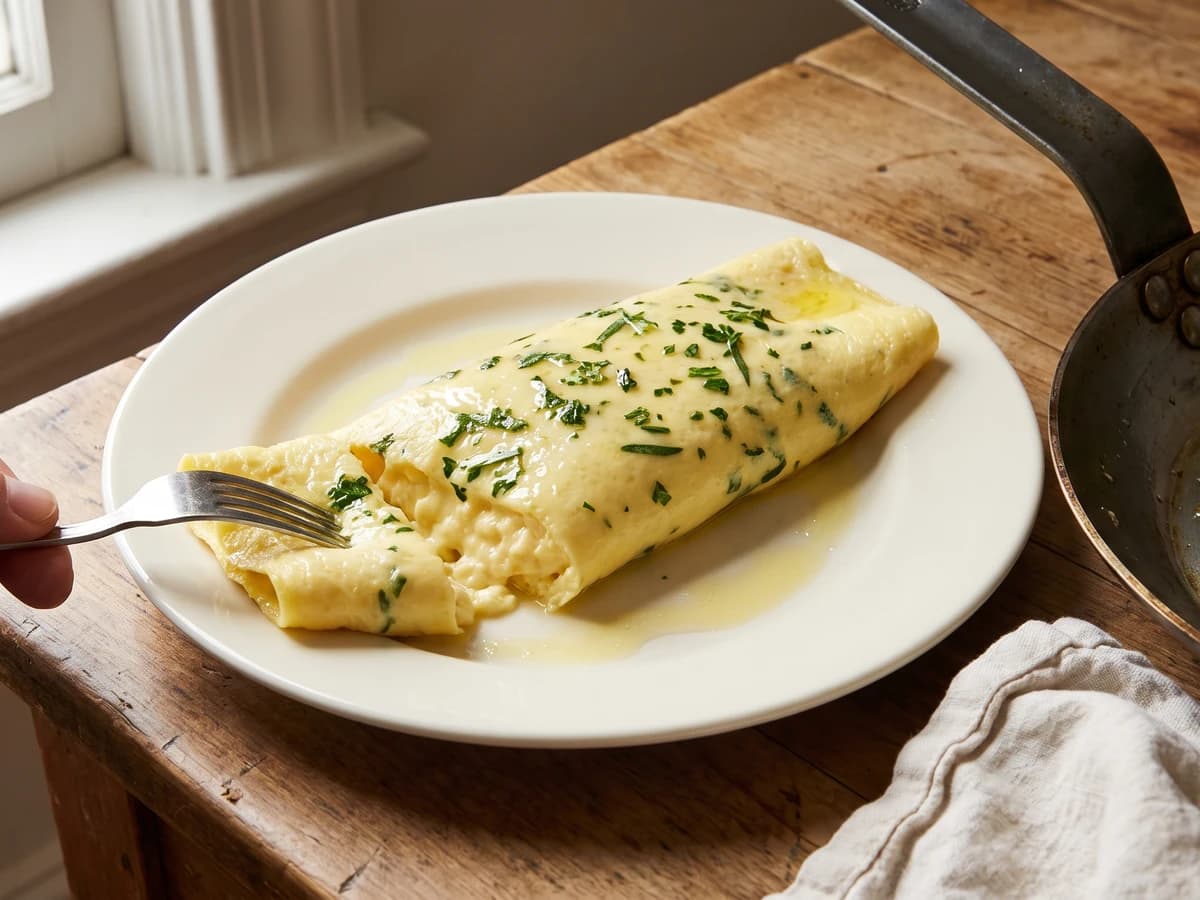
Four tender herbs, hot butter, and two eggs per pan: this rolled omelette teaches the quick hand and good judgment that keep the outside pale and the center creamy.
Chef Juliette
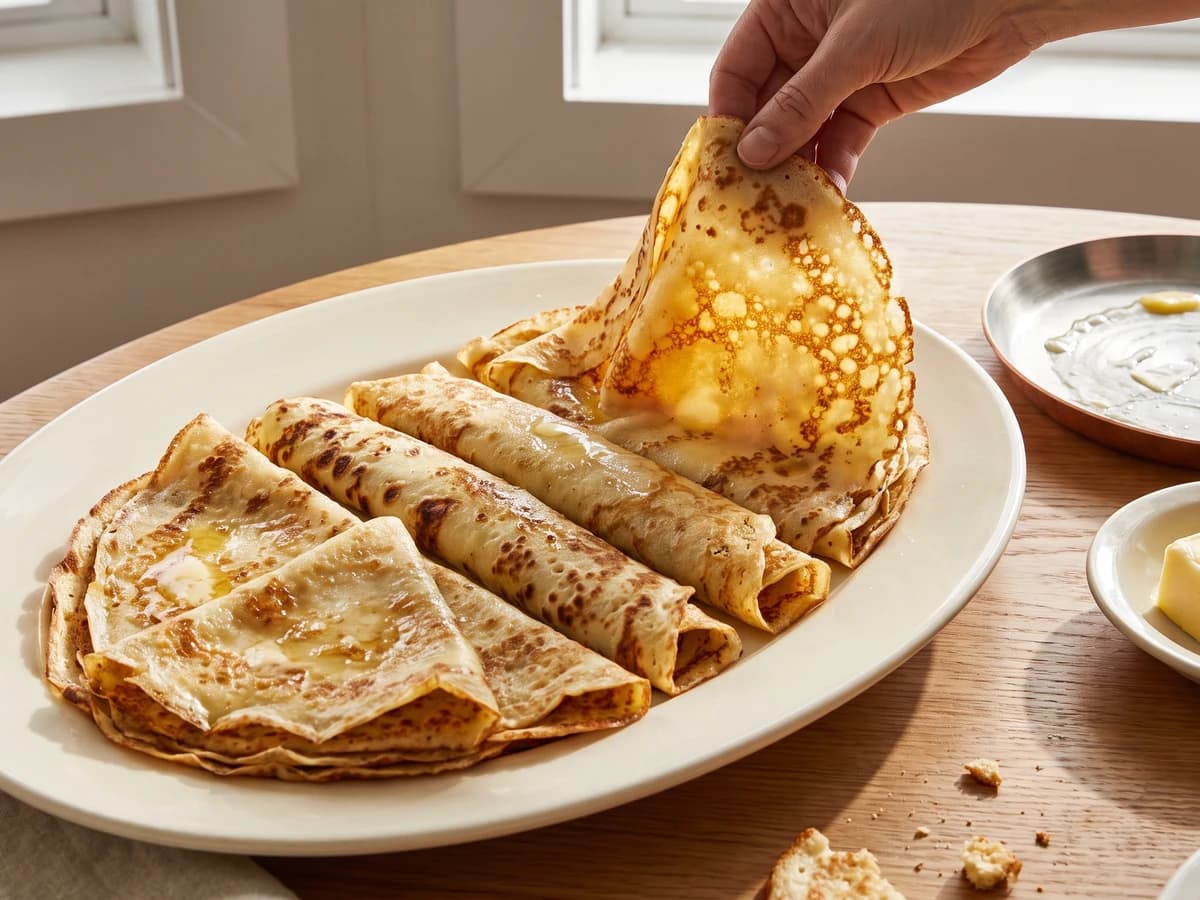
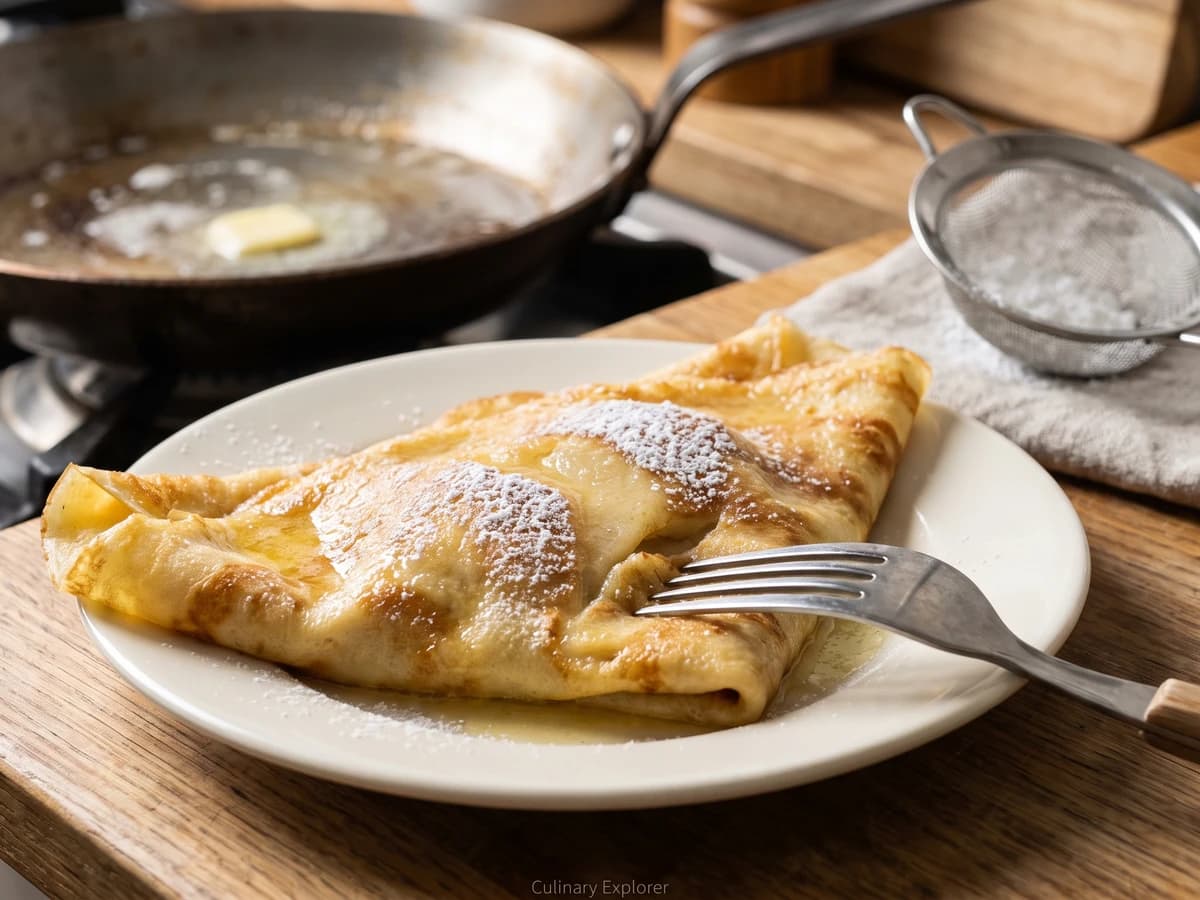
Four batters, one lesson: let the flour drink deeply before cooking, then spread the batter thinly in butter for crêpes and pannequets that bend without becoming tough.
Chef Juliette
Crêpes au Couvent trap ripe Williams pear dice between two thin pours of sweet batter, then turn in one clean toss and reach the table butter-gold, powdered, and burning hot.