Chef Juliette
Omelette à l’Écossaise
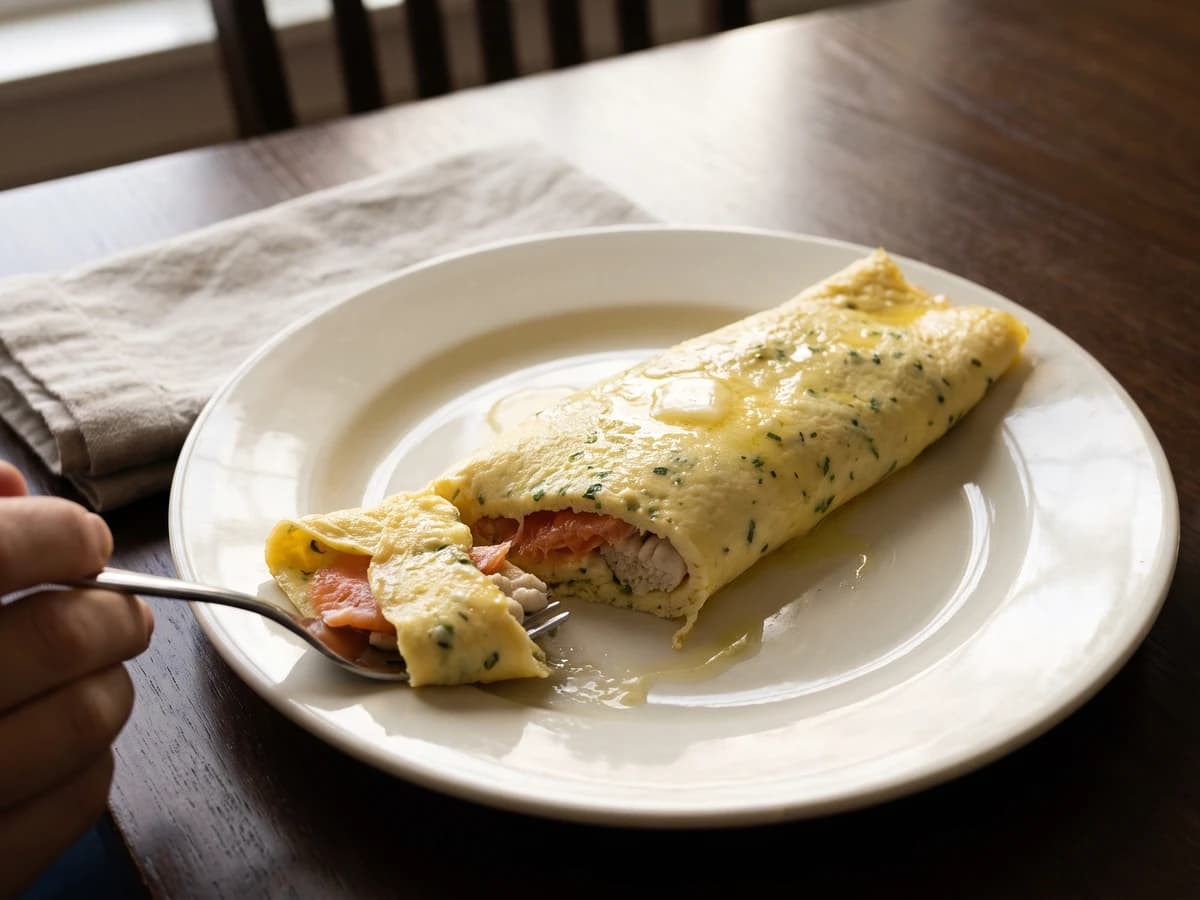
A creamy omelette aux fines herbes closes around smoked-salmon-wrapped herring milts, gently poached in butter. Have the filling ready, then roll the eggs while they still shine.
A cooking platform built around craft, culture, and the stories behind what we eat.
Created by Chef Juliette
Based on No. 528, Cold Eggs Capucine, from Le Guide Culinaire (1907) by Auguste Escoffier
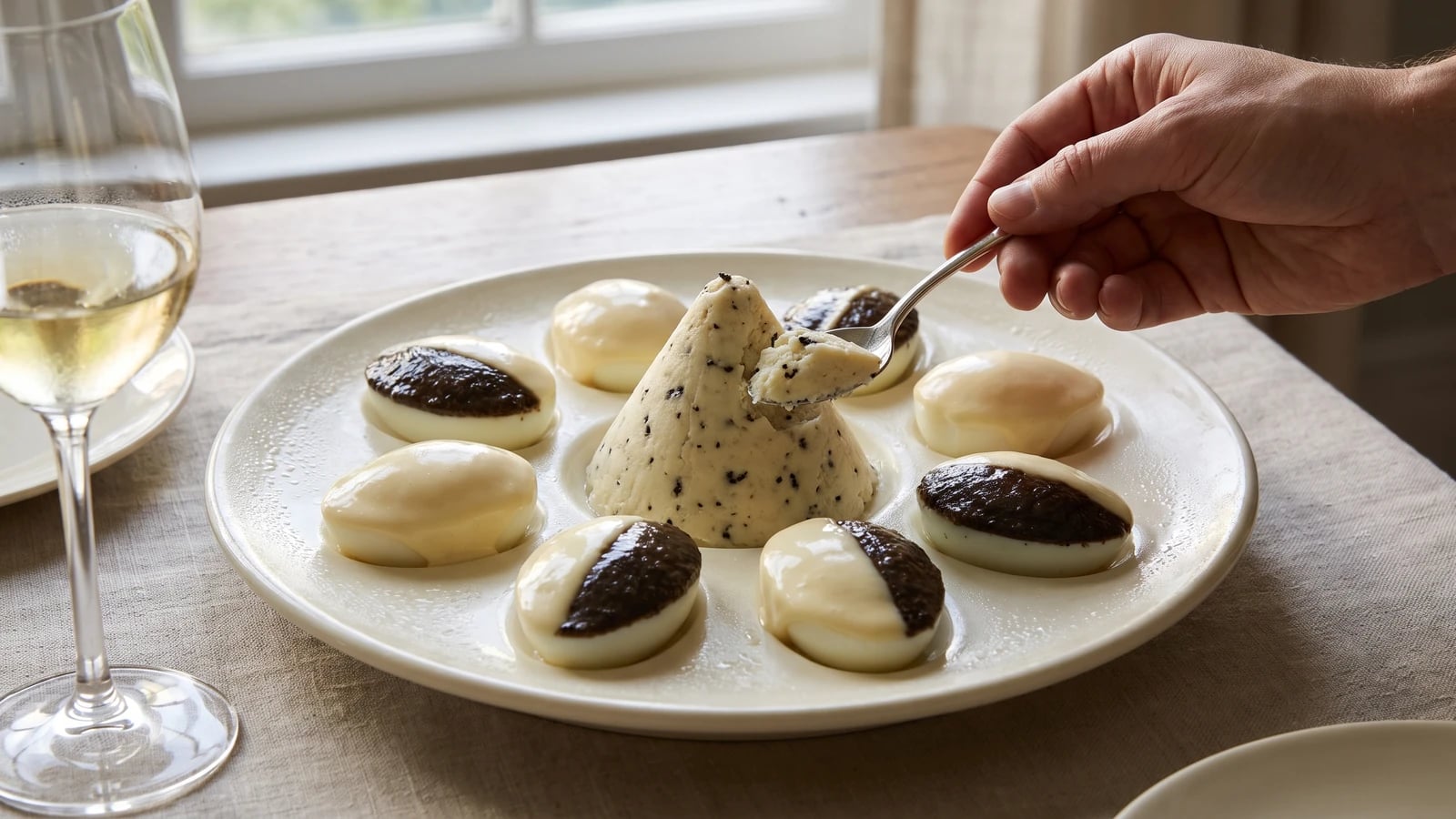
Cold poached eggs dressed in two precise halves, ivory chaud-froid and black truffle purée, arranged around chilled truffled brandade: a grand cold entrée made practical for one cook and four guests.
Œufs froids Capucine (cold eggs Capucine) teaches one exact cold-kitchen principle: sauce chaud-froid blanche, a white sauce set with jelly, clings only to an egg that is fully cold and absolutely dry. Know that before touching a pan. Moisture makes the coating slide, while a dry surface holds the clean ivory and truffle-black halves that define the dish.
The original kitchen assumed a saucier on staff, stock never off the fire, prepared jelly waiting on ice, a cold room, and enough hands to coat brigade quantities. A salamander, useful elsewhere, has no work in this cold dish. At home, one small roux-built sauce, measured gelatin, preserved black truffles, and an ordinary refrigerator do the work for four. The separate sauce station and ice room were scaffolding and can go; the two lengthwise coatings and the cold truffled Brandade de Morue (No. 1027), a whipped preparation of morue, salt cod, are the dish and must stay. One cook, one stove, one evening.
The finished platter is generous and wonderfully graphic: eight tender eggs circling a pale brandade pyramid, each egg divided between satin ivory and dark, glossy truffle. Dry the eggs until a fingertip comes away clean before you coat the first one. That quiet little step decides everything.
Œufs froids Capucine belongs to the Parisian grand-kitchen repertory of composed cold entrées, where poached eggs, chaud-froid sauces, aspic, and precise platter work turned familiar ingredients into formal first courses. Its center draws Brandade de Morue (No. 1027) from Nîmes and the Mediterranean table, where salt cod from Newfoundland or Iceland was worked with olive oil, garlic, and milk until smooth. Capucine is a repertory title rather than a regional claim, and the dish shows how Parisian kitchens brought a southern preparation into cold service without erasing its character.
Quantity
8
Quantity
2 quarts (1.9 L / 1.9 kg)
Quantity
2 tablespoons (30 ml / 30 g)
Quantity
1 tablespoon (15 ml / 14 g)
Quantity
1 tablespoon (15 ml / 8 g)
Quantity
¾ cup (180 ml / 180 g)
Quantity
⅓ cup (80 ml / 80 g)
Quantity
¾ teaspoon (3.75 ml / 2.3 g)
Quantity
1 tablespoon (15 ml / 15 g)
Quantity
⅔ cup (160 ml / 100 g)
drained, with juice reserved; use 75 g for the purée and mince 25 g for the brandade
Quantity
⅓ cup (80 ml / 80 g)
Quantity
1 teaspoon (5 ml / 3 g)
Quantity
1 tablespoon (15 ml / 15 g)
Quantity
1 tablespoon (15 ml / 15 g)
Quantity
1½ cups (360 ml / 340 g) cold Brandade de Morue (No. 1027)
Quantity
to taste
Quantity
to taste
| Ingredient | Quantity |
|---|---|
| large, very fresh eggs | 8 |
| water for poaching | 2 quarts (1.9 L / 1.9 kg) |
| white wine vinegar | 2 tablespoons (30 ml / 30 g) |
| unsalted butter | 1 tablespoon (15 ml / 14 g) |
| all-purpose flour | 1 tablespoon (15 ml / 8 g) |
| strong unsalted chicken stock for the chaud-froid | ¾ cup (180 ml / 180 g) |
| heavy cream | ⅓ cup (80 ml / 80 g) |
| powdered gelatin for the chaud-froid | ¾ teaspoon (3.75 ml / 2.3 g) |
| cold water for blooming the chaud-froid gelatin | 1 tablespoon (15 ml / 15 g) |
| preserved black trufflesdrained, with juice reserved; use 75 g for the purée and mince 25 g for the brandade | ⅔ cup (160 ml / 100 g) |
| strong unsalted chicken stock for the truffle jelly | ⅓ cup (80 ml / 80 g) |
| powdered gelatin for the truffle jelly | 1 teaspoon (5 ml / 3 g) |
| cold water for blooming the truffle gelatin | 1 tablespoon (15 ml / 15 g) |
| reserved truffle juice or additional chicken stock | 1 tablespoon (15 ml / 15 g) |
| cold Brandade de Morue | 1½ cups (360 ml / 340 g) cold Brandade de Morue (No. 1027) |
| fine sea salt | to taste |
| ground white pepper | to taste |
Bring the water and vinegar to a bare tremble in a wide saucepan. Crack each egg into a small cup, then slip it close to the surface, poaching no more than three at once so the water stays calm. Cook for 3½ to 4 minutes, until the whites are firm enough to lift while the yolks remain yielding. If a white feathers, gather it gently around the yolk with a spoon; any loose threads can be trimmed once cold. Lift each egg into ice water with a slotted spoon and chill completely.
Drain the cold eggs and trim only the ragged edges, keeping their natural oval shape. Lay them between clean kitchen towels and blot every surface without pressing on the yolks, then refrigerate them uncovered on a rack for 20 minutes. Touch one lightly before continuing. If your fingertip comes away damp, blot and chill again; sauce laid over water will slide straight off.
Bloom the ¾ teaspoon gelatin in its tablespoon of cold water for 5 minutes. Melt the butter gently in a small saucepan, stir in the flour, and cook for 90 seconds without allowing the roux to color. Whisk in the ¾ cup chicken stock gradually, simmer for 5 minutes, then add the cream and cook until nappé, thick enough to coat the back of a spoon. Remove from the heat, whisk in the bloomed gelatin, season with salt and white pepper, and pass through a fine sieve. Cool over ice, stirring, until it flows like thick cream. If it sets before the eggs are ready, don't force it. Ça se rattrape: stand the bowl in barely warm water and whisk gently until it flows again.
Bloom the remaining teaspoon of gelatin in its tablespoon of cold water. Warm the ⅓ cup chicken stock with the reserved truffle juice, stopping before it boils, then dissolve the gelatin in it. Blend 75 g of the truffles with this jelly until completely smooth and pass the purée through a fine sieve. Cool it over ice until it has the same thick, flowing consistency as the chaud-froid. If it remains loose, give it another few minutes over ice; if it turns firm, warm the bowl gently and stir. The two coatings must flow alike or their seam will wander.
Set the eggs on a fine wire rack over a chilled tray. Working from the blunt end toward the pointed end, spoon the chaud-froid over one longitudinal half of each egg, keeping the division as straight as your hand allows. Let the excess fall away, then refrigerate for 15 to 20 minutes, until the ivory coating is set and no longer marks when touched lightly.
Spoon the truffle purée over the exposed half of each egg, bringing it neatly against the edge of the white coating without covering it. If the purée begins to run across the seam, stop and chill it for 5 minutes before continuing. Wipe a small mistake away with the tip of a warm, damp palette knife while the coating is still soft. Chill the finished eggs for at least 30 minutes so both coats set cleanly.
Beat the cold Brandade de Morue (No. 1027) briefly with a wooden spoon to restore its smooth, potato-purée consistency, then fold in the remaining 25 g minced truffle. Taste before adding salt, because morue carries its own. If the brandade is too firm to shape, leave it out for 5 minutes and beat it again rather than thinning away its character. Mound it in the center of a cold round platter and shape it into a low pyramid with an offset spatula.
Slide a narrow offset spatula beneath each coated egg and arrange the eggs evenly around the brandade, pointed ends facing outward. Cover the platter without letting the cover touch the coatings and chill for another 30 minutes. Bring it from the refrigerator about 10 minutes before serving so the truffle opens and the brandade softens slightly while remaining properly cold. Serve two eggs and a generous spoonful of brandade to each guest. À table!
1 serving (about 300g)
Culinary guides, cultural storytelling, and the editorial depth that makes cooking meaningful.
Discover Culinary ExplorerChef Juliette
A creamy omelette aux fines herbes closes around smoked-salmon-wrapped herring milts, gently poached in butter. Have the filling ready, then roll the eggs while they still shine.
Chef Juliette
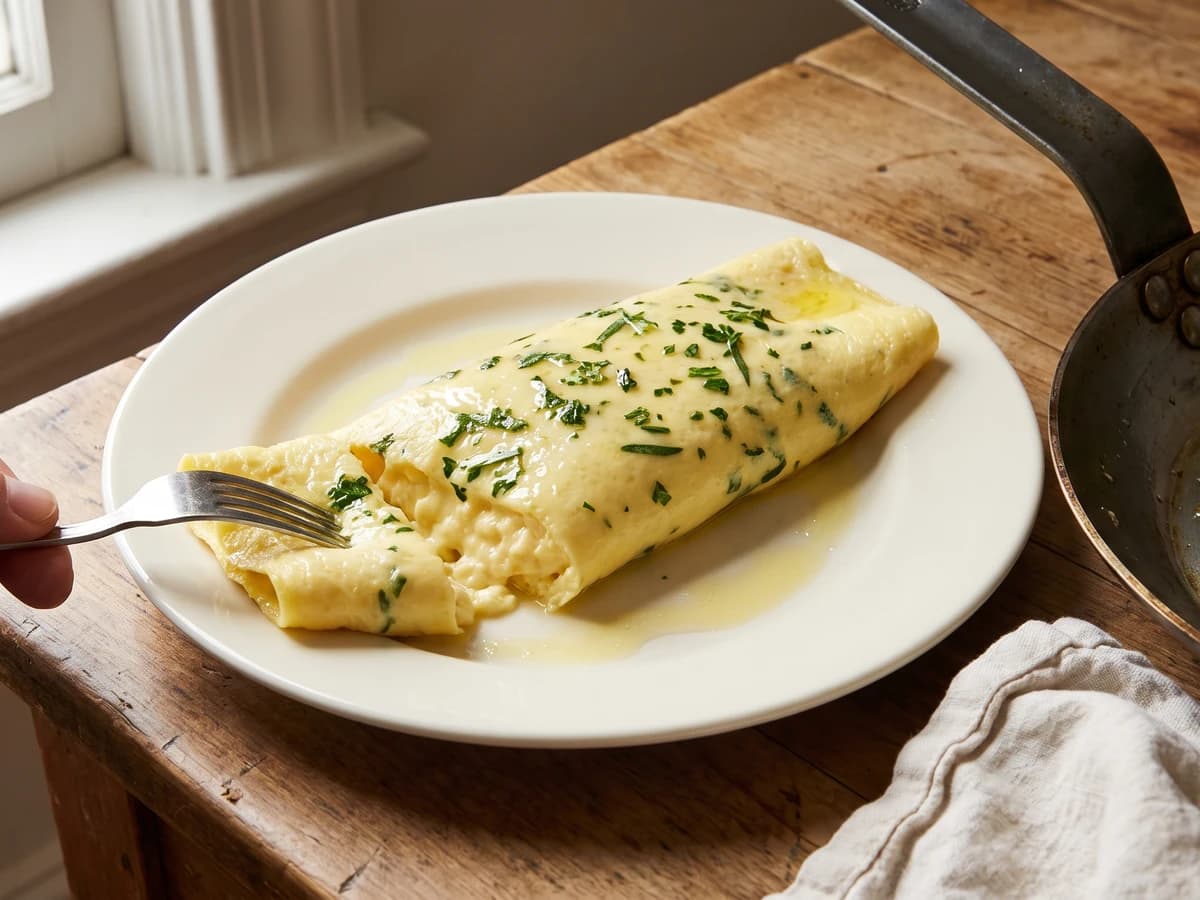
Four tender herbs, hot butter, and two eggs per pan: this rolled omelette teaches the quick hand and good judgment that keep the outside pale and the center creamy.
Chef Juliette
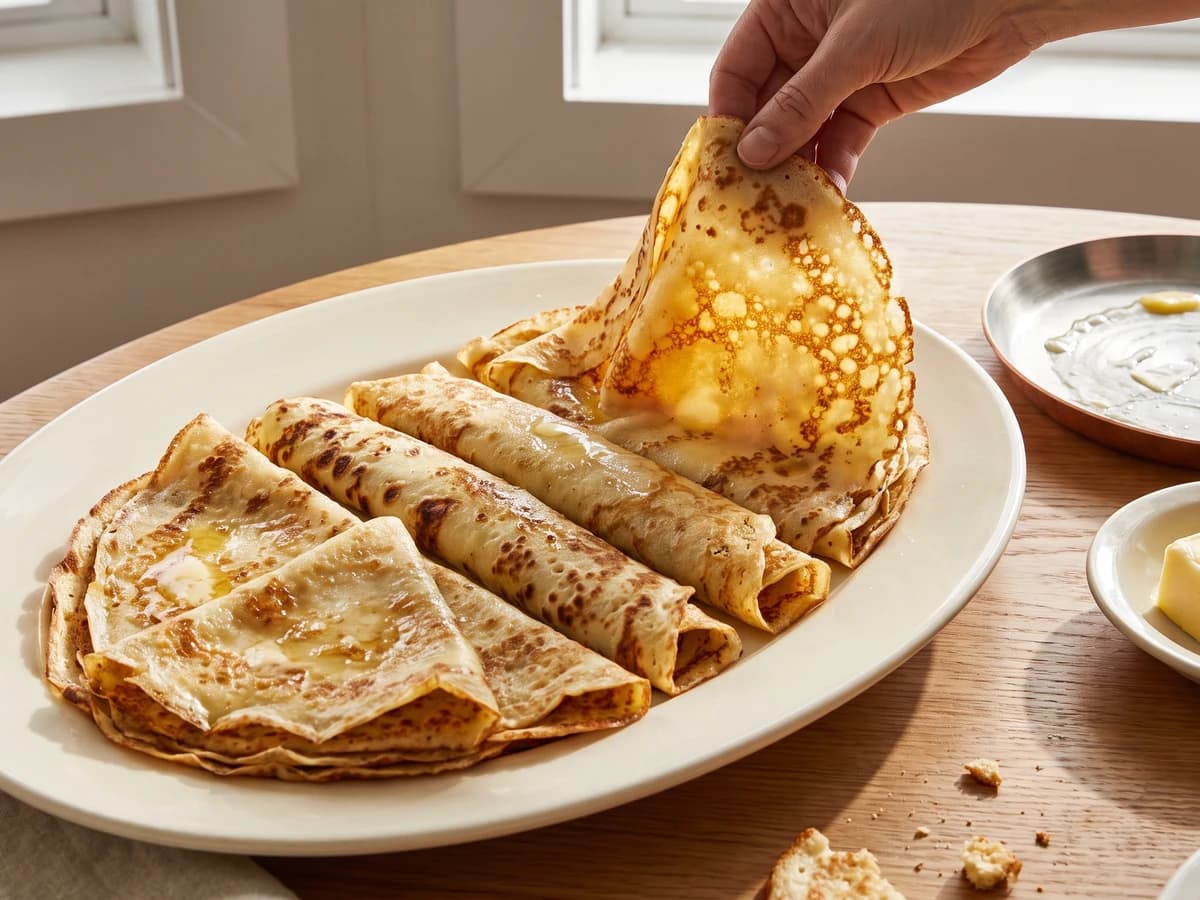
Four batters, one lesson: let the flour drink deeply before cooking, then spread the batter thinly in butter for crêpes and pannequets that bend without becoming tough.
Chef Juliette
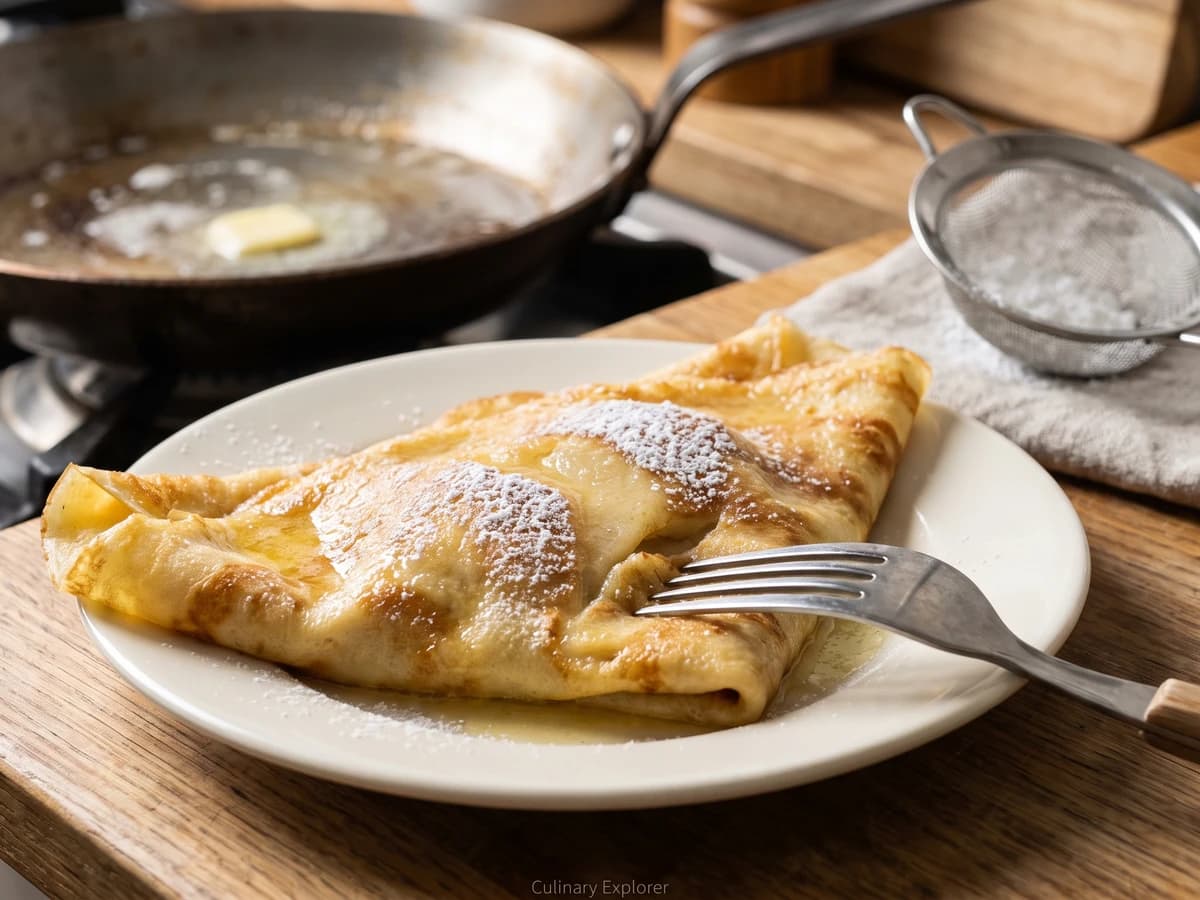
Crêpes au Couvent trap ripe Williams pear dice between two thin pours of sweet batter, then turn in one clean toss and reach the table butter-gold, powdered, and burning hot.