Chef Juliette
Omelette à l’Écossaise
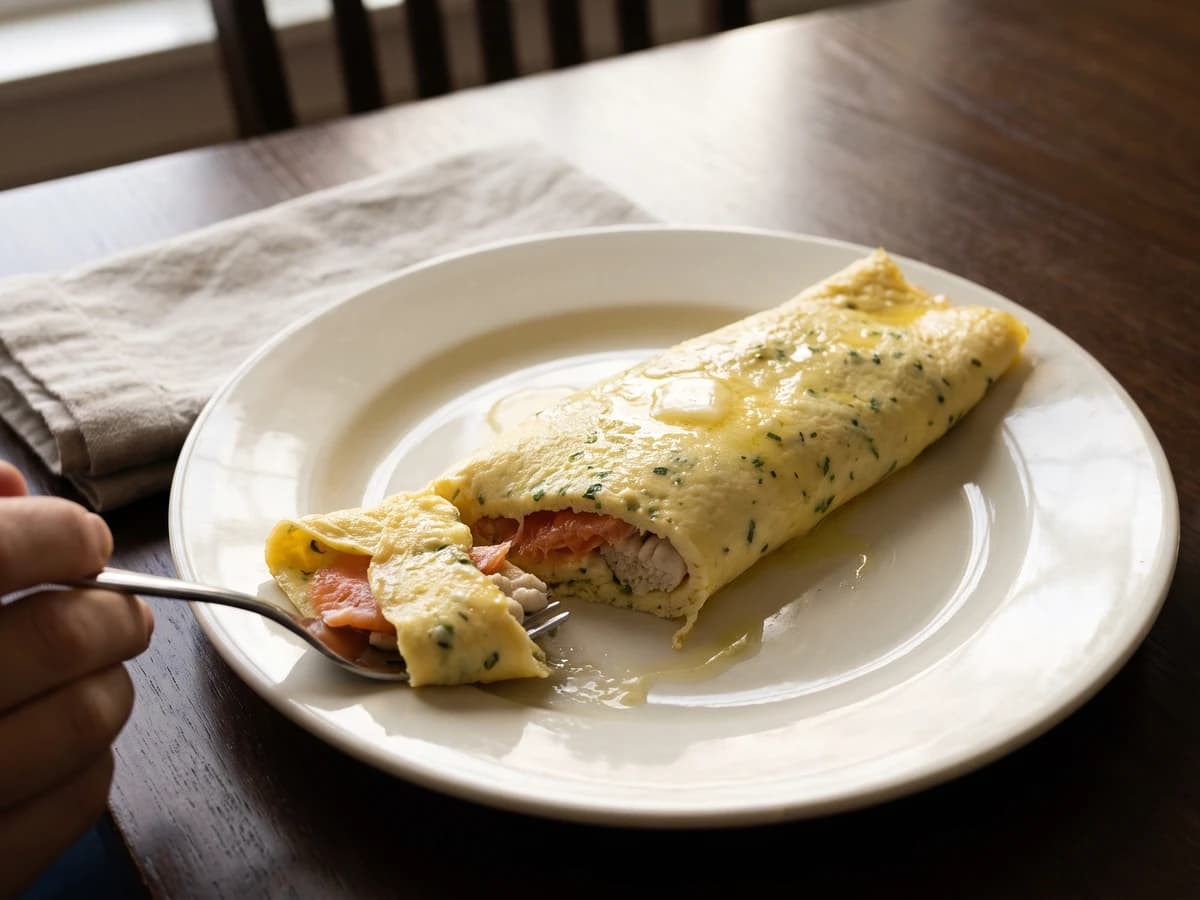
A creamy omelette aux fines herbes closes around smoked-salmon-wrapped herring milts, gently poached in butter. Have the filling ready, then roll the eggs while they still shine.
A cooking platform built around craft, culture, and the stories behind what we eat.
Created by Chef Juliette
Based on No. 526, Cold Eggs à l’Andalouse, from Le Guide Culinaire (1907) by Auguste Escoffier
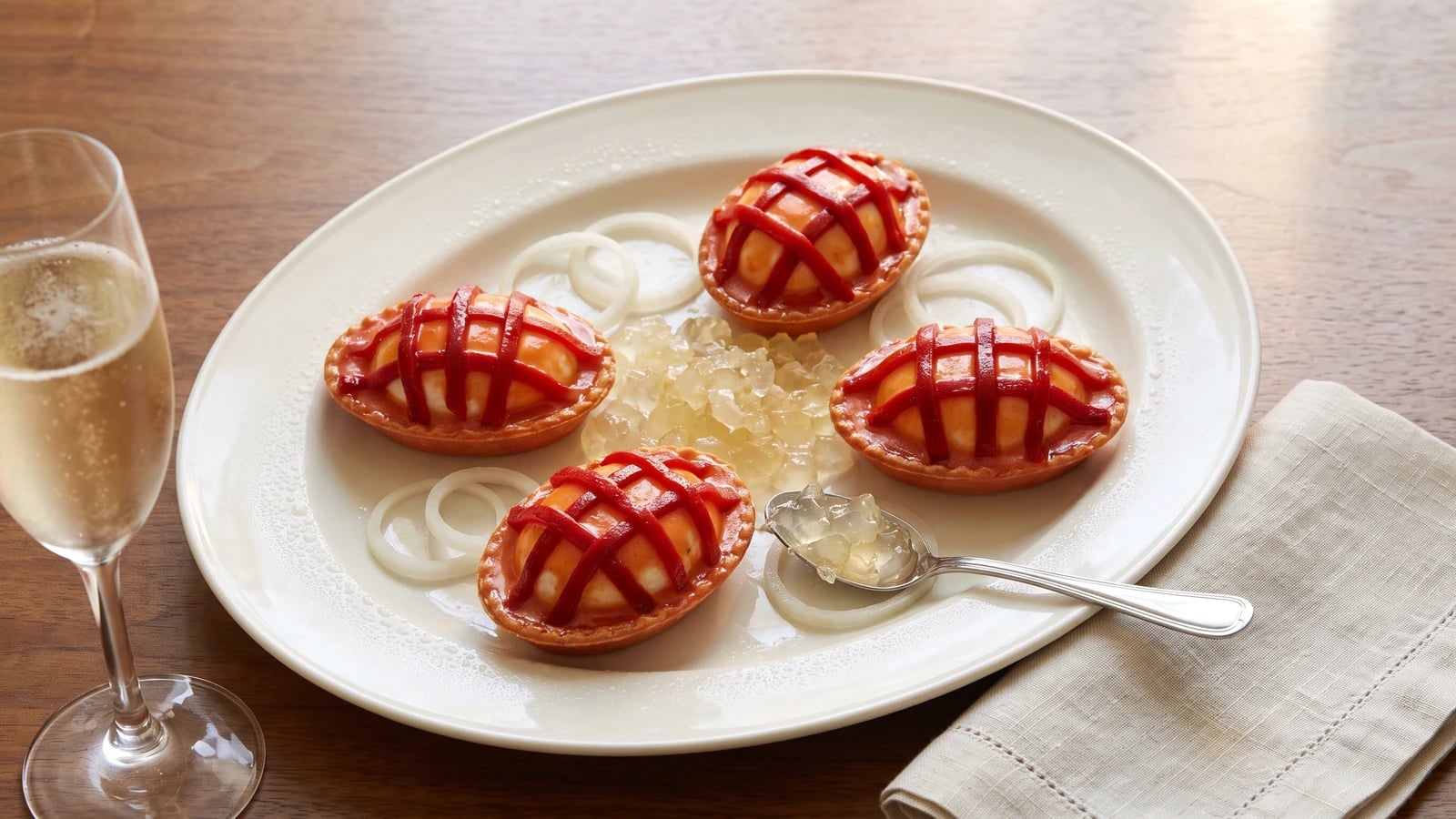
Cold poached eggs under a trembling tomato and Soubise glaze, striped with pimento and perched on tomato aspic tartlets, with linked onion rings circling the platter like edible lace.
Œufs froids à l’Andalouse (cold eggs in the Andalusian style) teaches the discipline of garde-manger, cold-kitchen work: aspic must hold a clean shape without eating like rubber. The one true thing to know before touching a pan is that temperature decides everything. A cold, perfectly dry egg and a cool but fluid glaze meet beautifully; change either one and the coating slides away or sets in ridges.
The original assumed a saucier, the sauce cook, with tomato purée, Soubise, and pale aspic already waiting, plus a stockpot never off the fire and oiled metal moulds set over ice. At home, good canned passata reduced with butter becomes the tomato foundation, a small onion-and-rice Soubise takes one saucepan, clear consommé strengthened with gelatin replaces the stock-room aspic, and four silicone moulds set in the refrigerator. The vats, ice beds, and brigade quantities were scaffolding. The exact tomato-to-Soubise ratio, the aspic, and that jaunty pimento lattice are the dish and must stay. One cook, one stove, one evening.
Finished properly, the platter is wonderfully assured: red tomato tartlets, ivory eggs beneath a glossy coral veil, fine pimento lattice, crystalline chopped jelly, and an onion chain around the edge. Dry the poached eggs until not one bead of water remains, then cool the glaze until it coats a spoon. That meeting is the step that decides the dish.
Œufs froids à l’Andalouse belongs to the French classical cold buffet, not to the domestic cooking of Andalusia. In French kitchen nomenclature, à l’Andalouse signals tomato and sweet pimento, sometimes accompanied by rice; here the tomato tartlet and pepper lattice carry the name. The dish traveled from the grand kitchen’s elaborate cold service to formal bourgeois tables, where moulded aspic let a cook prepare an impressive first course well before the guests arrived.
Quantity
½ cup (120 ml / 100 g)
drained
Quantity
1 tablespoon (15 ml / 14 g)
Quantity
1 tablespoon (15 ml / 15 g) Cooked Marinade for Venison (No. 168)
strained and fully chilled
Quantity
2 cups (480 ml / 480 g)
divided and well chilled
Quantity
4 teaspoons (20 ml / 12 g)
Quantity
3 cups (720 ml / 720 g)
Quantity
2 tablespoons (30 ml / 32 g)
Quantity
1 tablespoon (15 ml / 14 g)
Quantity
½ small onion (60 g)
thinly sliced
Quantity
2 teaspoons (10 ml / 9 g)
Quantity
2 teaspoons (10 ml / 8 g)
Quantity
¼ cup (60 ml / 60 g)
Quantity
1 tablespoon (15 ml / 15 g)
Quantity
1 teaspoon (5 ml / 6 g)
divided
Quantity
¼ teaspoon (1.25 ml / 0.6 g)
divided
Quantity
4
preferably pasteurized
Quantity
1½ quarts (1.4 L / 1.4 kg)
Quantity
2 tablespoons (30 ml / 30 g)
Quantity
1 teaspoon (5 ml / 4 g)
Quantity
1 small onion (100 g)
| Ingredient | Quantity |
|---|---|
| roasted red pimentosdrained | ½ cup (120 ml / 100 g) |
| extra-virgin olive oil | 1 tablespoon (15 ml / 14 g) |
| Cooked Marinade for Venisonstrained and fully chilled | 1 tablespoon (15 ml / 15 g) Cooked Marinade for Venison (No. 168) |
| clear chicken consommédivided and well chilled | 2 cups (480 ml / 480 g) |
| unflavoured powdered gelatin | 4 teaspoons (20 ml / 12 g) |
| good canned tomato passata | 3 cups (720 ml / 720 g) |
| tomato paste | 2 tablespoons (30 ml / 32 g) |
| unsalted butter for the tomato purée | 1 tablespoon (15 ml / 14 g) |
| white onion for the Soubisethinly sliced | ½ small onion (60 g) |
| unsalted butter for the Soubise | 2 teaspoons (10 ml / 9 g) |
| long-grain white rice | 2 teaspoons (10 ml / 8 g) |
| light chicken stock | ¼ cup (60 ml / 60 g) |
| heavy cream | 1 tablespoon (15 ml / 15 g) |
| fine sea saltdivided | 1 teaspoon (5 ml / 6 g) |
| ground white pepperdivided | ¼ teaspoon (1.25 ml / 0.6 g) |
| large eggspreferably pasteurized | 4 |
| water for poaching | 1½ quarts (1.4 L / 1.4 kg) |
| white wine vinegar | 2 tablespoons (30 ml / 30 g) |
| neutral oil for the moulds | 1 teaspoon (5 ml / 4 g) |
| white onion for the linked-ring garnish | 1 small onion (100 g) |
Lay the drained pimentos in a shallow dish and turn them in the olive oil and Cooked Marinade for Venison (No. 168). Cover and chill for 30 minutes. This cited marinade is a finished preparation, so reach for it cold and strained rather than rebuilding it here. Drain the pimentos thoroughly, blot away surface oil, and cut them into strips about 2 mm wide. Oily strips won't grip the glaze.
Pour ½ cup (120 ml) of the cold consommé into a bowl and sprinkle the gelatin evenly over it. Leave it for 5 minutes, until every grain is swollen. Warm the remaining 1½ cups (360 ml) of consommé just until hot, then whisk in the bloomed gelatin off the heat until completely dissolved. Do not boil it, which weakens the set and dulls the flavour. Pour 1 cup (240 ml) into a shallow dish and chill until firm for the chopped white jelly. Keep the remaining 1 cup (240 ml) cool but liquid. If it sets before you need it, warm the bowl gently over hot water. Ça se rattrape.
Melt the butter in a wide saucepan over medium-low heat. Add the tomato paste and cook for 1 minute, stirring until it darkens slightly, then add the passata, ¾ teaspoon of the salt, and half the white pepper. Simmer steadily, stirring more often as it thickens, until reduced to exactly 1¾ cups (420 ml). A spoon drawn across the pan should leave a path that closes slowly. If you reduce too far, loosen it with consommé one tablespoon at a time; if it still runs like soup, keep cooking. Pass the purée through a fine sieve and cool it completely.
Melt the butter in the smallest saucepan you own and add the sliced onion with the remaining salt and white pepper. Cover and cook over very low heat for 8 minutes, stirring once or twice, until the onion is tender and translucent without a trace of browning. Add the rice and chicken stock, cover again, and cook at the barest simmer for about 18 minutes, until the rice collapses under a spoon. Add the cream, blend to a smooth purée, and press it through a fine sieve. Measure ¼ cup (60 ml). If it is too stiff to pass cleanly, loosen it with a teaspoon of stock. Soubise should taste of sweet onion rounded by cream, not of browned onion.
Bring the water and vinegar to a bare tremble in a wide pan. Crack each egg into a small cup, slide it into the water, and poach without crowding for 3½ to 4 minutes, until the whites are fully set and the yolks feel softly resilient. Transfer the eggs to ice water, then trim away ragged strands of white with a small knife. Drain them on a folded towel, blot the tops gently, and chill uncovered for at least 20 minutes. The eggs must be cold and completely dry. Water left on the surface sends the glaze straight to the tray.
Measure ¾ cup (180 ml) of the cold tomato purée into a bowl and whisk in the ¼ cup (60 ml) of Soubise. This preserves the book’s proportion of one full part Soubise to three parts tomato. Whisk in ½ cup (120 ml) of the liquid aspic, exactly half the volume of the combined sauce. Let the glaze cool to about 24 to 27°C (75 to 80°F), when it coats a spoon but still pours smoothly. Set the eggs on a rack over a tray and spoon the glaze over each until fully covered. If it slides off, stop: blot the eggs again and chill the glaze for 5 minutes before recoating. While the surface is tacky, lay three pimento strips diagonally across each egg, then cross them with three more strips to form a lattice. Chill until set.
Brush four ⅓-cup (80 ml) oval silicone tartlet moulds very lightly with neutral oil. Whisk the remaining 1 cup (240 ml) tomato purée with the remaining ½ cup (120 ml) liquid aspic, using the same two-parts-tomato to one-part-aspic proportion for a clean but tender set. Divide the mixture among the moulds and smooth the tops. Chill for at least 2 hours. If the mixture begins setting in the bowl, rest it briefly over warm water and whisk until fluid again. Do not thin it with water.
Slice the garnish onion crosswise into rings about 1.5 mm thick. Separate the best intact rings, soak them in ice water for 10 minutes to crisp them and temper the raw bite, then dry them thoroughly. Slit each ring once, thread it through the preceding ring, and tuck the cut ends together to make a loose chain long enough to encircle the tartlets.
Chill an oval serving platter. Turn out the tomato tartlets and arrange them in a circle; silicone should release with gentle pressure, but a stubborn mould can be wrapped in a warm towel for two seconds. If a tartlet softens, return it to the refrigerator for 10 minutes before moving it. Set one glazed egg on each tartlet. Arrange the onion chain around the circle, chop the reserved firm aspic into small crystalline pieces, and mound it in the centre. Keep the platter cold until serving. À table!
1 serving (about 370g)
Culinary guides, cultural storytelling, and the editorial depth that makes cooking meaningful.
Discover Culinary ExplorerChef Juliette
A creamy omelette aux fines herbes closes around smoked-salmon-wrapped herring milts, gently poached in butter. Have the filling ready, then roll the eggs while they still shine.
Chef Juliette
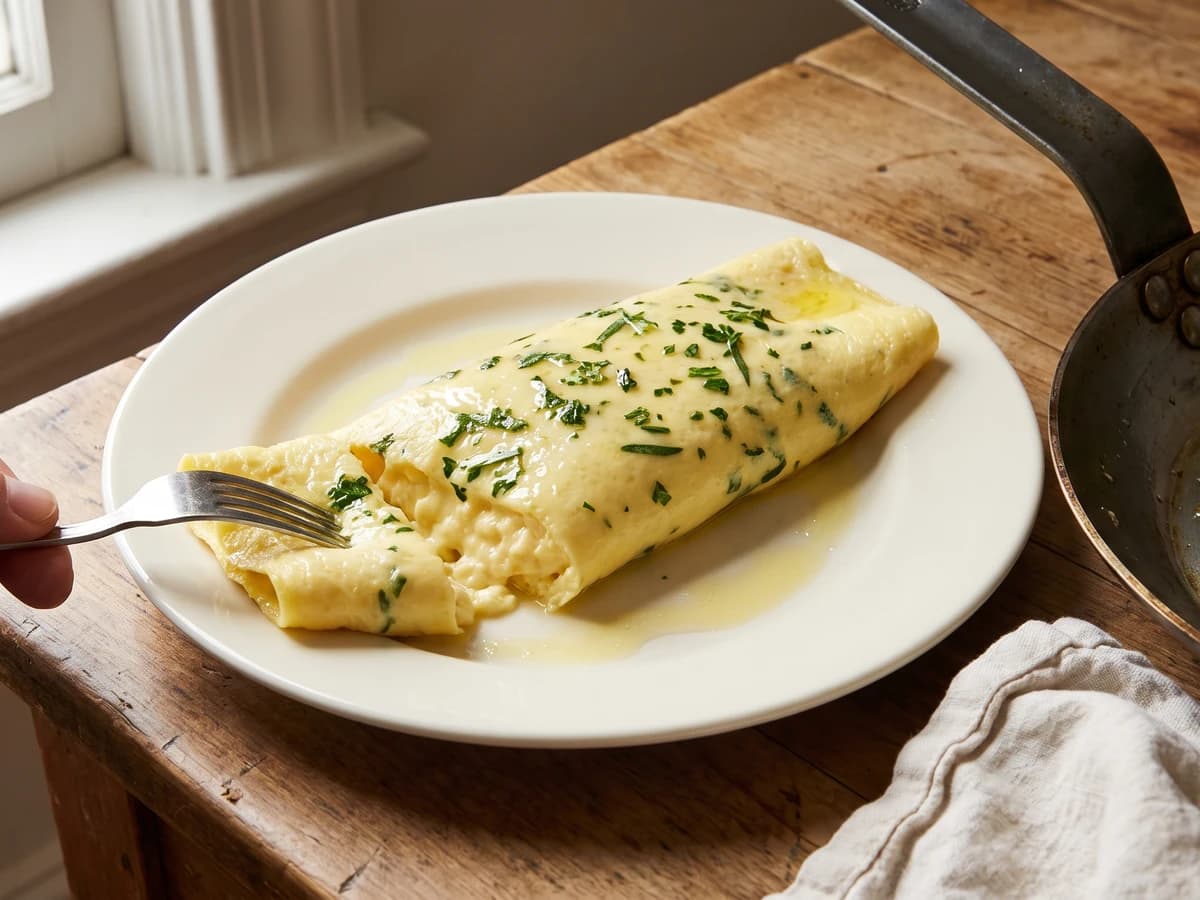
Four tender herbs, hot butter, and two eggs per pan: this rolled omelette teaches the quick hand and good judgment that keep the outside pale and the center creamy.
Chef Juliette
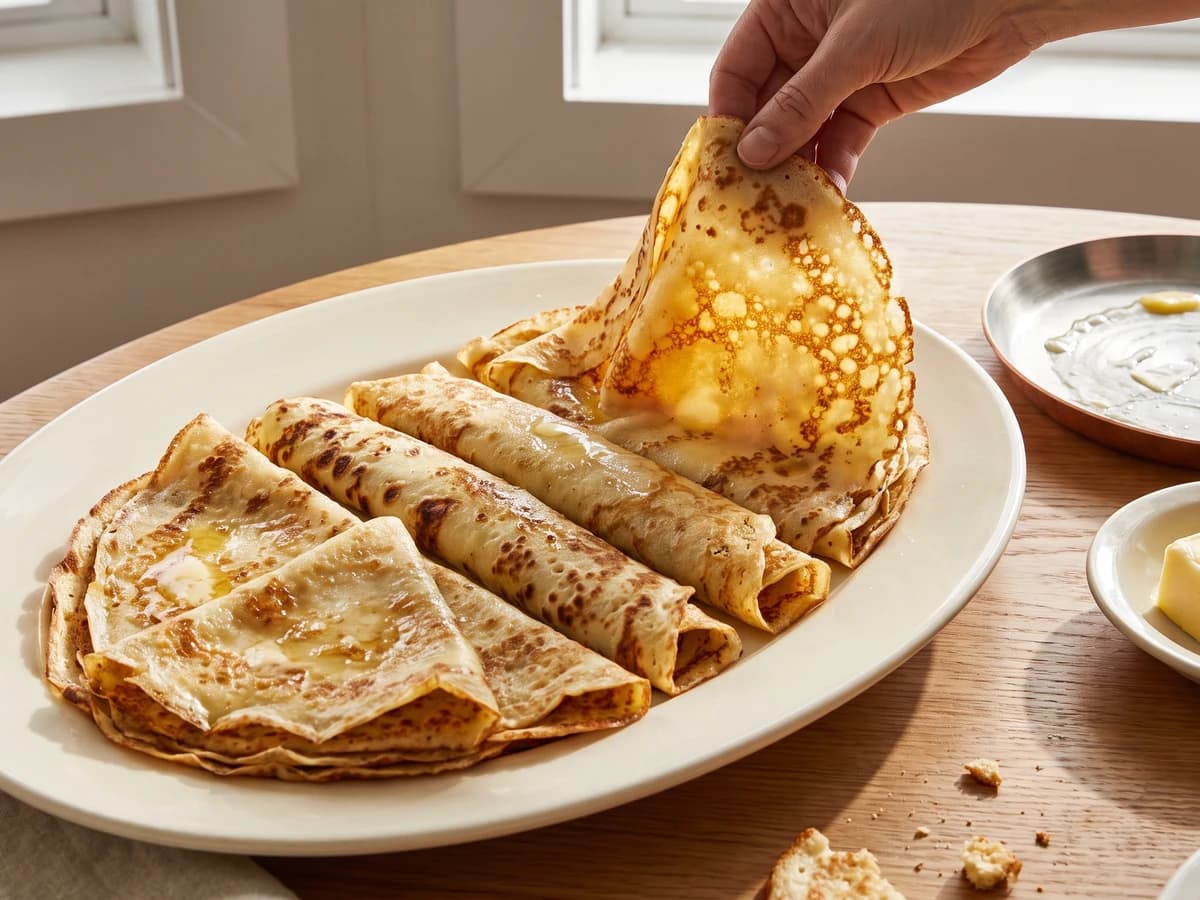
Four batters, one lesson: let the flour drink deeply before cooking, then spread the batter thinly in butter for crêpes and pannequets that bend without becoming tough.
Chef Juliette
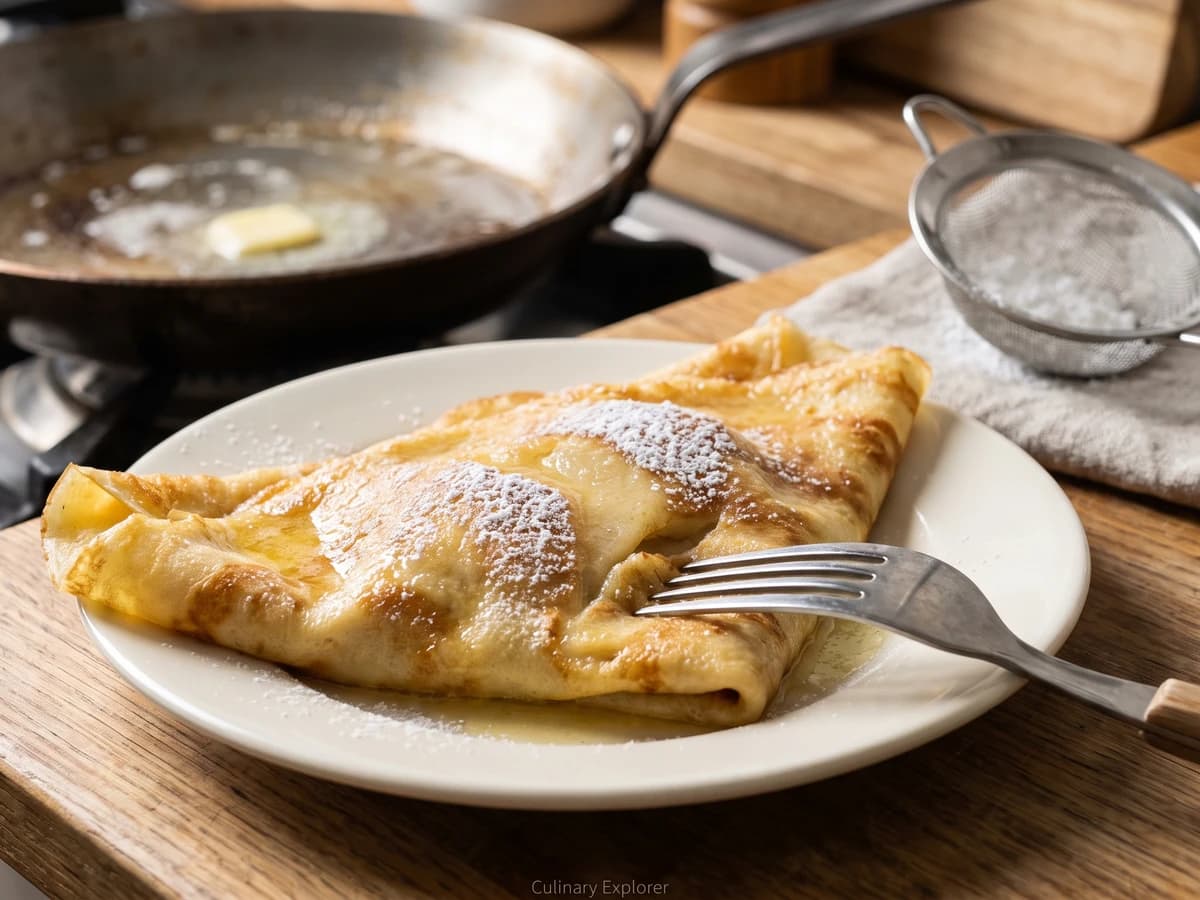
Crêpes au Couvent trap ripe Williams pear dice between two thin pours of sweet batter, then turn in one clean toss and reach the table butter-gold, powdered, and burning hot.