Chef Juliette
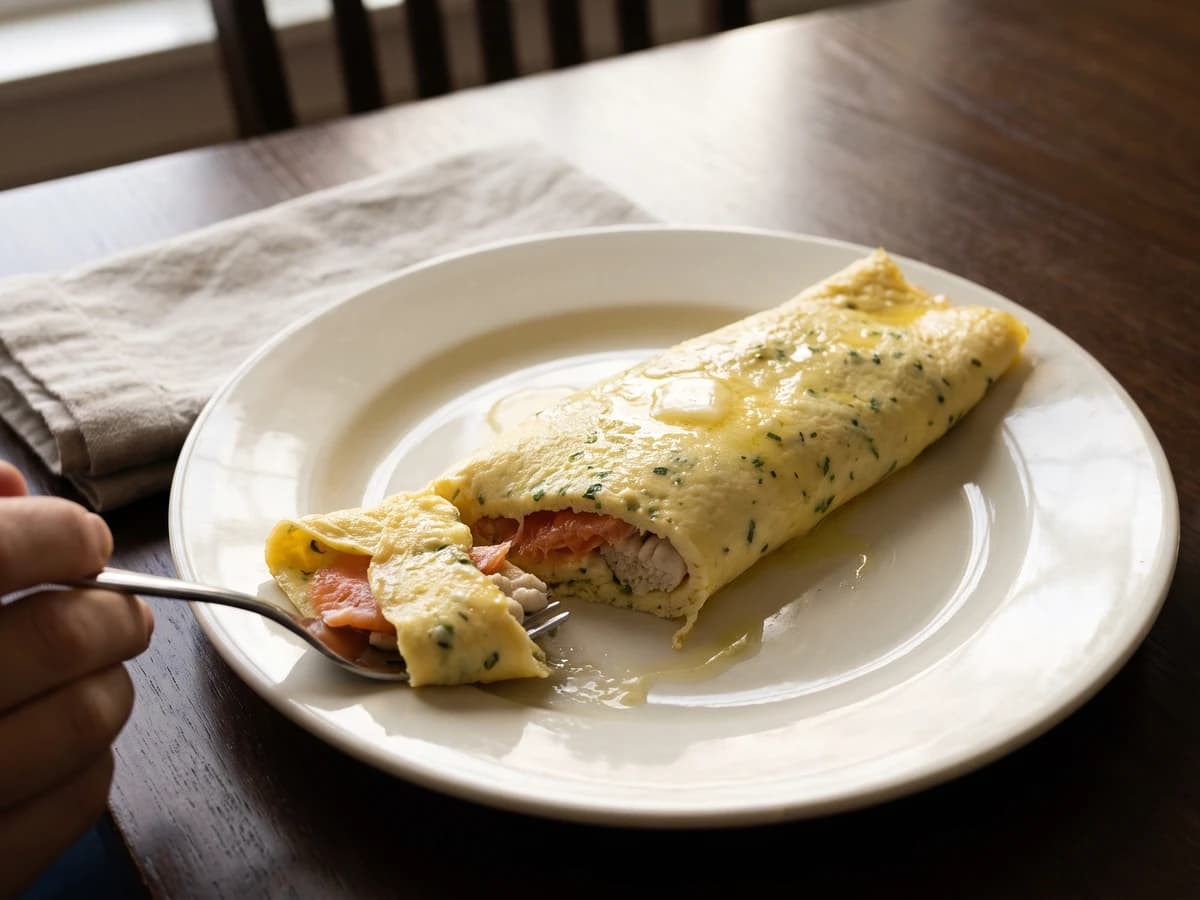
Omelette à l’Écossaise
A creamy omelette aux fines herbes closes around smoked-salmon-wrapped herring milts, gently poached in butter. Have the filling ready, then roll the eggs while they still shine.
A cooking platform built around craft, culture, and the stories behind what we eat.
Created by Chef Juliette
Based on No. 514, Omelet with Asparagus-tops, from Le Guide Culinaire (1907) by Auguste Escoffier
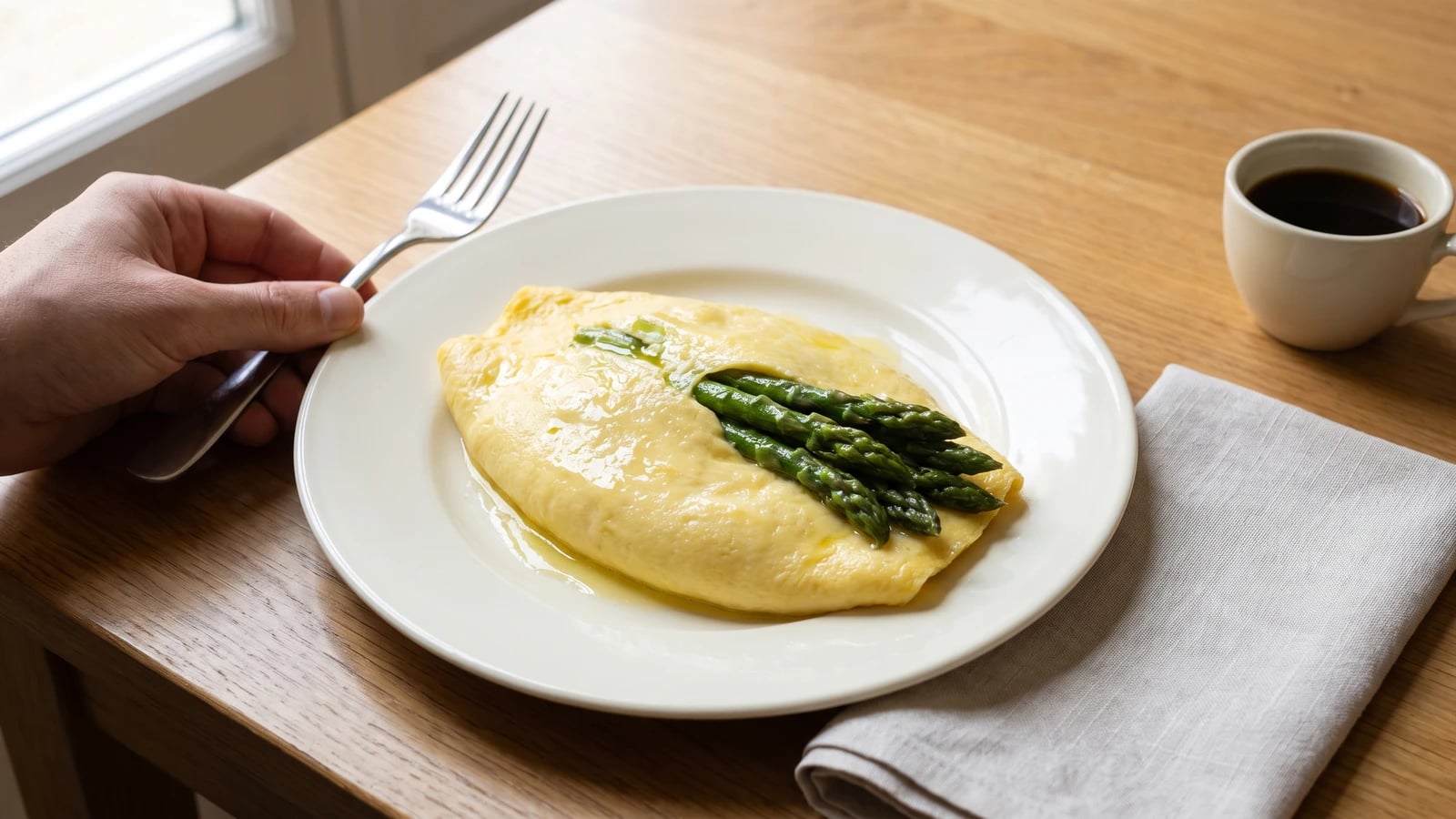
Omelette aux pointes d'asperges teaches the quiet discipline of the French omelet: tender curds, no browning, butter-stewed tips folded within, and a green bundle laid proudly in the opening.
Omelette aux pointes d'asperges (French omelet with asparagus tips) teaches controlled speed. The one true thing to know before touching the pan is that the asparagus, butter, plates, and diners must all be ready. Once the eggs begin to set, the dish won't wait while you search for anything.
The original entry assumes a vegetable station with blanched asparagus ready for service and an omelet cook turning out each portion to order. It needs no saucier on staff, stockpot, or salamander. At home, prepare Blanchings (No. 273) once, stew all the tips gently in butter, then cook four individual omelets in quick succession using the same pan. Holding trays of garnish are brigade scaffolding and can go; the two-stage treatment of the asparagus, one and one-half tablespoonfuls folded into each omelet and a whole-tip bundle displayed on top, is the dish and must stay.
The finished omelette should be pale butter-yellow, tender enough to yield under a fork, and green at its opened crown. Pull each omelet from the heat while its surface still shines with barely set egg. That is the step that decides the dish.
Omelette aux pointes d'asperges belongs to the French classical dining room rather than to one provincial larder, joining the spring asparagus of bourgeois tables to the disciplined omelet work of grand kitchens. Folding some tips inside and displaying others in the slit above was practical service language: the garnish announced itself before the first cut, and generations of home cooks could reproduce the same idea with nothing grander than a well-kept pan.
Quantity
6 tablespoons (90 ml / 55 g), prepared by Blanchings (No. 273)
cut into 1 cm pieces
Quantity
20 tips (about 1¼ cups / 300 ml / 125 g), prepared by Blanchings (No. 273)
left whole
Quantity
2 tablespoons (30 ml / 28 g)
Quantity
12
Quantity
4 tablespoons (60 ml / 56 g)
divided
Quantity
¾ teaspoon (3.75 ml / 4.5 g)
Quantity
¼ teaspoon (1.25 ml / 0.6 g)
| Ingredient | Quantity |
|---|---|
| asparagus tips for the fillingcut into 1 cm pieces | 6 tablespoons (90 ml / 55 g), prepared by Blanchings (No. 273) |
| slender asparagus tips for the top bundlesleft whole | 20 tips (about 1¼ cups / 300 ml / 125 g), prepared by Blanchings (No. 273) |
| unsalted butter for stewing the asparagus | 2 tablespoons (30 ml / 28 g) |
| large eggs | 12 |
| unsalted butter for cooking the omeletsdivided | 4 tablespoons (60 ml / 56 g) |
| fine sea salt | ¾ teaspoon (3.75 ml / 4.5 g) |
| ground white pepper | ¼ teaspoon (1.25 ml / 0.6 g) |
Set four plates somewhere gently warm, and have your diners ready. Reach for both portions of asparagus tips already prepared by Blanchings (No. 273), drain them thoroughly, and blot every surface dry. Divide the whole tips into four bundles of five, and divide the cut tips into four portions of exactly 1½ tablespoons (22.5 ml / about 14 g) each. This preparation is what lets the omelet move at its proper pace.
Melt the 2 tablespoons of butter in the omelet pan over low heat. Add both the cut and whole asparagus tips, cover, and let them étuver, stew gently in their own moisture and butter, for 2 to 3 minutes. Turn them once, keeping them green and free of browning. If water gathers in the pan, lift out the tips and let the liquid cook away before returning them; wet asparagus would loosen the eggs. Transfer the tips and their butter to a warm plate, preserving the four filling portions and four whole-tip bundles, then wipe the pan clean.
Crack 3 eggs into a bowl and season with one-quarter of the salt and white pepper. Beat with a fork only until the whites and yolks become one even yellow mixture, without whipping in a cap of foam. Prepare each three-egg portion immediately before cooking it, because salted beaten eggs left standing lose some of their clean, tender body.
Set the clean 20 cm pan over medium heat and melt 1 tablespoon of the cooking butter until it foams without browning. Pour in the eggs, shake the pan briskly, and stir with the fork or a flexible spatula for 20 to 30 seconds, drawing the soft curds toward the centre while uncooked egg runs beneath them. Stop stirring when the base is set but the surface remains moist. If the curds begin setting in firm slabs, lift the pan completely off the burner and stir through the remaining loose egg. Ça se rattrape while the omelet is still pale and moist.
Scatter one measured 1½-tablespoon portion of butter-stewed cut asparagus across the centre. Tilt the pan away from you, fold the near third inward, then roll the omelet toward the far rim so it forms a plump oval. Don't wait for the upper surface to dry; residual heat will finish it, while another minute in the pan will toughen it.
Turn the omelet seam-side down onto a warm plate. With the tip of a sharp knife, make a shallow lengthwise slit along the top without cutting through the bottom, then ease the opening apart and lay one bundle of five whole butter-stewed asparagus tips in the interspace. Repeat with the remaining eggs, butter, filling, and bundles, serving each omelet as soon as it is finished. Cooking well is not cooking fancy. À table!
1 serving (about 195g)
Culinary guides, cultural storytelling, and the editorial depth that makes cooking meaningful.
Discover Culinary ExplorerChef Juliette
A creamy omelette aux fines herbes closes around smoked-salmon-wrapped herring milts, gently poached in butter. Have the filling ready, then roll the eggs while they still shine.
Chef Juliette
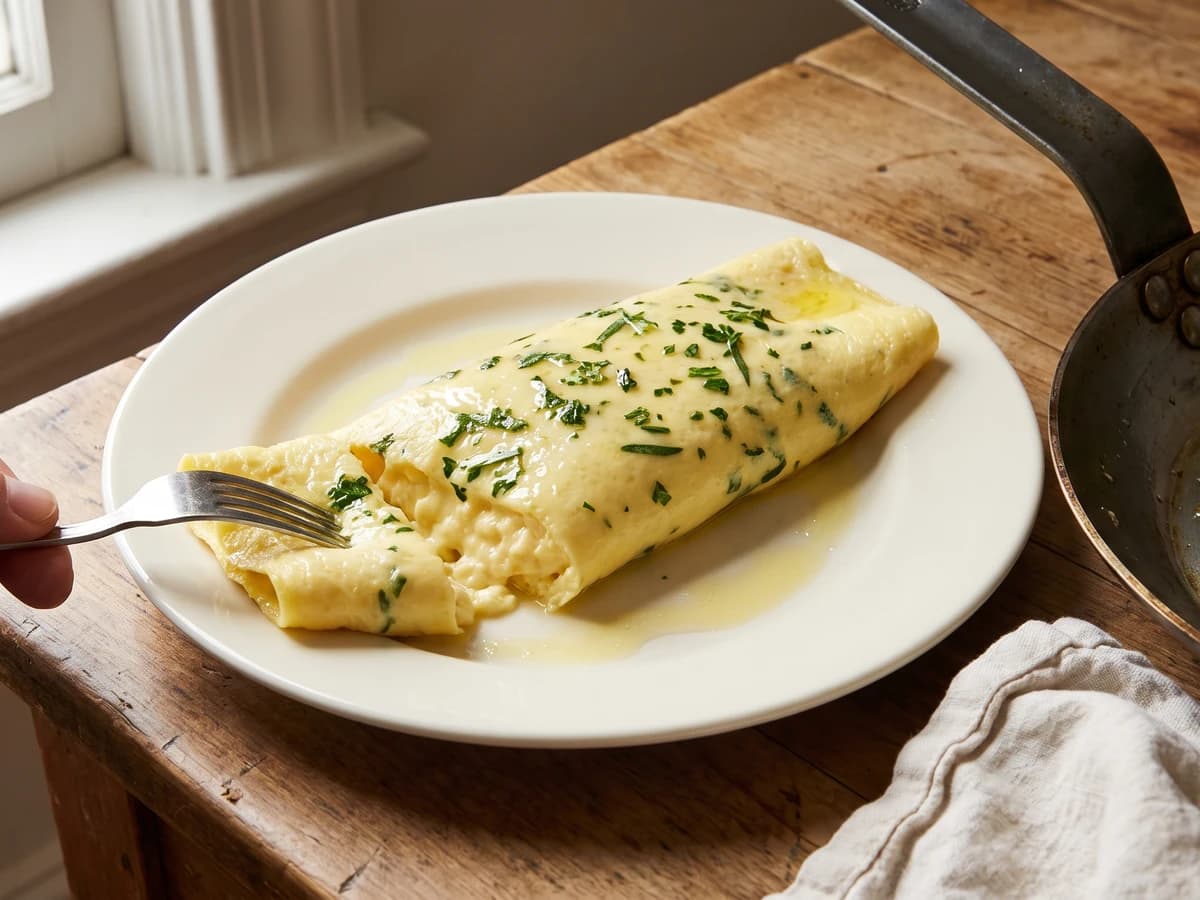
Four tender herbs, hot butter, and two eggs per pan: this rolled omelette teaches the quick hand and good judgment that keep the outside pale and the center creamy.
Chef Juliette
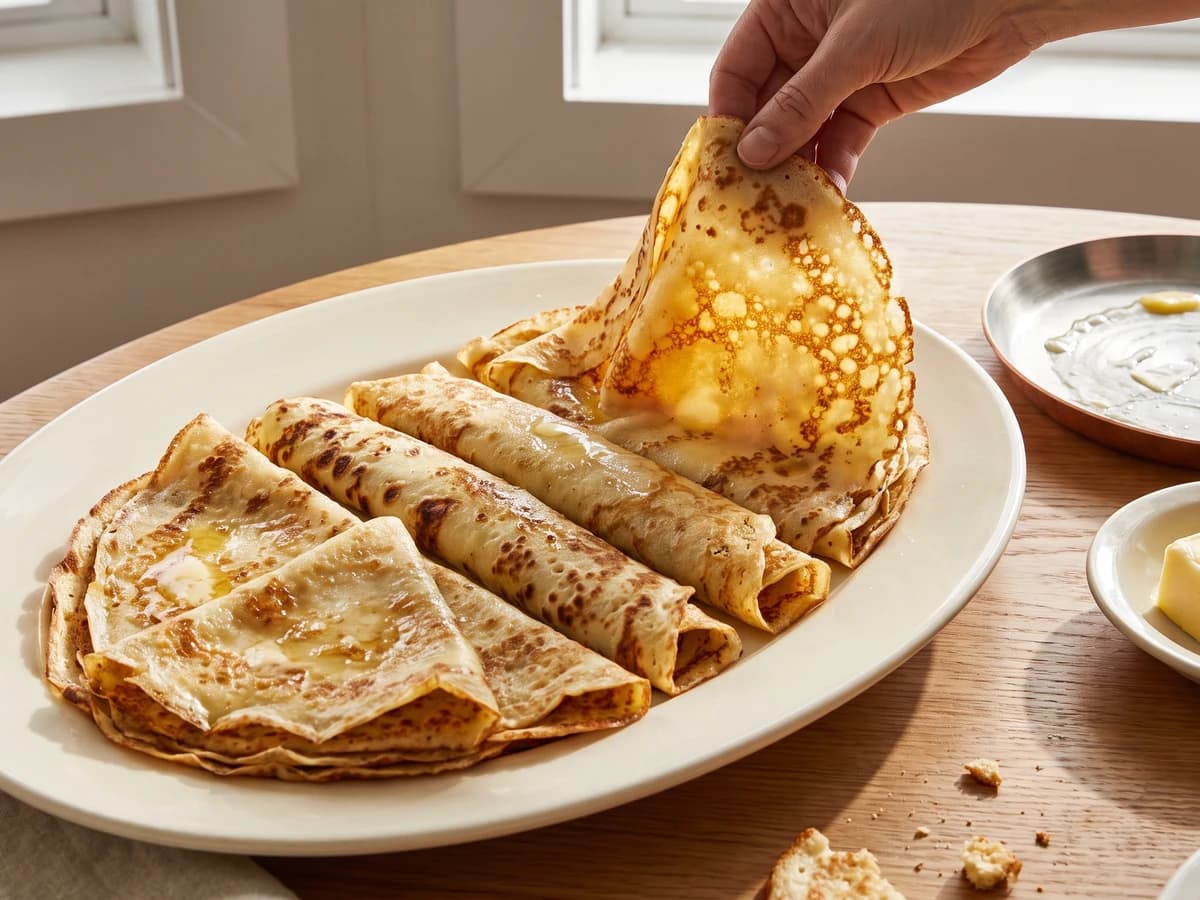
Four batters, one lesson: let the flour drink deeply before cooking, then spread the batter thinly in butter for crêpes and pannequets that bend without becoming tough.
Chef Juliette
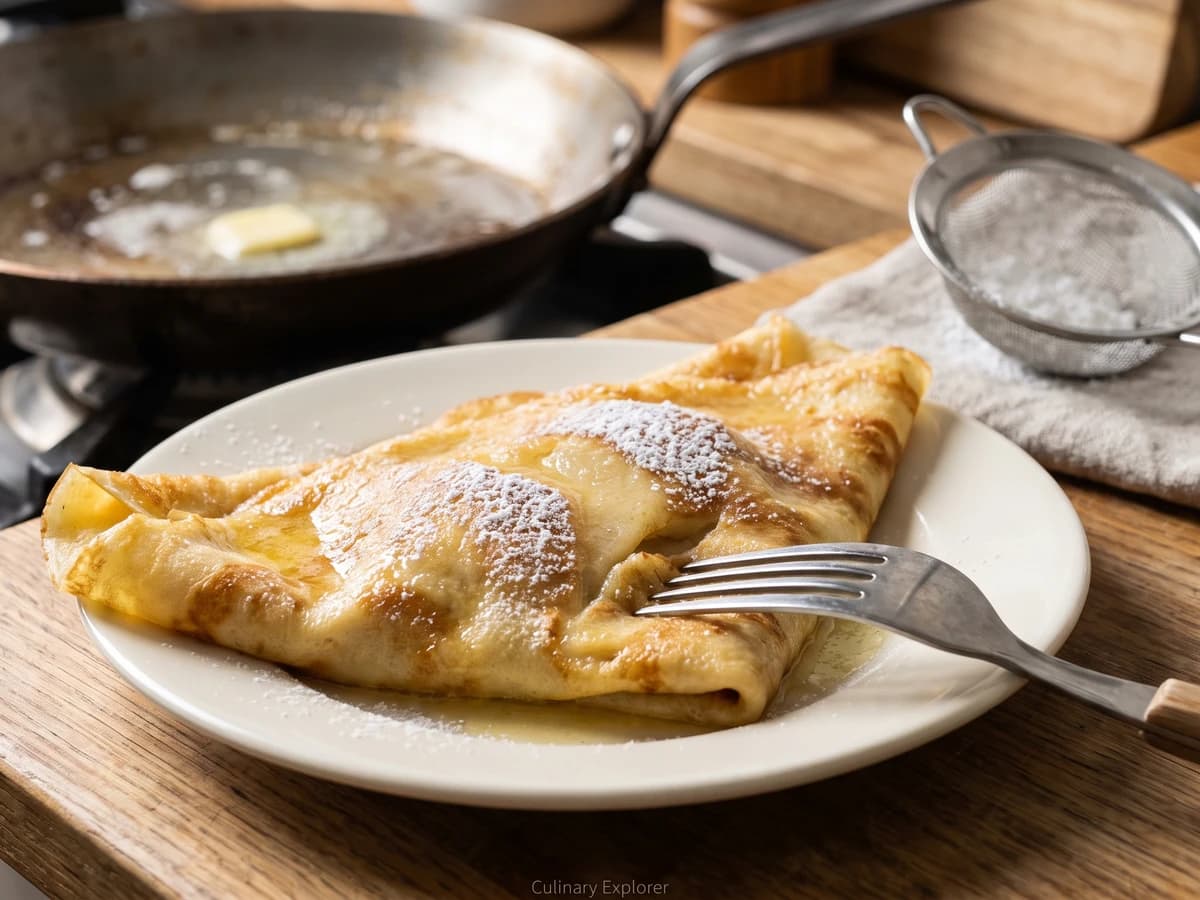
Crêpes au Couvent trap ripe Williams pear dice between two thin pours of sweet batter, then turn in one clean toss and reach the table butter-gold, powdered, and burning hot.