Chef Juliette
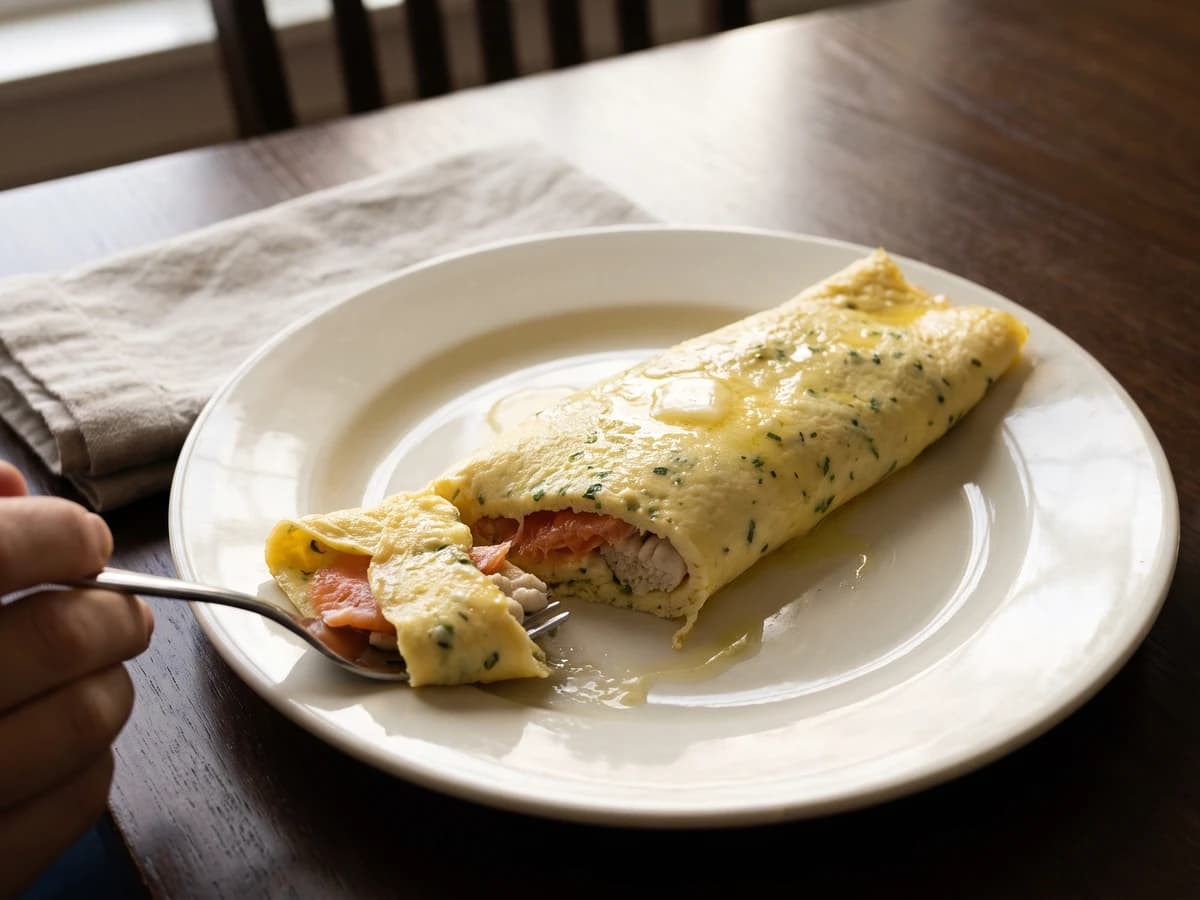
Omelette à l’Écossaise
A creamy omelette aux fines herbes closes around smoked-salmon-wrapped herring milts, gently poached in butter. Have the filling ready, then roll the eggs while they still shine.
A cooking platform built around craft, culture, and the stories behind what we eat.
Created by Chef Juliette
Based on No. 491, Fried Poached Eggs à la Villeroy, from Le Guide Culinaire (1907) by Auguste Escoffier
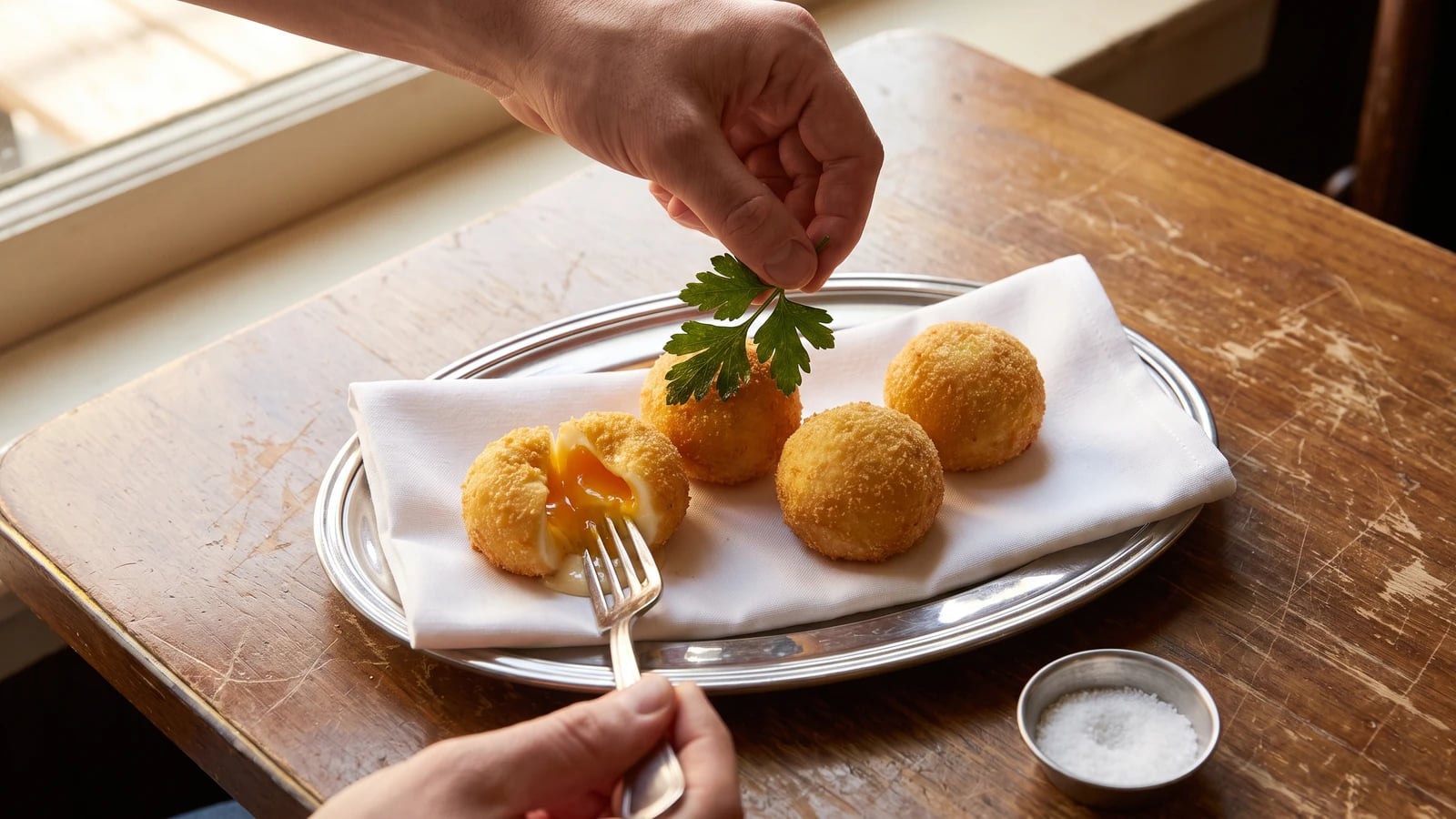
A soft poached egg beneath set Villeroy and fine crumbs, fried to a burnished shell and served with crisp parsley: classical timing brought within reach of one home cook.
Œufs pochés à la Villeroy (fried poached eggs with Villeroy coating) teach one fierce little principle: a tender egg can survive deep frying only when every outer layer is cold, set, and complete. The contrast is the dish, a crisp golden shell, a rich coating beneath it, and an egg still tender at the center.
The original kitchen assumed a saucier on staff, stock never off the fire, prepared eggs waiting cold, and a dedicated bath of frying fat held ready for service. At home, the Fried Poached Eggs (No. 486) are prepared through breading earlier in the day, then fried in a compact heavy pan just before dinner. The brigade's constant sauce work and enormous fat pot were scaffolding. The poaching, the set Villeroy coating, the fine crumbs, and the last-minute frying are the dish, so all four remain. One cook, one stove, one evening.
Keep the eggs cold until the fat is ready. That is the step that decides everything: a firm coating enters the oil intact, while a warm one slips, leaks, and leaves its supper behind in the pan. Once the shell is secure, the frying is brief, decisive, and wonderfully golden.
Œufs pochés à la Villeroy belong to the Parisian grand-kitchen repertoire, where Villeroy described a thick coating allowed to set around delicate food before breading and frying, not merely a sauce spooned over it. The method traveled readily to bourgeois dining rooms because its careful work could be completed before the guests arrived, leaving only the final frying for service. The apparent contradiction is the point: the egg is poached first, then fried just long enough to bronze its protective shell.
Quantity
4 eggs prepared as Fried Poached Eggs (No. 486)
carried through coating and breading, then chilled until firm
Quantity
6 cups (1.4 L / 1.28 kg)
for deep-frying
Quantity
1 loosely packed cup (240 ml / 15 g)
washed and dried completely
Quantity
1/2 teaspoon (2.5 ml / 3 g)
| Ingredient | Quantity |
|---|---|
| Fried Poached Eggs preparationcarried through coating and breading, then chilled until firm | 4 eggs prepared as Fried Poached Eggs (No. 486) |
| refined sunflower or peanut oilfor deep-frying | 6 cups (1.4 L / 1.28 kg) |
| flat-leaf parsley sprigswashed and dried completely | 1 loosely packed cup (240 ml / 15 g) |
| fine salt | 1/2 teaspoon (2.5 ml / 3 g) |
Line an oval serving platter with a clean white napkin, as the classical service requires, and set a wire rack over a tray beside the stove for draining. Put the salt within reach. Once the eggs leave the fat, there should be no search for equipment and no delay at the table.
Pour the oil into a heavy 4-quart saucepan, leaving the pan comfortably less than half full. Heat it steadily to 355°F (180°C). A thermometer gives the calmest answer; without one, a loose crumb should race to the surface at once, surrounded by lively bubbles, without blackening. If the oil passes 375°F (190°C), take the pan off the heat and let it fall back before proceeding.
When the oil reaches about 350°F (175°C), lower the completely dry parsley in with a spider, working in two small batches and standing back from the initial sputter. Fry for 10 to 20 seconds, just until the leaves become crisp and deep green, then lift them to the rack and salt lightly. Skim away any loose leaves and return the oil to 355°F (180°C).
Bring out the Fried Poached Eggs (No. 486) only when the oil is nearly ready. Their coating should feel firm, dry, and securely crumbed. If a seam has opened, press the cold coating gently back into place, pack a few loose crumbs from the tray over it, and chill the egg for another 10 minutes. Ça se rattrape. Never send a warm or visibly split coating into the fat.
Lower two eggs into the 355°F (180°C) oil with the spider. Fry for 3 to 4 minutes, turning them gently for even color, until the crumbs are deep butter-gold and crisp. Lift them to the rack and let the oil regain its heat before frying the remaining pair. If the crust darkens during the first minute, lift the eggs out and lower the heat; once the oil returns to 340°F (170°C), finish them gently. A fierce pan burns the breading before the center is warm.
Drain each egg on the rack for about 30 seconds and salt it lightly while the crust is still glistening. Arrange the four eggs in a circle on the napkin-lined platter and gather the fried parsley into a generous tuft at the center. Carry them straight to the table while the shells remain crisp and the centers tender. À table!
1 serving (about 150g)
Culinary guides, cultural storytelling, and the editorial depth that makes cooking meaningful.
Discover Culinary ExplorerChef Juliette
A creamy omelette aux fines herbes closes around smoked-salmon-wrapped herring milts, gently poached in butter. Have the filling ready, then roll the eggs while they still shine.
Chef Juliette
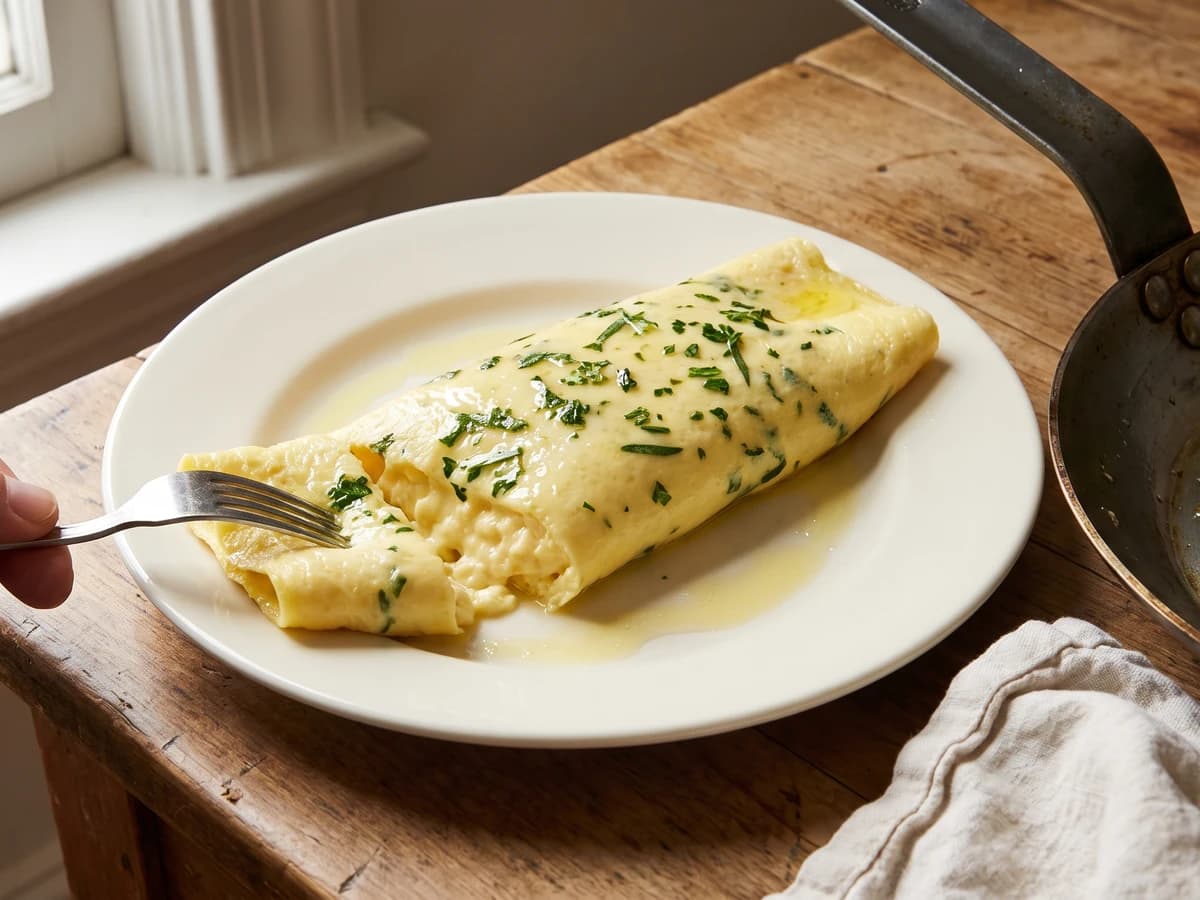
Four tender herbs, hot butter, and two eggs per pan: this rolled omelette teaches the quick hand and good judgment that keep the outside pale and the center creamy.
Chef Juliette
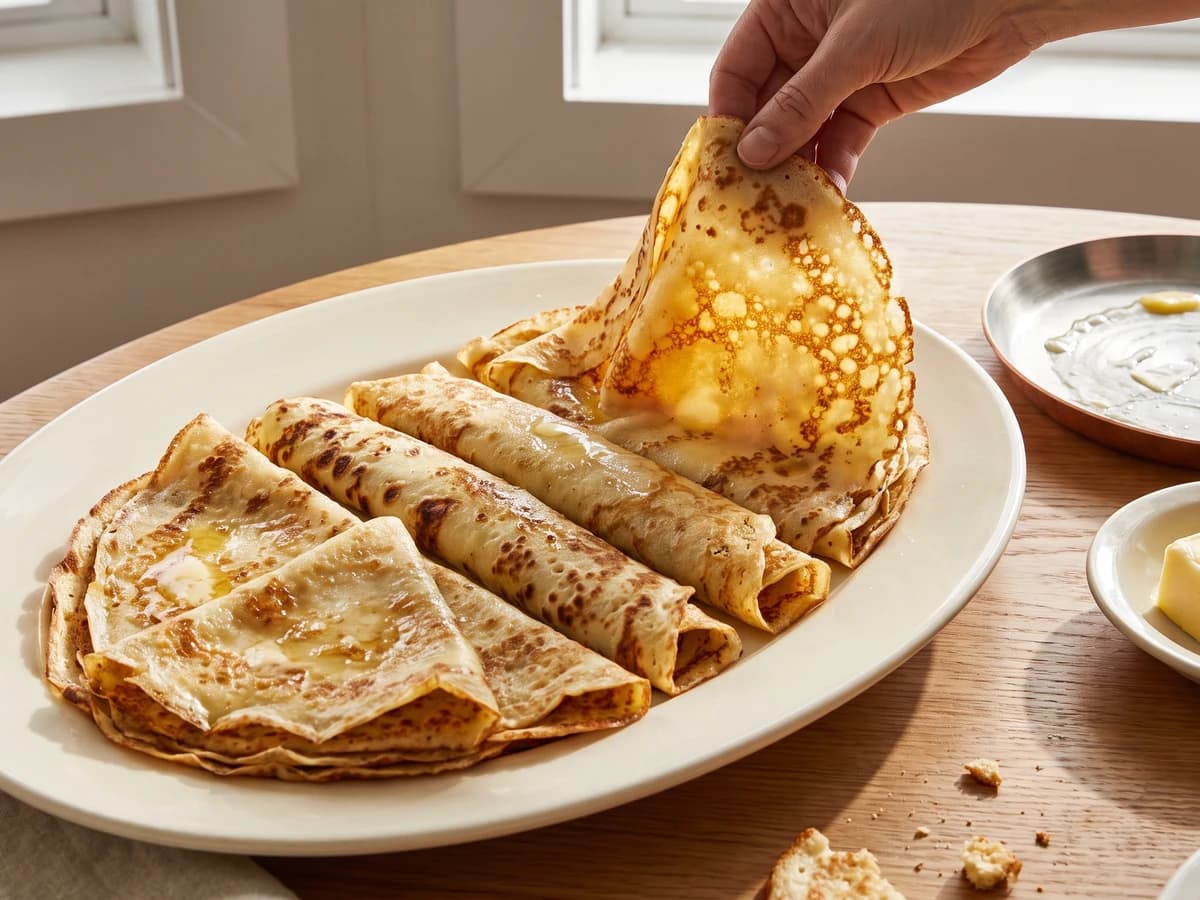
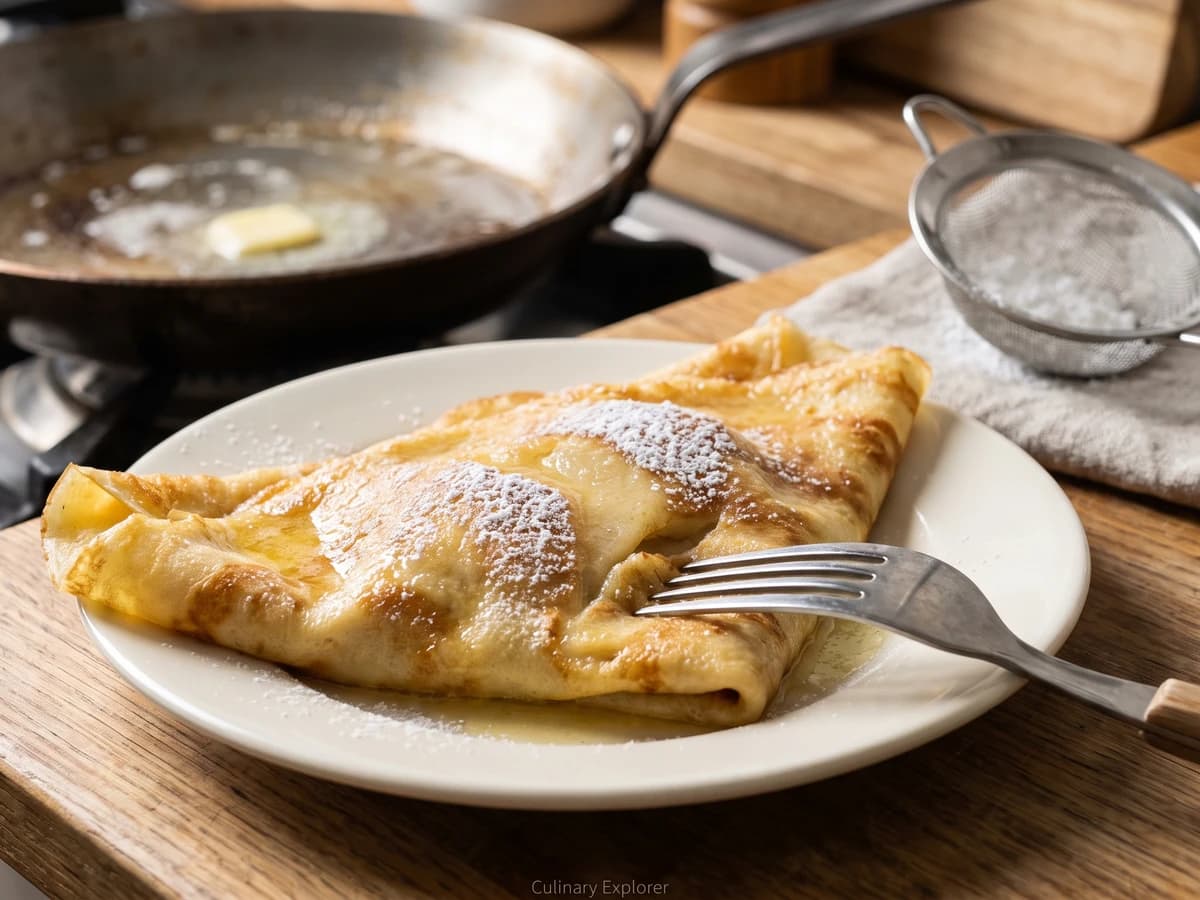
Four batters, one lesson: let the flour drink deeply before cooking, then spread the batter thinly in butter for crêpes and pannequets that bend without becoming tough.
Chef Juliette
Crêpes au Couvent trap ripe Williams pear dice between two thin pours of sweet batter, then turn in one clean toss and reach the table butter-gold, powdered, and burning hot.