Chef Juliette
Omelette à l’Écossaise
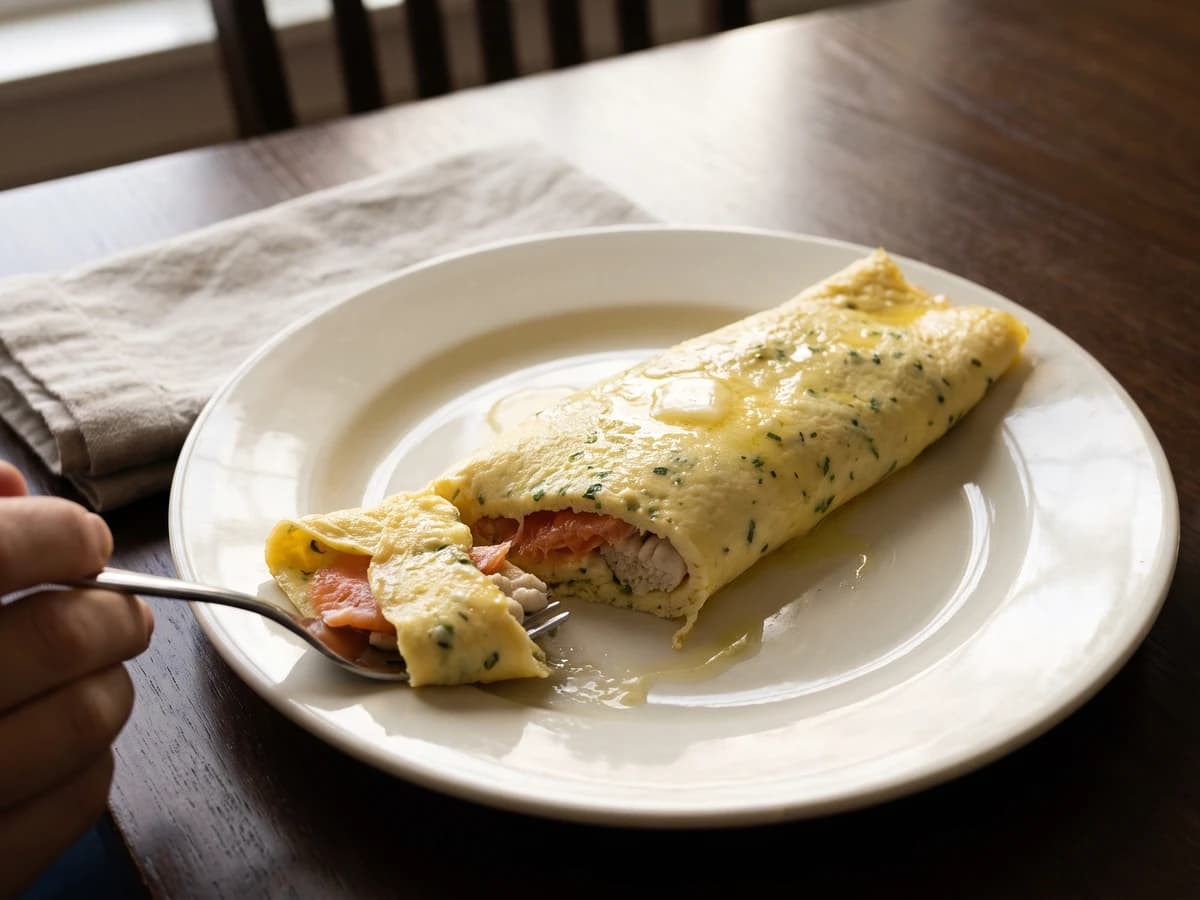
A creamy omelette aux fines herbes closes around smoked-salmon-wrapped herring milts, gently poached in butter. Have the filling ready, then roll the eggs while they still shine.
A cooking platform built around craft, culture, and the stories behind what we eat.
Created by Chef Juliette
Based on No. 480, Scrambled Eggs, Rothschild, from Le Guide Culinaire (1907) by Auguste Escoffier
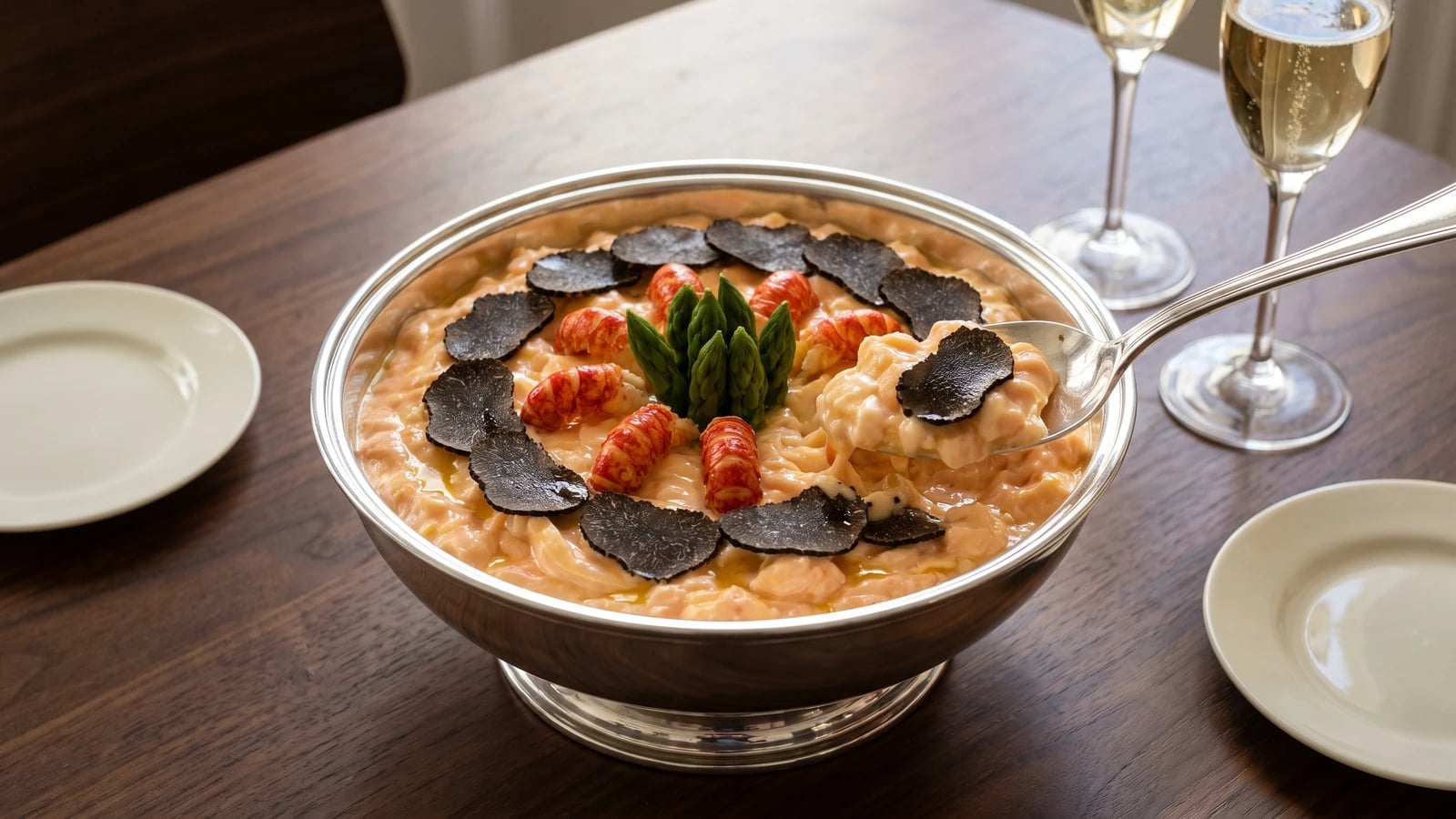
Six eggs scrambled to a soft cream with pounded crayfish shells, then ringed with asparagus, sweet tails, and black truffle: a grand Parisian composition made for one attentive home stove.
Œufs brouillés Rothschild (soft scrambled eggs with crayfish cream, asparagus, and truffle) teaches the discipline that decides every French scramble: moderate heat and constant movement make a custard, while impatience makes dry curds. Here the foundation is crème d’écrevisses (crayfish cream), made by pounding the cooked shells with thick cream so their sweetness and coral colour pass into the eggs. The shells are doing real work, not merely decorating the plate.
The original entry assumed a saucier to pound six crayfish remains in a large mortar, a tamis (drum sieve) within reach, and asparagus, tails, and truffle already dressed for service. At home, a sturdy small mortar and a very fine sieve do the same work. The book’s six-egg formula is already right for four small first-course servings, so the proportions remain intact. The large tamis and brigade mise en place are scaffolding; the shell cream, soft scramble, and concentric garnish are the dish, and they stay. One cook, one stove, one evening.
The finished eggs should slump softly from the spoon, pale coral and glossy, with green asparagus at the centre, six red tails around it, and a dark truffle crown. Pull the pan while the eggs still look a shade too loose, because their own heat finishes the setting. That is the one true thing to know before touching the pan.
Œufs brouillés Rothschild belongs to the Parisian grand-kitchen register of named egg dishes, where a soft scramble became a composed first course through sauce and garnish. Its title points to the Rothschild dining table, while its method reveals the kitchen’s practical economy: the crayfish tails decorate the eggs, and the otherwise discarded shells are pounded with cream to season them. The asparagus bundle, circle of tails, and crown of black truffle preserve the precise service that carried the preparation from private dining rooms into the classical canon.
Quantity
6 (about 12 ounces / 340 g total), cooked and cooled in Mirepoix (No. 228)
tails separated; shells and clean head remains reserved
Quantity
2 tablespoons (30 ml / 30 g)
Quantity
6 (about 1¼ cups / 300 ml / 300 g without shells)
Quantity
12 (about 1 cup / 90 g)
trimmed to 3 inches
Quantity
2 cups (475 ml / 475 g)
for blanching
Quantity
1¼ teaspoons (6 ml / 7 g)
divided
Quantity
⅛ teaspoon (0.6 ml / 0.3 g)
Quantity
1 tablespoon (15 ml / 14 g)
Quantity
1 small truffle (about 1 ounce / 28 g)
brushed clean and sliced into 12 broad, paper-thin rounds
| Ingredient | Quantity |
|---|---|
| whole crayfishtails separated; shells and clean head remains reserved | 6 (about 12 ounces / 340 g total), cooked and cooled in Mirepoix (No. 228) |
| cold heavy cream | 2 tablespoons (30 ml / 30 g) |
| large eggs | 6 (about 1¼ cups / 300 ml / 300 g without shells) |
| medium asparagus tipstrimmed to 3 inches | 12 (about 1 cup / 90 g) |
| waterfor blanching | 2 cups (475 ml / 475 g) |
| fine sea saltdivided | 1¼ teaspoons (6 ml / 7 g) |
| ground white pepper | ⅛ teaspoon (0.6 ml / 0.3 g) |
| unsalted butter | 1 tablespoon (15 ml / 14 g) |
| fresh black trufflebrushed clean and sliced into 12 broad, paper-thin rounds | 1 small truffle (about 1 ounce / 28 g) |
Take the six crayfish cooked in Mirepoix (No. 228). Twist off and peel the tails, remove each dark intestinal thread, and cover the tails so they remain supple. Remove the feathery gills and any gritty stomach sac from the heads, then reserve the clean shells, claws, head shells, and any coral. These remains carry the flavour that distinguishes Rothschild from eggs merely decorated with shellfish.
Bring the water and 1 teaspoon of the salt to a lively simmer. Blanch the asparagus tips for 1 to 2 minutes, just until vivid green and tender at the cut end, then lift them onto a clean towel and dry them well. Keep the asparagus and crayfish tails covered in a warm place, never over direct heat, and slice the truffle as broadly and thinly as possible. Have every piece ready before the eggs begin, because œufs brouillés wait for nobody.
Snip the reserved shells into small pieces with sturdy kitchen shears. Pound them in a mortar until very fine, then add the cold cream a teaspoon at a time, pounding thoroughly after each addition until the mixture becomes a thick coral paste. Rub the paste firmly through a very fine sieve, scraping the smooth cream from its underside; pass it through a second time if you feel any grit. A shell fragment on the tongue ruins all the saucier’s work, so accept nothing but silk.
Crack the eggs into a bowl and beat with a fork just until yolks and whites are completely united, without whipping in a cap of air. Stir in all the sieved crème d’écrevisses, the remaining ¼ teaspoon salt, and the white pepper. Set a warmed 1-quart timbale or deep serving bowl beside the stove with the asparagus, tails, and truffle within reach.
Melt the butter in a heavy 2-quart saucepan over medium-low heat without letting it colour. Add the egg mixture and stir continuously with a flat-ended wooden spoon or flexible spatula, sweeping the floor, sides, and corners so no layer sets unnoticed. After 6 to 8 minutes, the eggs should form very small tender curds suspended in a glossy cream and flow slowly from the spoon. If they begin setting in firm sheets at the edge, lift the pan from the heat and stir briskly until the mixture relaxes, then return it only when the pan has calmed. Ça se rattrape while the centre remains loose; once the eggs are dry, no spoonful of cream can give them back their tenderness.
Remove the eggs while they are still slightly looser than you intend to serve them, about 158 to 160°F (70 to 71°C), and spoon them immediately into the warmed timbale. Lay the asparagus tips in a neat bundle at the centre. Arrange the six crayfish tails in a circle around them, then overlap the broad truffle slices in a dark outer crown. Carry the dish straight to the table while the eggs still gleam. À table!
1 serving (about 125g)
Culinary guides, cultural storytelling, and the editorial depth that makes cooking meaningful.
Discover Culinary ExplorerChef Juliette
A creamy omelette aux fines herbes closes around smoked-salmon-wrapped herring milts, gently poached in butter. Have the filling ready, then roll the eggs while they still shine.
Chef Juliette
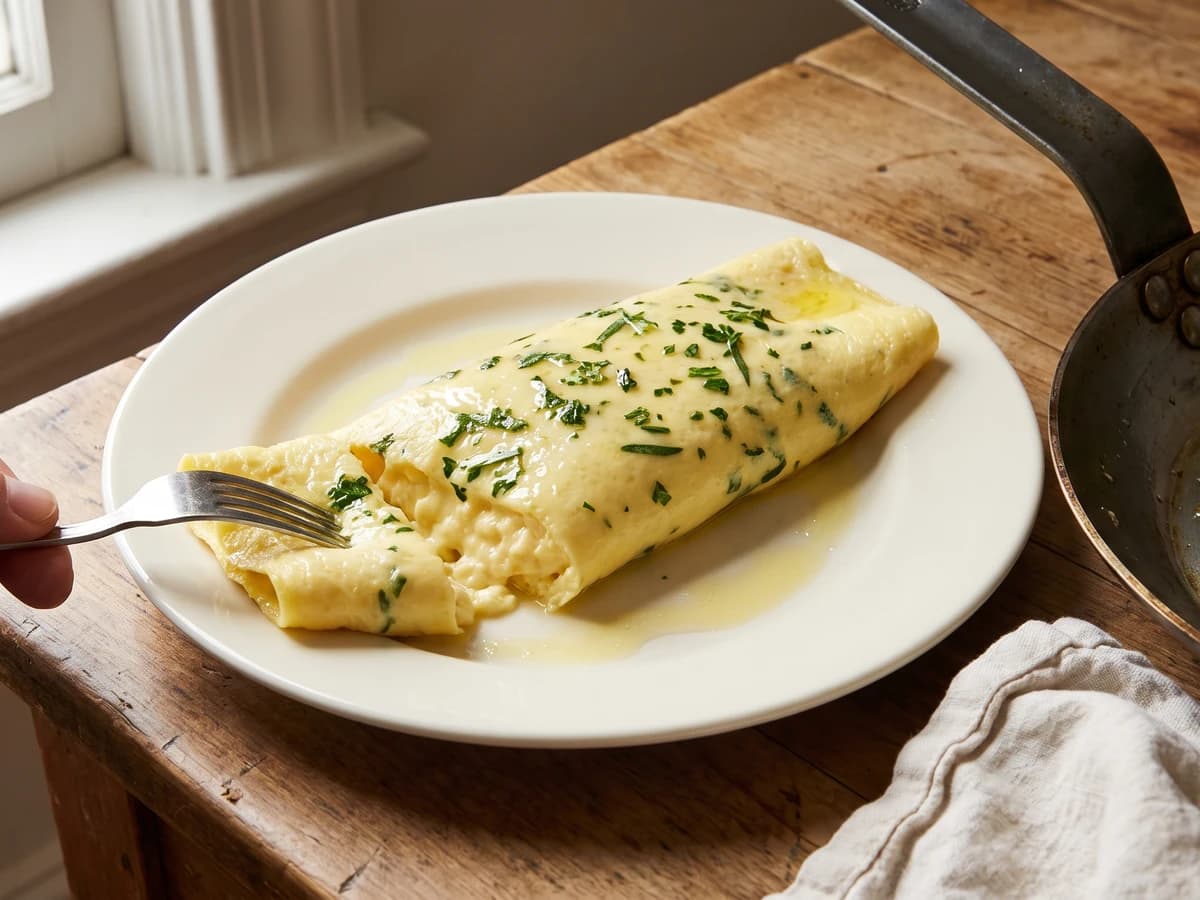
Four tender herbs, hot butter, and two eggs per pan: this rolled omelette teaches the quick hand and good judgment that keep the outside pale and the center creamy.
Chef Juliette
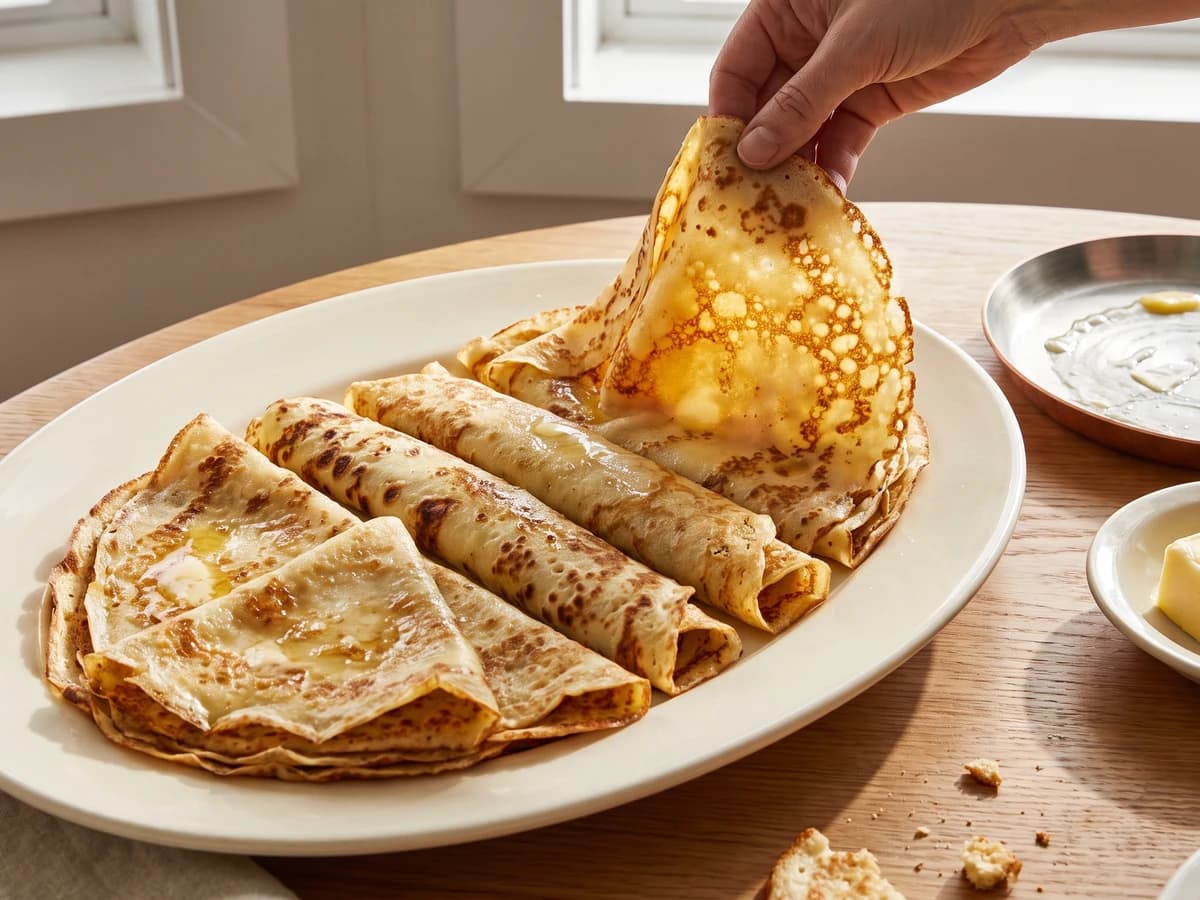
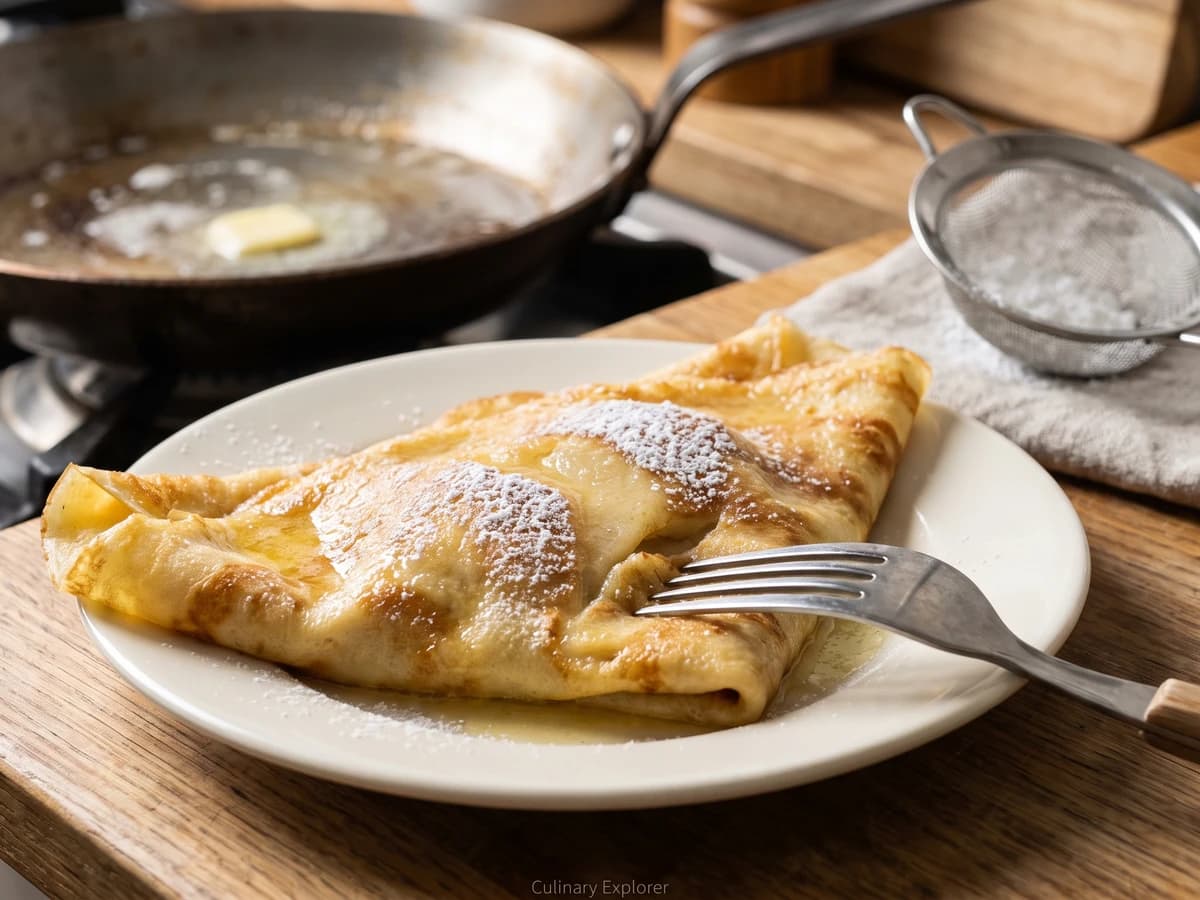
Four batters, one lesson: let the flour drink deeply before cooking, then spread the batter thinly in butter for crêpes and pannequets that bend without becoming tough.
Chef Juliette
Crêpes au Couvent trap ripe Williams pear dice between two thin pours of sweet batter, then turn in one clean toss and reach the table butter-gold, powdered, and burning hot.