Chef Juliette
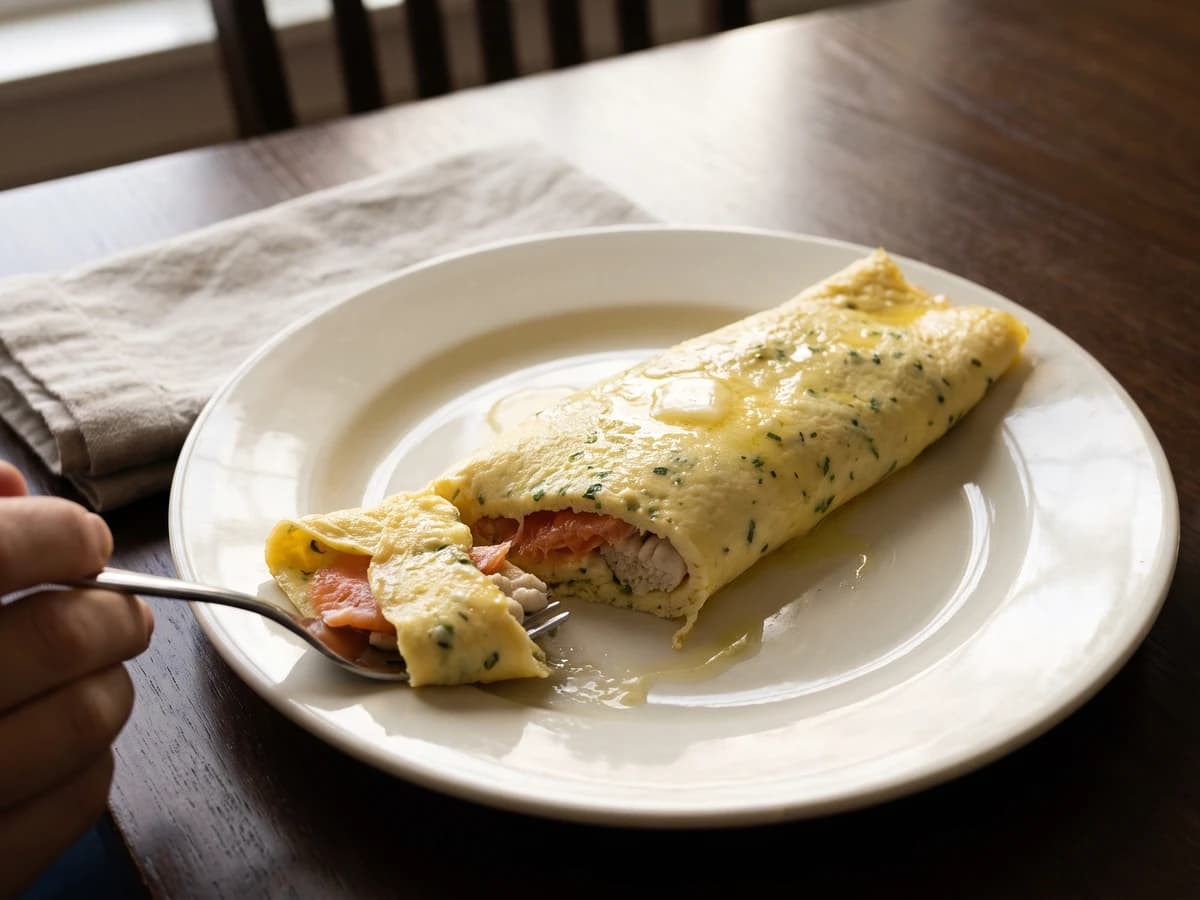
Omelette à l’Écossaise
A creamy omelette aux fines herbes closes around smoked-salmon-wrapped herring milts, gently poached in butter. Have the filling ready, then roll the eggs while they still shine.
A cooking platform built around craft, culture, and the stories behind what we eat.
Created by Chef Juliette
Based on No. 470, Scrambled Eggs for Hot Luncheon Hors-d’œuvre, from Le Guide Culinaire (1907) by Auguste Escoffier
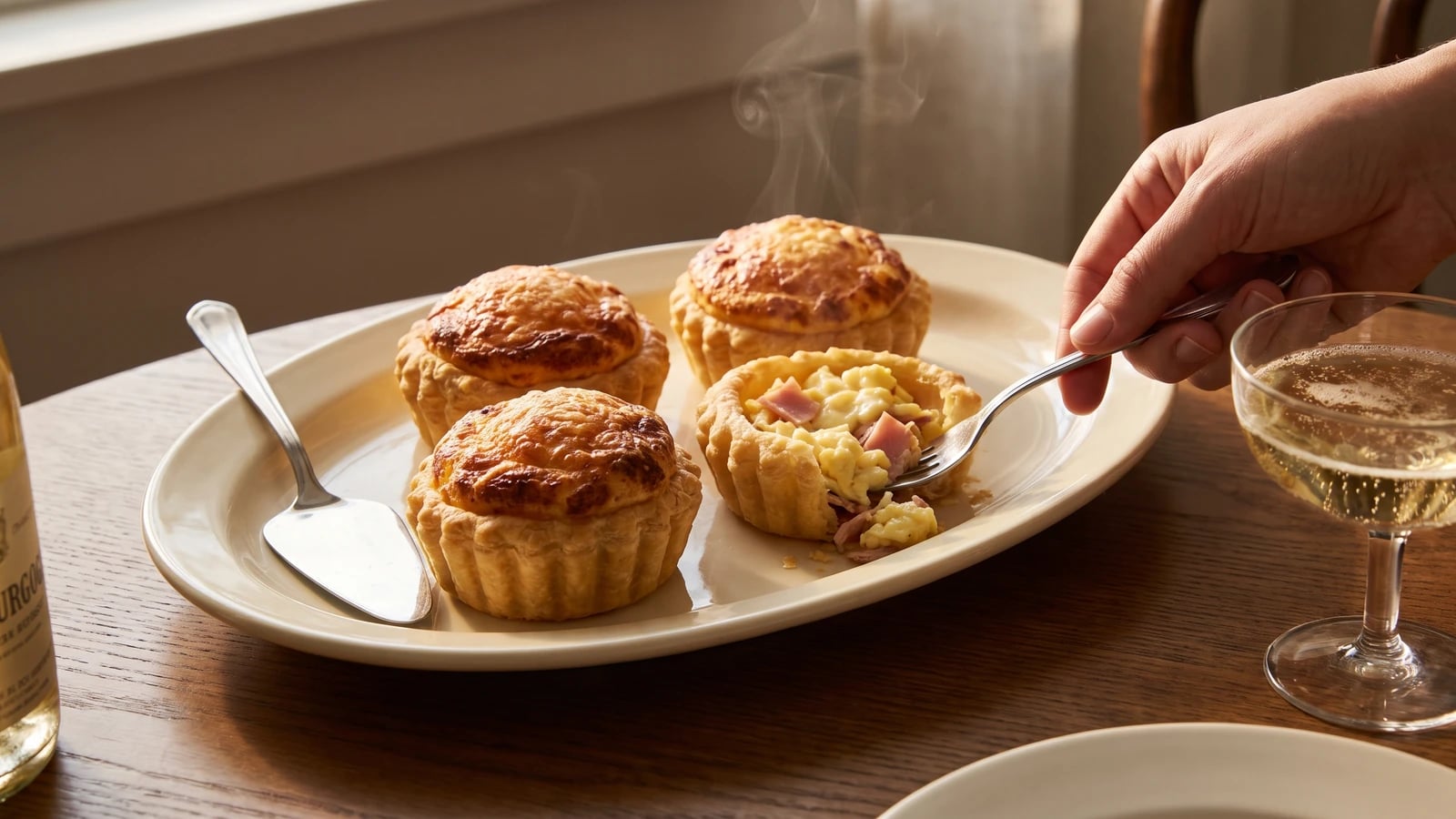
Soft Œufs brouillés hide beneath a high Parmesan soufflé cap in a pale tartlet shell, before a quick oven poach raises and glazes the crown.
Œufs brouillés en hors-d’œuvre chaud (soft scrambled eggs presented as a hot first course) teaches control through carryover heat. The eggs must leave the pan softer than you would serve them alone, because the tartlet shell and hot oven will cook them again. Understand that before touching the pan and the center stays creamy beneath its Parmesan crown.
The original entry assumed separate hands for pale pastry shells, scrambled eggs, and fresh Soufflé au Parmesan (No. 2295a), plus a salamander waiting to glaze the top. It asks for neither a saucier nor the stockpot kept forever at a tremble, just the coordination of a brigade. At home we make four tartlets, set the oven rack high, and use the broiler only if the risen caps need their final gold. The separate stations are scaffolding and can go; the two-thirds fill, high mound, quick oven poach, and glaze are the dish and must stay. One cook, one stove, one evening.
Fine jambon blanc is the garnish tonight, though the source deliberately leaves that choice open. Stop scrambling when the eggs still flow slowly, then finish them with cold cream off the heat. That is the step deciding whether the first forkful reveals silk or dry curds.
This composed tartlet belongs to the formal French luncheon table, where hors-d’œuvre chauds were hot first courses rather than the cold nibbles the term often suggests. Grand kitchens built families of such dishes by keeping the architecture fixed, a pastry shell, a soft savory center, and an airy soufflé crown, while changing the garnish from one service to the next. Its passage to the home table requires smaller quantities and careful timing, not a change to that structure.
Quantity
4
4 inches (10 cm) wide, blind-baked until set but still pale
Quantity
6
Quantity
2 tablespoons (30 ml / 28 g)
Quantity
3 tablespoons (45 ml / 45 g)
cold and divided
Quantity
1/3 cup (80 ml / 60 g)
finely diced
Quantity
1/4 teaspoon (1.25 ml / 1.5 g)
Quantity
1/8 teaspoon (0.6 ml / 0.3 g)
Quantity
1½ cups (355 ml / about 300 g) Soufflé au Parmesan (No. 2295a)
freshly prepared
| Ingredient | Quantity |
|---|---|
| large savory pâte brisée tartlet shells4 inches (10 cm) wide, blind-baked until set but still pale | 4 |
| large eggs | 6 |
| unsalted butter | 2 tablespoons (30 ml / 28 g) |
| heavy creamcold and divided | 3 tablespoons (45 ml / 45 g) |
| jambon blanc or mild cooked hamfinely diced | 1/3 cup (80 ml / 60 g) |
| fine salt | 1/4 teaspoon (1.25 ml / 1.5 g) |
| ground white pepper | 1/8 teaspoon (0.6 ml / 0.3 g) |
| Soufflé au Parmesanfreshly prepared | 1½ cups (355 ml / about 300 g) Soufflé au Parmesan (No. 2295a) |
Heat the oven to 450°F (230°C) with a rack in the upper third. Arrange the pale tartlet shells on a sturdy sheet pan and keep them at room temperature. Their pastry is already cooked without coloration, as the source requires; baking it darker now would make the final trip through the oven taste twice-baked.
Whisk the eggs with the salt and white pepper only until the whites and yolks unite. Melt the butter in a heavy saucepan over medium-low heat, add the eggs, and stir continuously with a flexible spatula, sweeping the floor and corners. When small, tender curds form but the eggs still flow together like a thick sauce, remove the pan from the heat. Stir in 2 tablespoons (30 ml / 30 g) of the cold cream and the diced ham. If the curds begin tightening too quickly, set the pan on a cold damp towel and beat in the remaining tablespoon of cream at once. Ça se rattrape while they are merely firm; once dry and grainy, they cannot be made creamy again.
Divide the scrambled eggs among the shells, filling each only two-thirds full. Keep the pastry rims clean. That empty third is deliberate: it gives the soufflé a ledge to grip and leaves room for the eggs to expand without forcing the crown over the sides.
Spoon the freshly prepared Soufflé au Parmesan (No. 2295a) over the eggs, dividing it evenly and shaping each portion into a generous mound that projects above the tartlet rim. Work lightly so you preserve the air in the mixture, and do not press it down. Run a clean fingertip around the inner edge of each shell to define the crown and encourage an even rise.
Transfer the tray immediately to the upper third of the oven and pocher au four, set quickly in the oven, for 7 to 9 minutes. The crowns should rise, hold at their edges, and turn an even butter-gold while remaining tender at the center. If they color before rising fully, move the tray down one rack; if they rise but remain pale, pass them under the broiler for 15 to 30 seconds. Watch without blinking. The broiler is the home salamander, and it works just as quickly in both directions.
Let the tartlets stand for no more than 30 seconds, then move each to a warm small plate. Serve while the soufflé crowns remain high and the eggs beneath are still creamy. This is a hot hors-d’œuvre, not a dish that waits for conversation to catch up. À table!
1 serving (about 215g)
Culinary guides, cultural storytelling, and the editorial depth that makes cooking meaningful.
Discover Culinary ExplorerChef Juliette
A creamy omelette aux fines herbes closes around smoked-salmon-wrapped herring milts, gently poached in butter. Have the filling ready, then roll the eggs while they still shine.
Chef Juliette
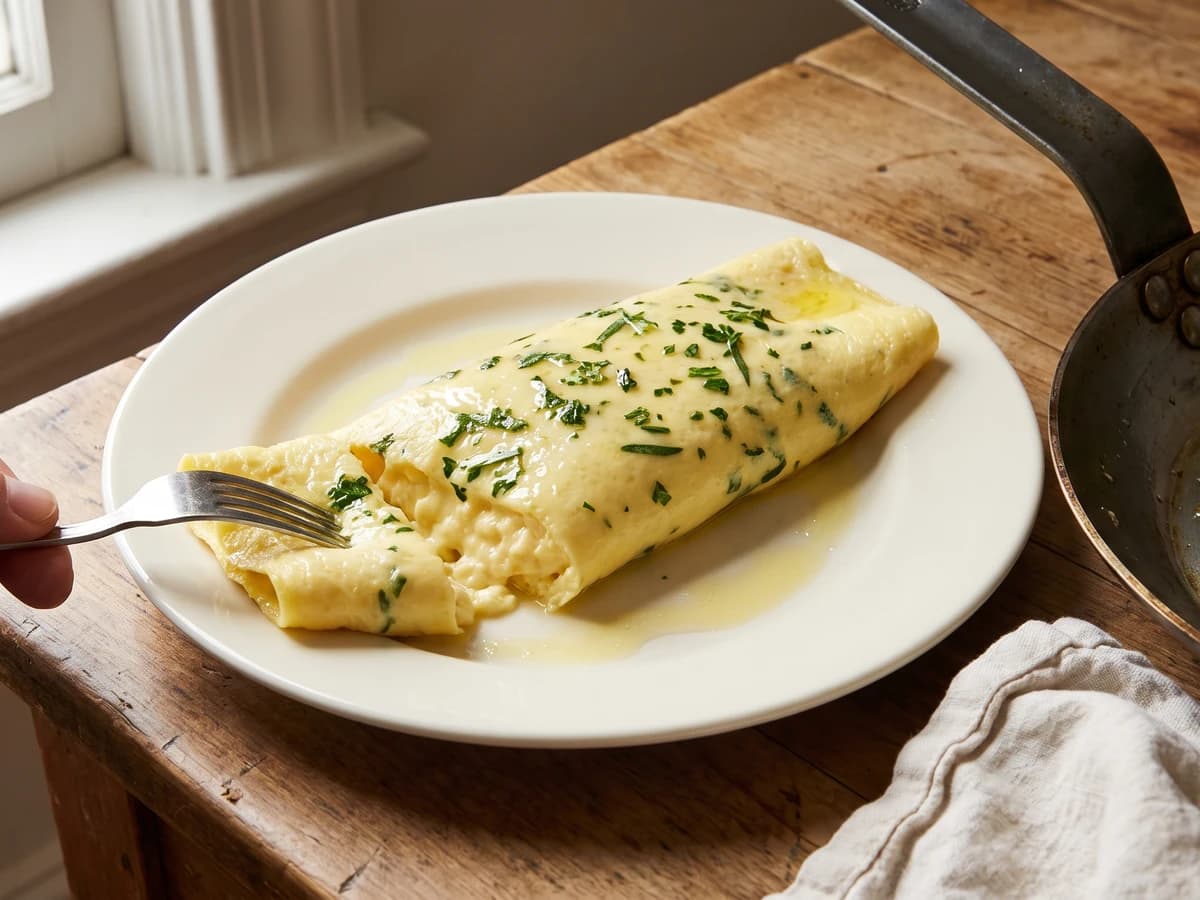
Four tender herbs, hot butter, and two eggs per pan: this rolled omelette teaches the quick hand and good judgment that keep the outside pale and the center creamy.
Chef Juliette
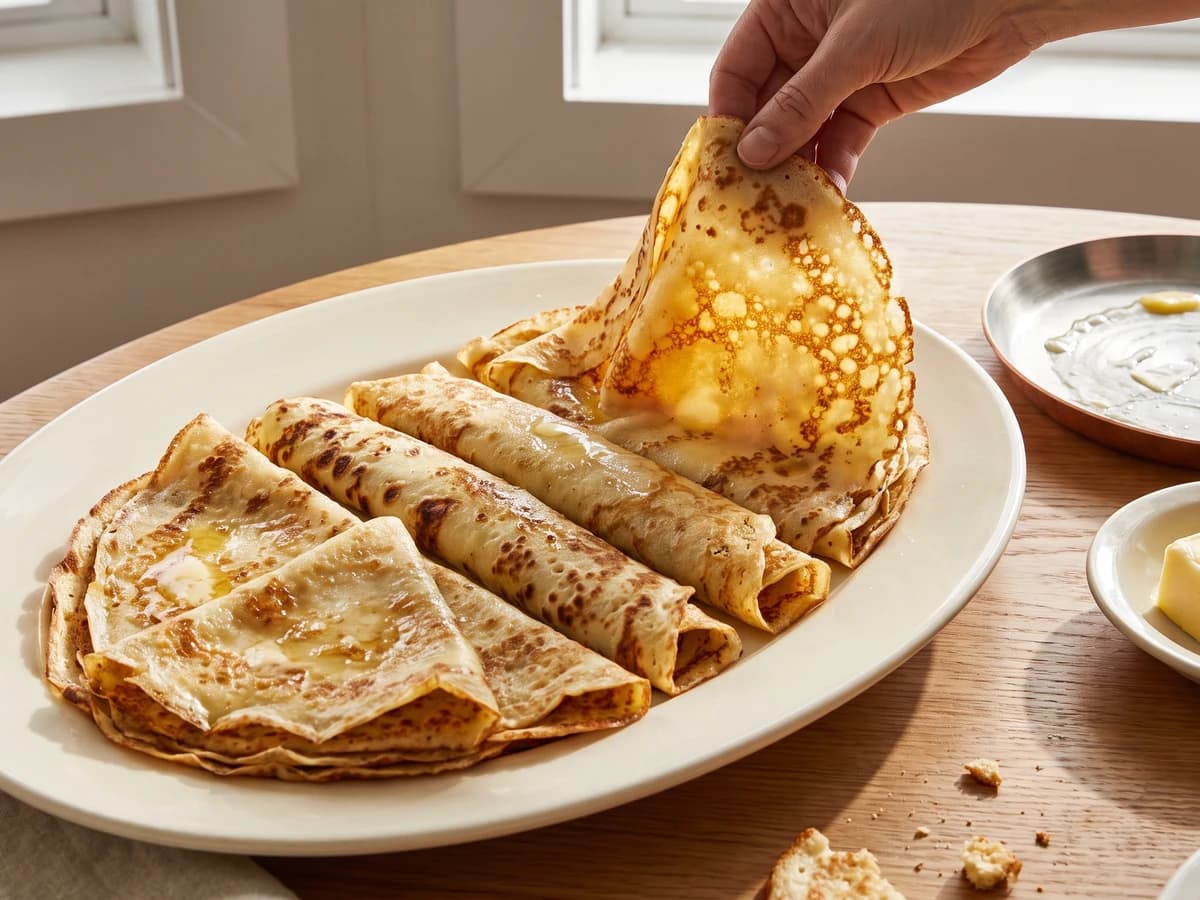
Four batters, one lesson: let the flour drink deeply before cooking, then spread the batter thinly in butter for crêpes and pannequets that bend without becoming tough.
Chef Juliette
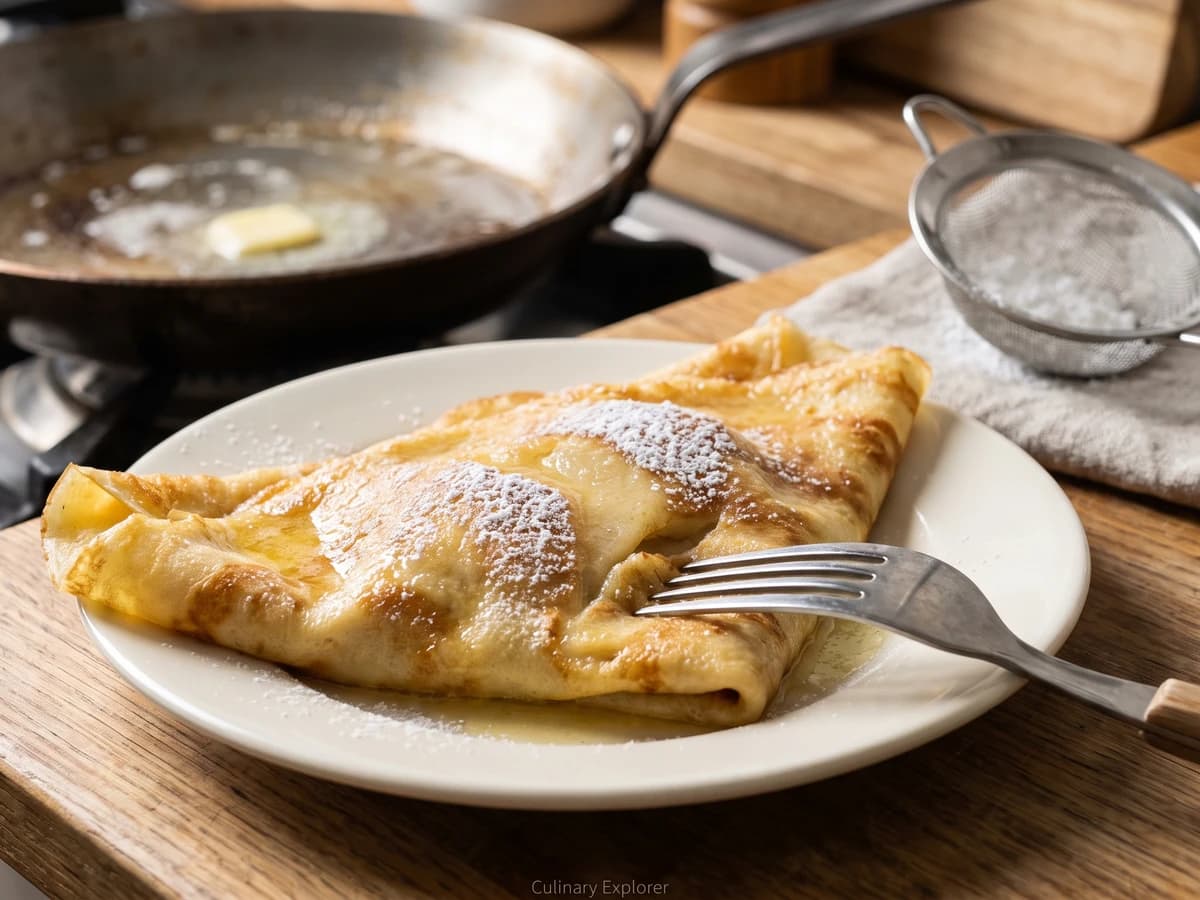
Crêpes au Couvent trap ripe Williams pear dice between two thin pours of sweet batter, then turn in one clean toss and reach the table butter-gold, powdered, and burning hot.