Chef Juliette
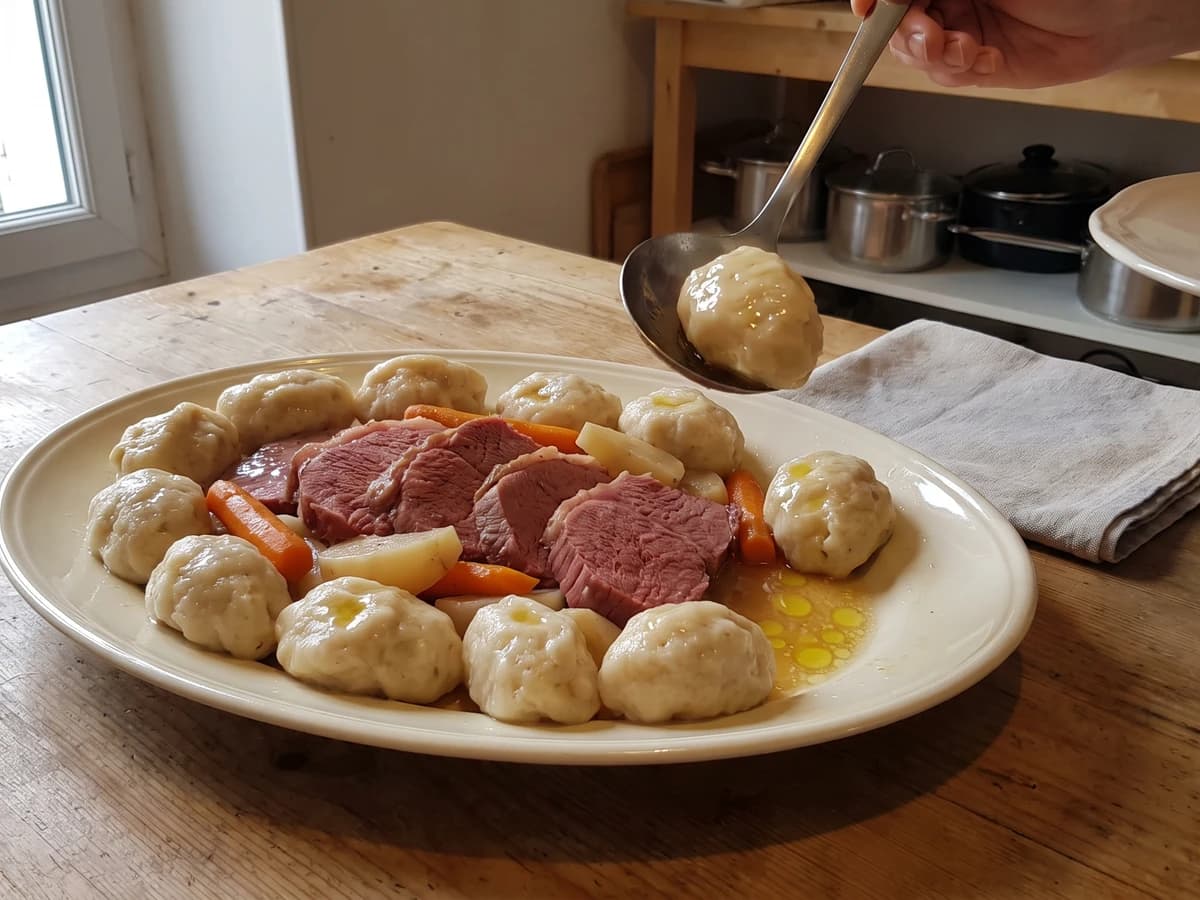
Suet Dumpling
Boulettes au suif, poached beside salt beef, turn equal weights of flour and finely chopped suet into tender, rich dumplings. Keep the beef liquor at a bare tremble and the old garnish works beautifully at home.
A cooking platform built around craft, culture, and the stories behind what we eat.
Created by Chef Juliette
Based on No. 2295a, Soufflé au Parmesan, from Le Guide Culinaire (1907) by Auguste Escoffier
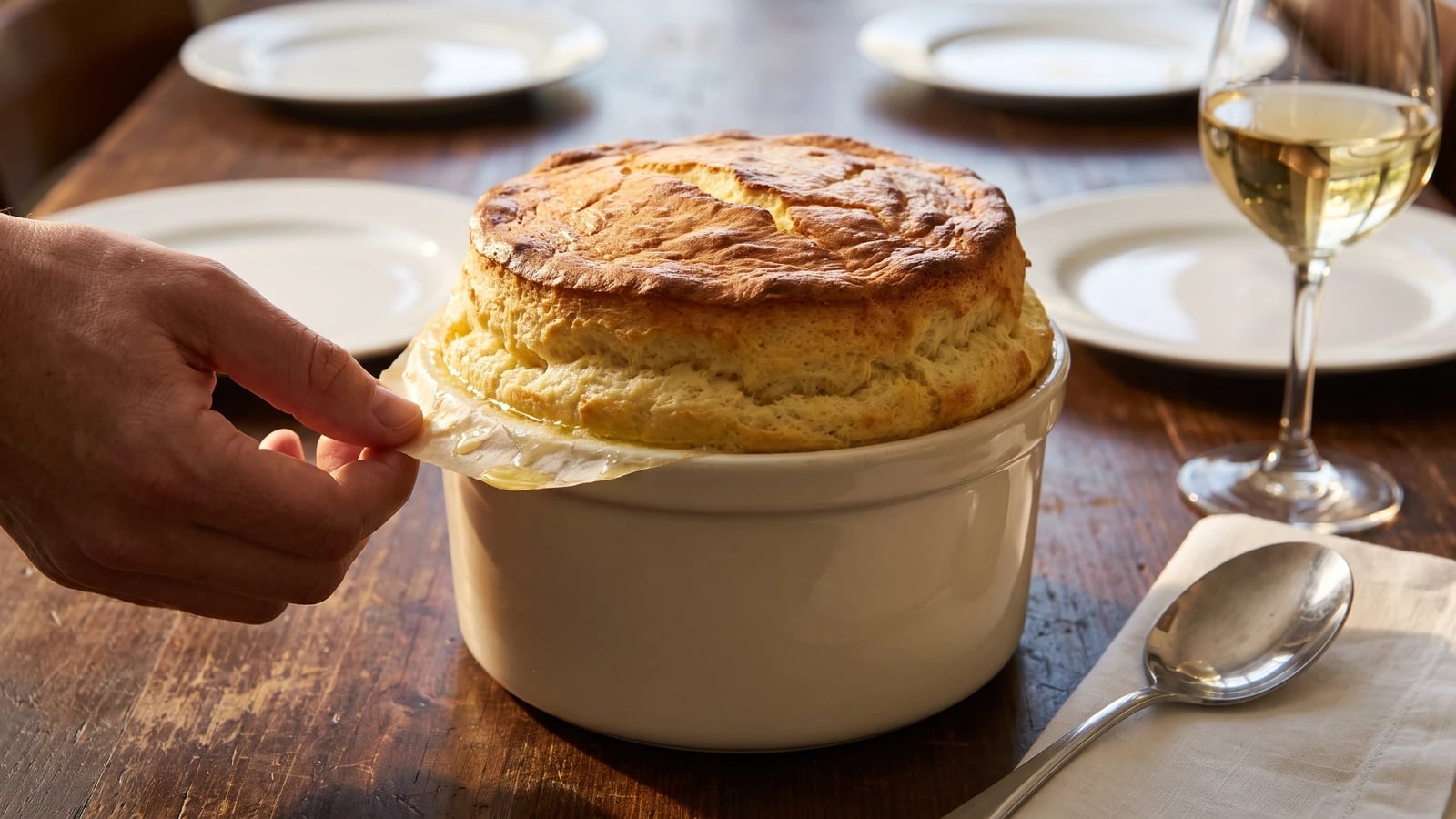
Soufflé au Parmesan rises on one discipline: a perfectly smooth panade. Pass it through the tamis, fold without fuss, and the oven gives you a bronzed crown and a tender, even crumb.
Soufflé au Parmesan (Parmesan soufflé) teaches the compact grammar of every savory soufflé: a flavorful base provides structure, beaten whites provide lift, and neither can correct the other's mistakes. The one true thing to know before touching the pan is this: the whites cannot hide a rough panade. Smoothness must be built before they enter.
The original formula assumed brigade proportions, a pound each of flour and Parmesan, two and one-half imperial pints of milk, ten yolks and ten whites, a tammy, a silver timbale, and another arm available for the whisk. It asks for neither standing stock nor a salamander, so neither belongs here. This version is exactly one-fifth of that formula, with its ratios intact: a tamis (fine-mesh sieve) replaces the tammy, a straight-sided porcelain dish replaces the silver, and an electric mixer supplies the spare arm. The extra hands and precious metal were scaffolding. The sieving and careful fold are the dish, and they stay.
What emerges is generous rather than fragile, with a butter-gold crown, a close and tender crumb, and Parmesan carried through every bite. It will settle after serving, because soufflés breathe out just as people do. Rub the enriched panade through the tamis while it is still warm; that is the step that decides the crumb.
Soufflé au Parmesan belongs to the Parisian grand-kitchen and bourgeois dining-room canon, where savory soufflés were served directly from the oven as an entrée or substantial accompaniment. Parmesan, though Italian in origin, entered the French repertoire as a prized grating cheese whose dry, concentrated savor strengthened an egg base without flooding it with moisture. Its passage to the home table changed the vessel and the whisk, not the service rule: a soufflé waits for no one.
Quantity
3/4 cup (180 ml / 90 g)
Quantity
1 cup plus 3 tbsp (285 ml / 293 g)
Quantity
1/4 tsp (1.25 ml / 1.5 g)
Quantity
1/8 tsp (0.6 ml / 0.25 g)
Quantity
1/8 tsp (0.6 ml / 0.25 g)
Quantity
1 packed cup (240 ml / 90 g)
finely grated
Quantity
1 tbsp plus 1/2 tsp (17.5 ml / 17 g)
cut into small pieces
Quantity
2
separated and brought to room temperature
Quantity
2 tsp (10 ml / 9 g)
softened
| Ingredient | Quantity |
|---|---|
| all-purpose flour | 3/4 cup (180 ml / 90 g) |
| whole milk | 1 cup plus 3 tbsp (285 ml / 293 g) |
| fine sea salt | 1/4 tsp (1.25 ml / 1.5 g) |
| finely ground white pepper | 1/8 tsp (0.6 ml / 0.25 g) |
| freshly grated nutmeg | 1/8 tsp (0.6 ml / 0.25 g) |
| aged Parmesanfinely grated | 1 packed cup (240 ml / 90 g) |
| unsalted buttercut into small pieces | 1 tbsp plus 1/2 tsp (17.5 ml / 17 g) |
| large eggsseparated and brought to room temperature | 2 |
| unsalted butter for the dish and parchmentsoftened | 2 tsp (10 ml / 9 g) |
Set a rack in the lower-middle oven and heat it to 375°F (190°C), with a heavy baking sheet heating on the rack. Butter the base and sides of a 1 1/4-quart (1.2-liter) straight-sided soufflé dish. Cut a parchment strip long enough to circle the inside wall and stand about 2 inches (5 cm) above the rim; butter the face that will touch the mixture and press it snugly into the dish. This collar is the home equivalent of the source's buttered paper band and gives the rising soufflé somewhere to go.
Whisk the flour and cold milk together in a heavy saucepan until no dry pockets remain, then add the salt, white pepper, and nutmeg. Set the pan over medium heat and stir constantly, scraping the base and corners. The mixture will thicken suddenly into a very firm panade. At the first heavy bubble, take it off the heat immediately, exactly as the original directs. If it clumps on the way, pull the pan off the heat and whisk hard until it loosens. Ça se rattrape: the tamis in the next step will catch any stubborn lumps.
While the panade is still hot, stir in the Parmesan and the 17 g of butter until both are completely incorporated. Beat in the yolks one at a time, working briskly so each disappears before it can set. Immediately rub the warm mixture through the tamis into a broad bowl, pressing firmly with a flexible scraper or wooden spoon and scraping the smooth paste from underneath. Do not skip this because the paste looks acceptable from above; the tamis removes cooked flour beads and fine strands of yolk that would mark the finished crumb. If the panade cools and becomes too stubborn to pass, set its bowl over barely warm water for thirty seconds and beat until pliable. Do not thin it with more milk, because the ratio is the structure.
Let the sieved panade cool until lukewarm but still supple. In a perfectly clean, dry bowl, whisk the whites until they hold stiff, glossy peaks that stand upright when the whisk is lifted. Stop there. Whites beaten to dry, separate clumps have lost the elasticity needed to expand in the oven; glossy and firm is the mark.
Stir one-third of the whites firmly into the panade to loosen it. This first portion is sacrificed for structure, so gentleness gains you nothing. Add half the remaining whites and fold with a broad spatula, cutting down through the center, sweeping along the bottom, and turning the mixture over itself while rotating the bowl. Fold in the last whites just until no white pockets remain. If the panade feels stiff and the whites slide around it, stir another spoonful in firmly before resuming the fold. If some volume is lost, do not discard the mixture; bake it at once. The crown may be lower, but the crumb will still be tender and deeply flavored.
Spoon the mixture into the prepared dish without knocking the bowl against the rim, then level the surface lightly. Set the dish on the heated baking sheet and bake for 20 to 25 minutes. Do not open the oven during the first 18 minutes. The Soufflé au Parmesan is ready when its crown stands above the rim, the high ridges are deep butter-gold, and the center gives a small, unified quiver rather than a liquid slosh. An instant-read thermometer inserted near the center should register at least 160°F (71°C).
Carry the soufflé directly to the table, peel away the parchment collar gently, and serve with a large spoon, cutting down through the bronzed crown to reach the soft center. A little settling is natural and no cause for alarm. What matters is the smooth crumb underneath. À table!
1 serving (about 130g)
Culinary guides, cultural storytelling, and the editorial depth that makes cooking meaningful.
Discover Culinary ExplorerChef Juliette
Boulettes au suif, poached beside salt beef, turn equal weights of flour and finely chopped suet into tender, rich dumplings. Keep the beef liquor at a bare tremble and the old garnish works beautifully at home.

Chef Juliette
Bread, flour, frangipane, and rice become four cool, supple panades for binding forcemeats, each changing body and flavor while preserving tenderness. The finest Mousselines need none, and knowing that distinction is the lesson.

Chef Juliette
Panade au pain is bread, milk, salt, heat, and attention: stir until the paste releases cleanly, butter it against a skin, and you have the quiet binder behind tender French farces.

Chef Juliette
Panade de farine teaches the drying stroke behind pâte à choux: flour meets boiling buttered water, then stays over the fire until the paste gathers, smooths, and quits the pan cleanly.