Chef Juliette
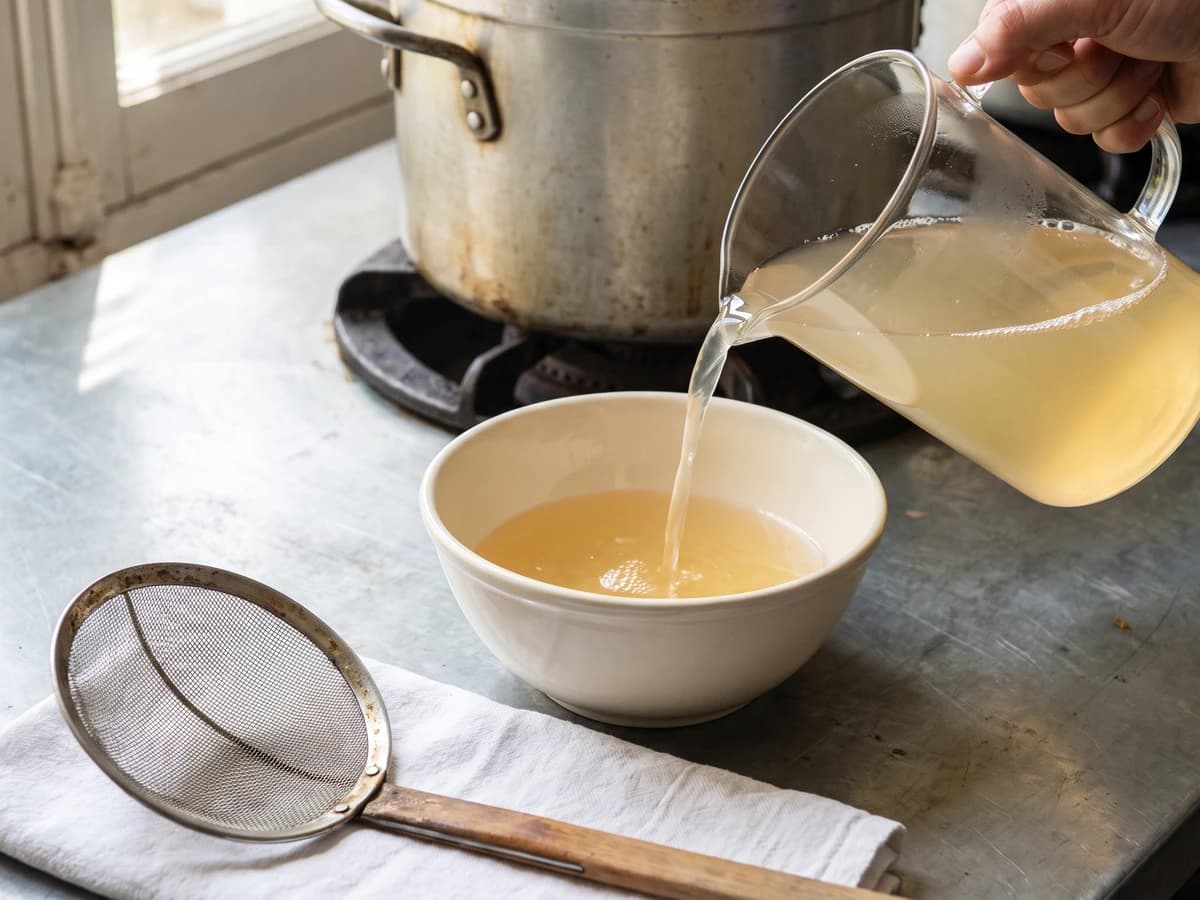
Ordinary or White Consommé
Beef shin, lean beef, and fowl begin in cold water and rise slowly toward a tremble. Skim before the boil, and you learn the quiet discipline that gives every clear French broth its backbone.
A cooking platform built around craft, culture, and the stories behind what we eat.
Created by Chef Juliette
Based on No. 47, Périgueux Sauce, from Le Guide Culinaire (1907) by Auguste Escoffier
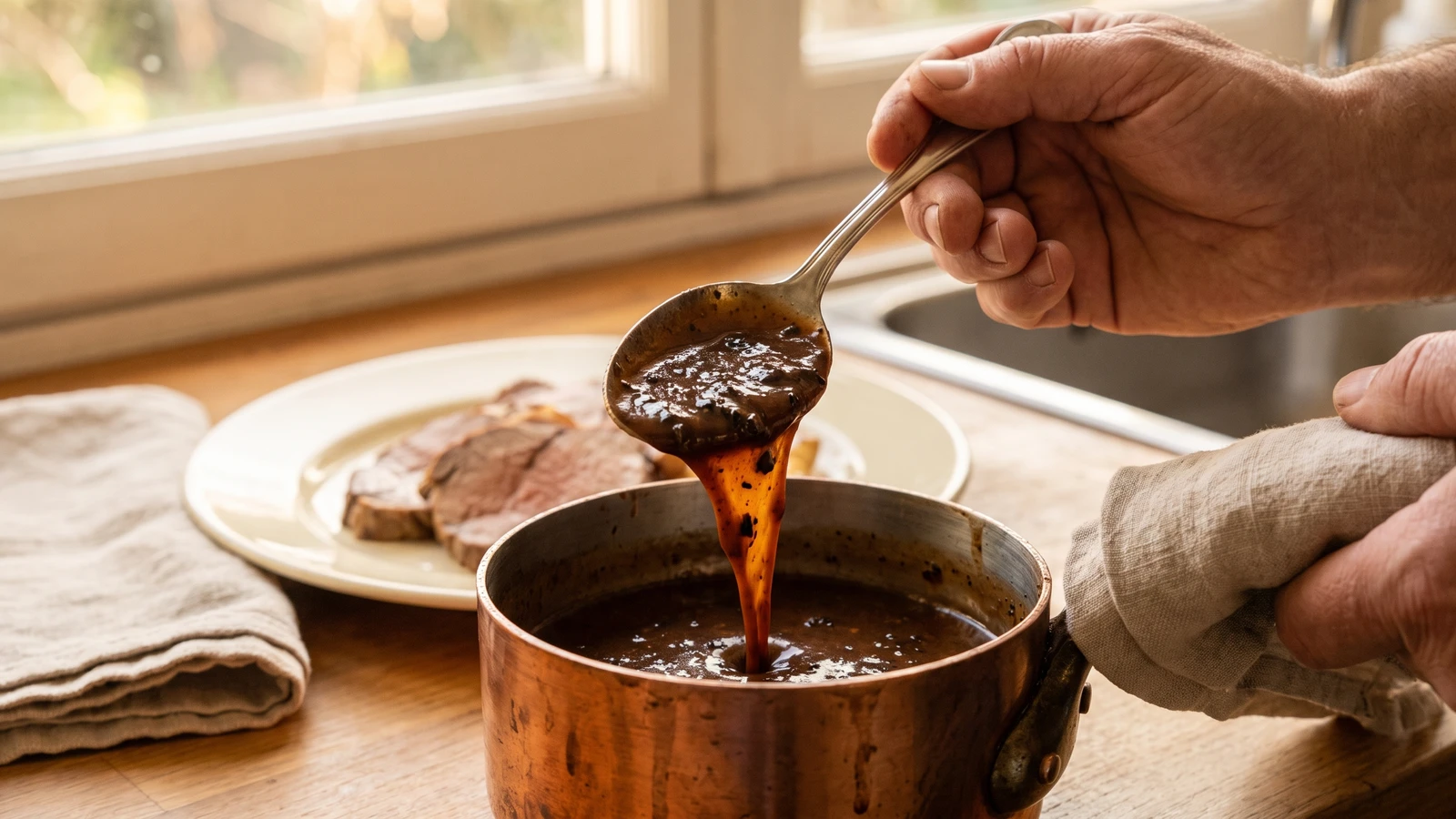
Sauce Périgueux (Périgord truffle sauce) teaches reduction without brutality: Madeira depth, concentrated veal, and black truffle folded in off the heat so its perfume reaches the table intact.
Sauce Périgueux (Périgord truffle sauce) teaches the discipline of reduction: the base must reach its density before the truffle enters, because truffle perfume will not survive a corrective boil. Keep that one truth at hand before touching the pan. Properly finished, the sauce falls from a spoon in a dark, glossy ribbon, carrying chopped black truffle through every serving.
The book assumed a saucier at a brisk fire, half-glaze already working, and a stockpot of very strong veal stock never off the fire. A home cook begins with the completed Madeira Sauce (No. 44), adds the prescribed half-volume of concentrated veal stock, and uses a wide heavy pan in place of brigade speed. The only modernization is the order of assembly and the home-scale batch: because the cross-referenced Madeira Sauce arrives as a finished component, the extra stock is reduced into it. The formula remains intact, one-sixth pint of truffle essence and three ounces of chopped truffle for every quart of Madeira sauce. One cook, one stove, one evening.
Straining is scaffolding, useful only if the stock leaves sediment; a fine-mesh sieve replaces the tammy. Reduction, the off-heat essence, and the chopped truffle are the dish, and they stay untouched. Reduce a little too far and the sauce can be loosened, ça se rattrape. Boil it after the truffle enters and its perfume is gone, so stop at a dense nappé before the finish.
Sauce Périgueux belongs to the black-truffle larder of Périgord and takes its name from Périgueux, the city at the region's center. It traveled into the classical grand-kitchen system by joining truffle essence and chopped truffle to Madeira Sauce (No. 44), then accompanying timbales, hot pâtés, and small entrées. Its identity lies in that double use of truffle, essence carried through the sauce and chopped truffle at the finish, not in a few decorative shavings.
Quantity
8 cups (1.9 L / about 2 kg) Madeira Sauce (No. 44)
Quantity
4 cups (950 ml / about 1 kg)
preferably unsalted and gelatin-rich
Quantity
⅔ cup (160 ml / 160 g)
Quantity
about 1½ cups (6 oz / 170 g)
finely chopped
| Ingredient | Quantity |
|---|---|
| Madeira Sauce | 8 cups (1.9 L / about 2 kg) Madeira Sauce (No. 44) |
| very strong veal stockpreferably unsalted and gelatin-rich | 4 cups (950 ml / about 1 kg) |
| truffle essence (jus de truffe) | ⅔ cup (160 ml / 160 g) |
| black trufflesfinely chopped | about 1½ cups (6 oz / 170 g) |
Pour the completed Madeira Sauce (No. 44) and the very strong veal stock into a wide, heavy 5- to 6-quart pan. Keep the truffle essence and chopped truffles aside and cool; they belong at the finish, not in the reduction. Note the combined volume of 12 cups so you can judge how far it must travel.
Bring the combined sauce to a brisk simmer over medium-high heat, skimming away any coarse foam and stirring across the pan floor often enough to prevent catching. Reduce to about 7⅓ cups, 30 to 40 minutes depending on the width of the pan. The sauce should be slightly denser than a normal nappé, coating a spoon heavily and holding a clean line when you draw a finger through it; the truffle essence will loosen it. If it reduces until sticky or begins dragging across the pan, take it off the heat and whisk in hot water one tablespoon at a time until the gloss returns. Ça se rattrape.
If the veal stock has left sediment, pass the reduction through a fine-mesh sieve into a clean pan. Do not press the residue through. If the sauce is already perfectly smooth, skip this entirely; the brigade needed a tammy for consistency across a long service, while one careful home batch can be judged directly.
Take the pan completely off the heat and wait for active bubbling to stop. Stir in the truffle essence, then fold in the finely chopped black truffles. The sauce should settle at a flowing nappé, glossy but dense enough to keep the truffle suspended. If it is unexpectedly loose, ladle 2 cups into a second pan, reduce that portion rapidly until dense, then whisk it back into the main sauce off the heat. This corrects the body while protecting most of the truffle perfume.
Warm the finished sauce over the lowest heat for 3 to 5 minutes, stirring gently so the chopped truffle distributes evenly. Never let it boil. Hold it around 150°F (65°C) for no more than 30 minutes, with parchment laid directly against the surface if a skin begins to form. Spoon generously over small hot entrées, timbales, or hot pâtés. À table!
1 serving (about 60g)
Culinary guides, cultural storytelling, and the editorial depth that makes cooking meaningful.
Discover Culinary ExplorerChef Juliette
Beef shin, lean beef, and fowl begin in cold water and rise slowly toward a tremble. Skim before the boil, and you learn the quiet discipline that gives every clear French broth its backbone.
Chef Juliette
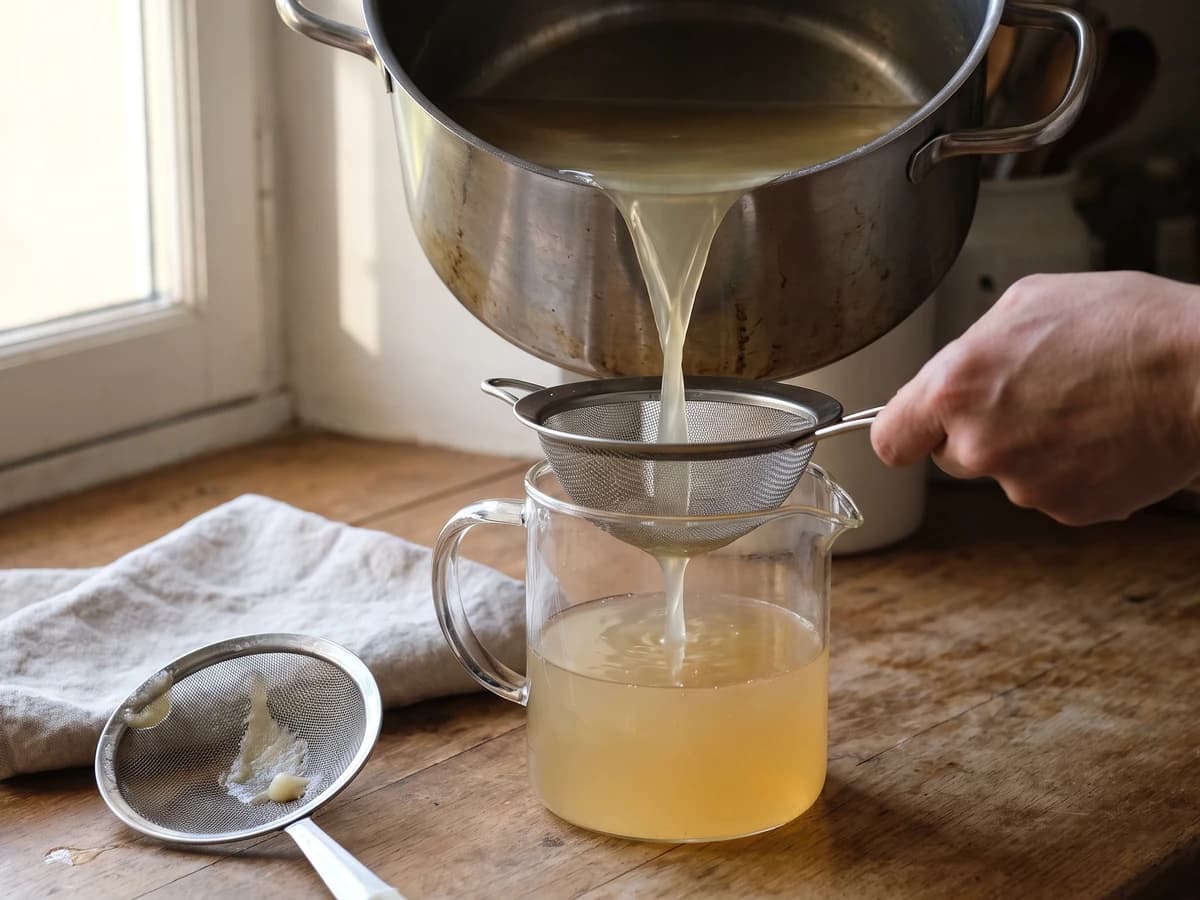
Break the veal bones small, then give them eight hours at a bare tremble. This pale, gelatinous fond becomes the quiet foundation beneath velouté, blanquette, and every sauce that must stay light.
Chef Juliette
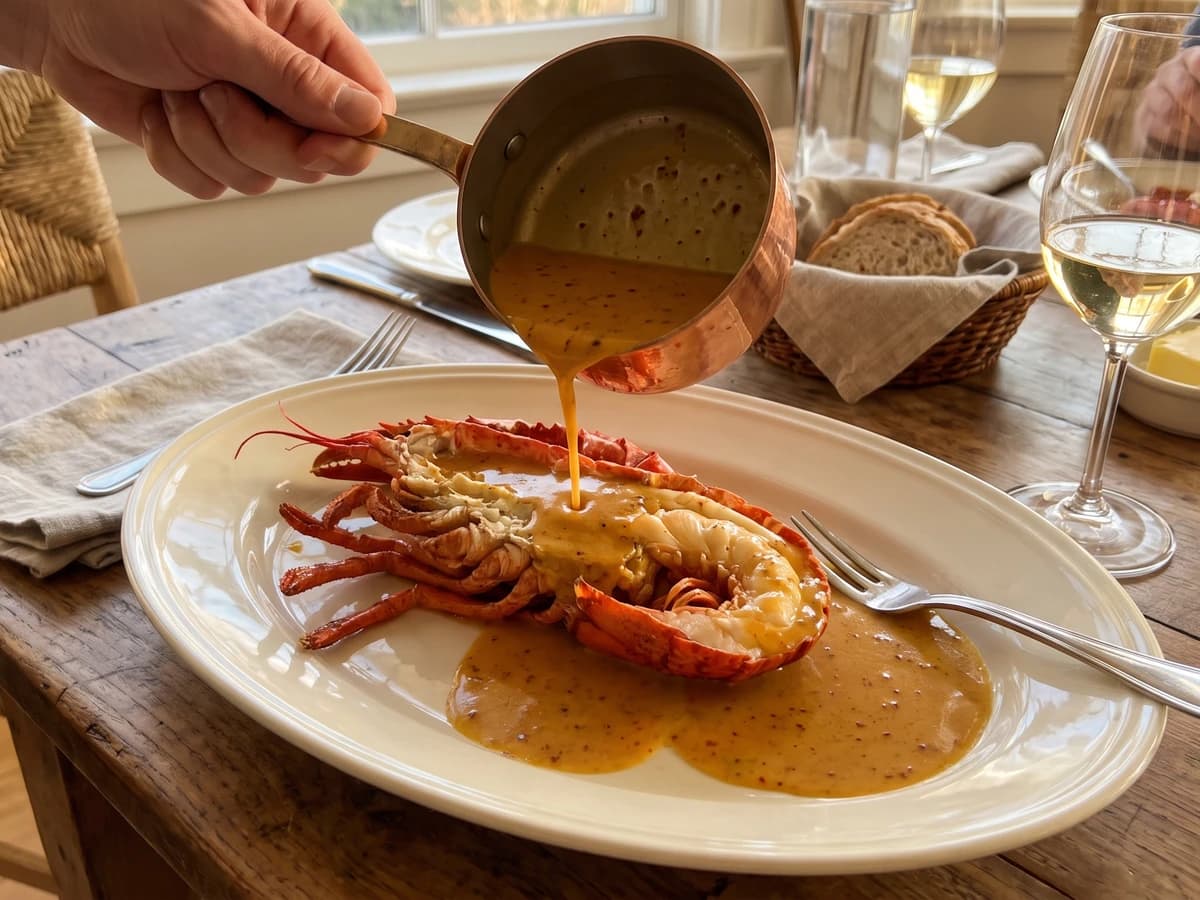
Sauce Orientale concentrates lobster-rich American Sauce with curry, then folds in cream away from the fire: a glossy, gently spiced derivative made for lobster, crayfish, and firm fish.
Chef Juliette
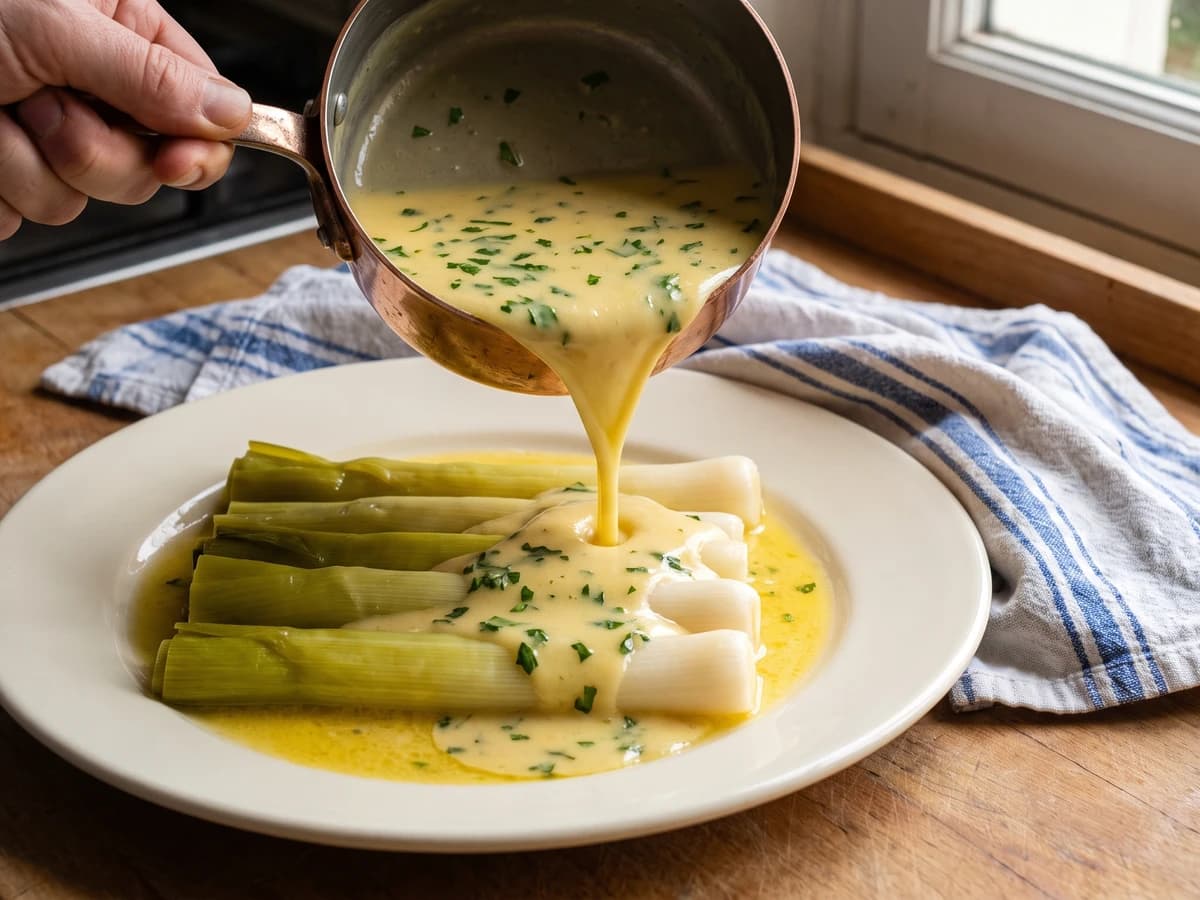
An old lesson in sauce families: Sauce Allemande takes mushroom liquor, then butter, lemon, and parsley, becoming a glossy Poulette for sheep's trotters, leeks, cauliflower, and anything needing gentle richness with a bright edge.