Chef Juliette
Ordinary or White Consommé
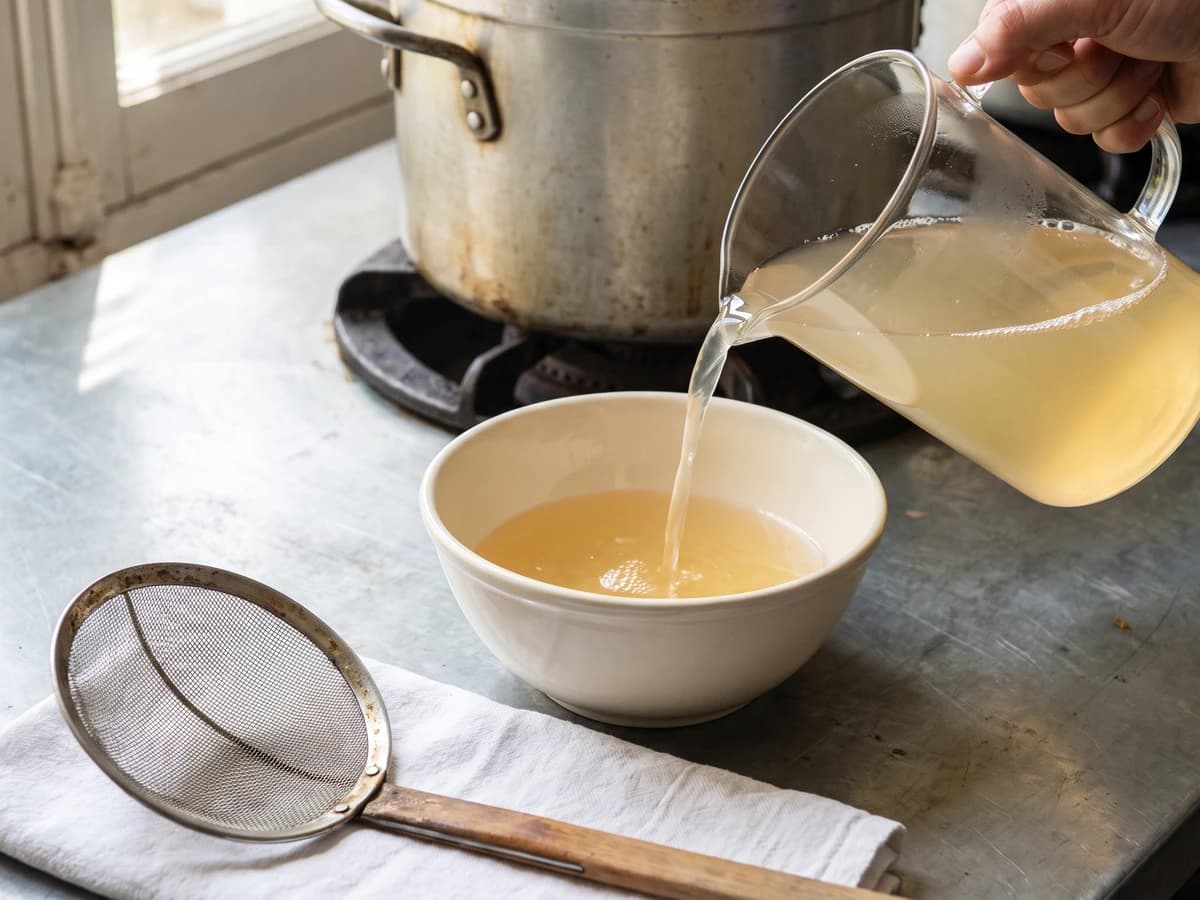
Beef shin, lean beef, and fowl begin in cold water and rise slowly toward a tremble. Skim before the boil, and you learn the quiet discipline that gives every clear French broth its backbone.
A cooking platform built around craft, culture, and the stories behind what we eat.
Created by Chef Juliette
Based on No. 44, Madeira Sauce, from Le Guide Culinaire (1907) by Auguste Escoffier
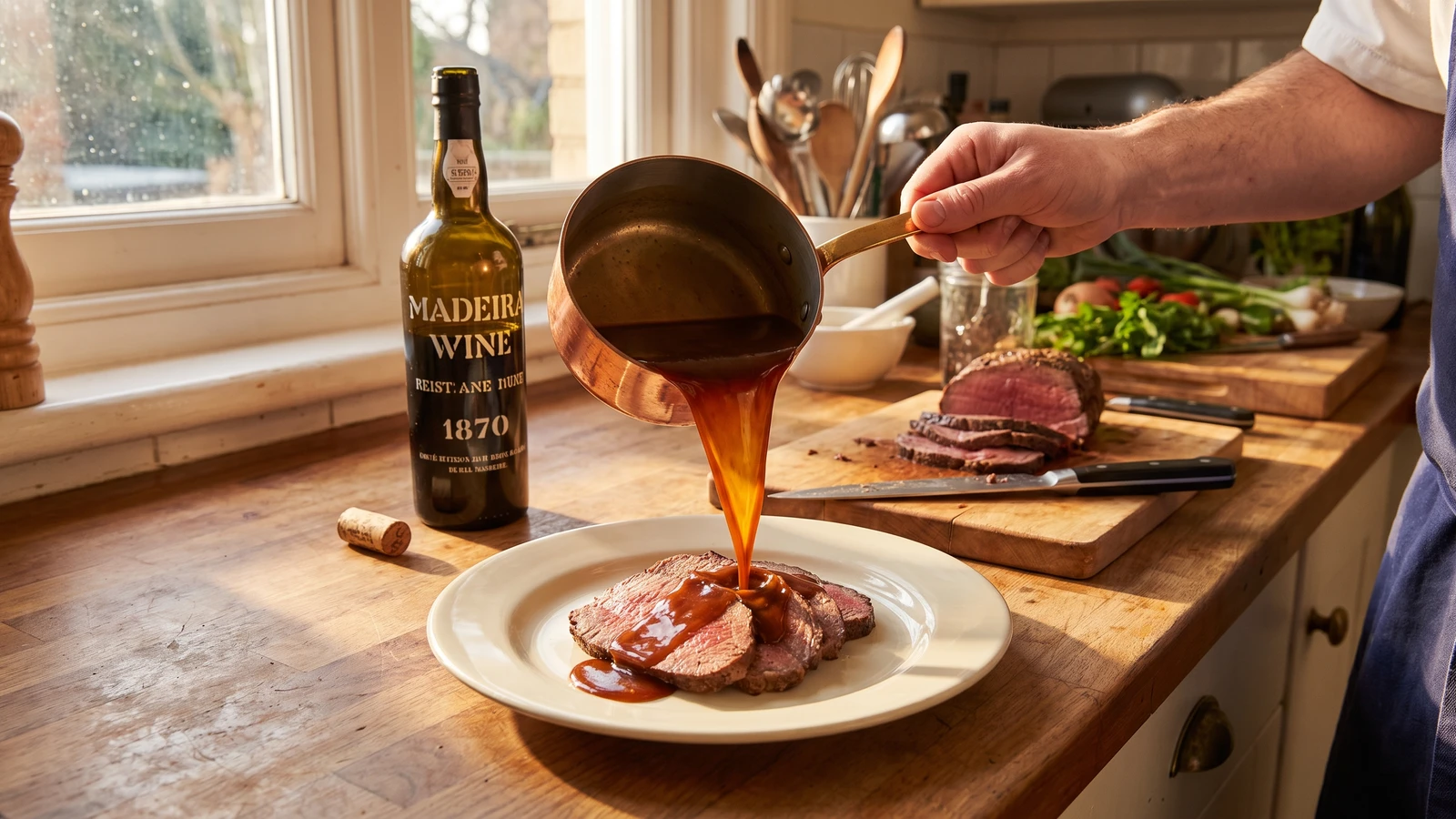
Sauce Madère teaches reduction in reverse: take half-glaze to a concentrated, stiff gloss, then restore its silken nap with Madeira off the heat, preserving the wine's perfume and the sauce's shine.
Sauce Madère (Madeira wine sauce) teaches reduction in reverse. First you drive finished half-glaze to a dark, stiff concentration; then Madeira, added away from the fire, restores the sauce to a flowing nap while lending its warm, nutty perfume. Know the governing truth before touching the pan: once the wine goes in, the sauce must never boil.
The original formula assumed a saucier on staff, half-glaze never far from the fire, and a tammy waiting on the bench. Here the brigade quantity becomes a small dinner-party batch, the broad sauté pan becomes a one-quart saucier, and a fine-mesh sieve replaces the tammy. The source ratio remains exact, fifteen parts half-glaze to two parts Madeira. The staff and the cloth strainer were scaffolding; the hard reduction and off-heat finish are the dish itself. One cook, one stove, one evening.
Watch the texture, not the clock. The half-glaze must become noticeably stiff before the Madeira touches it, or the finished sauce will be thin and its wine aroma will suffer during correction. Get that reduction right and the sauce falls from the spoon in a broad mahogany ribbon, glossy enough to catch every bit of light.
Sauce Madère belongs to the Parisian classical sauce repertoire, where derivatives of demi-glace allowed the saucier to turn one finished foundation into many distinct sauces at service. Its defining wine comes from the Portuguese island of Madeira, whose concentrated, nutty character stands firmly beside meat glaze. Mushrooms, shallots, and truffles are not part of the plain classical formula; they belong to related garnished sauces, while Sauce Madère itself remains simply reduced half-glaze and wine.
Quantity
1 cup (240 ml / 250 g)
cold or thawed and stirred smooth
Quantity
2 tablespoons plus ½ teaspoon (32 ml / 32 g)
| Ingredient | Quantity |
|---|---|
| finished half-glazecold or thawed and stirred smooth | 1 cup (240 ml / 250 g) |
| Madeira | 2 tablespoons plus ½ teaspoon (32 ml / 32 g) |
Set a fine-mesh sieve over a warmed heatproof jug. Beside the stove, prepare a shallow bain-marie with water hot enough to warm the jug but nowhere near a simmer. Measure the half-glaze and Madeira separately before beginning, because the final turn happens quickly.
Put the half-glaze in a one-quart heavy saucier and bring it to a brisk simmer over medium-high heat. Reduce uncovered, stirring more frequently as it concentrates, until the bubbles become tight and glossy and a flexible spatula drawn across the pan leaves a track that closes very slowly. The sauce should cling to the spatula in a heavy coat, stiffer than anything you would serve. If an edge catches, immediately pour the clean sauce into another pan without scraping the scorched patch, then continue over gentler heat. Ça se rattrape, provided no burnt taste has entered the sauce.
Take the pan completely off the heat and pour in the Madeira, whisking until the stiff glaze relaxes into a smooth, flowing sauce. Test the nappe, the coating consistency: dip in a spoon and draw a finger through the sauce on its back. The line should remain clean while the sauce coats evenly around it. If it is too thick, whisk in hot water a teaspoon at a time. If it is too thin, do not boil the whole finished sauce. Ça se rattrape: reduce one-third of it separately to a heavy glaze, remove that pan from the heat, then whisk the concentrated portion back into the rest.
Pass the sauce through the fine-mesh sieve into the warmed jug, scraping through every clean drop. Set the jug in the prepared bain-marie and hold the sauce between 60°C and 70°C (140°F and 158°F), whisking gently if a skin begins to form. The water must not simmer and the sauce must never boil, or the Madeira's perfume turns blunt. Serve within thirty minutes over beef, veal, ham, tongue, or game. À table!
1 serving (about 27g)
Culinary guides, cultural storytelling, and the editorial depth that makes cooking meaningful.
Discover Culinary ExplorerChef Juliette
Beef shin, lean beef, and fowl begin in cold water and rise slowly toward a tremble. Skim before the boil, and you learn the quiet discipline that gives every clear French broth its backbone.
Chef Juliette
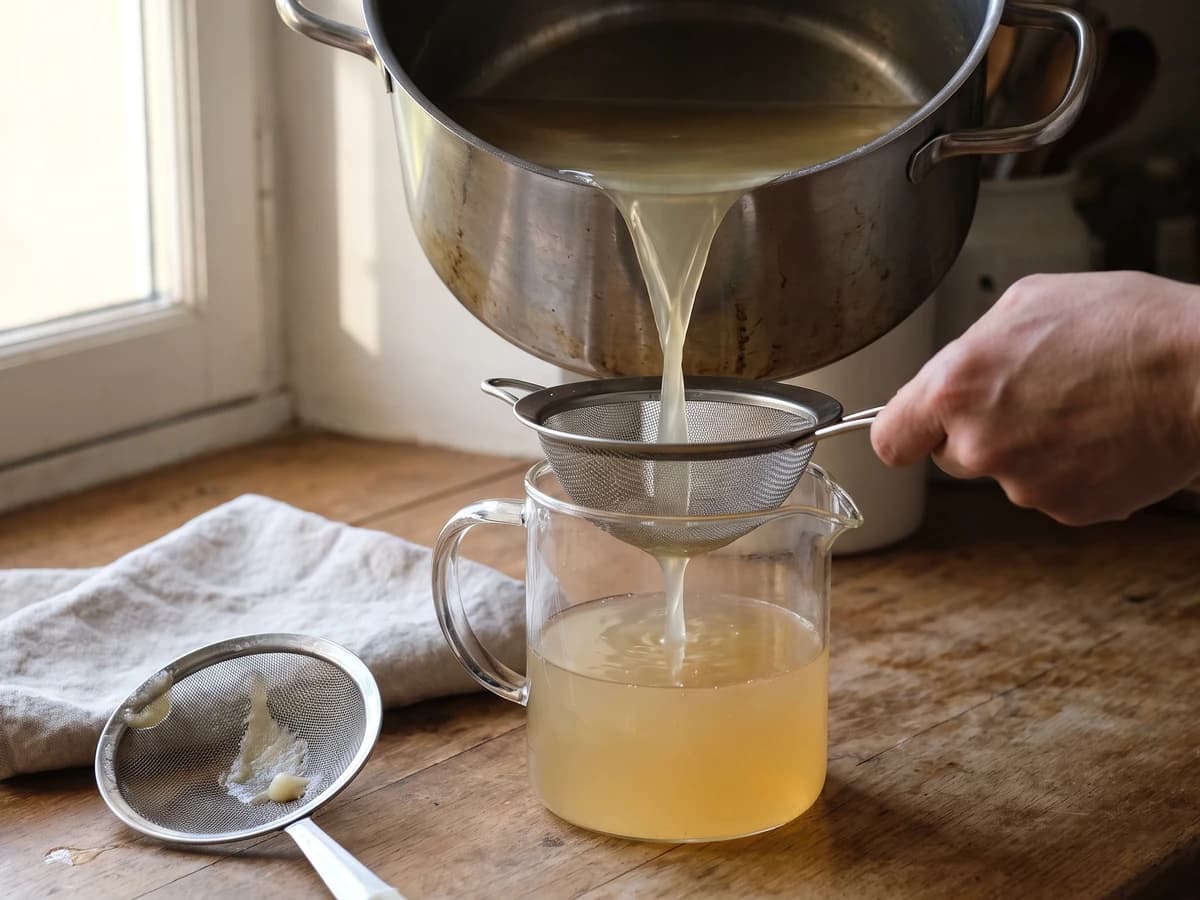
Break the veal bones small, then give them eight hours at a bare tremble. This pale, gelatinous fond becomes the quiet foundation beneath velouté, blanquette, and every sauce that must stay light.
Chef Juliette
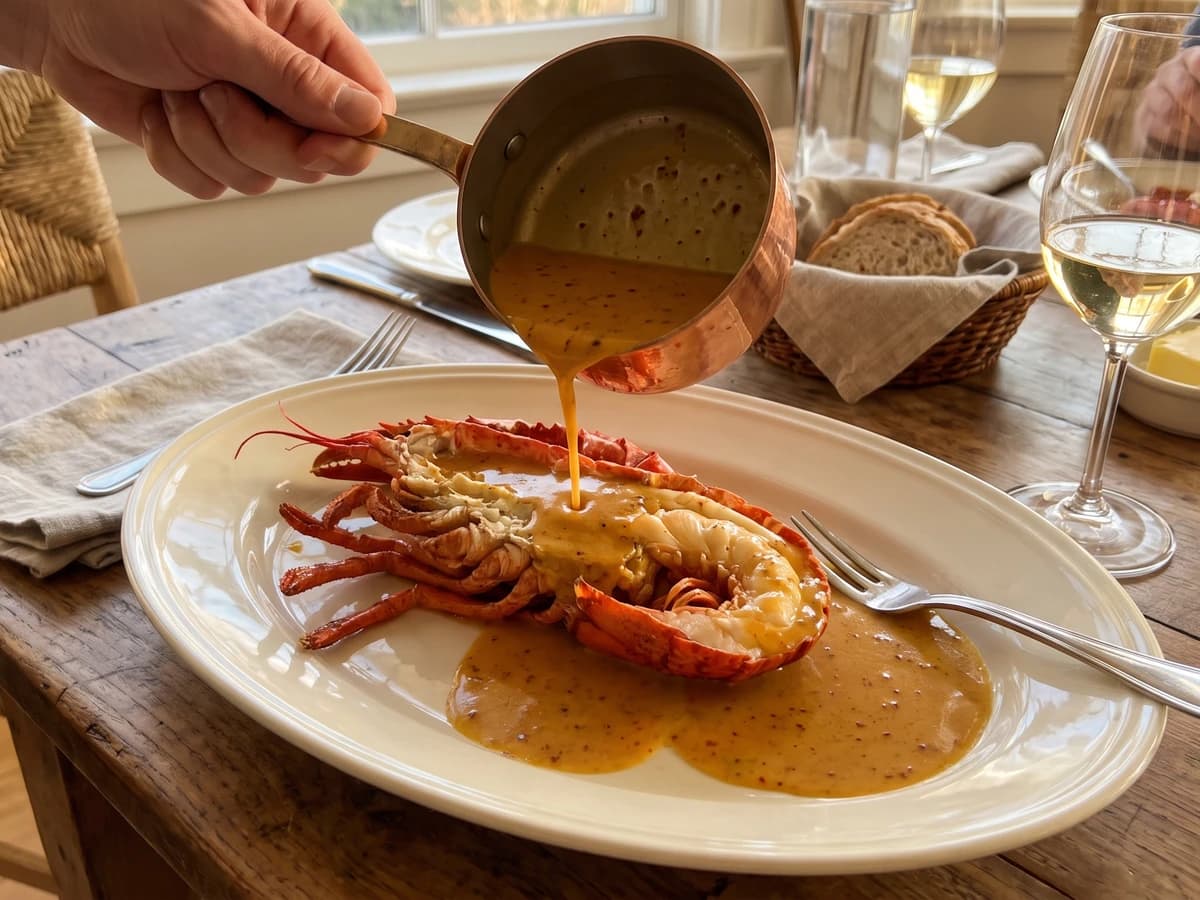
Sauce Orientale concentrates lobster-rich American Sauce with curry, then folds in cream away from the fire: a glossy, gently spiced derivative made for lobster, crayfish, and firm fish.
Chef Juliette
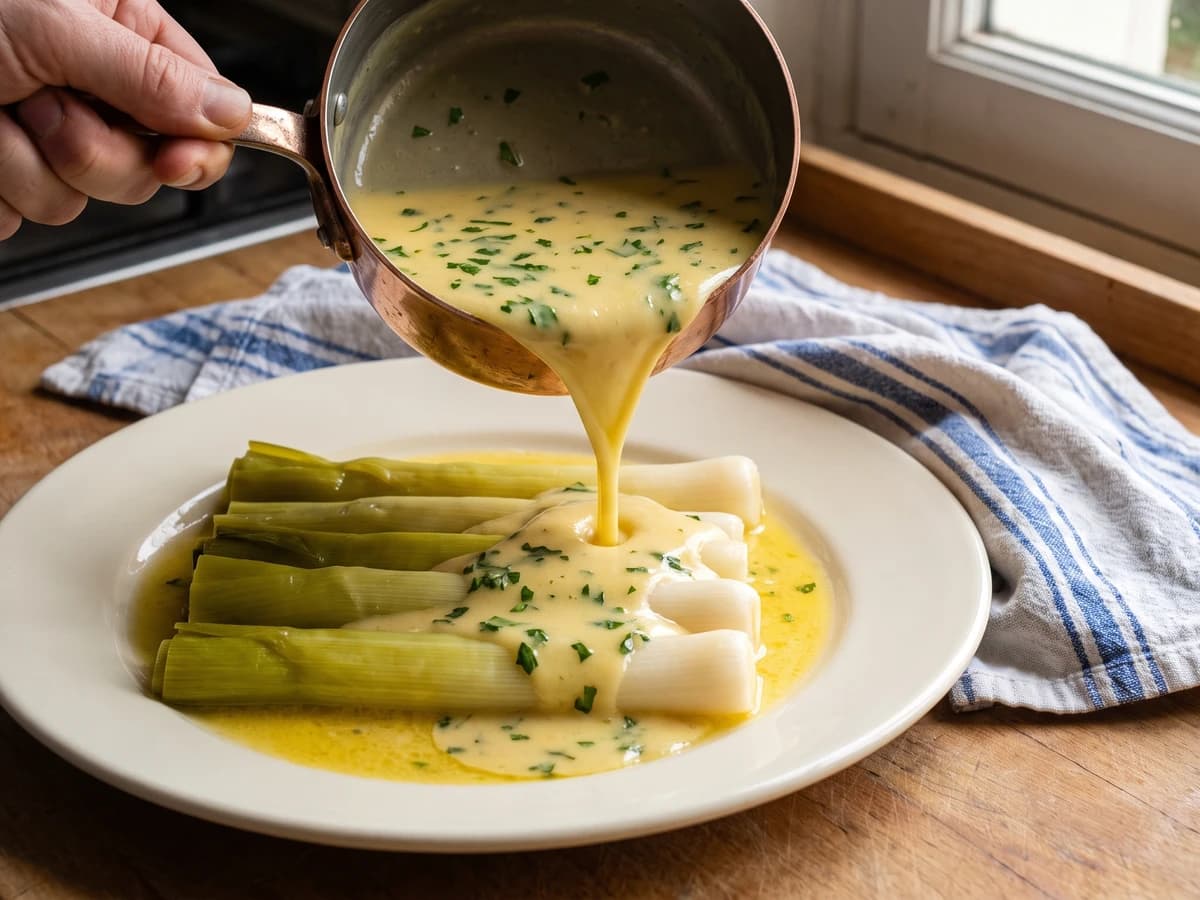
An old lesson in sauce families: Sauce Allemande takes mushroom liquor, then butter, lemon, and parsley, becoming a glossy Poulette for sheep's trotters, leeks, cauliflower, and anything needing gentle richness with a bright edge.