Chef Juliette
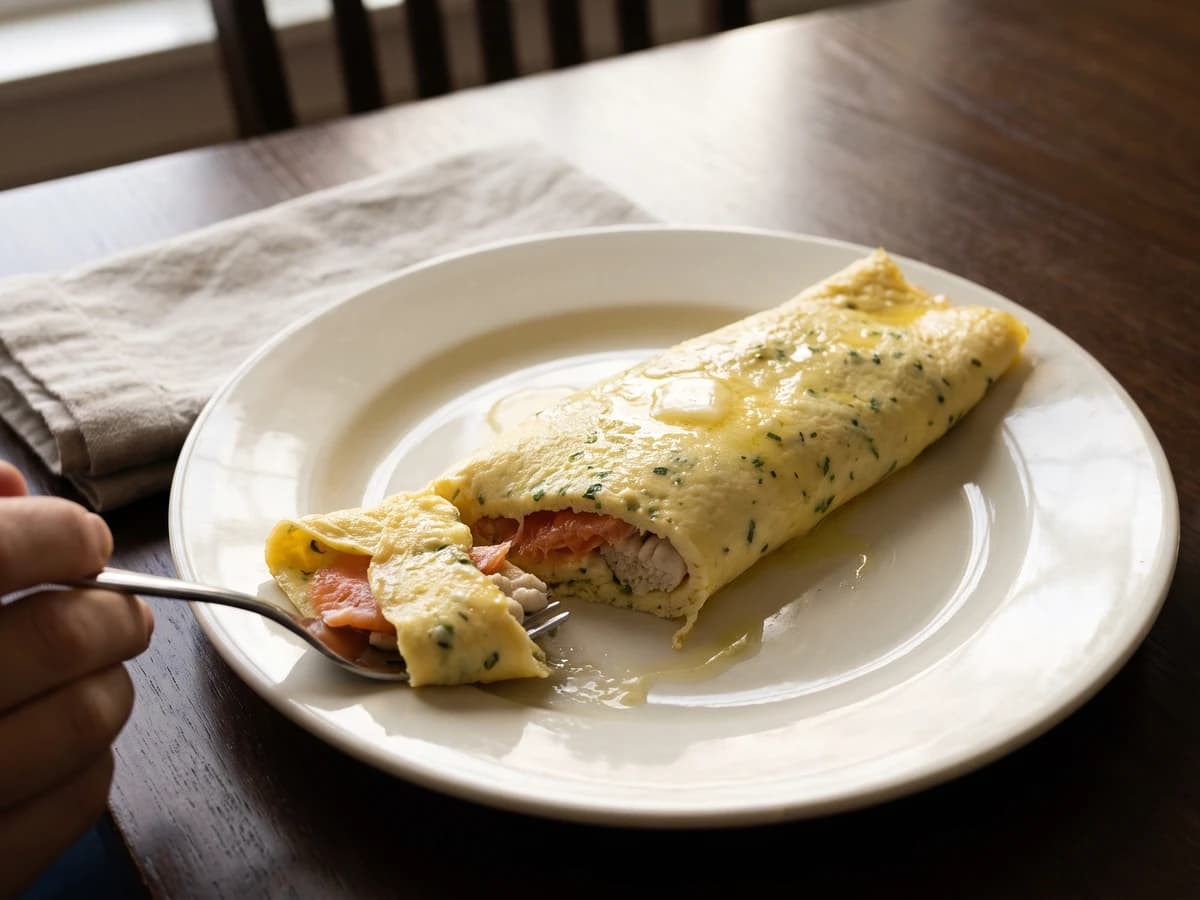
Omelette à l’Écossaise
A creamy omelette aux fines herbes closes around smoked-salmon-wrapped herring milts, gently poached in butter. Have the filling ready, then roll the eggs while they still shine.
A cooking platform built around craft, culture, and the stories behind what we eat.
Created by Chef Juliette
Based on No. 463, Scrambled Eggs, Chasseur, from Le Guide Culinaire (1907) by Auguste Escoffier
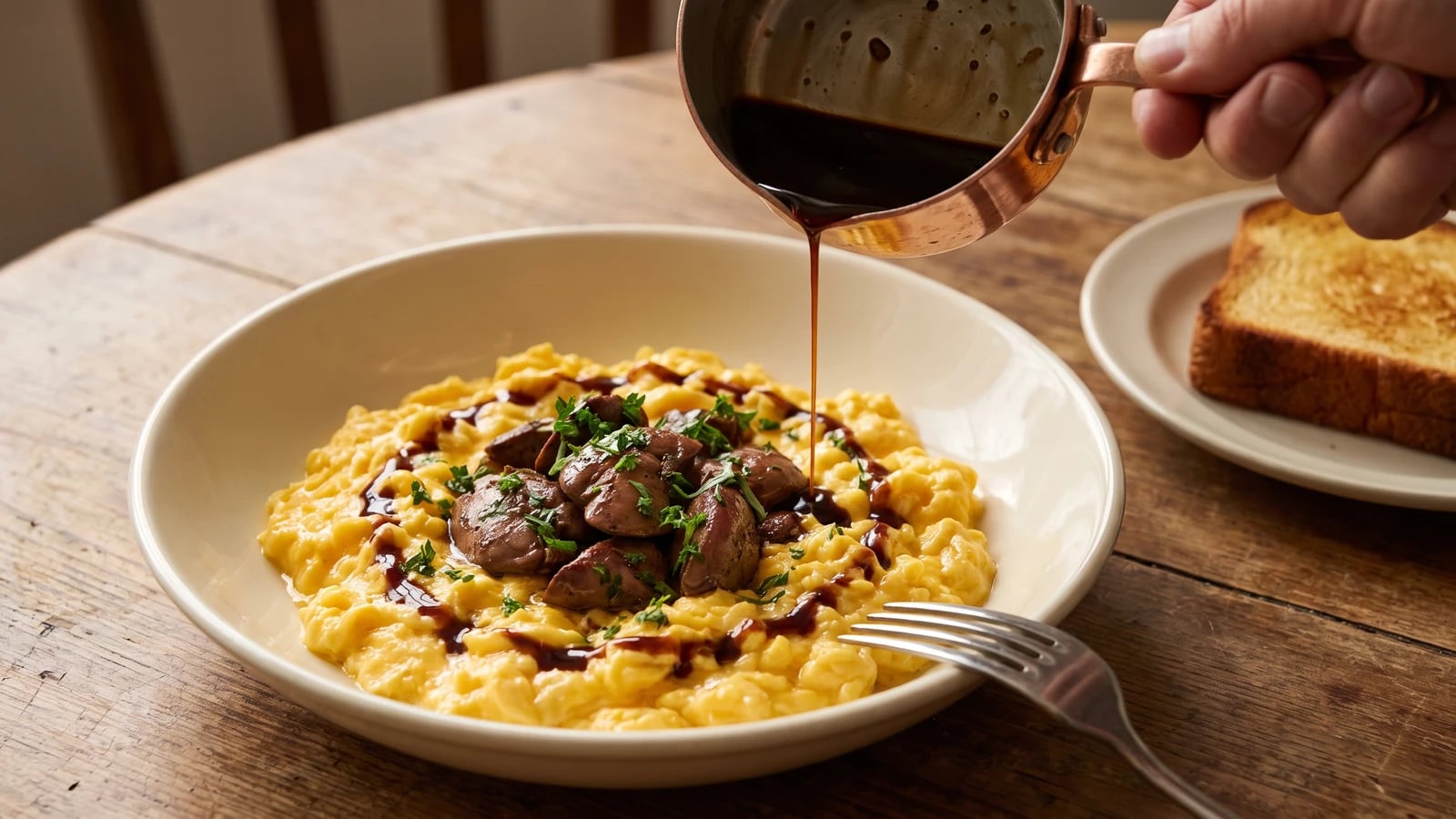
Œufs brouillés chasseur keep their grand-kitchen poise at the home table: loose butter-gold curds cupping browned chicken livers, fresh herbs, and one fine thread of glossy Chasseur sauce.
Œufs brouillés chasseur (soft scrambled eggs with sautéed chicken livers and Chasseur sauce) teach the essential law of œufs brouillés: finish the garnish first, then take the eggs from the heat while they still flow. Residual heat carries them to tenderness on the way to the table. Wait for firmness in the pan and you've already gone too far.
The original entry assumed a saucier on staff, Chasseur Sauce (Escoffier’s Method) (No. 33) waiting beside a stockpot never allowed to go cold, and timbales ready for service. At home, prepare that finished sauce from its own entry ahead, warm only what four people need, and use four heated shallow bowls. No salamander enters this dish. The timbale is brigade scaffolding and can go; one chicken liver for every two eggs, the chervil and tarragon, and the narrow thread of sauce are the dish and must stay. One cook, one stove, one evening.
Brown the livers and have every bowl waiting before you begin the eggs. Once the eggs enter the pan, they own your attention. Stir gently, lift the pan whenever the curds gather too quickly, and stop while they look almost too loose. That last bit of nerve decides the dish.
Œufs brouillés chasseur belongs to the Parisian dining room and the classical grand-hotel table, where named garnishes turned foundational egg preparations into distinct dishes without changing their central technique. Chasseur, the hunter's garnish, traveled from sauces for sautéed meats into the egg repertoire, with browned chicken liver supplying the rich center. This is not simply breakfast with a grand title: the formula is exact, one liver for every two eggs, herbs over the garnish, and only a thread of sauce around the curds.
Quantity
8
Quantity
4 livers (about 6 oz / 170 g)
trimmed and separated into neat lobes
Quantity
4 tablespoons (60 ml / 56 g)
divided
Quantity
3 tablespoons (45 ml / 45 g)
kept cold
Quantity
⅓ cup (80 ml / 85 g) Chasseur Sauce (Escoffier’s Method) (No. 33)
finished and warmed
Quantity
1 teaspoon (5 ml / 1 g)
finely chopped
Quantity
1 teaspoon (5 ml / 1 g)
finely chopped
Quantity
¾ teaspoon (3.75 ml / 4 g)
divided
Quantity
⅛ teaspoon (0.6 ml / 0.3 g)
| Ingredient | Quantity |
|---|---|
| large eggs | 8 |
| chicken liverstrimmed and separated into neat lobes | 4 livers (about 6 oz / 170 g) |
| unsalted butterdivided | 4 tablespoons (60 ml / 56 g) |
| heavy creamkept cold | 3 tablespoons (45 ml / 45 g) |
| Chasseur Sauce (Escoffier’s Method)finished and warmed | ⅓ cup (80 ml / 85 g) Chasseur Sauce (Escoffier’s Method) (No. 33) |
| fresh chervilfinely chopped | 1 teaspoon (5 ml / 1 g) |
| fresh tarragon leavesfinely chopped | 1 teaspoon (5 ml / 1 g) |
| fine sea saltdivided | ¾ teaspoon (3.75 ml / 4 g) |
| finely ground white pepper | ⅛ teaspoon (0.6 ml / 0.3 g) |
Warm four shallow bowls and a small plate. Set the chopped chervil and tarragon beside them, with the cold cream and butter measured and ready. Warm the Chasseur Sauce (Escoffier’s Method) (No. 33) gently in a small saucepan, then cover and hold it off the heat. It must be fluid enough to fall from a spoon in a narrow thread; if reheating has tightened it, loosen it with a teaspoon of warm water.
Dry the chicken livers thoroughly and season them with ¼ teaspoon of the salt and a little white pepper. Melt 1 tablespoon of the butter in a heavy skillet over medium-high heat. When the foam subsides, sauté the livers without crowding, turning once their first sides are deeply browned. Cook until bronzed outside and the thickest piece reaches 165°F (74°C), about 4 to 6 minutes depending on size. Transfer them to the warm plate and cover loosely. If the butter blackens before the livers are cooked, wipe out the pan and begin again with fresh butter. Ça se rattrape; burnt butter does not improve by negotiation.
Crack the eggs into a bowl and beat them with the remaining salt and white pepper only until the yolks and whites are completely joined. Don't whip in a cap of foam. Œufs brouillés should be creamy and close-textured, not airy.
Melt 1 tablespoon of the butter in a heavy-bottomed saucepan over low heat. Add the eggs and stir continuously with a flexible spatula, scraping the bottom, sides, and corners in slow sweeps. The eggs will seem unchanged, then begin forming very small, tender curds after several minutes. If they gather quickly or leave a dry film on the pan, lift the saucepan from the heat and keep stirring. Gentle heat is the technique here; the curds should thicken like a soft custard, never seize into lumps.
When the eggs mound softly but still spread back into the pan, remove them from the heat. Fold in the cold cream and the remaining 2 tablespoons of butter until the curds become glossy and flowing. If the eggs have begun tightening too fast, add half the cream immediately and fold off the heat before adding the rest. Ça se rattrape, provided you act before they brown. The finished eggs should look slightly looser than you intend to serve, because the warm bowls will finish them.
Divide the œufs brouillés among the four warm bowls. With the back of a spoon, make a shallow hollow in the center of each portion and set one sautéed chicken liver inside. Scatter the chervil and tarragon over the livers, then surround each hollow with a fine thread of the warm Chasseur Sauce (Escoffier’s Method) (No. 33). Keep the sauce narrow and deliberate. It should season the eggs, not drown their tenderness. Serve at once. À table!
1 serving (about 170g)
Culinary guides, cultural storytelling, and the editorial depth that makes cooking meaningful.
Discover Culinary ExplorerChef Juliette
A creamy omelette aux fines herbes closes around smoked-salmon-wrapped herring milts, gently poached in butter. Have the filling ready, then roll the eggs while they still shine.
Chef Juliette
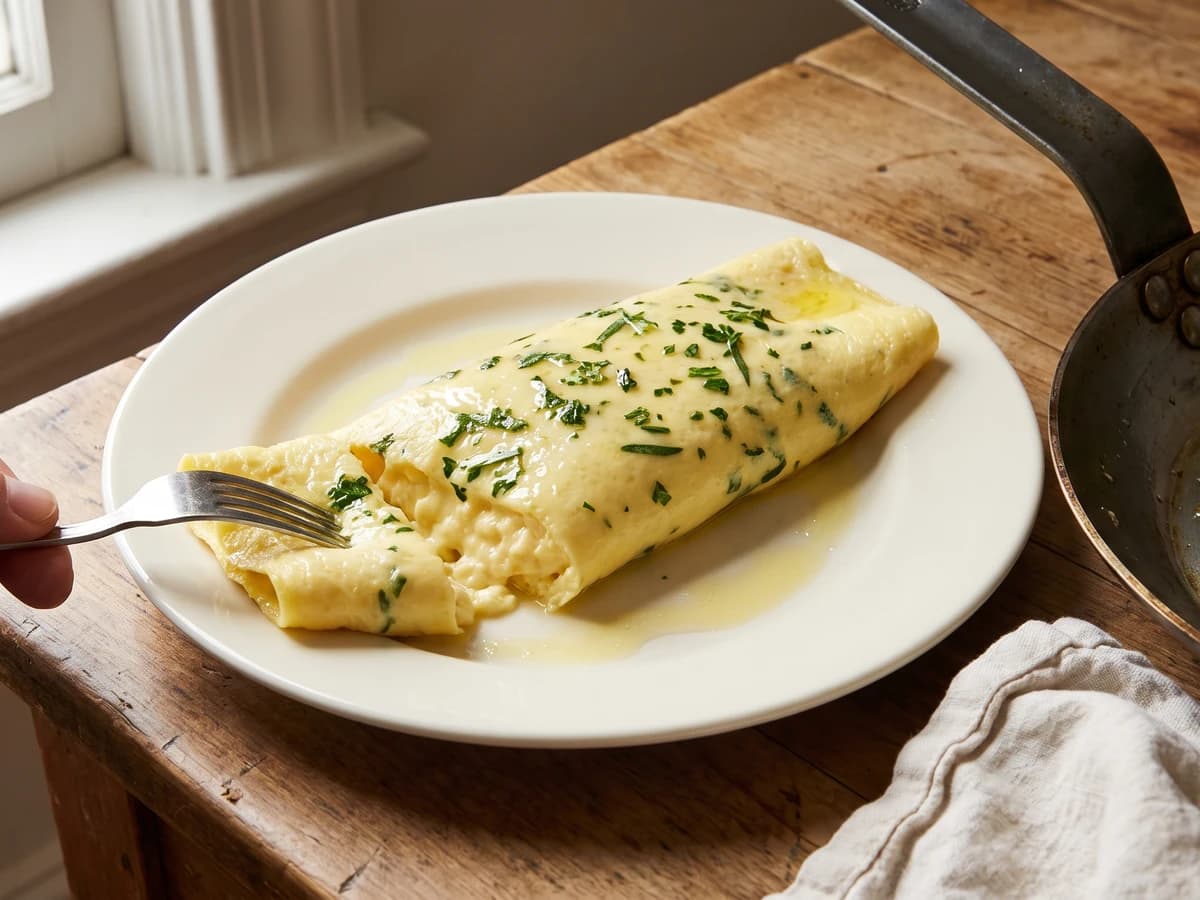
Four tender herbs, hot butter, and two eggs per pan: this rolled omelette teaches the quick hand and good judgment that keep the outside pale and the center creamy.
Chef Juliette
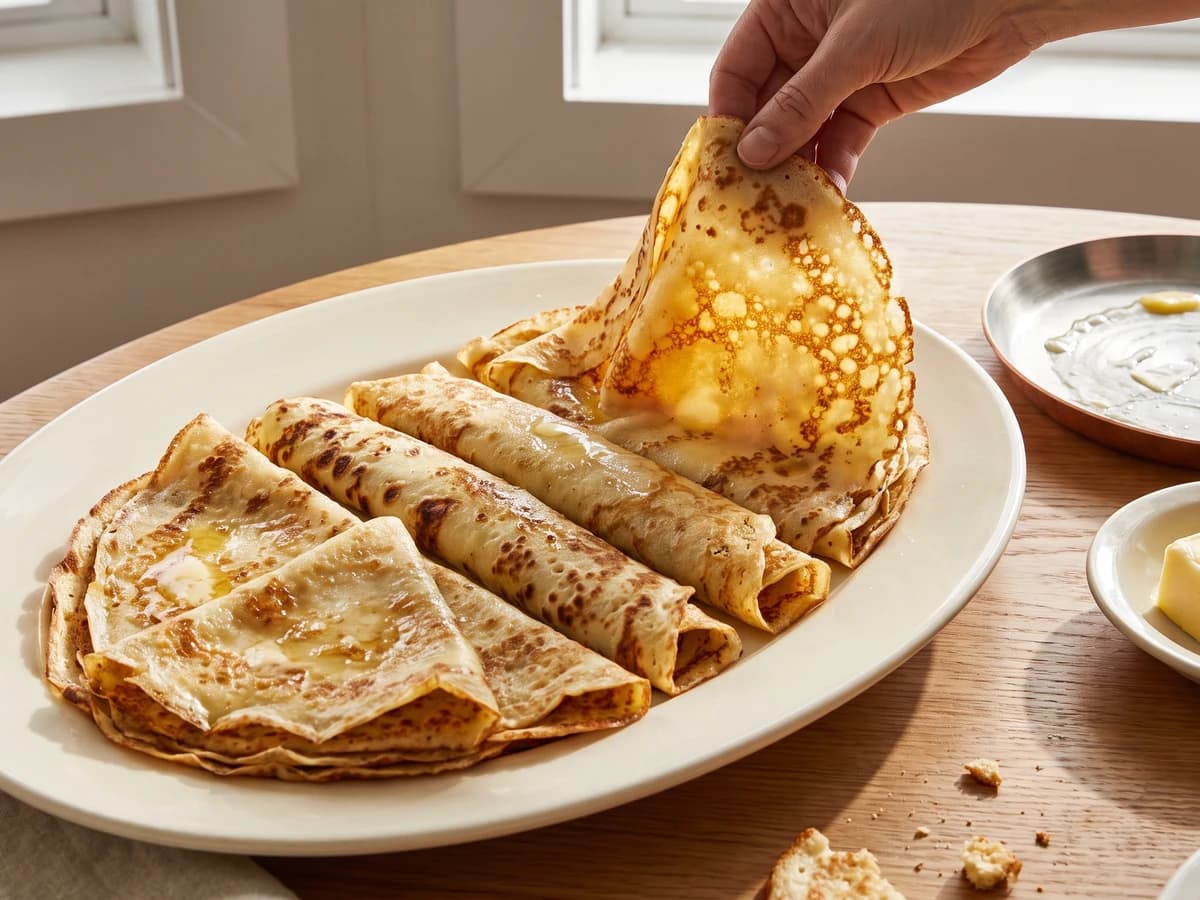
Four batters, one lesson: let the flour drink deeply before cooking, then spread the batter thinly in butter for crêpes and pannequets that bend without becoming tough.
Chef Juliette
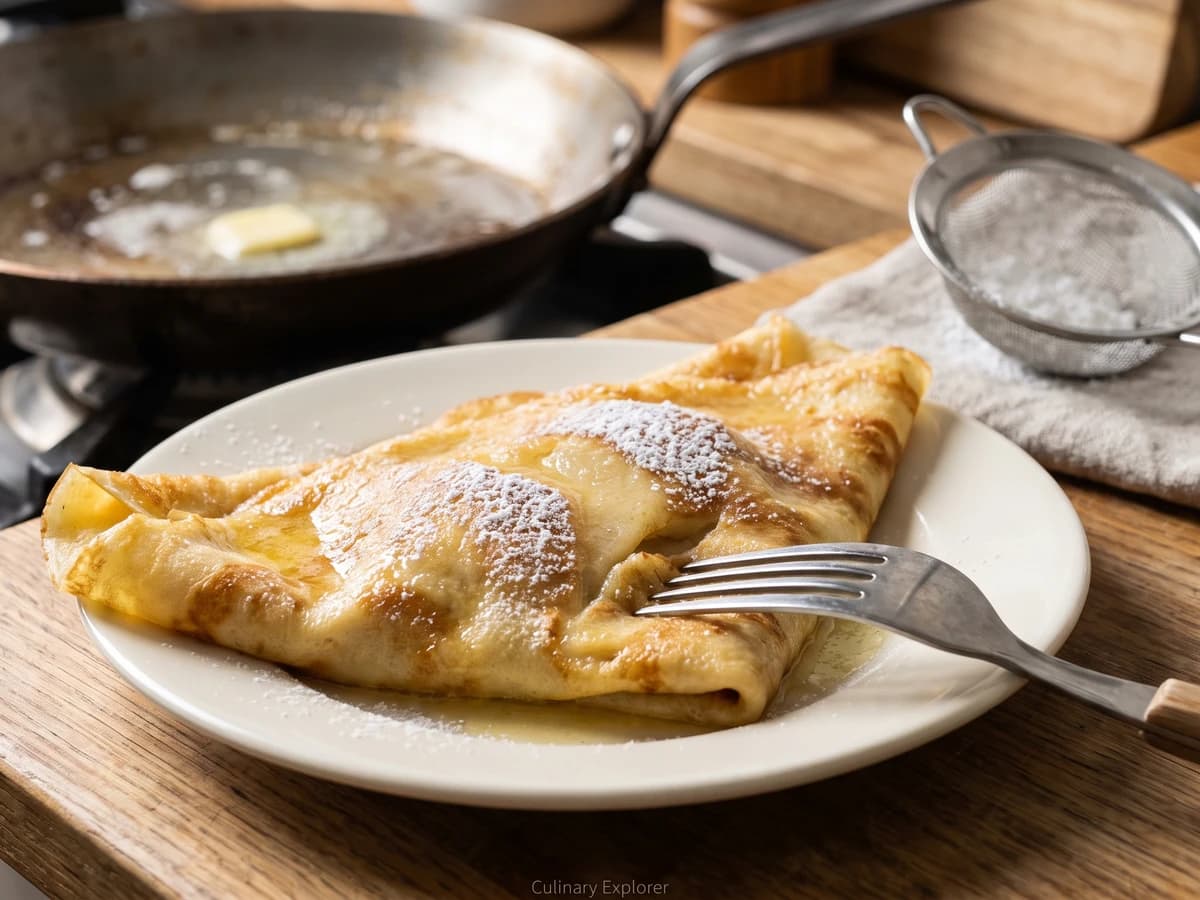
Crêpes au Couvent trap ripe Williams pear dice between two thin pours of sweet batter, then turn in one clean toss and reach the table butter-gold, powdered, and burning hot.