Chef Juliette
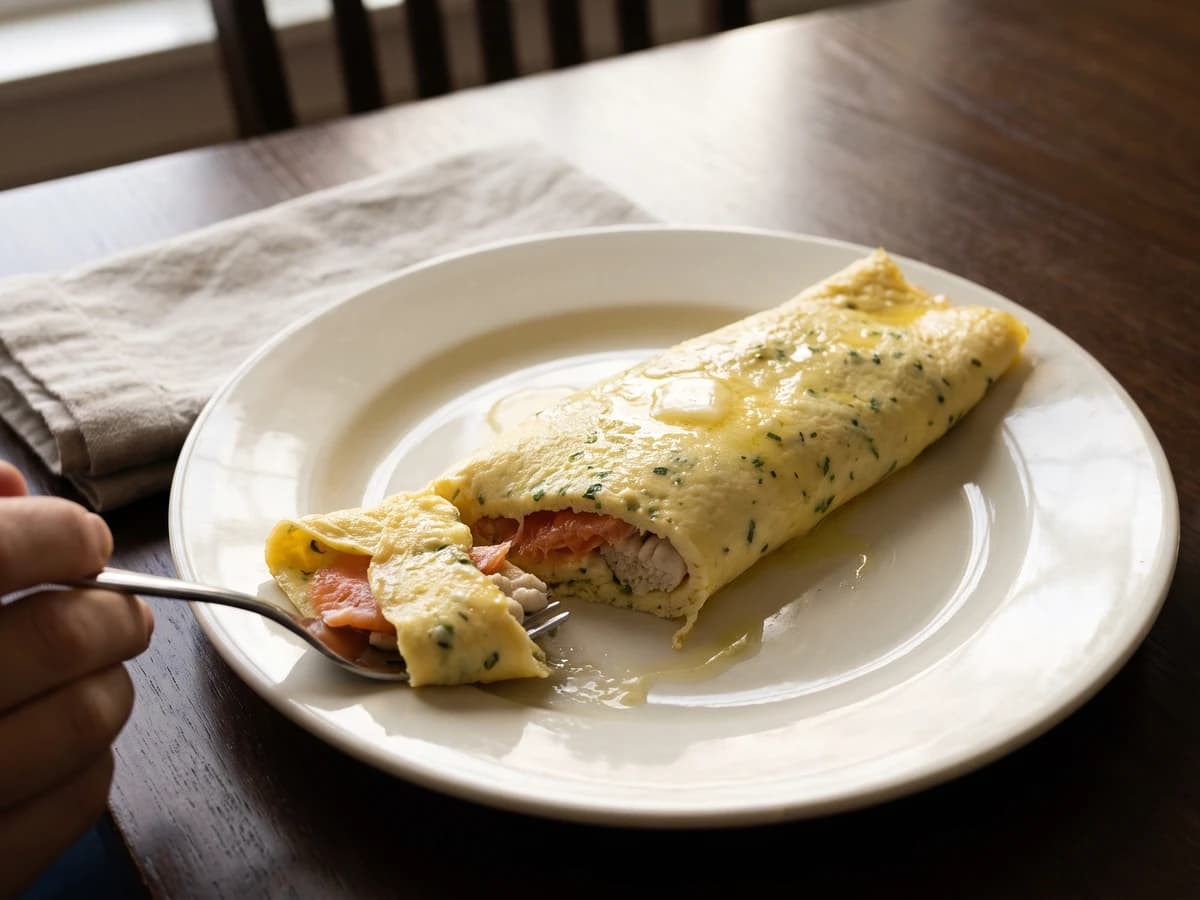
Omelette à l’Écossaise
A creamy omelette aux fines herbes closes around smoked-salmon-wrapped herring milts, gently poached in butter. Have the filling ready, then roll the eggs while they still shine.
A cooking platform built around craft, culture, and the stories behind what we eat.
Created by Chef Juliette
Based on No. 459, Scrambled Eggs, from Le Guide Culinaire (1907) by Auguste Escoffier
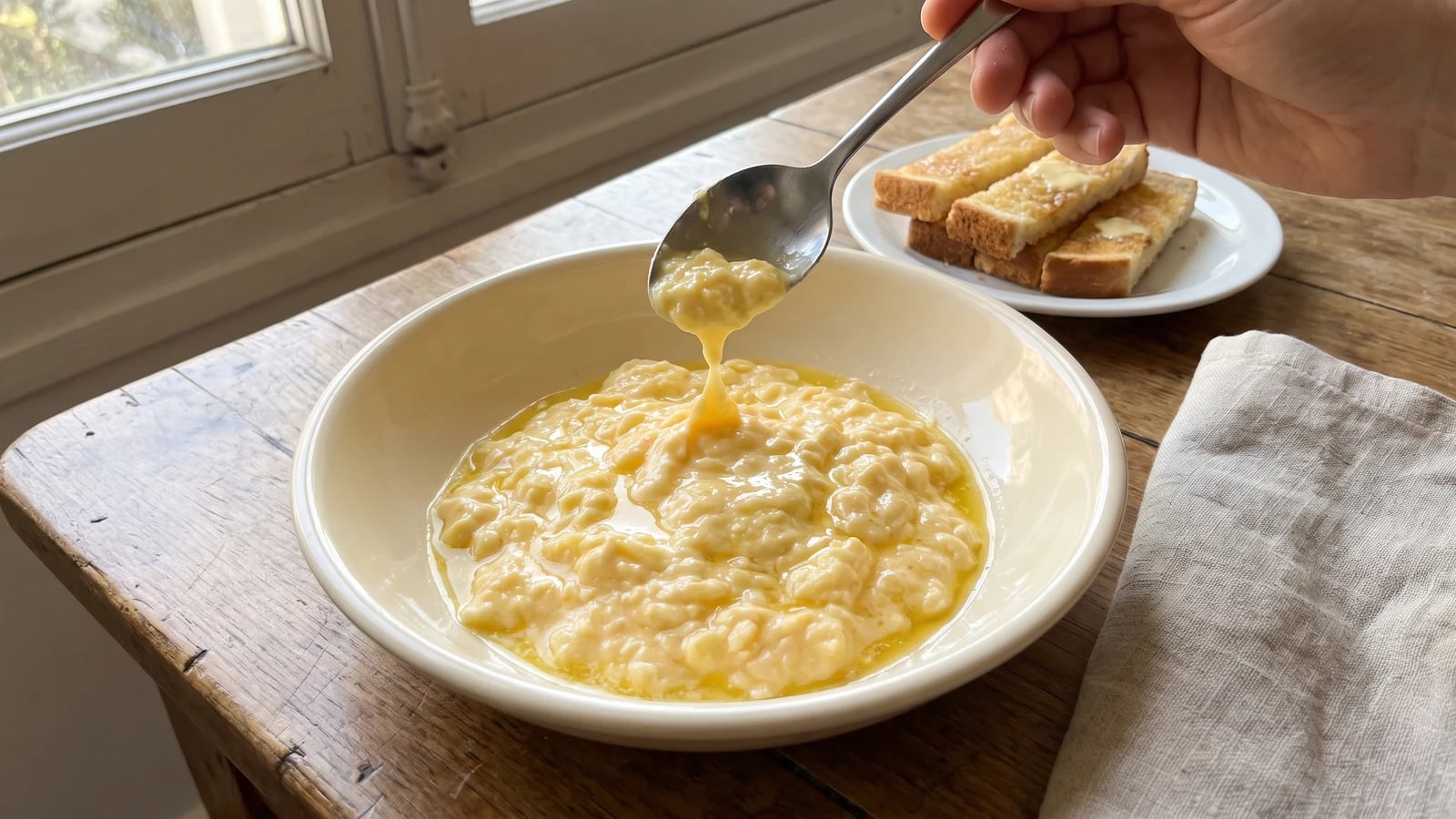
Œufs brouillés teach the quiet discipline of moderate heat: fine curds, a creamy flow, and butter shining through, all made in one small pan and brought to the table before the eggs think of setting firm.
Œufs brouillés, French scrambled eggs, teach one exact lesson: eggs keep cooking after the pan leaves the flame. Before you touch the pan, know that you must stop while they still look slightly too loose. Wait until they appear finished and their own retained heat will carry them past creamy into firm.
The book's grand service assumed silver timbales and, in older practice, a Bain-Marie (hot-water bath), with ornamental toast or Palmettes, palm-shaped pieces of puff paste, standing by. Your home equivalent is a 20 cm heavy saucepan over moderate direct heat and four warmed bowls; the optional finished Croûtes et Croustades (No. 2393) remain if you want the pastry service. The silver, ornamental garnish, and brigade-sized service are scaffolding and may go. Moderate heat, constant movement, and immediate serving are the dish and must stay. One cook, one stove, one evening.
Have the cold cream and final piece of butter waiting beside the stove before the eggs begin. The moment that matters is the finish: remove the pan while the curds still flow, then arrest the cooking with that cold cream and butter.
Œufs brouillés belong to the French bourgeois breakfast and light-supper table, and Parisian grand kitchens polished them into a timbale dish accompanied by toast, Palmettes, or pastry croustades. Old cookery admitted only the Bain-Marie, but the canon itself accepted direct moderate heat once cooks recognized that gradual coagulation, not the water bath alone, creates the fine, homogeneous texture. Direct heat changes the time, not the standard: the eggs must still reach the table flowing and creamy.
Quantity
8
Quantity
3 tablespoons (45 ml / 42 g)
divided
Quantity
3 tablespoons (45 ml / 45 g)
kept cold
Quantity
½ teaspoon (2.5 ml / 3 g)
Quantity
⅛ teaspoon (0.6 ml / 0.3 g)
Quantity
4 small finished Croûtes et Croustades (No. 2393)
warmed for serving
| Ingredient | Quantity |
|---|---|
| large eggs | 8 |
| unsalted butterdivided | 3 tablespoons (45 ml / 42 g) |
| heavy creamkept cold | 3 tablespoons (45 ml / 45 g) |
| fine sea salt | ½ teaspoon (2.5 ml / 3 g) |
| ground white pepper | ⅛ teaspoon (0.6 ml / 0.3 g) |
| Croûtes et Croustades (No. 2393) (optional)warmed for serving | 4 small finished Croûtes et Croustades (No. 2393) |
Warm four shallow serving bowls and keep them nearby. Divide the butter, setting aside 1 tablespoon (15 ml / 14 g) for the finish, and keep all the cream cold. Crack the eggs into a bowl, add the salt and white pepper, and whisk only until the yolks and whites are completely joined. You want homogeneity, not a head of foam.
Melt the remaining 2 tablespoons (30 ml / 28 g) butter in a 20 cm heavy saucepan over low to moderate heat. Swirl it across the base and sides, but do not let it brown. Add the eggs as soon as the butter finishes foaming. A wide frying pan cooks the mixture too quickly at the edges; the small saucepan gives you depth, control, and time.
Stir without pause using a flexible spatula, sweeping slowly across the base, around the corners, and up the sides. Keep the heat moderate enough that the eggs thicken progressively as one creamy mass, forming fine curds rather than separate dry pieces, about 5 to 7 minutes. If a firm skin forms against the pan or the curds suddenly seize, lift the saucepan off the heat at once, scrape thoroughly, and stir in a spoonful of the cold cream. Ça se rattrape. Return the pan only after its fierce heat has subsided.
Remove the saucepan from the heat when the eggs resemble a loose, glossy porridge and a path drawn by the spatula closes slowly behind it. They should settle softly, not stand in a heap. Fold in the reserved cold butter and whatever remains of the cold cream, stirring until the butter disappears and the curds run smooth. If they still tighten too quickly, set the saucepan on a cold surface and continue stirring. Fully browned or rubbery eggs cannot be restored, so make this decision early.
Taste for seasoning and spoon the œufs brouillés immediately into the warmed bowls. For the book's pastry service, divide them among the four warm Croûtes et Croustades (No. 2393), filling them only at the last moment so their shells remain crisp. Bring the eggs straight to the table while they still flow under the spoon. À table!
1 serving (about 115g)
Culinary guides, cultural storytelling, and the editorial depth that makes cooking meaningful.
Discover Culinary ExplorerChef Juliette
A creamy omelette aux fines herbes closes around smoked-salmon-wrapped herring milts, gently poached in butter. Have the filling ready, then roll the eggs while they still shine.
Chef Juliette
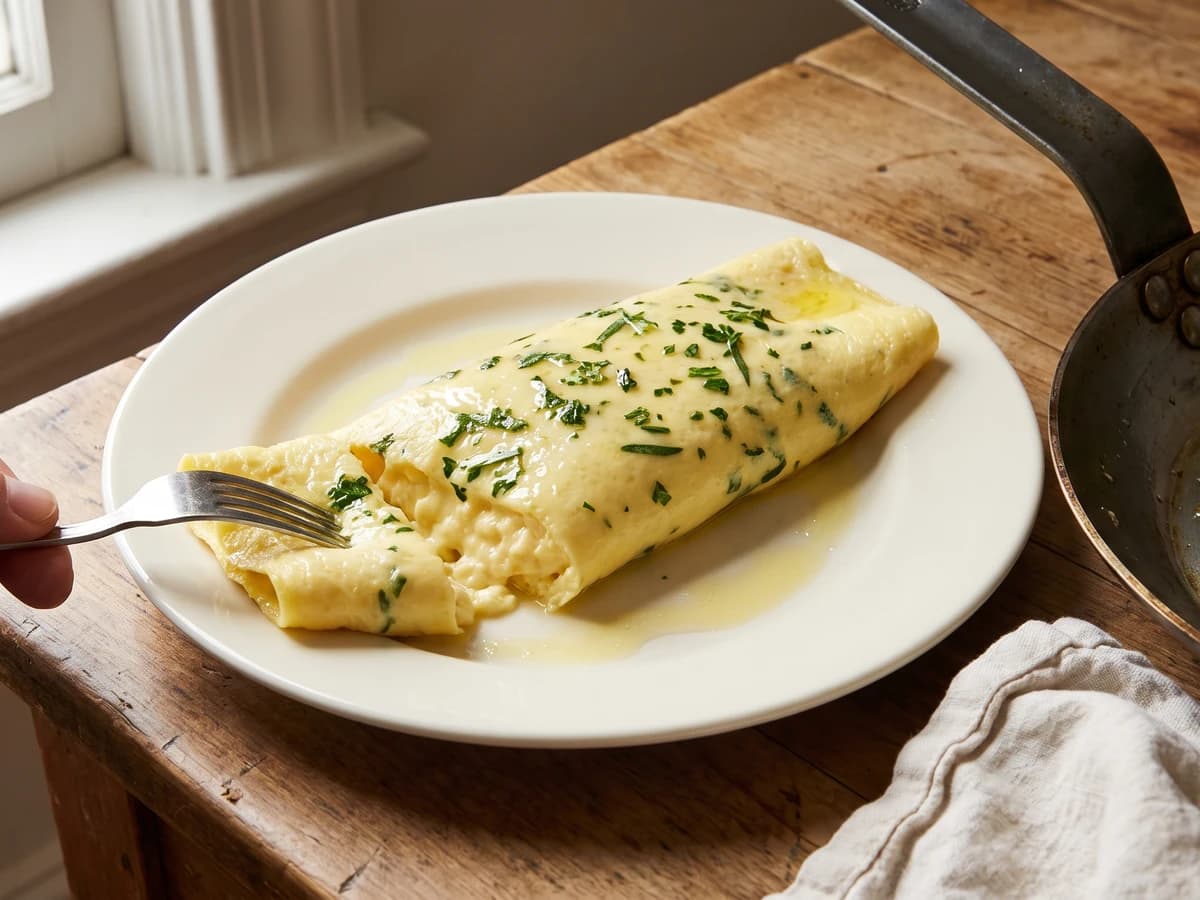
Four tender herbs, hot butter, and two eggs per pan: this rolled omelette teaches the quick hand and good judgment that keep the outside pale and the center creamy.
Chef Juliette
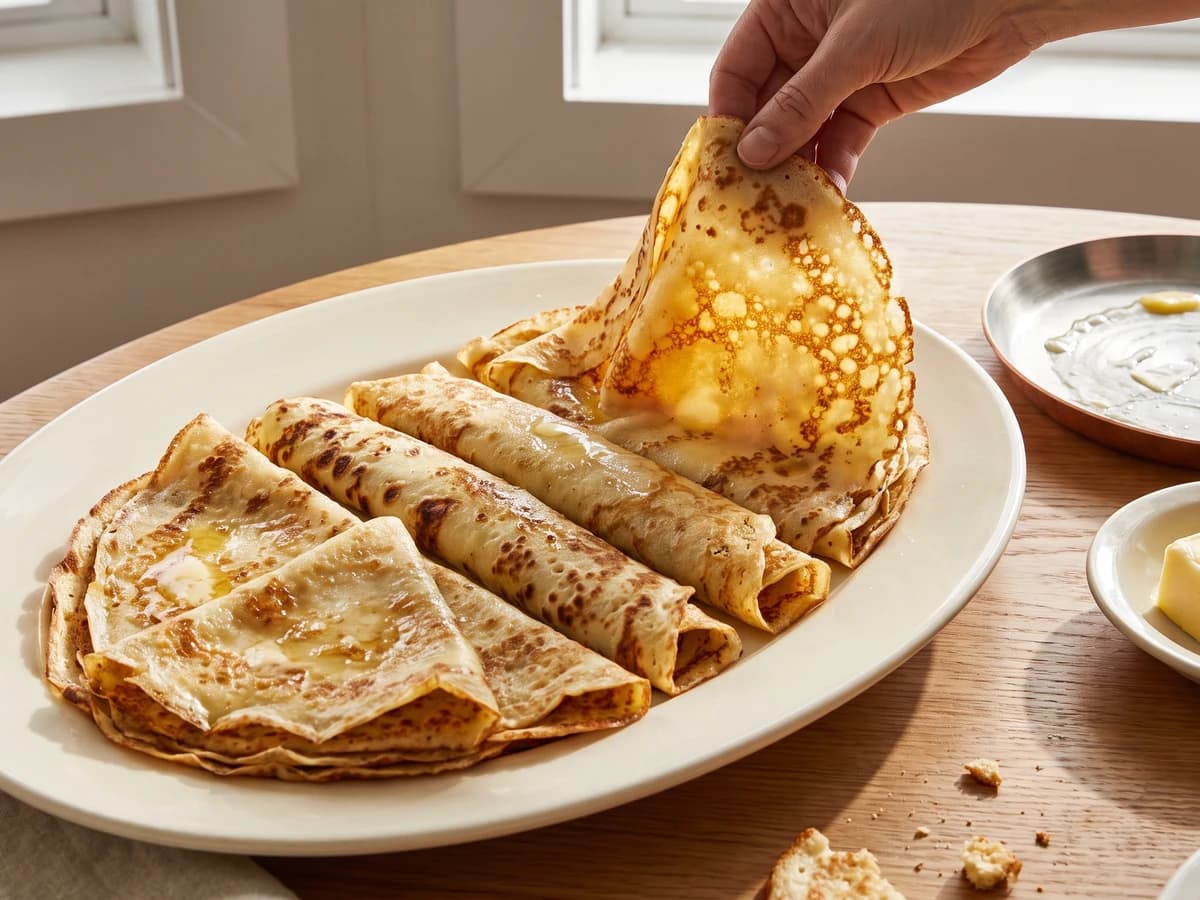
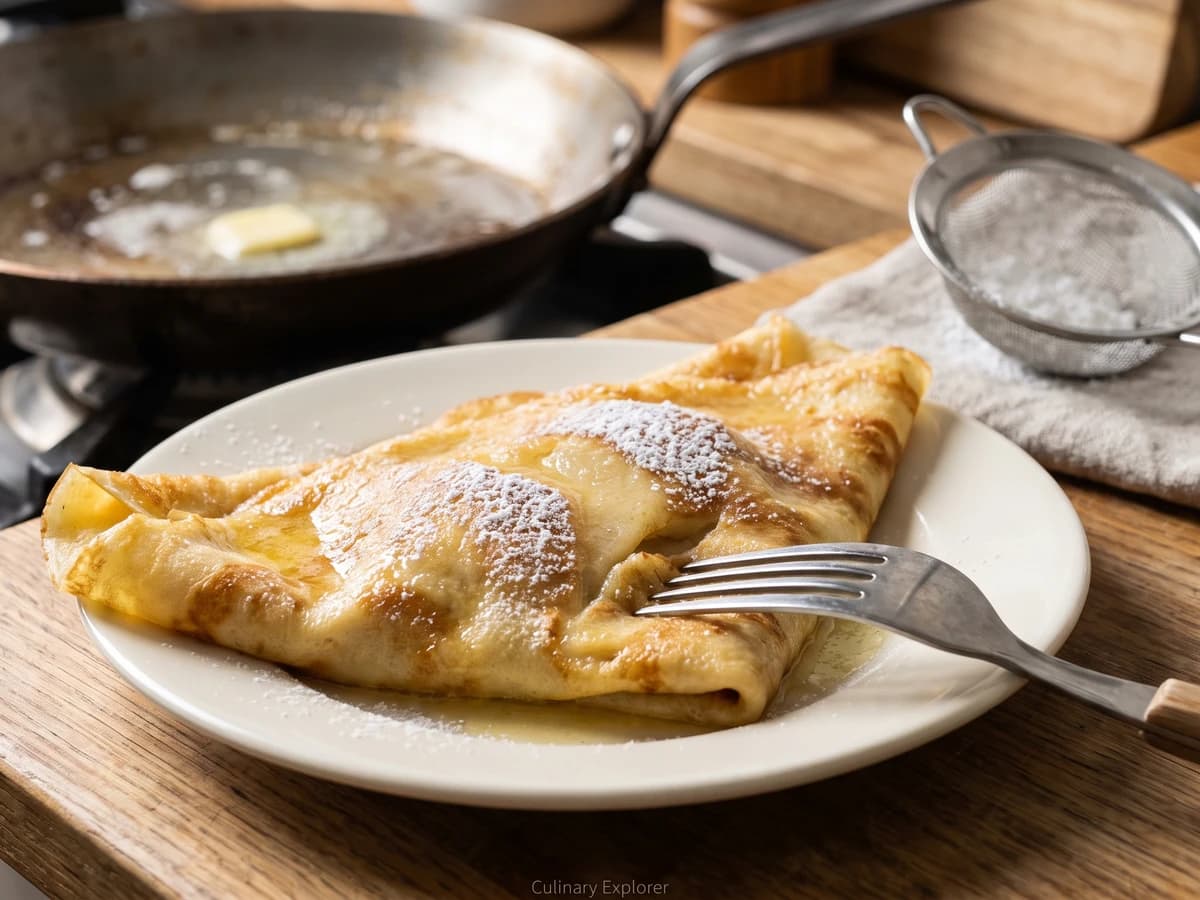
Four batters, one lesson: let the flour drink deeply before cooking, then spread the batter thinly in butter for crêpes and pannequets that bend without becoming tough.
Chef Juliette
Crêpes au Couvent trap ripe Williams pear dice between two thin pours of sweet batter, then turn in one clean toss and reach the table butter-gold, powdered, and burning hot.