Chef Juliette
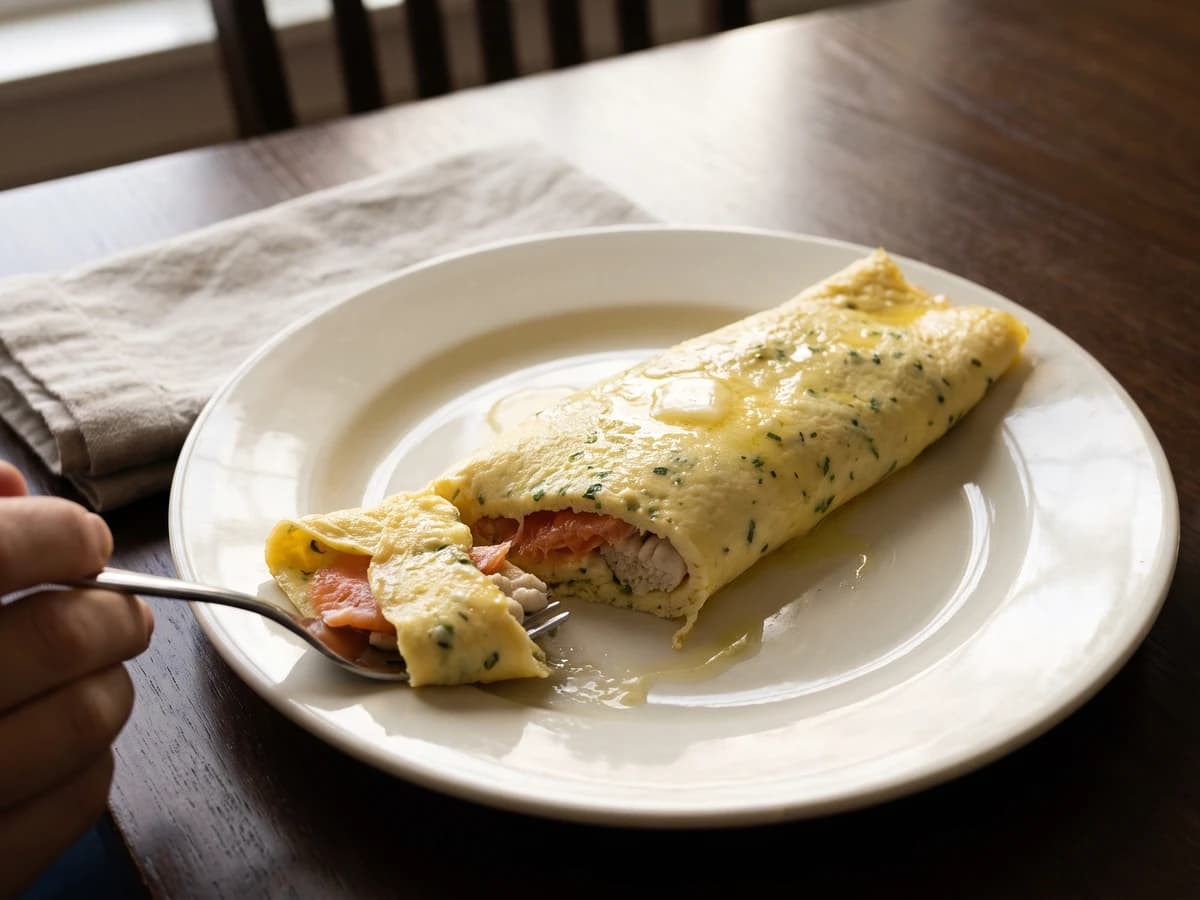
Omelette à l’Écossaise
A creamy omelette aux fines herbes closes around smoked-salmon-wrapped herring milts, gently poached in butter. Have the filling ready, then roll the eggs while they still shine.
A cooking platform built around craft, culture, and the stories behind what we eat.
Created by Chef Juliette
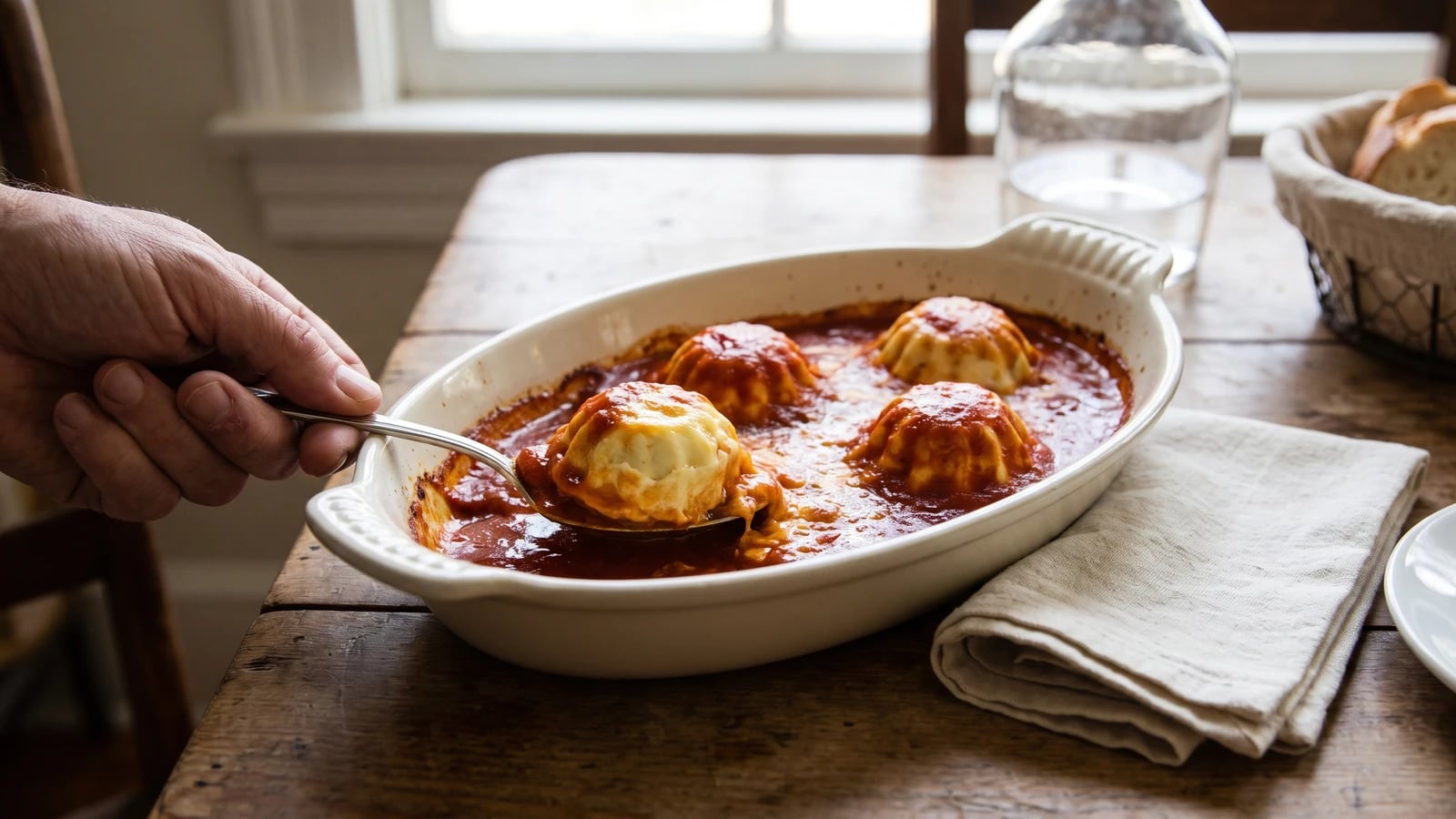
Based on No. 454, Neapolitan Moulded Eggs, from Le Guide Culinaire (1907) by Auguste Escoffier
Soft scrambled eggs become tender little moulds under tomato-rich, buttered demi-glace: a precise lesson in stopping early, poaching gently, and giving the broiler only a brief final word.
Œufs moulés à la napolitaine (Neapolitan moulded eggs) teach the discipline of cooking an egg twice without making it taste twice-cooked. The one true thing is this: the first scramble must remain loose and shining, because the Bain-Marie (hot-water bath) will finish it. Cook those first five eggs firmly and no sauce, however splendid, can return their tenderness.
The original preparation assumed a saucier with demi-glace always ready, a shelf of fluted brioche moulds, a salamander for glazing, and enough hands to make brigade quantities to order. At home, use a good gelatin-rich prepared demi-glace reduced with canned tomato passata, four small metal moulds, and the domestic broiler. The stockpot and individual salamander service were scaffolding; the five-to-two ratio of scrambled eggs to raw eggs, the gentle poach, Parmesan, and the tomato-saturated buttered glaze are the dish and remain exactly where they belong. One cook, one stove, one evening.
The finished moulds should be tender enough to yield under a spoon, savoury with Parmesan, and lacquered in a sauce that tastes first of tomato, then deep brown stock, then butter. Take the five eggs off the heat while they still look underdone. That is the step that decides everything.
Œufs moulés à la napolitaine belong to the Parisian grand-kitchen table, where egg preparations were organized through precise moulds, sauces, and garnitures. The title can mislead: à la napolitaine is French classical shorthand for tomato and Parmesan, a culinary glance toward Naples rather than evidence that Neapolitan households served this exact moulded egg. French cooks carried the preparation from formal first-course service to the home table by keeping its gentle Bain-Marie poach and reducing the surrounding apparatus.
Quantity
7
divided into 5 eggs and 2 eggs
Quantity
5 tablespoons (75 ml / 70 g)
softened and divided
Quantity
3/4 cup (180 ml / 70 g)
divided
Quantity
3/4 teaspoon (3.75 ml / 4 g)
divided
Quantity
1/8 teaspoon (0.6 ml / 0.25 g)
Quantity
1 cup (240 ml / 240 g)
Quantity
1/2 cup (120 ml / 125 g)
Quantity
About 6 cups (1.5 L / 1.5 kg)
for the Bain-Marie
Quantity
1 finishing application of Gratins (No. 268)
| Ingredient | Quantity |
|---|---|
| large eggsdivided into 5 eggs and 2 eggs | 7 |
| unsalted buttersoftened and divided | 5 tablespoons (75 ml / 70 g) |
| finely grated Parmesan cheesedivided | 3/4 cup (180 ml / 70 g) |
| fine saltdivided | 3/4 teaspoon (3.75 ml / 4 g) |
| finely ground white pepper | 1/8 teaspoon (0.6 ml / 0.25 g) |
| prepared veal demi-glace | 1 cup (240 ml / 240 g) |
| smooth canned tomato passata | 1/2 cup (120 ml / 125 g) |
| just-boiled waterfor the Bain-Marie | About 6 cups (1.5 L / 1.5 kg) |
| Gratins | 1 finishing application of Gratins (No. 268) |
Heat the oven to 325°F (165°C) with a rack in the middle. Use 1 1/2 tablespoons (22 ml / 21 g) of the butter to coat four 4-fluid-ounce (120 ml) brioche or dariole moulds generously, working it into every flute, then butter a shallow gratin dish. Set a folded kitchen towel in a deep roasting pan and stand the moulds on it; the towel keeps them from skating when the water is poured. Separate five eggs into one bowl and the remaining two into another.
Combine the veal demi-glace and tomato passata in a small heavy saucepan. Bring them to a quiet simmer and reduce for 12 to 15 minutes, stirring often, until about 1 cup (240 ml) remains and the sauce coats a spoon without running away at once. Keep the heat moderate so the tomato sweetens rather than catches. Set the reduction aside off the heat; the final butter goes in only after the eggs are unmoulded.
Whisk the five eggs with 1/2 teaspoon (2.5 ml / 3 g) of the salt and all the white pepper, just until no streaks remain. Melt 1 tablespoon (15 ml / 14 g) butter in a 10-inch (25 cm) skillet over medium-low heat. Add the eggs and stir continuously with a flexible spatula, sweeping the pan floor and folding the soft curds over themselves. Stop while the eggs are still very loose, glossy, and visibly wet between the curds. Scrape them immediately into a cool bowl and fold in 1/2 cup (120 ml / 47 g) Parmesan. If the curds tighten too quickly, stir in 1 tablespoon (15 ml) of the two reserved beaten eggs as soon as they reach the cool bowl; this arrests the cooking without changing the five-to-two ratio. Ça se rattrape.
Let the soft scramble stand for 2 to 3 minutes, until warm rather than hot. Whisk the two reserved raw eggs until fluid, then fold them gently into the scrambled eggs. The preparation should look alarmingly loose, with soft curds suspended in raw egg. It is exactly right. Taste a small cooked dab and add some of the remaining salt only if needed, remembering that the Parmesan and demi-glace both carry salt.
Divide the egg preparation among the buttered moulds, filling each about three-quarters full. Pour the just-boiled water into the roasting pan until it reaches halfway up the moulds, cover the pan loosely with foil, and transfer it carefully to the oven. Poach for 18 to 24 minutes, until the edges are set and the centre trembles as one tender mass rather than rippling like liquid. An instant-read thermometer inserted into the centre should register at least 160°F (71°C). The water must never boil hard; if bubbles begin breaking around the moulds, lower the oven to 300°F (150°C) and add a little cool water to the bath. Gentle heat keeps the eggs smooth.
Lift the moulds from the Bain-Marie and rest them for 2 minutes. Run a thin blunt knife just around each rim, place the buttered gratin dish over the moulds one at a time, and invert decisively. Lift each mould straight up. If an egg clings, wrap the outside of its mould in a hot damp towel for 15 seconds and try again; don't dig at the sides, because the heat will release the butter more cleanly than a knife.
Return the tomato demi-glace to a bare simmer. If it has tightened beyond a spoon-coating consistency, loosen it with a spoonful of hot water. Remove it from the heat and whisk in the remaining 2 1/2 tablespoons (37 ml / 35 g) butter a little at a time until the sauce is glossy and rounded. This is monter au beurre, finishing with butter, and boiling afterward will break its sheen. If it does split, whisk 1 teaspoon (5 ml) cool water in a clean saucepan, then add the sauce back gradually over the gentlest heat. Ça se rattrape.
Heat the broiler fully. Sprinkle the remaining 1/4 cup (60 ml / 23 g) Parmesan over the moulded eggs, then spoon the tomato-rich, buttered demi-glace over them so every dome is coated and a little sauce pools in the gratin dish. Complete the finishing application of Gratins (No. 268), setting the dish about 6 inches (15 cm) beneath the broiler for 60 to 90 seconds, just until the sauce gleams, the Parmesan freckles lightly, and the edge bubbles. Don't wait for a hard crust, because the eggs are already cooked. Bring the gratin dish straight to the table. À table!
1 serving (about 180g)
Culinary guides, cultural storytelling, and the editorial depth that makes cooking meaningful.
Discover Culinary ExplorerChef Juliette
A creamy omelette aux fines herbes closes around smoked-salmon-wrapped herring milts, gently poached in butter. Have the filling ready, then roll the eggs while they still shine.
Chef Juliette
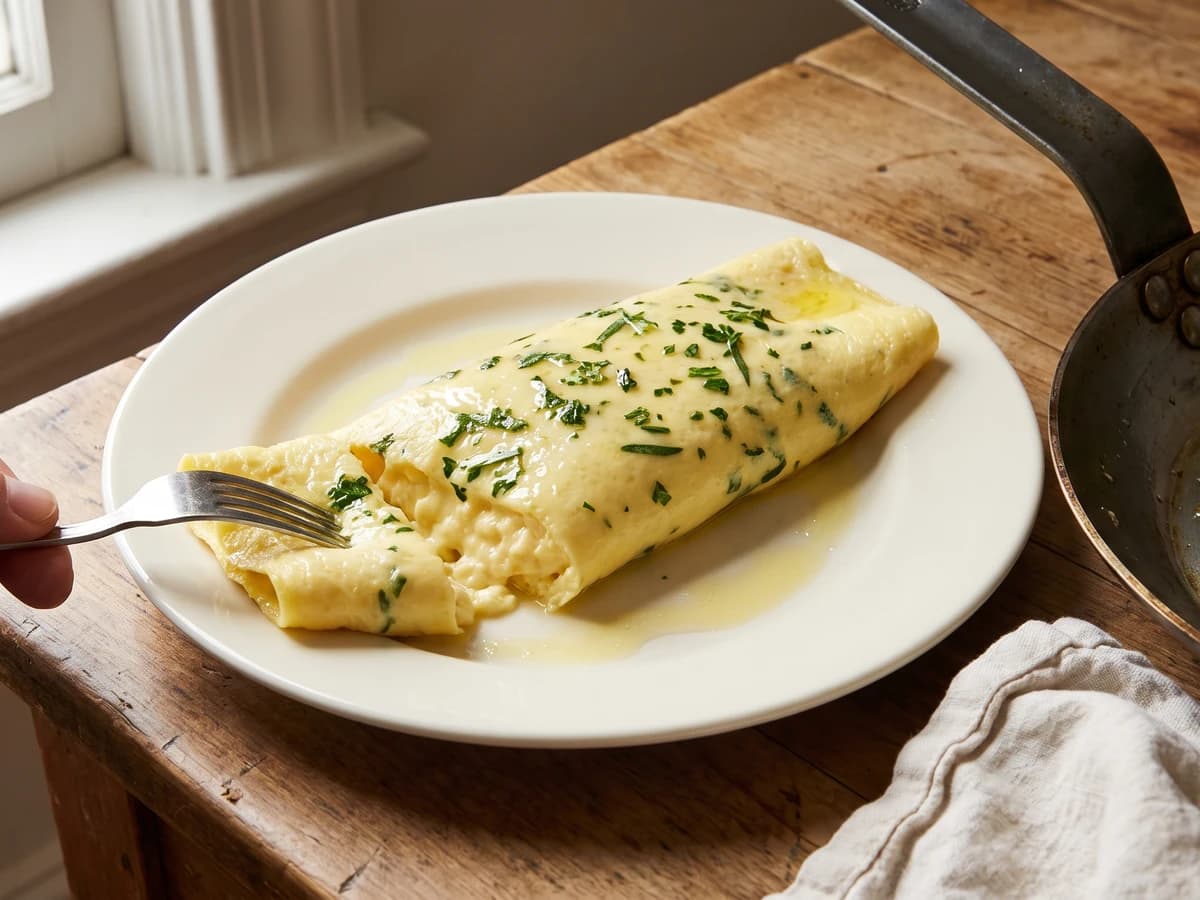
Four tender herbs, hot butter, and two eggs per pan: this rolled omelette teaches the quick hand and good judgment that keep the outside pale and the center creamy.
Chef Juliette
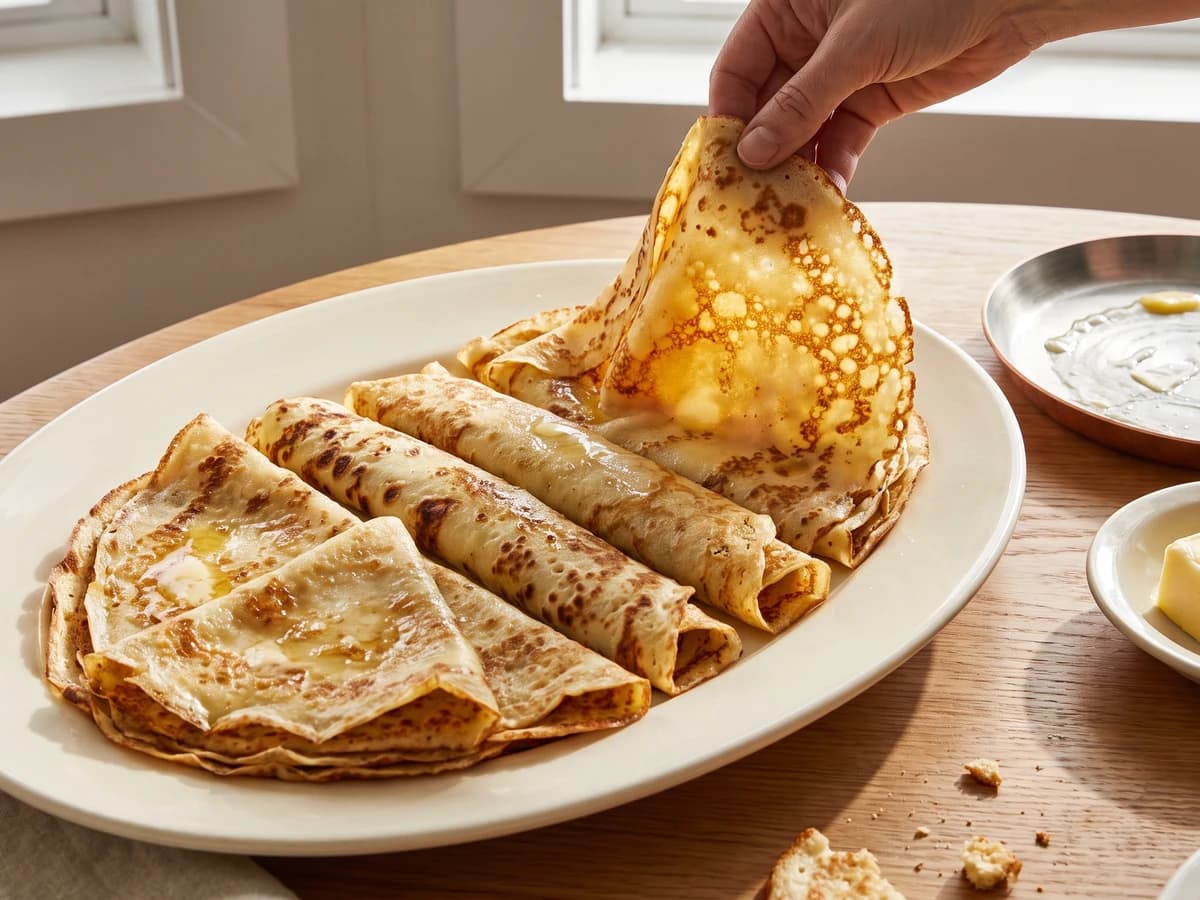
Four batters, one lesson: let the flour drink deeply before cooking, then spread the batter thinly in butter for crêpes and pannequets that bend without becoming tough.
Chef Juliette
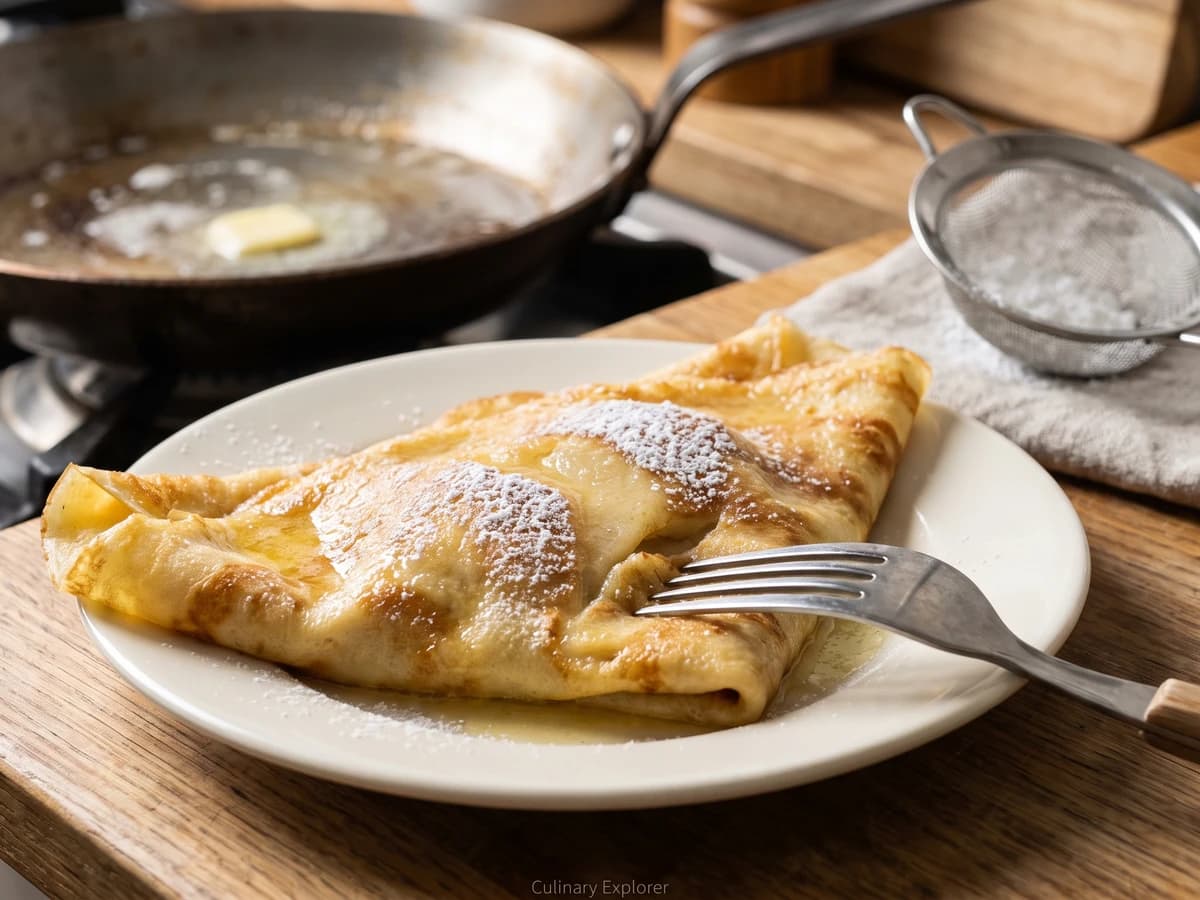
Crêpes au Couvent trap ripe Williams pear dice between two thin pours of sweet batter, then turn in one clean toss and reach the table butter-gold, powdered, and burning hot.