Chef Juliette
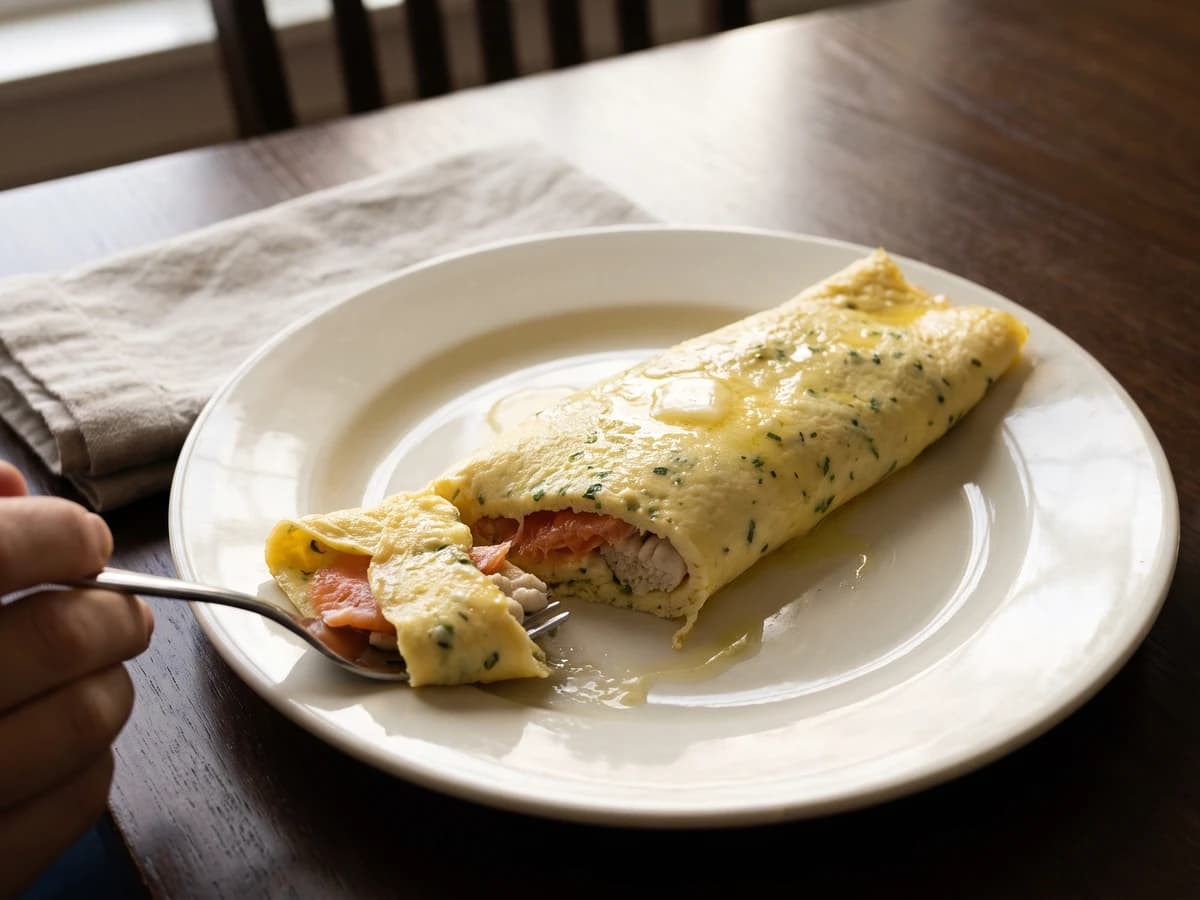
Omelette à l’Écossaise
A creamy omelette aux fines herbes closes around smoked-salmon-wrapped herring milts, gently poached in butter. Have the filling ready, then roll the eggs while they still shine.
A cooking platform built around craft, culture, and the stories behind what we eat.
Created by Chef Juliette
Based on No. 453, Moulded Eggs à la Mortemart, from Le Guide Culinaire (1907) by Auguste Escoffier
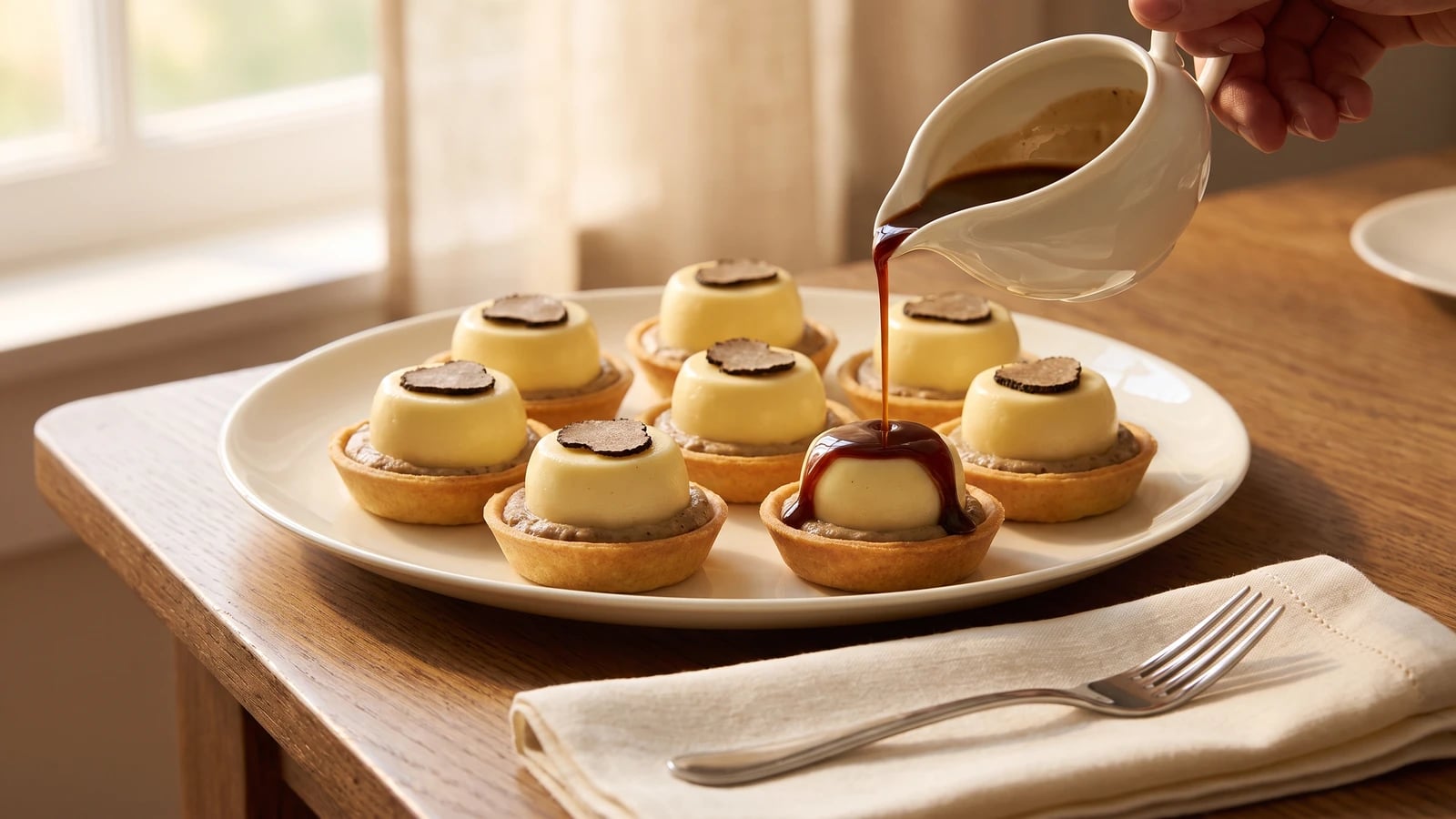
Soft scrambled eggs, strengthened with raw egg and gently poached over truffle, turn out onto crisp mushroom-filled tartlets with a glossy buttered veal glaze: a grand egg dish made calmly at home.
Œufs moulés à la Mortemart (moulded eggs on mushroom tartlets) teach one true thing: softness survives a second cooking only when the first cooking stops while the eggs still look almost too loose. Five eggs become tender curds, three more go in raw to form a custard around them, and a bain-marie (hot-water bath) sets the mixture gently over a fine coin of truffle.
The source assumed a pastry station for the tartlet crusts, a saucier on staff to keep Purée de Champignons (No. 2079) and meat glaze ready, and a stockpot never off the fire. At home, fully baked all-butter tartlet shells replace the pastry-station labor, the mushroom purée arrives as its own finished preparation, and low-salt veal demi-glace is reduced and mounted with butter to supply the meat glaze. The source's eight eggs already make four generous first-course servings, two timbales each. The separate stations are scaffolding and go; the soft scramble, three raw eggs, truffle-lined moulds, and gentle poach are the dish and stay. One cook, one stove, one evening.
The first scramble decides everything. Stop while the curds are tender, glossy, and loose enough to flow from the pan; cook them to breakfast firmness now and the second cooking will turn them spongy. Keep your nerve and pull them early.
Œufs moulés à la Mortemart belong to the formal Parisian table, where egg entrées were assembled from small timbales and distinct repertory preparations kept ready by separate kitchen stations. Mortemart is one of the aristocratic names used to identify a precise garnish in the French canon, not a broad regional egg style. The construction later suited the bourgeois dining room beautifully: truffle, mushroom purée, crisp pastry, and meat glaze remain distinct, yet one cook can bring them together in sequence.
Quantity
8 shells, each 3 inches (7.5 cm) wide
Quantity
3 tablespoons (45 ml / 42 g)
softened and divided
Quantity
1 small truffle (about 3/4 ounce / 20 g)
drained and cut into 8 fine rounds
Quantity
5
at room temperature
Quantity
3
beaten until uniform
Quantity
1/2 teaspoon (2.5 ml / 3 g)
divided
Quantity
1/8 teaspoon (0.6 ml / 0.3 g)
Quantity
1 cup (240 ml / about 250 g) finished Purée de Champignons (No. 2079)
Quantity
1/2 cup (120 ml / about 120 g)
| Ingredient | Quantity |
|---|---|
| fully baked all-butter pâte brisée tartlet shells | 8 shells, each 3 inches (7.5 cm) wide |
| unsalted buttersoftened and divided | 3 tablespoons (45 ml / 42 g) |
| preserved whole black truffledrained and cut into 8 fine rounds | 1 small truffle (about 3/4 ounce / 20 g) |
| large eggs for scramblingat room temperature | 5 |
| large eggs for finishing the mixturebeaten until uniform | 3 |
| fine saltdivided | 1/2 teaspoon (2.5 ml / 3 g) |
| ground white pepper | 1/8 teaspoon (0.6 ml / 0.3 g) |
| finished Purée de Champignons | 1 cup (240 ml / about 250 g) finished Purée de Champignons (No. 2079) |
| low-salt prepared veal demi-glace | 1/2 cup (120 ml / about 120 g) |
Heat the oven to 325°F (165°C). Use 1 tablespoon (15 ml / 14 g) of the butter to coat eight shallow 2-ounce (60 ml) timbale moulds thoroughly, reaching every corner and the full height of the sides. Lay one fine truffle round flat in the bottom of each mould, then arrange the moulds in a deep roasting pan. Heat enough water to fill the pan halfway up their sides.
Warm the finished Purée de Champignons (No. 2079) very gently in a covered saucepan, stirring occasionally so its cream does not catch. Bring the veal demi-glace to a bare simmer in a second small pan and reduce it to about 1/3 cup (80 ml), until it lightly coats a spoon. Pull it from the heat before it grows sticky. If it tightens too far, loosen it with a teaspoon of water at a time; the finished glaze should pour in a glossy ribbon, not sit like paste.
Beat the five eggs with 1/4 teaspoon (1.25 ml / 1.5 g) of the salt and the white pepper just until no streaks remain. Melt 1 tablespoon (15 ml / 14 g) of the butter in a 10-inch (25 cm) skillet over low heat, add the eggs, and stir constantly with a flexible spatula, sweeping the bottom and corners. Stop after 3 to 5 minutes, when small tender curds float in a glossy mass that still flows when the pan is tilted. If the edges begin setting firmly, lift the pan from the heat and scrape everything into a cool bowl at once. Ça se rattrape, provided the eggs are still moist; the hot skillet is what would finish the damage.
Off the heat, fold the three beaten raw eggs and the remaining 1/4 teaspoon (1.25 ml / 1.5 g) salt into the soft scramble until the mixture is even. Divide it immediately among the prepared moulds, filling each no more than three-quarters full. Tap each mould once against a folded towel to release large air pockets without dislodging the truffle.
Set the roasting pan on the pulled-out middle oven rack, then pour the very hot water around the moulds until it reaches halfway up their sides. Slide the rack in gently and poach for 14 to 18 minutes. The water should barely quiver, never boil. The timbales are ready when their edges are set, their centres retain a slight tremble, and an instant-read thermometer reaches 160°F (71°C). If the centre is still liquid, give it 2 minutes more; judge in short intervals because these small moulds cross from tender to rubbery quickly.
During the final 5 minutes of poaching, set the baked tartlet shells on a tray in the oven to warm and crisp. Stir the mushroom purée and adjust its consistency if necessary; it should mound softly, so loosen it with a teaspoon of warm water if it has become stiff. Place the shells in a circle on a warmed round serving dish and spoon 2 tablespoons (30 ml) of Purée de Champignons (No. 2079) into each.
Lift the timbale moulds from the water and let them stand for 1 minute. Run a thin knife around each edge, invert one squarely over every filled tartlet, and lift the mould straight up so the truffle appears on top. If one clings, cover the mould with a warm damp towel for 15 seconds and try again; never pull at the egg. Rewarm the reduced veal glaze without boiling, remove it from the heat, and swirl in the final 1 tablespoon (15 ml / 14 g) butter until glossy. Pour it into a warmed sauceboat and send it to the table beside the eggs. À table!
1 serving (about 240g)
Culinary guides, cultural storytelling, and the editorial depth that makes cooking meaningful.
Discover Culinary ExplorerChef Juliette
A creamy omelette aux fines herbes closes around smoked-salmon-wrapped herring milts, gently poached in butter. Have the filling ready, then roll the eggs while they still shine.
Chef Juliette
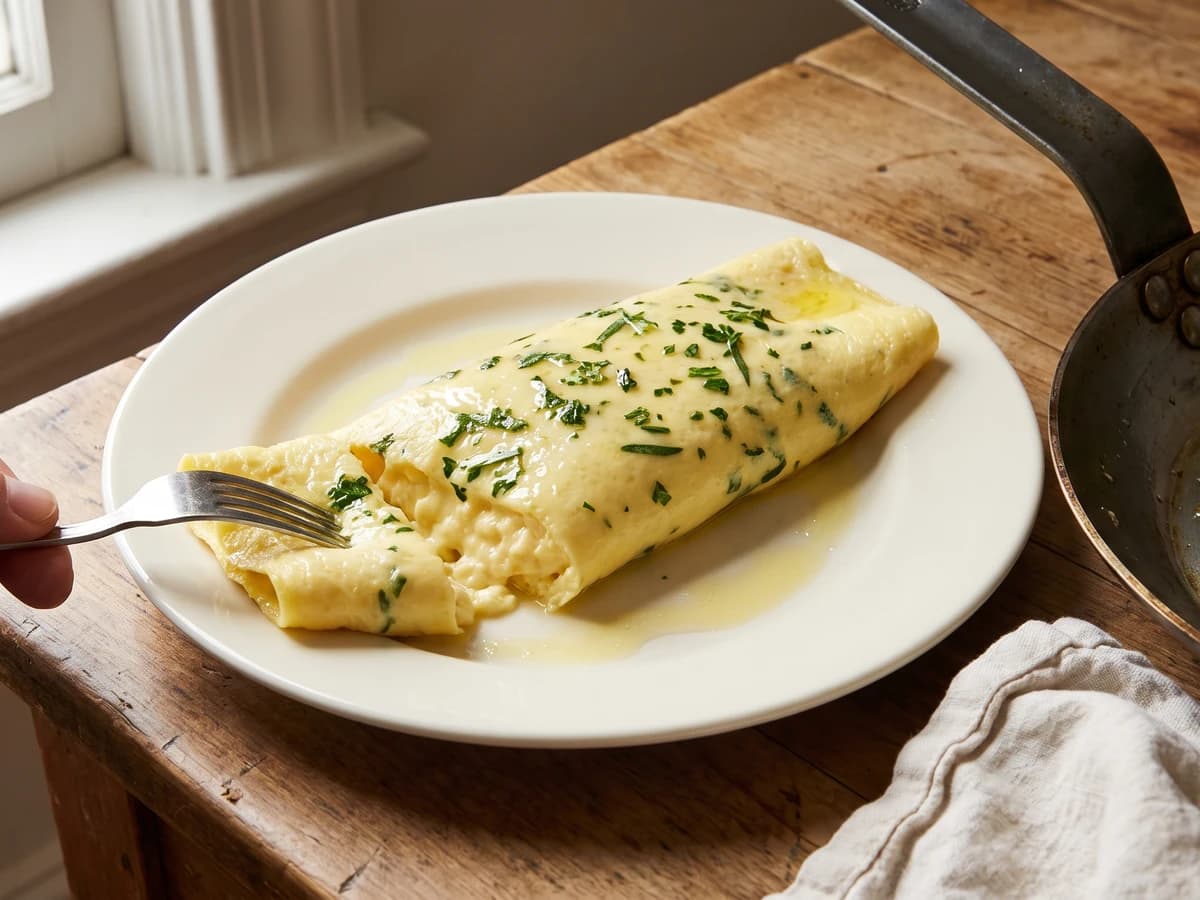
Four tender herbs, hot butter, and two eggs per pan: this rolled omelette teaches the quick hand and good judgment that keep the outside pale and the center creamy.
Chef Juliette
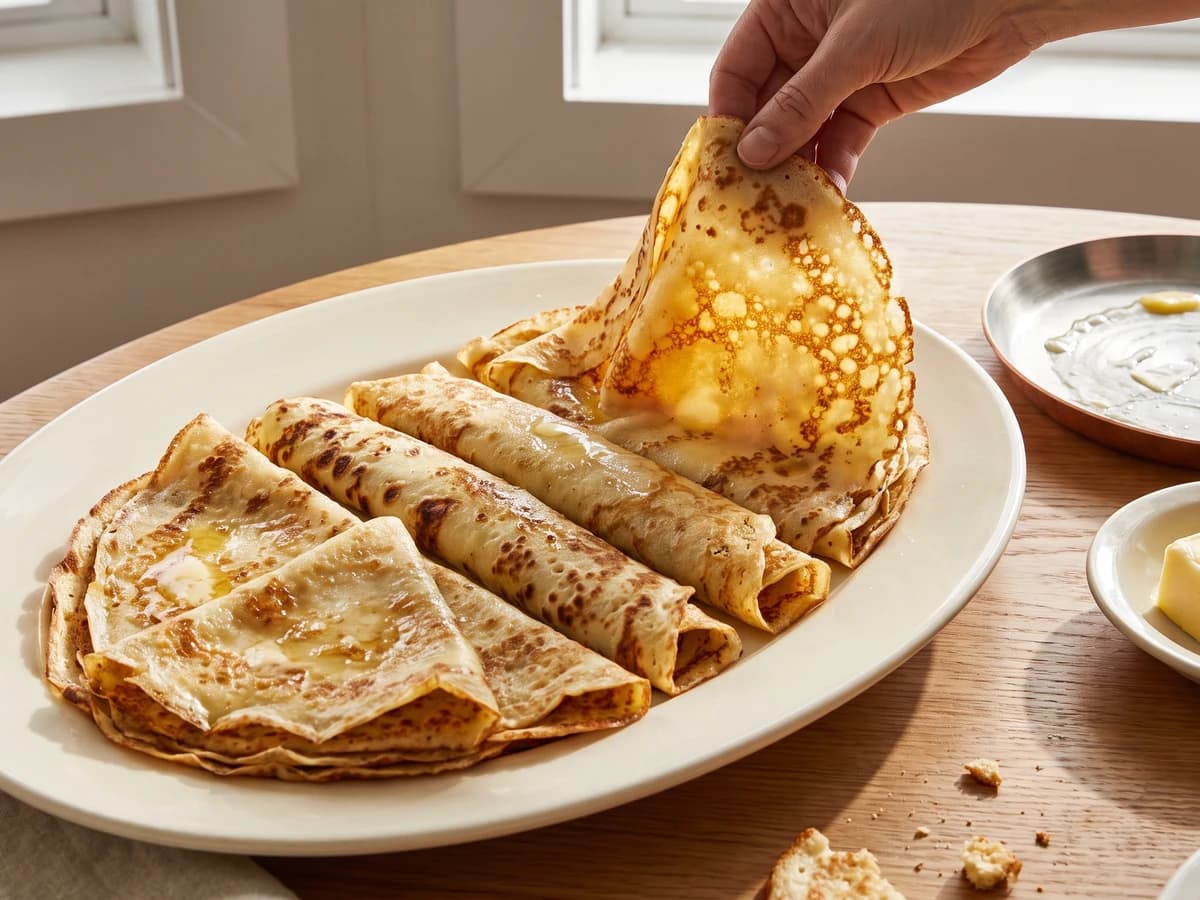
Four batters, one lesson: let the flour drink deeply before cooking, then spread the batter thinly in butter for crêpes and pannequets that bend without becoming tough.
Chef Juliette
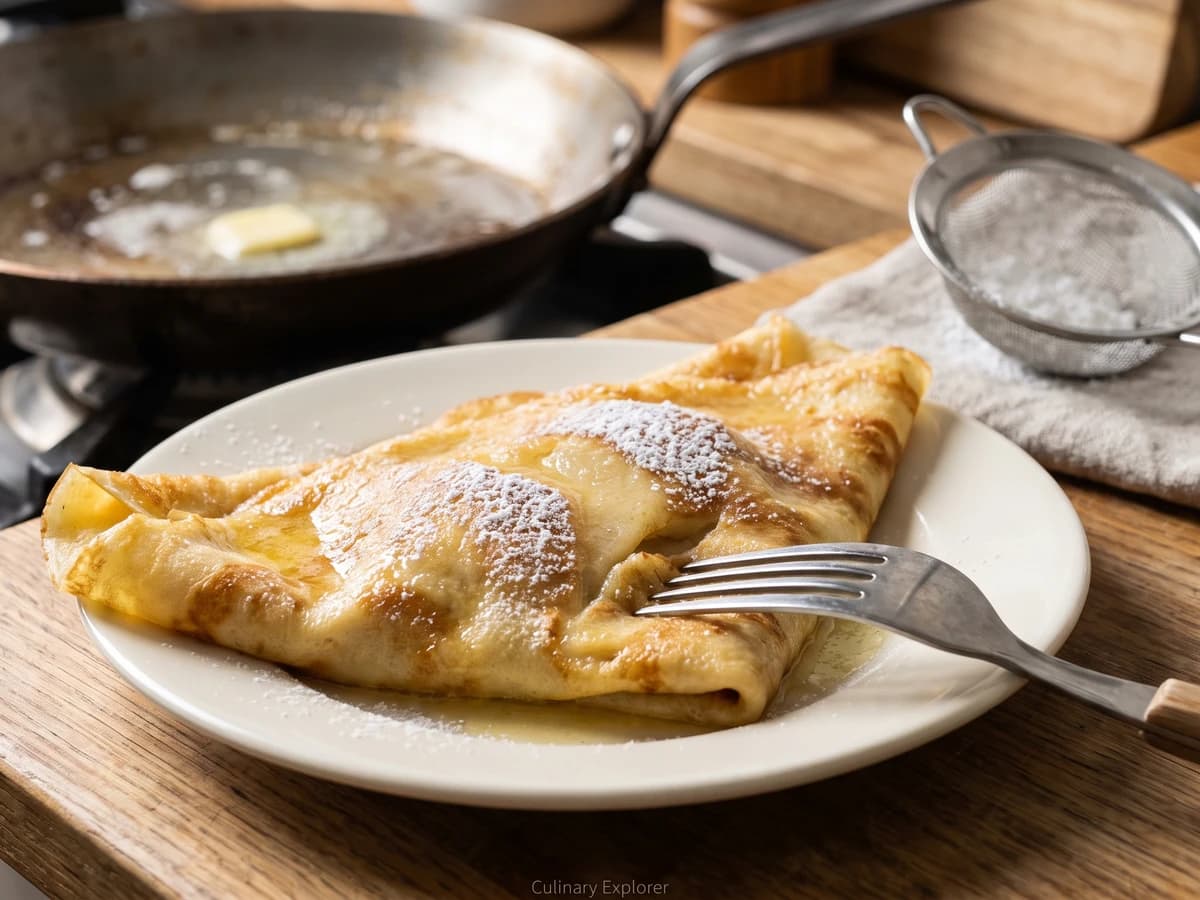
Crêpes au Couvent trap ripe Williams pear dice between two thin pours of sweet batter, then turn in one clean toss and reach the table butter-gold, powdered, and burning hot.