Chef Juliette
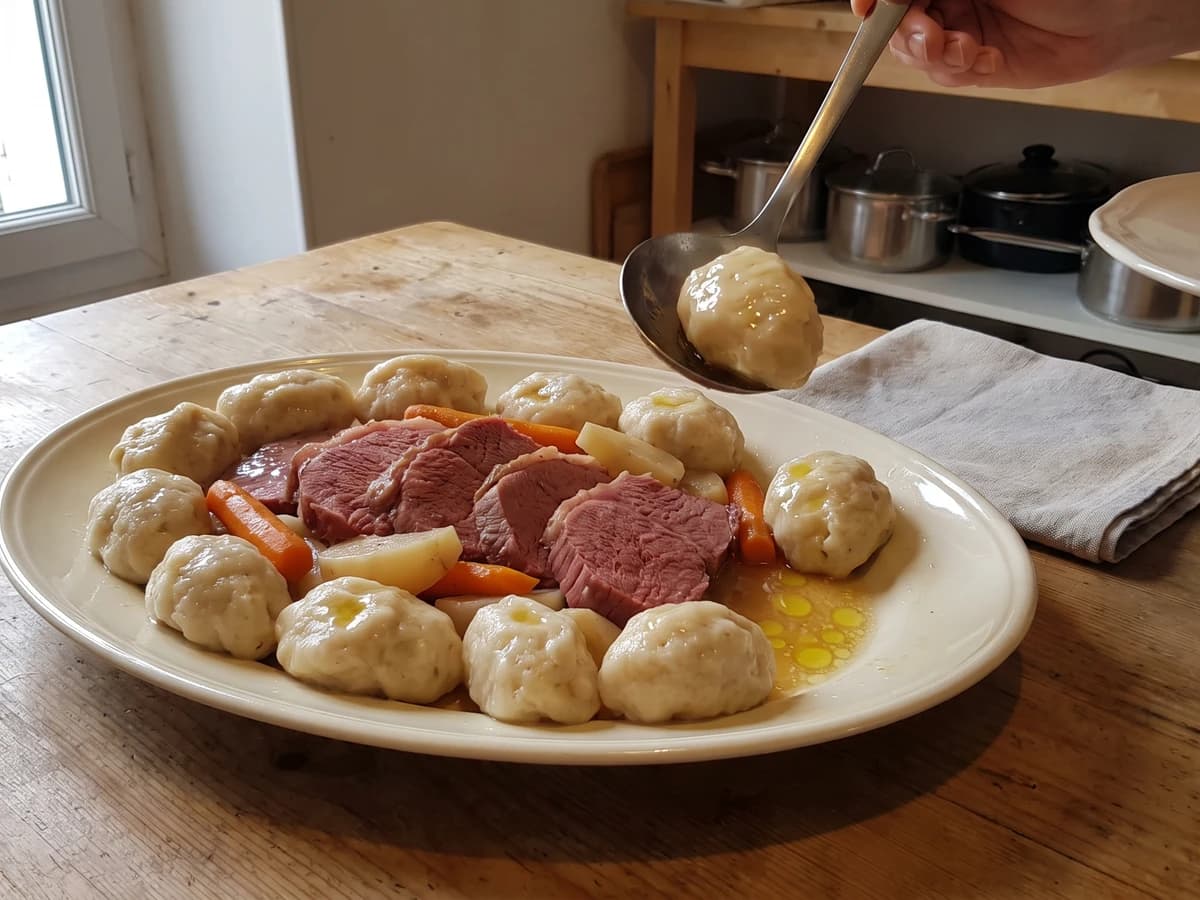
Suet Dumpling
Boulettes au suif, poached beside salt beef, turn equal weights of flour and finely chopped suet into tender, rich dumplings. Keep the beef liquor at a bare tremble and the old garnish works beautifully at home.
A cooking platform built around craft, culture, and the stories behind what we eat.
Created by Chef Juliette
Based on No. 2079, Purée de Champignons, from Le Guide Culinaire (1907) by Auguste Escoffier
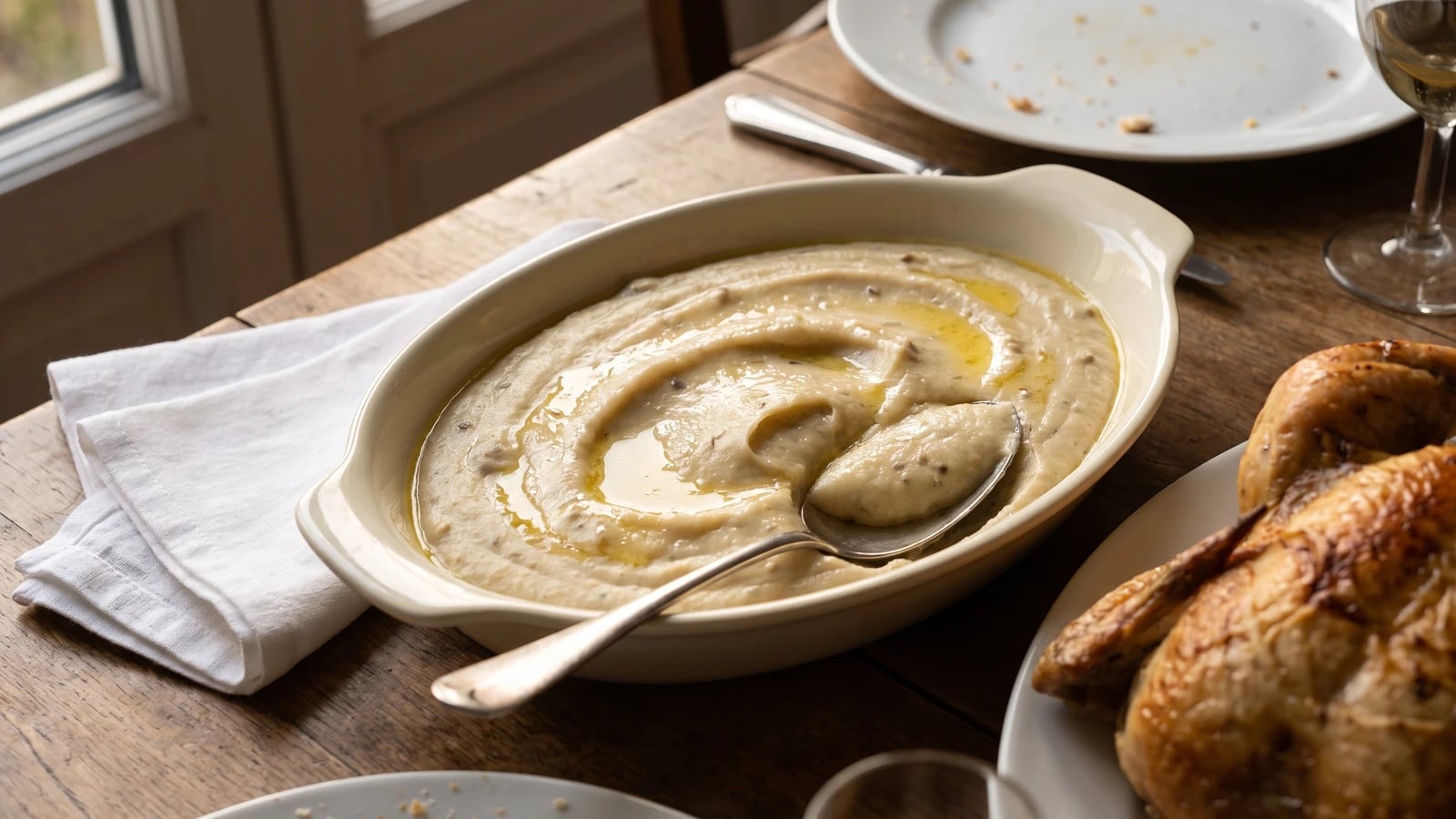
Raw mushrooms, sieved before they ever meet heat, become a pale, silken purée with reduced Béchamel, cream, and butter. The lesson is speed: cook out the moisture without cooking away the delicacy.
Purée de Champignons (pale mushroom purée) teaches restraint. Raw mushrooms must meet their sauce quickly and leave the fire as soon as their water has cooked away. Brown them first and you make a fine duxelles, but not this. The one true thing to know before touching the pan is simple: raw and quick keeps the purée pale.
The original recipe assumed a commis at the sieve, a saucier with reduced Béchamel ready, and an open fire under a broad sautépan. At home, one pound of mushrooms serves four, a food processor performs the first rough work, a sturdy sieve supplies the refinement, and a wide pan on an ordinary burner gives the necessary evaporation. The brigade quantity and hours of hand-pounding were scaffolding, so they can go. The raw sieving, reduced Béchamel, brief reduction, and butter added away from the fire are the dish, so they stay. One cook, one stove, one evening.
The mixture will loosen when the mushrooms surrender their water, then gather into a soft, glossy mass. Don't panic and don't add flour. Keep it moving until a spoon leaves a furrow that closes slowly, then take the pan off the heat before adding the butter. Work swiftly from sieve to pan, because that is the step that decides the color.
Purée de champignons belongs to the classical French grand-kitchen repertoire centered on the Parisian dining table, where vegetable purées served both as side dishes and as garnishes for poultry, veal, and game. Unlike duxelles, whose chopped mushrooms are cooked down in butter and allowed to deepen in color, this preparation begins with raw mushrooms rubbed through a sieve and bound with reduced Béchamel to preserve delicacy and paleness. Its refinement came from labor rather than rare ingredients, which makes it particularly honest to translate from the saucier's pan to the home stove.
Quantity
about 6 cups whole (1.4 L / 454 g)
cleaned, quickly peeled, and trimmed
Quantity
3/4 cup (180 ml / 190 g)
prepared
Quantity
3 tablespoons (45 ml / 45 g)
Quantity
1/2 teaspoon (2.5 ml / 3 g), plus more if needed
Quantity
1/8 teaspoon (0.6 ml / 0.3 g)
Quantity
1/16 teaspoon (0.3 ml / 0.1 g)
freshly grated
Quantity
3 tablespoons (45 ml / 42 g)
cold and diced
| Ingredient | Quantity |
|---|---|
| small white button mushroomscleaned, quickly peeled, and trimmed | about 6 cups whole (1.4 L / 454 g) |
| reduced Béchamel sauceprepared | 3/4 cup (180 ml / 190 g) |
| heavy cream | 3 tablespoons (45 ml / 45 g) |
| fine sea salt | 1/2 teaspoon (2.5 ml / 3 g), plus more if needed |
| ground white pepper | 1/8 teaspoon (0.6 ml / 0.3 g) |
| nutmegfreshly grated | 1/16 teaspoon (0.3 ml / 0.1 g) |
| best unsalted buttercold and diced | 3 tablespoons (45 ml / 42 g) |
Have the reduced Béchamel, cream, seasonings, butter, sieve, and pan ready before starting. Rinse the mushrooms briskly under cold water rather than soaking them, dry them thoroughly in clean towels, trim the dry stem ends, and peel the caps thinly with a paring knife. The washing follows the original method, but the drying matters just as much: extra surface water lengthens the cooking and works against the pale color.
Quarter the mushrooms and pulse them in a food processor with short, one-second pulses until they become a fine, damp paste. Don't let the machine run continuously, which warms the mushrooms and hastens discoloration. Immediately press the paste through a sturdy medium-fine sieve with a flexible scraper, working firmly until only dry, fibrous scraps remain. The processor replaces the commis's first pounding, but the sieve stays because its fine, even texture is part of the dish.
Scrape the raw mushroom purée into a wide 25 cm sauté pan. Add the reduced Béchamel, all but 1 teaspoon of the cream, the salt, white pepper, and nutmeg, then stir until completely even before setting the pan over medium heat. The roux-built Béchamel supplies the foundation and enough body to hold the mushroom juices without masking them.
Raise the heat to medium-high and cook for 5 to 8 minutes, stirring and scraping the entire pan floor without pause. The purée will first loosen as the mushrooms release their water, then tighten and turn glossy; it is ready when the raw aroma has softened, a spoonful holds a relaxed mound, and a furrow drawn across the pan closes slowly. If it remains watery, keep reducing rather than adding flour. If it begins catching, lift the pan immediately and transfer the unbrowned upper layer to a clean pan, leaving the stuck film behind. Lower the heat and continue. Ça se rattrape.
Take the pan completely off the heat and wait 20 seconds. Monter au beurre, mount with butter, by stirring in the cold diced butter one-third at a time, adding each portion only when the last has disappeared. The purée should become supple and satiny, with no oily ring. If butter beads at the edge, the pan was too hot; set its base briefly in cool water and beat in the reserved cold cream a few drops at a time. Ça se rattrape. If the emulsion remains smooth, simply stir in that reserved cream with the final butter.
Taste and correct the salt, white pepper, or nutmeg with restraint. Spoon the purée into a warmed shallow serving dish, leaving generous soft ridges to catch the butter sheen, and serve at once beside roast chicken, veal, or simply cooked game. If it must wait a few minutes, cover it and keep it barely warm; never let it boil after the butter goes in. À table!
1 serving (about 145g)
Culinary guides, cultural storytelling, and the editorial depth that makes cooking meaningful.
Discover Culinary ExplorerChef Juliette
Boulettes au suif, poached beside salt beef, turn equal weights of flour and finely chopped suet into tender, rich dumplings. Keep the beef liquor at a bare tremble and the old garnish works beautifully at home.

Chef Juliette
Bread, flour, frangipane, and rice become four cool, supple panades for binding forcemeats, each changing body and flavor while preserving tenderness. The finest Mousselines need none, and knowing that distinction is the lesson.

Chef Juliette
Panade au pain is bread, milk, salt, heat, and attention: stir until the paste releases cleanly, butter it against a skin, and you have the quiet binder behind tender French farces.

Chef Juliette
Panade de farine teaches the drying stroke behind pâte à choux: flour meets boiling buttered water, then stays over the fire until the paste gathers, smooths, and quits the pan cleanly.