Chef Juliette
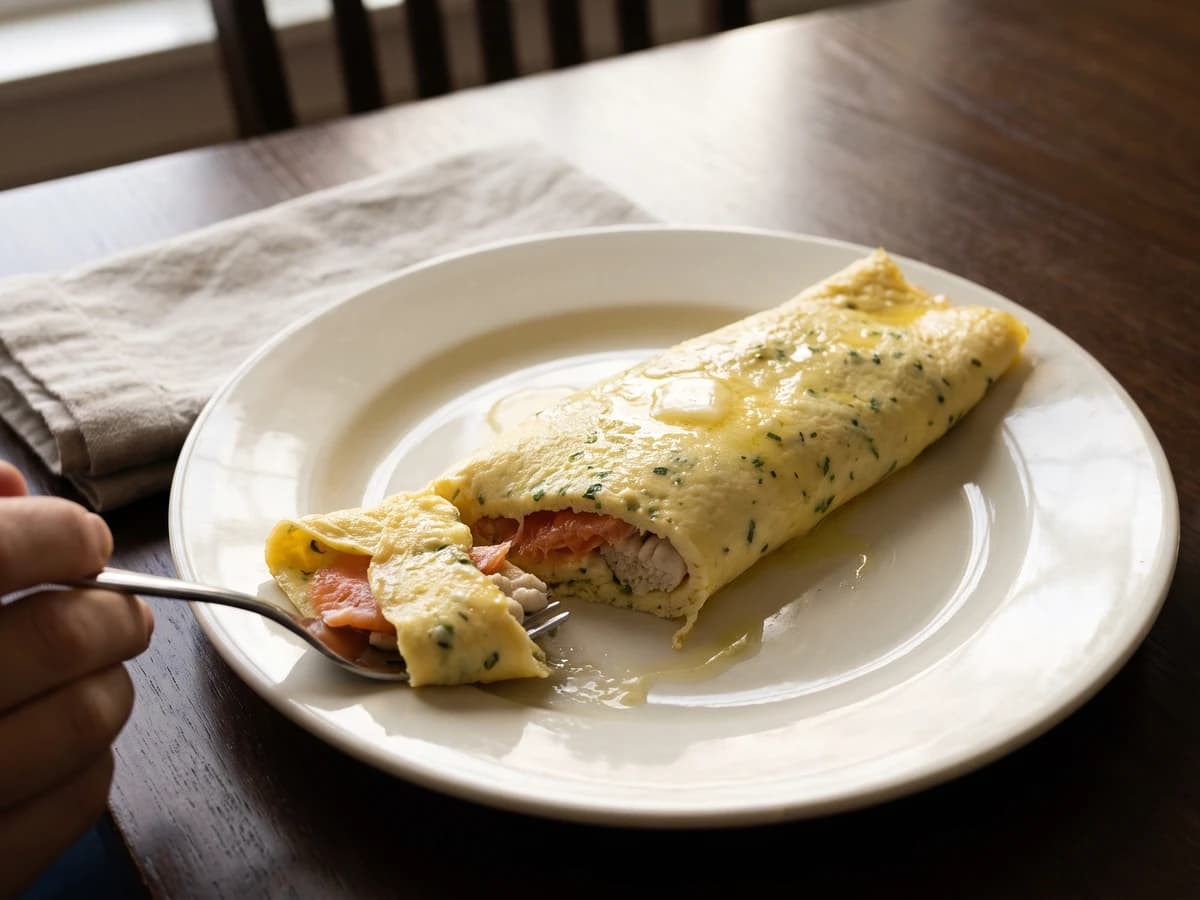
Omelette à l’Écossaise
A creamy omelette aux fines herbes closes around smoked-salmon-wrapped herring milts, gently poached in butter. Have the filling ready, then roll the eggs while they still shine.
A cooking platform built around craft, culture, and the stories behind what we eat.
Created by Chef Juliette
Based on No. 452, Galli-Marié, Moulded Eggs, from Le Guide Culinaire (1907) by Auguste Escoffier
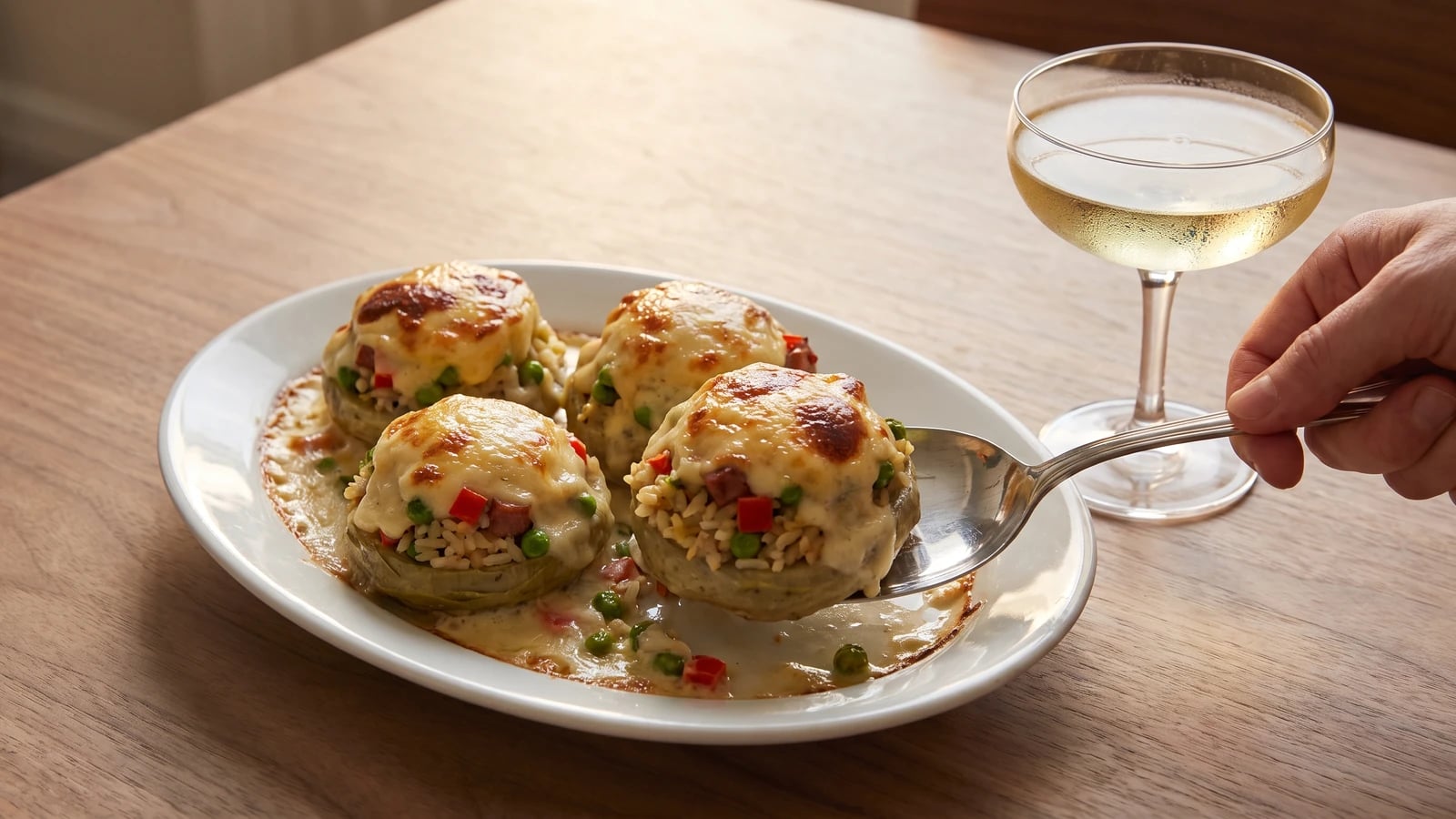
Soft scrambled eggs rebound with raw egg, capsicum, and a gentle bain-marie, then unmoulded over artichoke and rice beneath glossy Béchamel: a composed French entrée made manageable at home.
Œufs moulés Galli-Marié (Galli-Marié moulded eggs) teach one true thing: eggs that must cook twice need to be stopped early the first time. Five eggs become a very soft scramble, barely gathered and still glossy, before three raw eggs bind them into a delicate preparation that can be poached, unmoulded, and glazed without turning firm.
The original assumed an egg station, a saucier holding Béchamel (roux-bound milk sauce), Riz à la Grecque (No. 2253) waiting hot, a row of cassolettes, and a salamander fierce enough to colour the sauce before the eggs toughened. Four shallow ramekins become the cassolettes (small drum-shaped moulds), a roasting tin becomes the bain-marie (hot-water bath), and the household broiler supplies that final fierce heat. The entry already feeds four, so its five-to-three egg ratio stays untouched. Parallel hands are brigade scaffolding and can go; the soft scramble, raw-egg binding, gentle poach, and swift glaze are the dish and must stay. One cook, one stove, one evening.
The finished plate is wonderfully architectural without becoming fussy: a fluted artichoke bottom filled with savoury rice, a tender egg drum above it, and ivory Béchamel bronzed in spots. The step that decides everything comes before the moulds: take the scrambled eggs off while they still look almost too loose.
Œufs moulés Galli-Marié belongs not to a provincial breakfast table but to the Parisian grand dining room, part of the classical practice of naming composed dishes for celebrated performers. The name honours the French mezzo-soprano Célestine Galli-Marié, remembered for creating Carmen, while the stacked artichoke, rice, moulded egg, sauce, and glaze display the grand kitchen's fondness for carefully built entrées. It is often mistaken for a baked egg dish, but the eggs are first scrambled, rebound with raw egg, poached in moulds, and only then glazed; the capsicum is a precise accent, not a Provençal claim.
Quantity
5
lightly beaten
Quantity
3
beaten until smooth
Quantity
1 teaspoon (5 ml / 5 g)
peeled, thoroughly drained, and cut into fine dice
Quantity
5 tablespoons (75 ml / 70 g)
divided between the moulds, eggs, roux, and sauce finish
Quantity
1¼ teaspoons (6 ml / 7.5 g)
divided
Quantity
1¼ cups (300 ml / 310 g)
Quantity
3 tablespoons (45 ml / 24 g)
Quantity
¼ teaspoon (1.25 ml / 0.6 g)
Quantity
⅛ teaspoon (0.6 ml / 0.3 g)
Quantity
4
Quantity
1 cup (240 ml / 200 g) prepared Riz à la Grecque (No. 2253)
kept hot
| Ingredient | Quantity |
|---|---|
| large eggs for scramblinglightly beaten | 5 |
| large eggs for bindingbeaten until smooth | 3 |
| roasted red capsicumpeeled, thoroughly drained, and cut into fine dice | 1 teaspoon (5 ml / 5 g) |
| unsalted butterdivided between the moulds, eggs, roux, and sauce finish | 5 tablespoons (75 ml / 70 g) |
| fine saltdivided | 1¼ teaspoons (6 ml / 7.5 g) |
| whole milk | 1¼ cups (300 ml / 310 g) |
| plain flour | 3 tablespoons (45 ml / 24 g) |
| ground white pepper | ¼ teaspoon (1.25 ml / 0.6 g) |
| freshly grated nutmeg | ⅛ teaspoon (0.6 ml / 0.3 g) |
| large cooked artichoke bottoms | 4 |
| prepared Riz à la Grecquekept hot | 1 cup (240 ml / 200 g) prepared Riz à la Grecque (No. 2253) |
Heat the oven to 325°F (160°C) and bring a kettle of water nearly to the boil. Butter four 4-ounce (120 ml) shallow, straight-sided ramekins generously with 1 tablespoon of the butter, covering the bases, sides, and especially the upper rims. Set them in a deep roasting tin. Have a broiler-safe serving platter ready, because the finished eggs cannot wait while you search the cupboard.
Warm the milk in a small saucepan until tiny bubbles gather around its edge, then pour it into a jug. Melt 2 tablespoons of butter in the same pan, stir in the flour, and cook this roux, the butter-flour base, over gentle heat for 2 minutes without letting it colour. Add the warm milk gradually, whisking smooth after each addition, then simmer gently for 6 to 8 minutes until the Béchamel coats a spoon but still pours freely. Season assertively with ½ teaspoon salt, the white pepper, and nutmeg. If lumps appear, keep whisking and pass the sauce through a fine sieve; ça se rattrape. Cover its surface directly and keep it warm, reserving 1 tablespoon butter for the final finish.
Melt 1 tablespoon butter in a wide pan over low heat. Add the five lightly beaten eggs with ¾ teaspoon salt and stir continuously with a flexible spatula, drawing the setting egg from the pan floor into loose, glossy curds. Stop while liquid egg still runs between those curds, after about 2 to 3 minutes, and scrape everything immediately into a cool bowl. If the edges catch while the centre remains loose, whisk in a spoonful of the three beaten raw eggs as soon as the mixture reaches the bowl; ça se rattrape. Once the entire scramble is dry, no sauce can restore its tenderness.
Stir the remaining three beaten eggs into the warm soft scramble, then fold in the finely diced capsicum. Divide the mixture evenly among the buttered ramekins, filling each no more than three-quarters full, and tap them once against the worktop to settle large air pockets. Do not beat or froth the mixture now; bubbles leave holes in the little egg drums.
Place the roasting tin on a pulled-out oven rack, then pour the hot water around the ramekins until it reaches halfway up their sides. Slide the rack in carefully and poach for 18 to 22 minutes. The edges should be set, the centres should retain a slight quiver, and an instant-read thermometer should register 160°F (71°C). If a centre is still liquid, return the moulds for 2 minutes at a time; gentle corrections preserve the texture better than one long, anxious bake.
While the eggs poach, trim shallow, evenly spaced scallops around the edge of each cooked artichoke bottom with a small paring knife to create the book's fluted finish. Warm the bottoms gently, dry them well, and arrange them hollow-side up on the broiler-safe platter. Divide the hot Riz à la Grecque (No. 2253) among them, pressing it into four level, compact beds. Loose rice makes the moulded eggs tilt, so give each one a steady landing place.
Lift the ramekins from the water and let them stand for 1 minute. Run a thin knife around each edge, invert one egg onto each rice-filled artichoke bottom, and lift the mould straight upward. If one clings, wrap the ramekin for 10 seconds in a cloth dipped in hot water, then try again without shaking it. Bring the Béchamel back to a gentle simmer and whisk in the reserved tablespoon of butter. If it has become pasty, loosen it with a spoonful of milk; if it runs like milk, simmer it briefly. Spoon the hot sauce over every mould, coating the eggs fully while leaving the fluted artichoke edges visible.
Heat the broiler to its fiercest setting and place the platter close beneath it for 60 to 90 seconds, just until the buttered Béchamel swells at the edges and freckles gold. Rotate the platter if necessary, but do not chase perfectly even colour at the cost of toughening the eggs. The glaze must be quick because every component is already cooked and hot. Carry the platter directly to the table. À table!
1 serving (about 280g)
Culinary guides, cultural storytelling, and the editorial depth that makes cooking meaningful.
Discover Culinary ExplorerChef Juliette
A creamy omelette aux fines herbes closes around smoked-salmon-wrapped herring milts, gently poached in butter. Have the filling ready, then roll the eggs while they still shine.
Chef Juliette
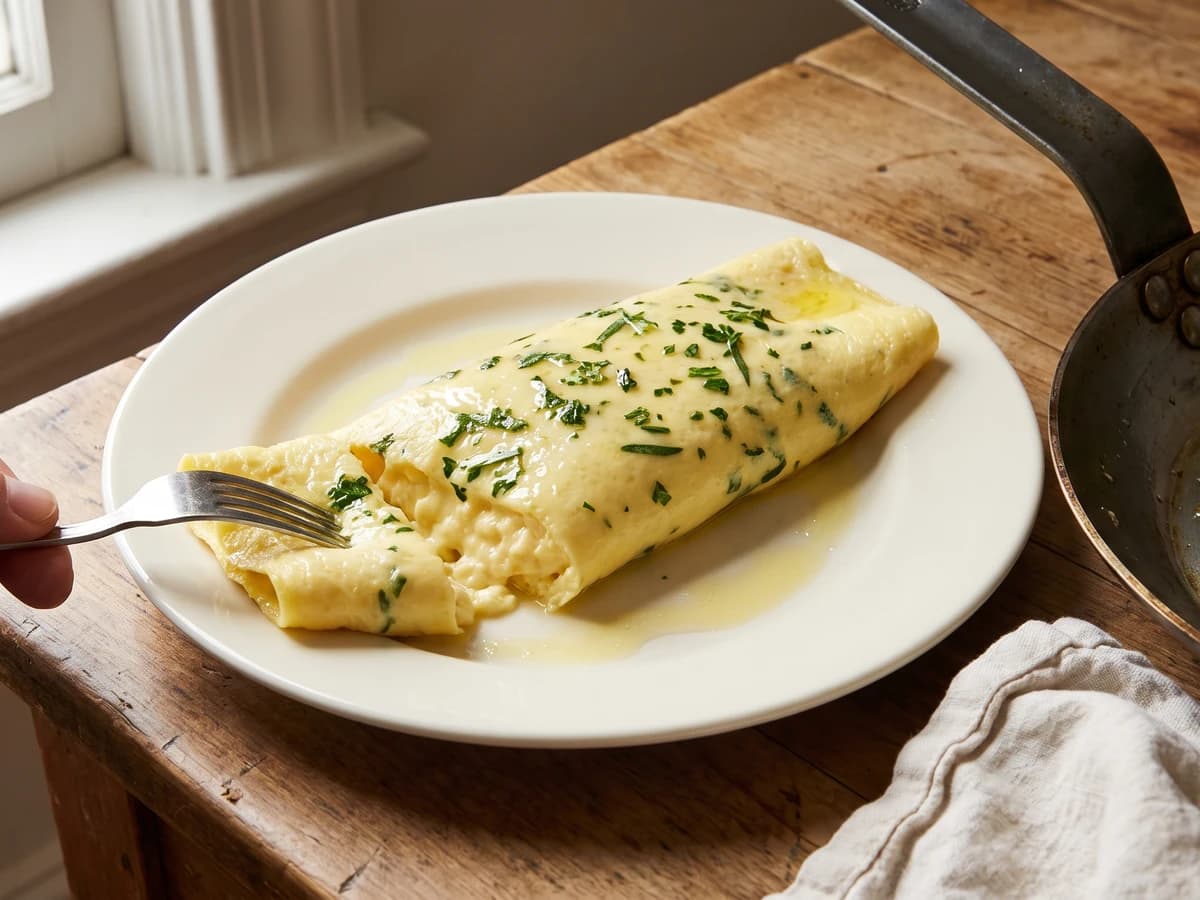
Four tender herbs, hot butter, and two eggs per pan: this rolled omelette teaches the quick hand and good judgment that keep the outside pale and the center creamy.
Chef Juliette
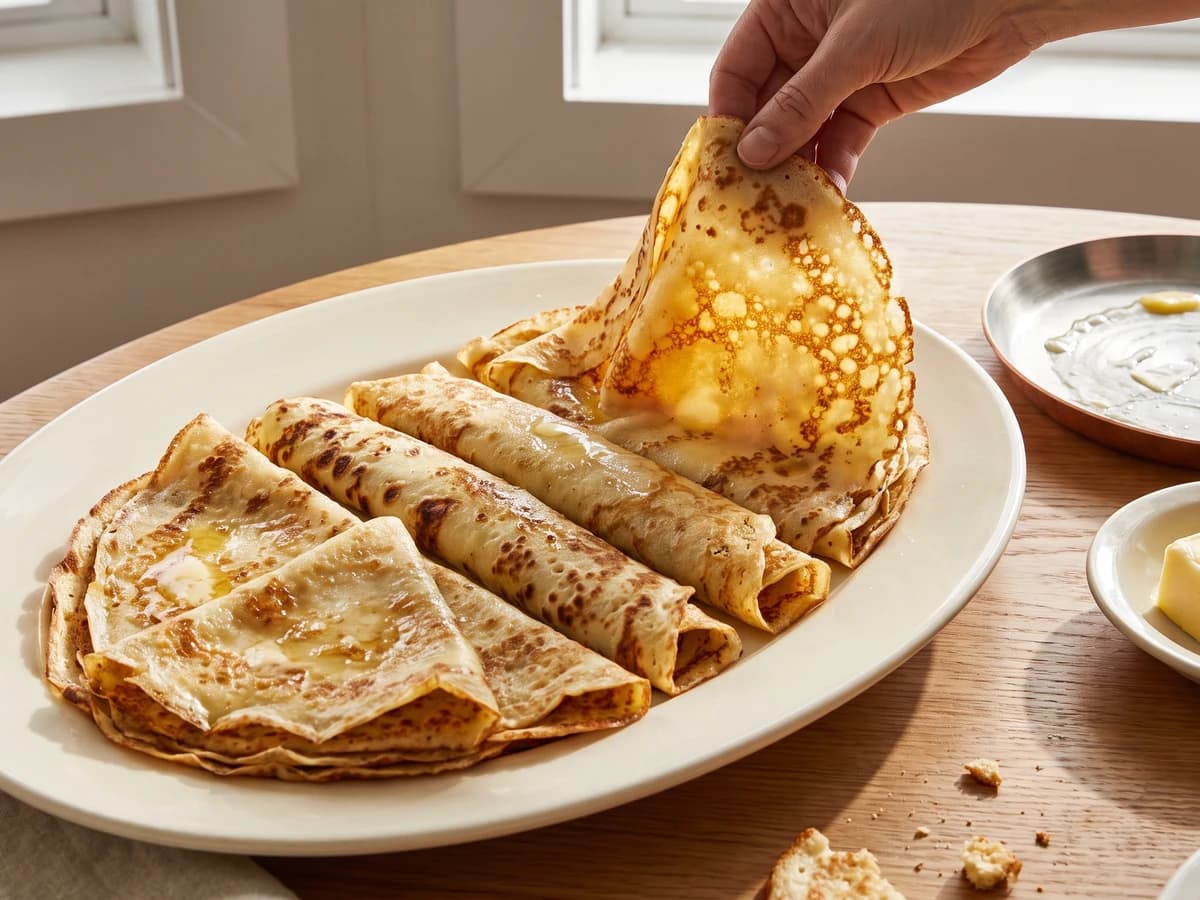
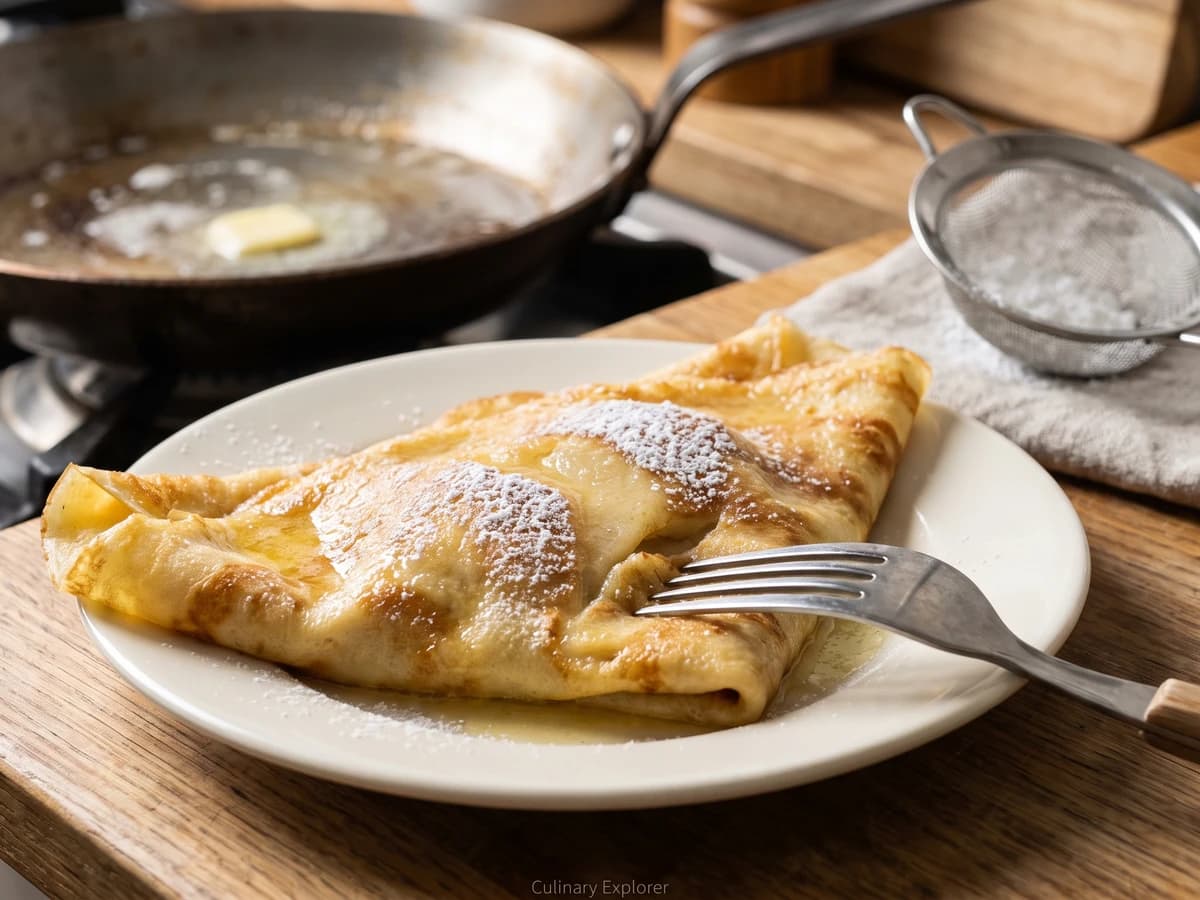
Four batters, one lesson: let the flour drink deeply before cooking, then spread the batter thinly in butter for crêpes and pannequets that bend without becoming tough.
Chef Juliette
Crêpes au Couvent trap ripe Williams pear dice between two thin pours of sweet batter, then turn in one clean toss and reach the table butter-gold, powdered, and burning hot.