Chef Juliette
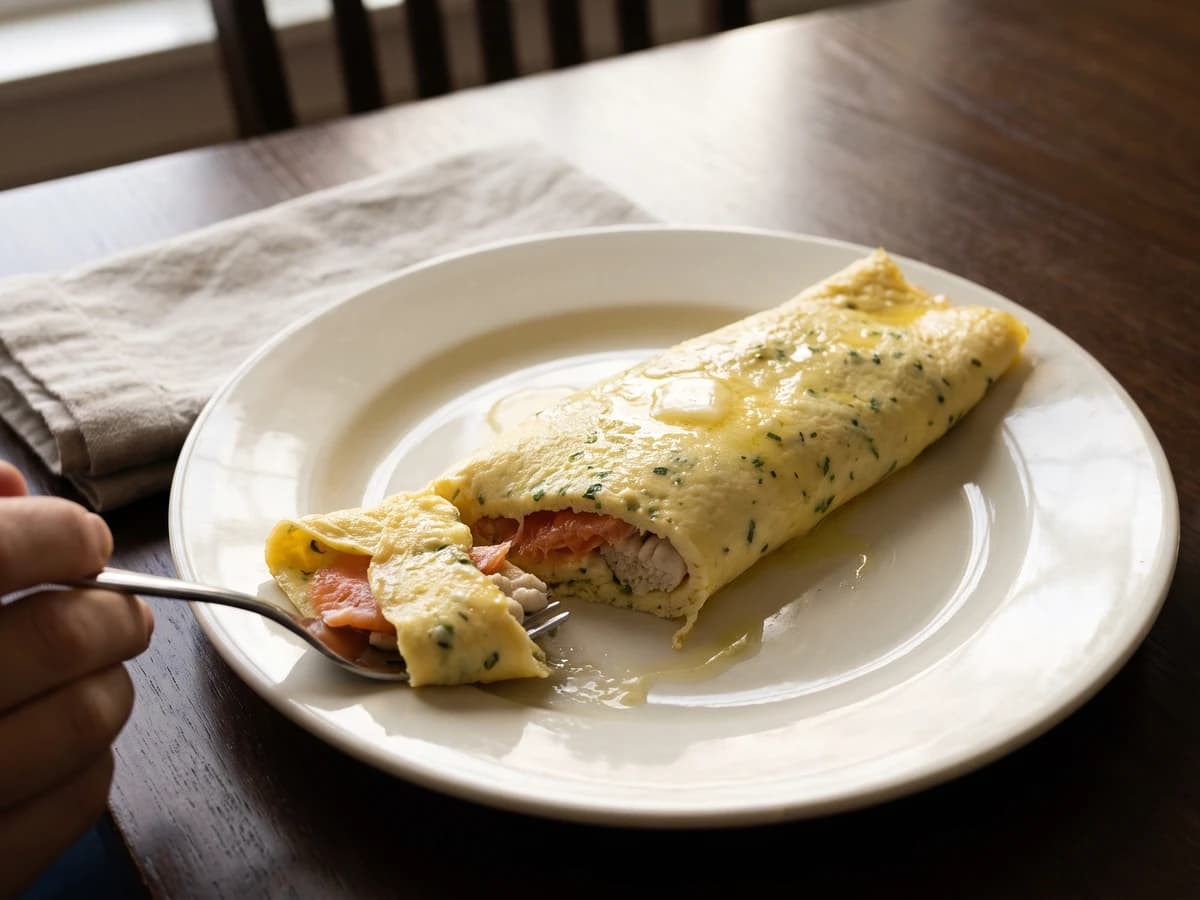
Omelette à l’Écossaise
A creamy omelette aux fines herbes closes around smoked-salmon-wrapped herring milts, gently poached in butter. Have the filling ready, then roll the eggs while they still shine.
A cooking platform built around craft, culture, and the stories behind what we eat.
Created by Chef Juliette
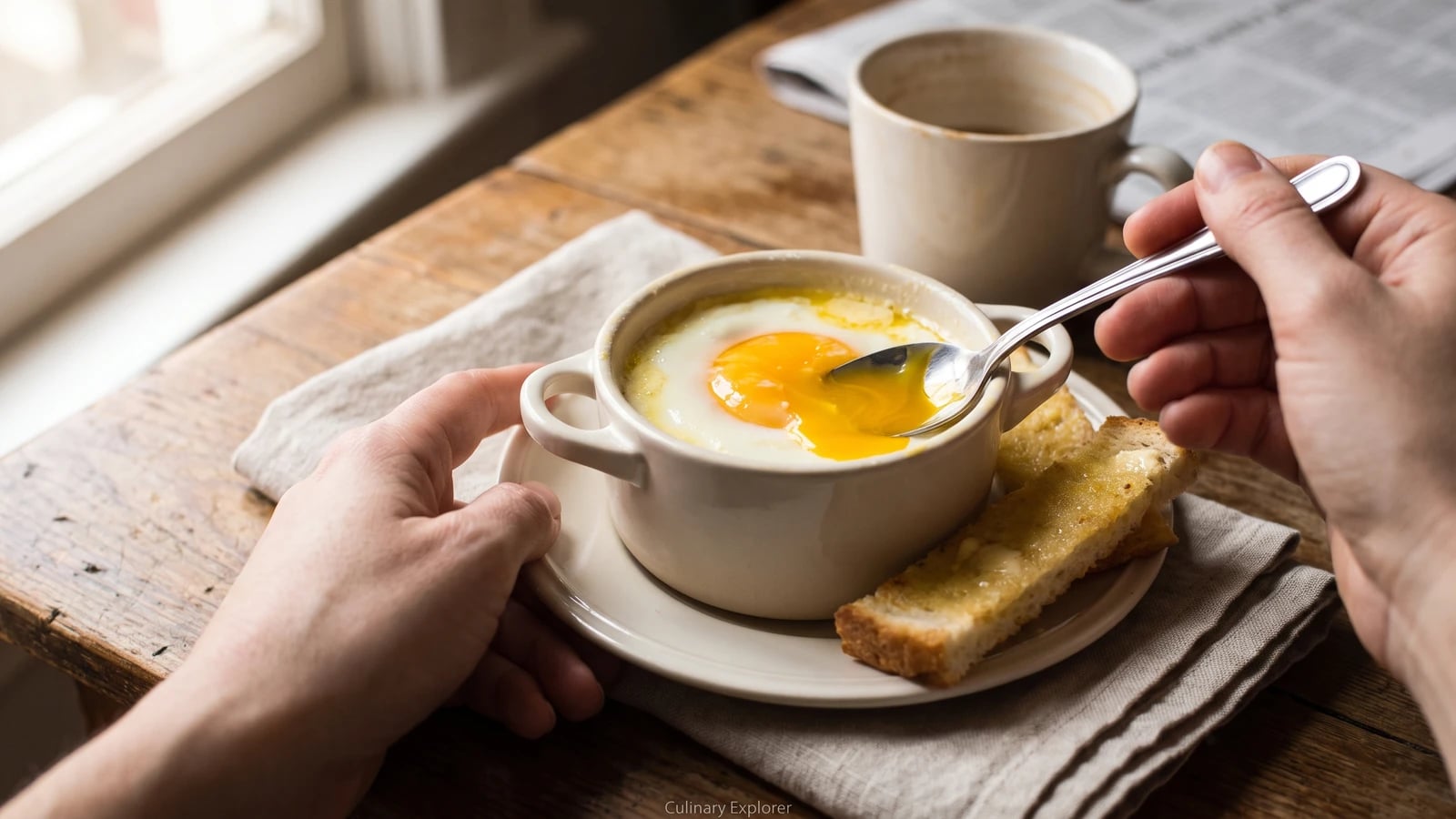
Based on No. 440, Eggs en Cocotte, from Le Guide Culinaire (1907) by Auguste Escoffier
Œufs en cocotte teach gentle heat: warm little pots, a sheltering bain-marie, whites barely set, yolks left glossy. The whole dish depends on pulling them before they look completely done.
Œufs en cocotte (eggs gently poached in little pots) teach one true thing: an egg likes heat around it, not heat hurled at it. A bain-marie, the hot-water bath, softens the oven’s force so the whites set tenderly while the yolks remain glossy enough to run into the cream.
The original entry needed no saucier, perpetual stockpot, or salamander. It assumed purpose-built handled cocottes, a covered sauté-pan, and formal service on napkins or fancy dish paper. Four 6-ounce ramekins, a high-sided roasting pan, and a loose sheet of foil do the same work at home. The special handles and paper are brigade scaffolding and may go; the warmed vessels and bain-marie are the dish and must stay. One cook, one stove, one evening.
Warm the cocottes before the eggs enter them. That small instruction shortens the poaching time and helps the whites set before the yolks lose their shine. Pull each cocotte as soon as its white is almost set, even if its neighbor needs another minute.
Œufs en cocotte belong to French cuisine bourgeoise, where individual ovenproof pots moved directly from the kitchen to the breakfast or light-supper table. The name describes both vessel and method rather than one fixed garnish; cream, mushrooms, ham, or a spoonful of sauce may vary, while gentle poaching in a bain-marie remains constant. The book’s cross-reference to Poëlings (No. 250) places the eggs within the broader classical logic of en cocotte service: gentle cooking in the vessel from which the food is served.
Quantity
8
Quantity
2 tablespoons (30 ml / 28 g)
softened
Quantity
6 tablespoons (90 ml / 90 g)
Quantity
1/2 teaspoon (2.5 ml / 3 g)
Quantity
1/8 teaspoon (0.6 ml / 0.3 g)
Quantity
About 6 cups (1.4 L / 1.4 kg), or enough to reach within 1/2 inch of the ramekin rims
Quantity
Reference method only, not added to the eggs
| Ingredient | Quantity |
|---|---|
| large eggs | 8 |
| unsalted buttersoftened | 2 tablespoons (30 ml / 28 g) |
| heavy cream | 6 tablespoons (90 ml / 90 g) |
| fine salt | 1/2 teaspoon (2.5 ml / 3 g) |
| ground white pepper | 1/8 teaspoon (0.6 ml / 0.3 g) |
| boiling water | About 6 cups (1.4 L / 1.4 kg), or enough to reach within 1/2 inch of the ramekin rims |
| Poëlings (No. 250) | Reference method only, not added to the eggs |
Heat the oven to 375°F (190°C) with a rack in the middle, and bring the bain-marie water to a full boil. Set four dry, room-temperature 6-ounce (180 ml) ramekins on a baking sheet and warm them in the oven for 5 minutes. Meanwhile, warm the cream gently in a small saucepan until it feels warm at a fingertip but never simmers. The broader vessel principle comes from Poëlings (No. 250); here the warmed ramekin is the honest home equivalent of the handled cocotte.
Remove the warm ramekins and butter their bases and sides generously, using about one quarter of the butter for each. Spoon 1 tablespoon of warm cream into every ramekin. Crack each egg first into a small cup, then slide 2 eggs into each cocotte without breaking the yolks. Divide the salt and white pepper among them, then trickle the remaining cream around the whites, keeping the glossy yolks exposed.
Arrange the filled cocottes in a high-sided roasting pan. Pour the boiling water carefully against the side of the pan, never into the eggs, until it reaches within 1/2 inch of the cocotte rims. Cover the pan loosely with foil, leaving a 1-inch opening at one side, and transfer it carefully to the oven. Keep this step. The bain-marie is not professional ornament; it is what protects the whites from turning rubbery before the yolks are ready.
Begin checking after 8 minutes. The eggs are ready when the whites are almost set, with only a faint tremble near the yolks, and the yolks remain rounded and glossy. Remove each cocotte as it reaches that point, usually between 9 and 12 minutes; ramekins, eggs, and ovens do not march in formation. If a white is still watery after removal, ça se rattrape: return only that cocotte to the bain-marie for 1 to 2 minutes. If the water begins bubbling hard, lower the oven by 25°F (15°C) and add a small splash of cool water to the bath.
Lift the cocottes from the water with silicone-tipped tongs, keeping them level. Wipe the bottoms and sides thoroughly, then set each on a small plate over a folded napkin so it cannot slide. Rest for 1 minute, no longer, and serve while the cream gleams and the yolks still flow. The fancy dish paper has done its service and may retire. À table!
1 serving (about 125g)
Culinary guides, cultural storytelling, and the editorial depth that makes cooking meaningful.
Discover Culinary ExplorerChef Juliette
A creamy omelette aux fines herbes closes around smoked-salmon-wrapped herring milts, gently poached in butter. Have the filling ready, then roll the eggs while they still shine.
Chef Juliette
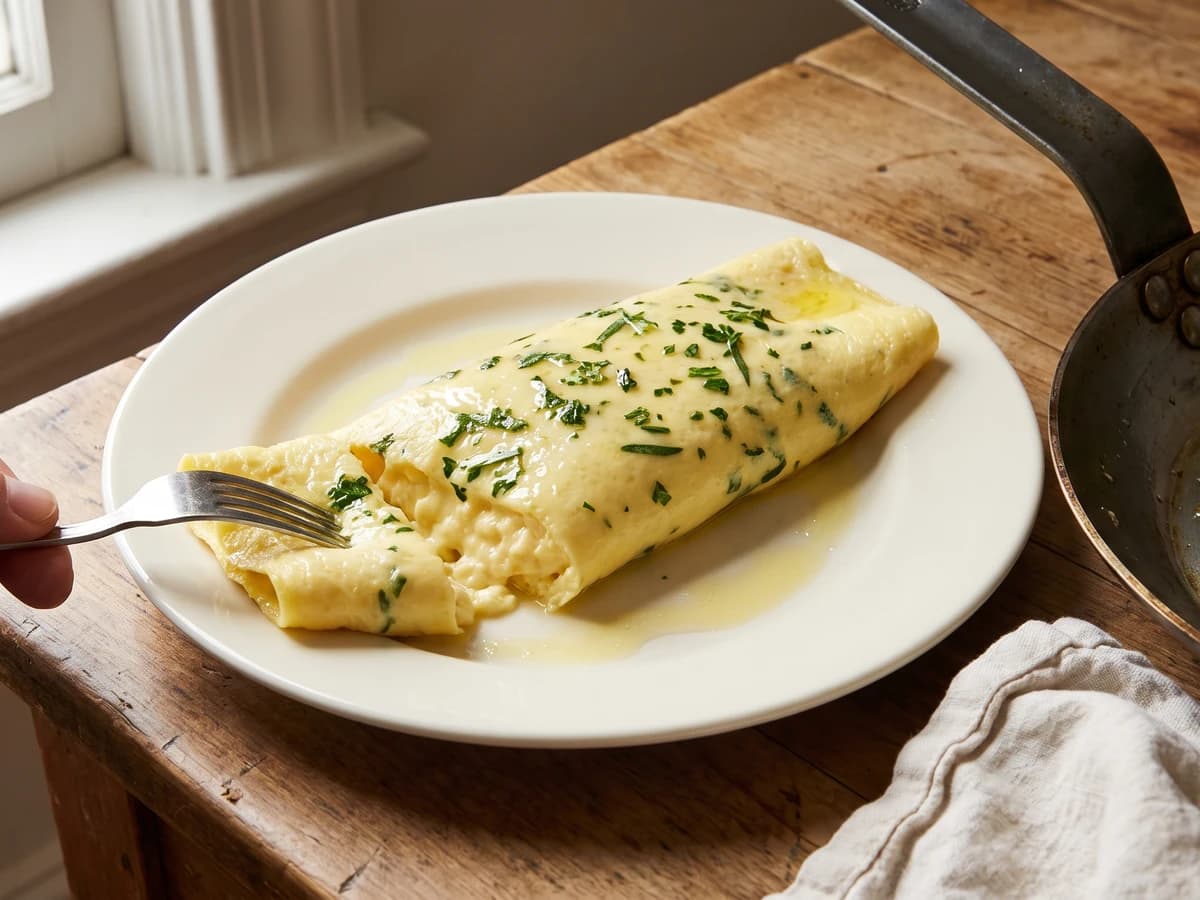
Four tender herbs, hot butter, and two eggs per pan: this rolled omelette teaches the quick hand and good judgment that keep the outside pale and the center creamy.
Chef Juliette
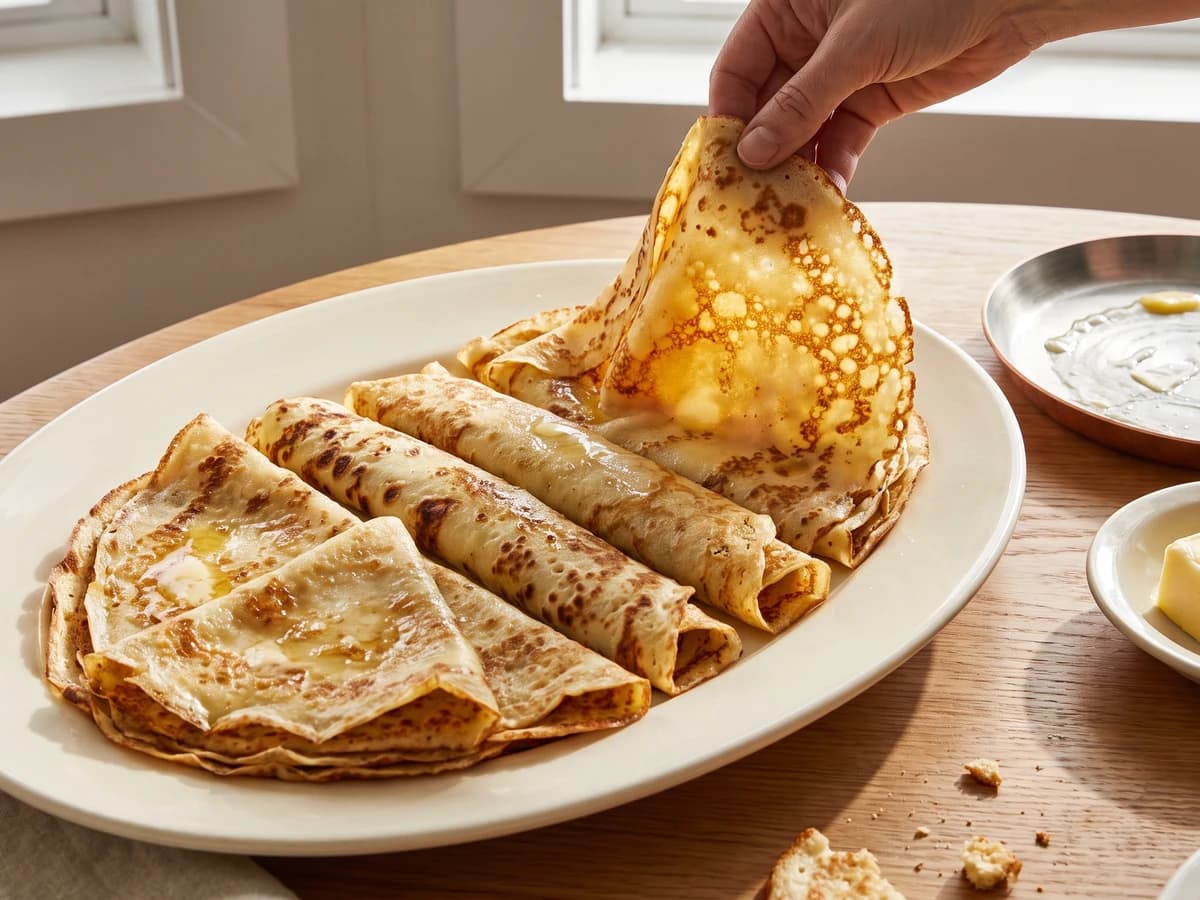
Four batters, one lesson: let the flour drink deeply before cooking, then spread the batter thinly in butter for crêpes and pannequets that bend without becoming tough.
Chef Juliette
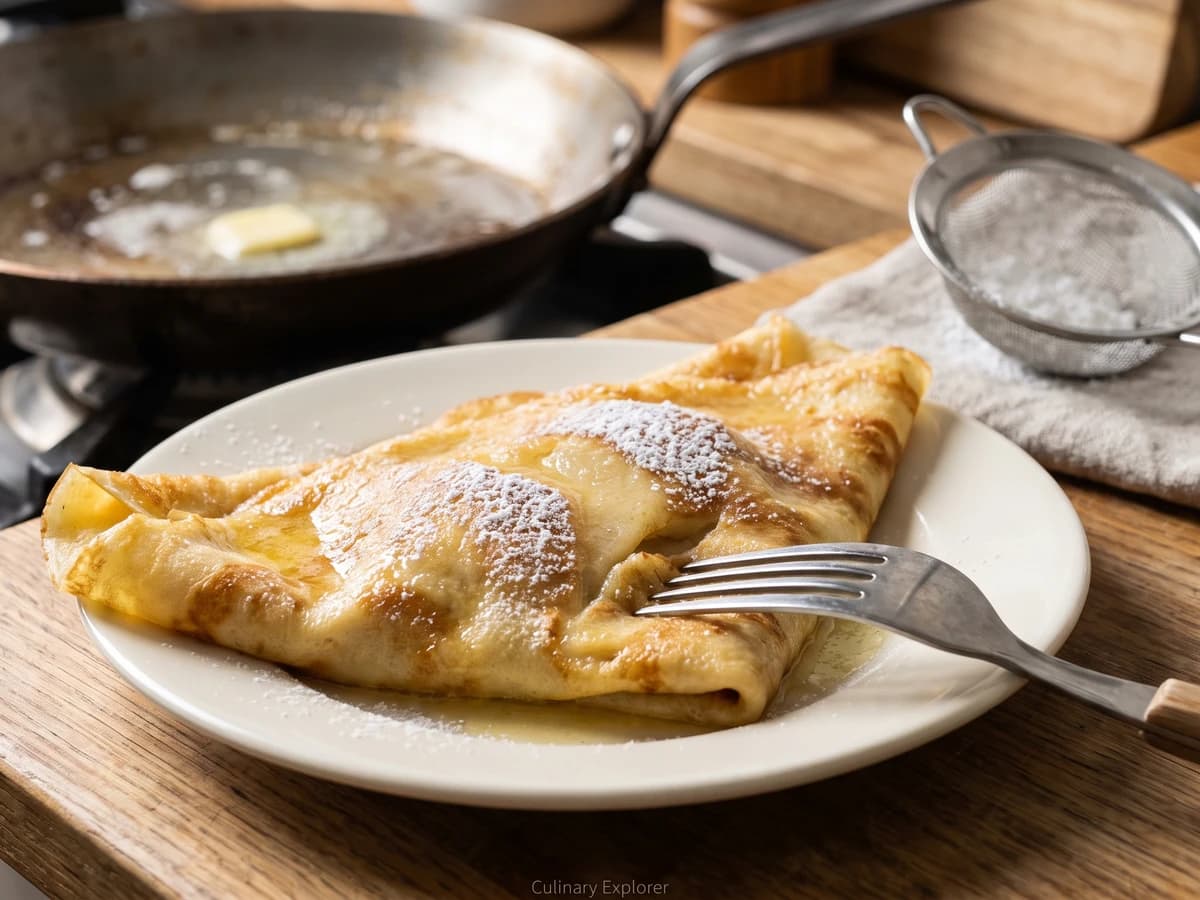
Crêpes au Couvent trap ripe Williams pear dice between two thin pours of sweet batter, then turn in one clean toss and reach the table butter-gold, powdered, and burning hot.