Chef Juliette
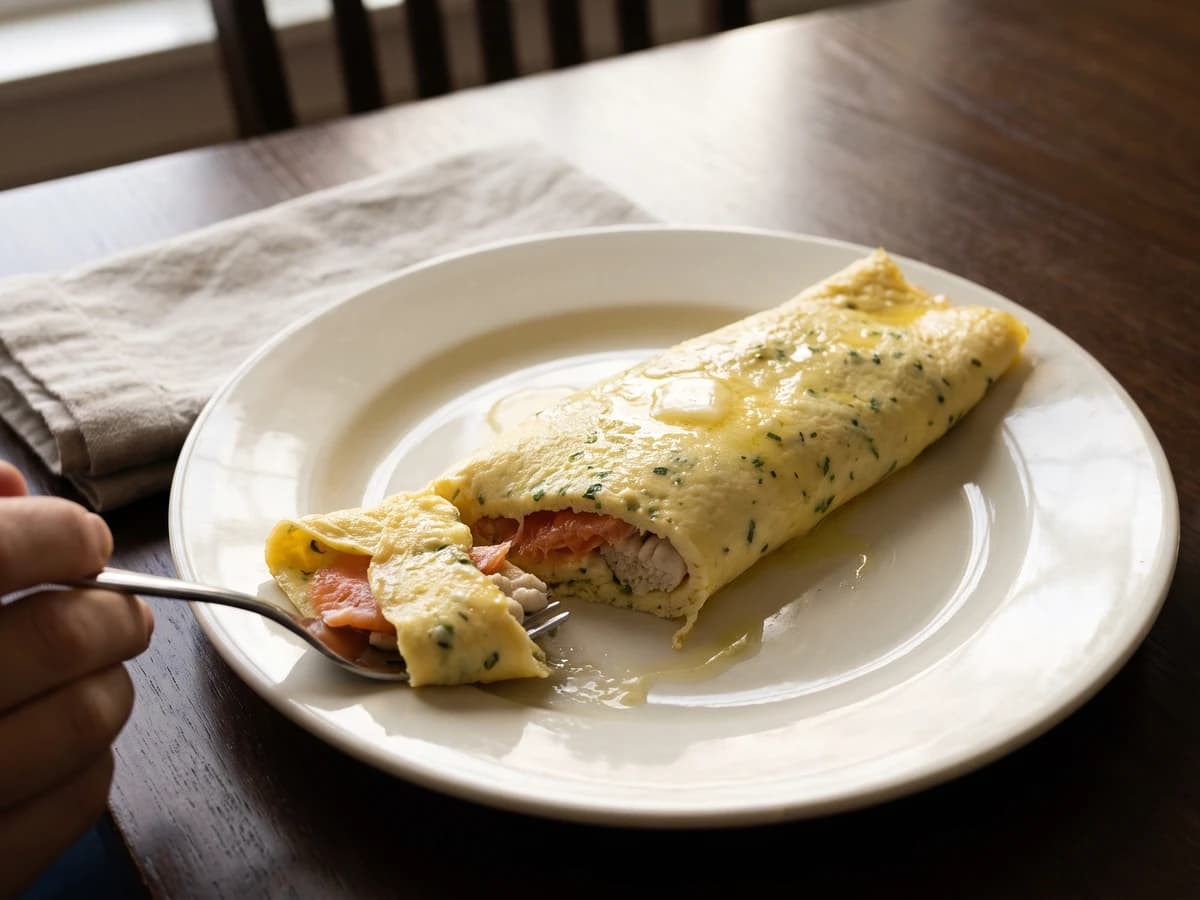
Omelette à l’Écossaise
A creamy omelette aux fines herbes closes around smoked-salmon-wrapped herring milts, gently poached in butter. Have the filling ready, then roll the eggs while they still shine.
A cooking platform built around craft, culture, and the stories behind what we eat.
Created by Chef Juliette
Based on No. 423, Poached Eggs Grand Duc, from Le Guide Culinaire (1907) by Auguste Escoffier
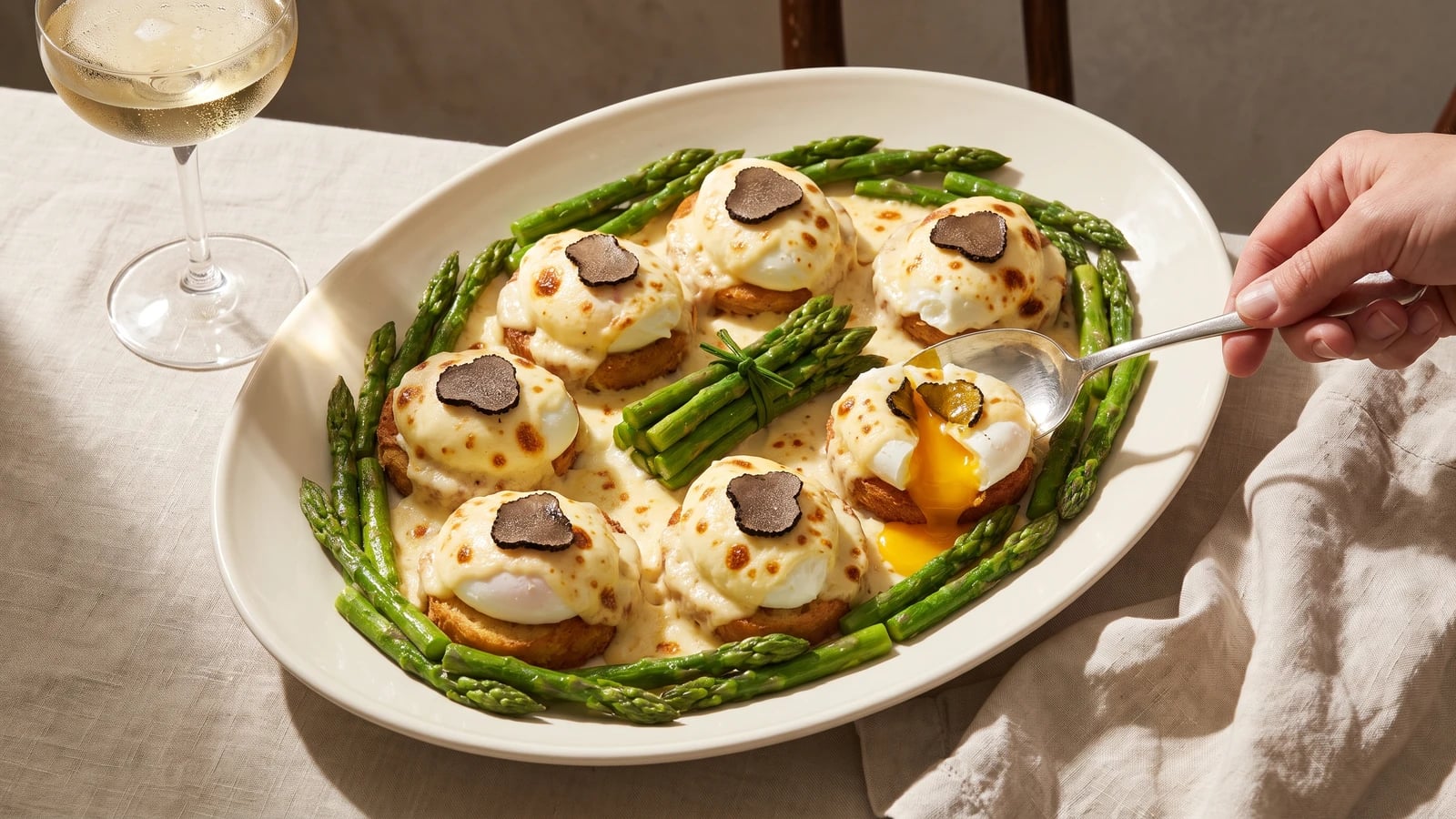
Soft poached eggs, crisp fried croûtes, black truffle, and Mornay meet a fierce glaze, then circle brilliant asparagus tips and their tied fagot: grand-kitchen composition made for four.
Œufs pochés Grand-Duc (Grand Duc poached eggs) teaches orchestration. Crisp croûtes, flowing yolks, black truffle, Mornay (cheese-enriched béchamel), and vivid asparagus must arrive hot together, yet none may wait long enough to lose itself. The one true thing to know before touching a pan is this: the final glaze must be a flash of fierce heat, not a second cooking of the eggs.
The original sat inside a brigade kitchen with a saucier on staff, a stock never off the fire, several hands to poach and trim, and a salamander ready to brown the sauce in seconds. At home, one small saucepan makes the Mornay, one skillet poaches the eggs in batches, and a fully heated broiler supplies the fierce top heat. The large croustade, flawn ring, and drying-box belong to the alternate presentation's scaffolding, so this four-person version follows the book's first mode on fried croûtes from Croûtes et Croustades (No. 2393). The portions changed. The garnish and sequence did not. One cook, one stove, one evening.
What must stay is the dish itself: each egg on its own crisp base, each yolk sheltered beneath truffle and sauce, with loose asparagus tips and a fagot d'asperges (small tied asparagus bundle) filling the centre. Have every component ready before the platter approaches the broiler. That brief glaze decides everything.
Œufs pochés Grand-Duc belongs to the formal Parisian grand-kitchen repertoire, where aristocratic titles often described a prescribed garnish rather than a regional origin. Here the Grand-Duc name is carried by black truffle, Mornay, and exceptionally green asparagus arranged with ceremonial symmetry. Classical manuals preserve both individual eggs on fried croûtes and a grand croustade presentation, showing how the same composition could serve either plated dining or a shared celebration table.
Quantity
8, each 2½ inches (6.5 cm) wide (No. 2393)
prepared and fully crisp
Quantity
8
Quantity
2 tablespoons (30 ml / 30 g)
Quantity
24 spears (about 1 pound / 450 g)
Quantity
2
Quantity
5 tablespoons (75 ml / 70 g)
divided
Quantity
¼ cup (60 ml / 32 g)
Quantity
2 cups (480 ml / 495 g)
divided
Quantity
½ cup (120 ml / 120 g)
Quantity
1 cup (240 ml / 100 g)
finely grated
Quantity
¼ cup (60 ml / 22 g)
finely grated and divided
Quantity
⅛ teaspoon (0.6 ml / 0.3 g)
Quantity
¼ teaspoon (1.25 ml / 0.6 g)
Quantity
2 teaspoons (10 ml / 12 g), divided, plus more for the asparagus water
Quantity
8 thin slices (about 20 g)
fresh, or good preserved truffle drained and patted dry
| Ingredient | Quantity |
|---|---|
| fried bread croûtes from Croûtes et Croustadesprepared and fully crisp | 8, each 2½ inches (6.5 cm) wide (No. 2393) |
| large eggs | 8 |
| white wine vinegar | 2 tablespoons (30 ml / 30 g) |
| slender asparagus spears | 24 spears (about 1 pound / 450 g) |
| long chives | 2 |
| unsalted butterdivided | 5 tablespoons (75 ml / 70 g) |
| all-purpose flour | ¼ cup (60 ml / 32 g) |
| whole milkdivided | 2 cups (480 ml / 495 g) |
| heavy cream | ½ cup (120 ml / 120 g) |
| Gruyèrefinely grated | 1 cup (240 ml / 100 g) |
| Parmesanfinely grated and divided | ¼ cup (60 ml / 22 g) |
| freshly grated nutmeg | ⅛ teaspoon (0.6 ml / 0.3 g) |
| ground white pepper | ¼ teaspoon (1.25 ml / 0.6 g) |
| fine sea salt | 2 teaspoons (10 ml / 12 g), divided, plus more for the asparagus water |
| black trufflefresh, or good preserved truffle drained and patted dry | 8 thin slices (about 20 g) |
Cut eight of the asparagus tips to 4 inches (10 cm) long for the fagot, then cut the remaining sixteen tips to 2½ inches (6.5 cm). Save the lower stalks for soup or an omelette. Bring well-salted water to a boil and add the eight long tips; after 45 seconds, add the shorter tips and cook for another 1 to 1½ minutes, until vivid green and just tender under a knife. Dip the chives into the water for the final 5 seconds. Transfer everything immediately to iced water, then drain and dry thoroughly. Tie the eight long tips into a neat bundle with the softened chives. The cold bath fixes the colour, but leaving the asparagus wet would thin the butter and Mornay later.
Melt 4 tablespoons (60 ml / 56 g) of the butter in a small heavy saucepan over medium-low heat. Stir in the flour and cook the roux for 90 seconds, keeping it pale and smelling faintly of warm biscuit. Reserve ¼ cup (60 ml / 62 g) of the milk, then whisk the remainder into the roux a little at a time. Bring it to a gentle simmer and cook for 4 to 5 minutes, whisking, until the sauce nappes, meaning it coats the back of a spoon and holds a clean line drawn through it. Remove from the heat and whisk in the cream, Gruyère, all but 1 tablespoon of the Parmesan, nutmeg, white pepper, and enough salt to make the sauce taste complete. Do not boil once the cheese is in. If the Mornay turns grainy or oily, take it off the heat and whisk in the reserved cold milk one spoonful at a time. Ça se rattrape. Cover directly on the surface and keep warm.
Fill a wide skillet with 2½ inches (6.5 cm) of water, add the vinegar, and bring it to a bare tremble. Crack each egg into a small cup. Working in two batches of four, slide the eggs into the water with space between them and poach for 2½ to 3 minutes, gently folding any wandering white around its yolk with a spoon. The whites should hold while the yolks remain completely fluid. Lift each egg with a slotted spoon into iced water to stop the cooking, then trim only the loose fringes. This deliberate pause replaces the extra pair of brigade hands and lets one cook assemble eight eggs evenly.
Heat the oven to 300°F (150°C). Set the fried bread croûtes from Croûtes et Croustades (No. 2393) on a tray and warm them for 4 to 5 minutes, until crisp through their centres. Remove them, then switch the oven to its highest broiler setting and place the rack 5 to 6 inches (13 to 15 cm) below the heat. Brush a broiler-safe oval platter with ½ tablespoon (7.5 ml / 7 g) of the remaining butter. The broiler must be fully fierce before assembly begins; waiting beneath weak heat cooks the yolks before the sauce colours.
Bring a fresh skillet of water to just below a simmer. Lower in the chilled eggs for 30 to 45 seconds, only long enough to heat them through, then drain them very well on a clean towel. If the first eggs cooled while you worked, give them another 15 seconds in the hot water rather than broiling them longer. Melt the final ½ tablespoon (7.5 ml / 7 g) of butter in a small pan and turn the asparagus tips and tied fagot through it over low heat. Arrange the eight warm croûtes in a ring on the platter, set one egg on each, and lay a truffle slice over every egg. Coat each generously with warm Mornay, allowing the sauce to cover the egg and meet the croûte, then sprinkle over the reserved Parmesan.
Slide the platter beneath the broiler and watch without leaving it. Glaze for 45 to 75 seconds, rotating the platter if one side colours first, until the Mornay bubbles at the edges and takes small tawny-gold marks. Do not leave it beyond 90 seconds merely to chase darker colour; a pale glaze can still be delicious, while a hard yolk cannot be made soft again. Withdraw the platter, spoon the loose buttered asparagus tips into the centre, and set the tied fagot over them. Serve immediately, two eggs per person. À table!
1 serving (about 400g)
Culinary guides, cultural storytelling, and the editorial depth that makes cooking meaningful.
Discover Culinary ExplorerChef Juliette
A creamy omelette aux fines herbes closes around smoked-salmon-wrapped herring milts, gently poached in butter. Have the filling ready, then roll the eggs while they still shine.
Chef Juliette
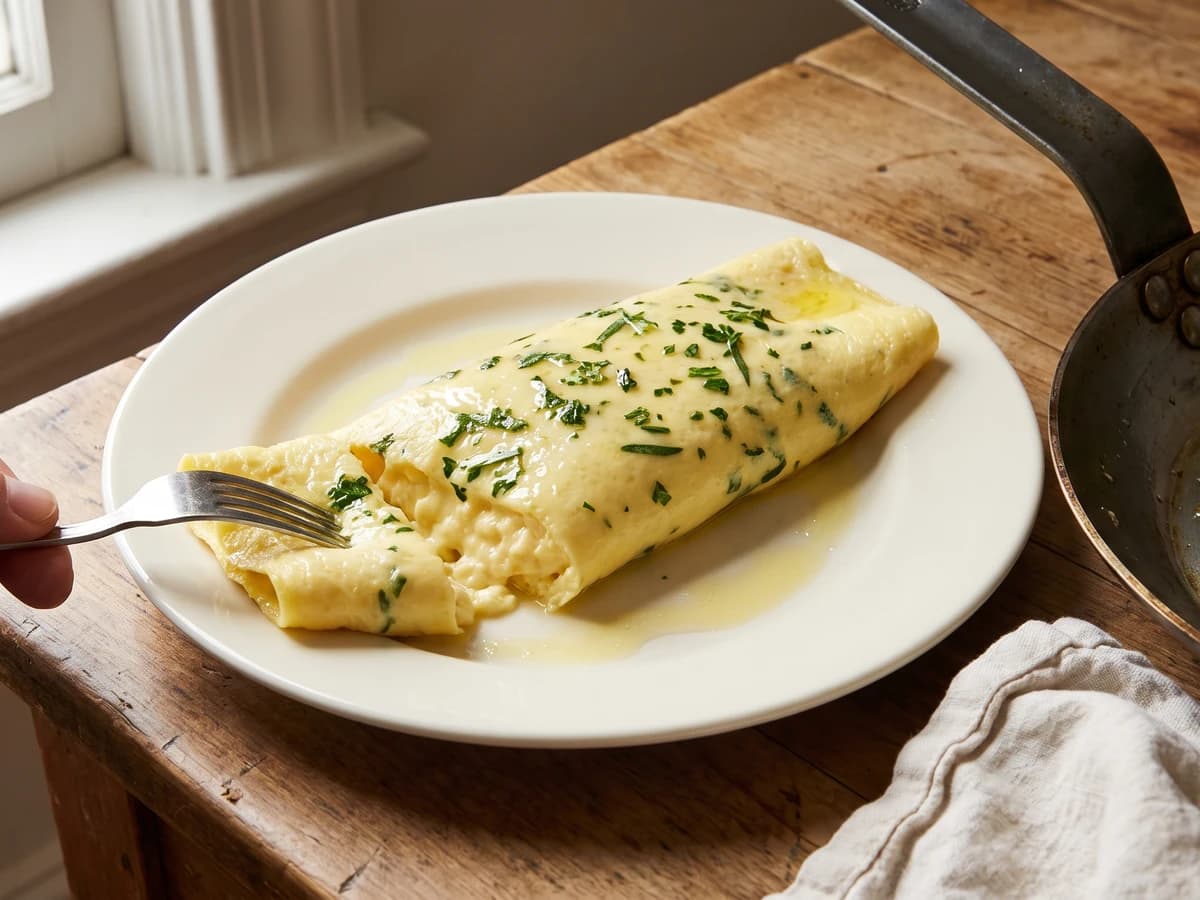
Four tender herbs, hot butter, and two eggs per pan: this rolled omelette teaches the quick hand and good judgment that keep the outside pale and the center creamy.
Chef Juliette
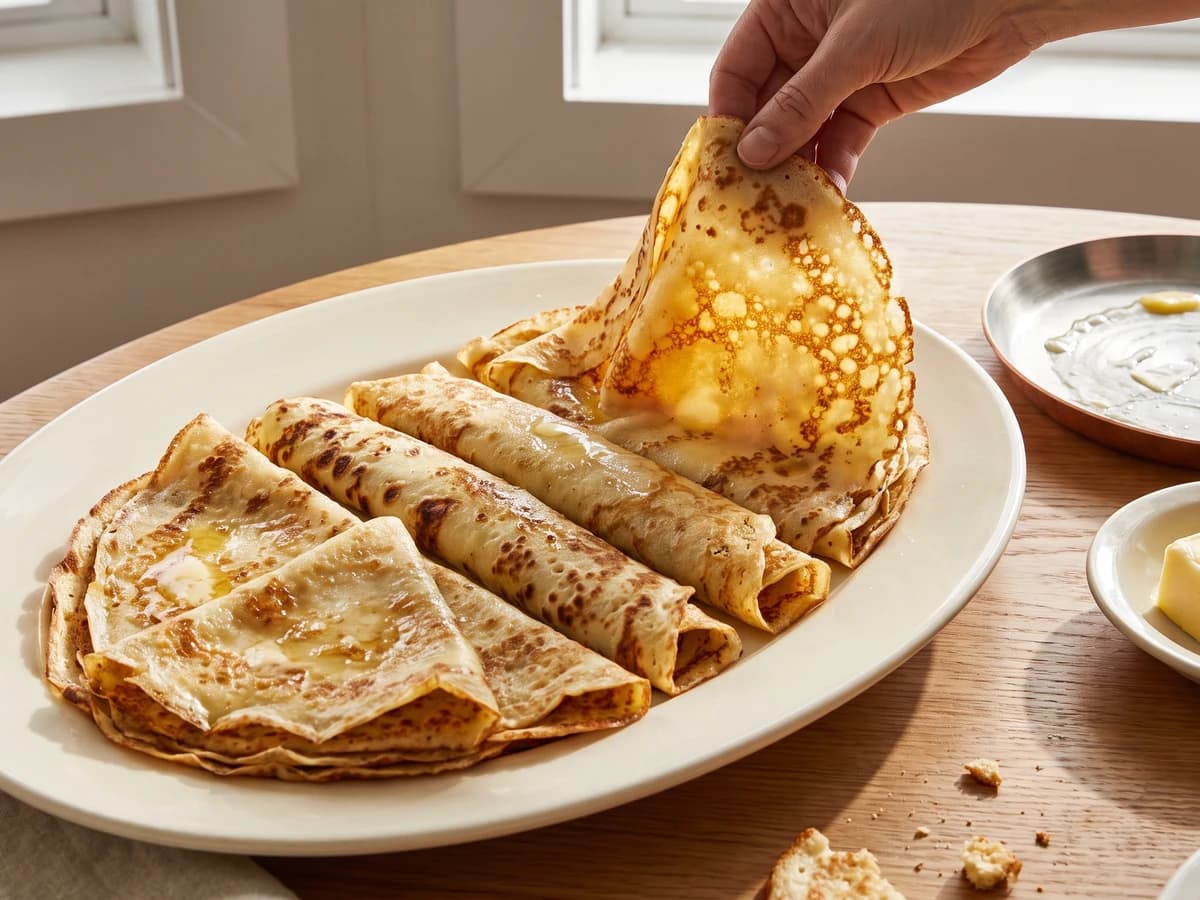
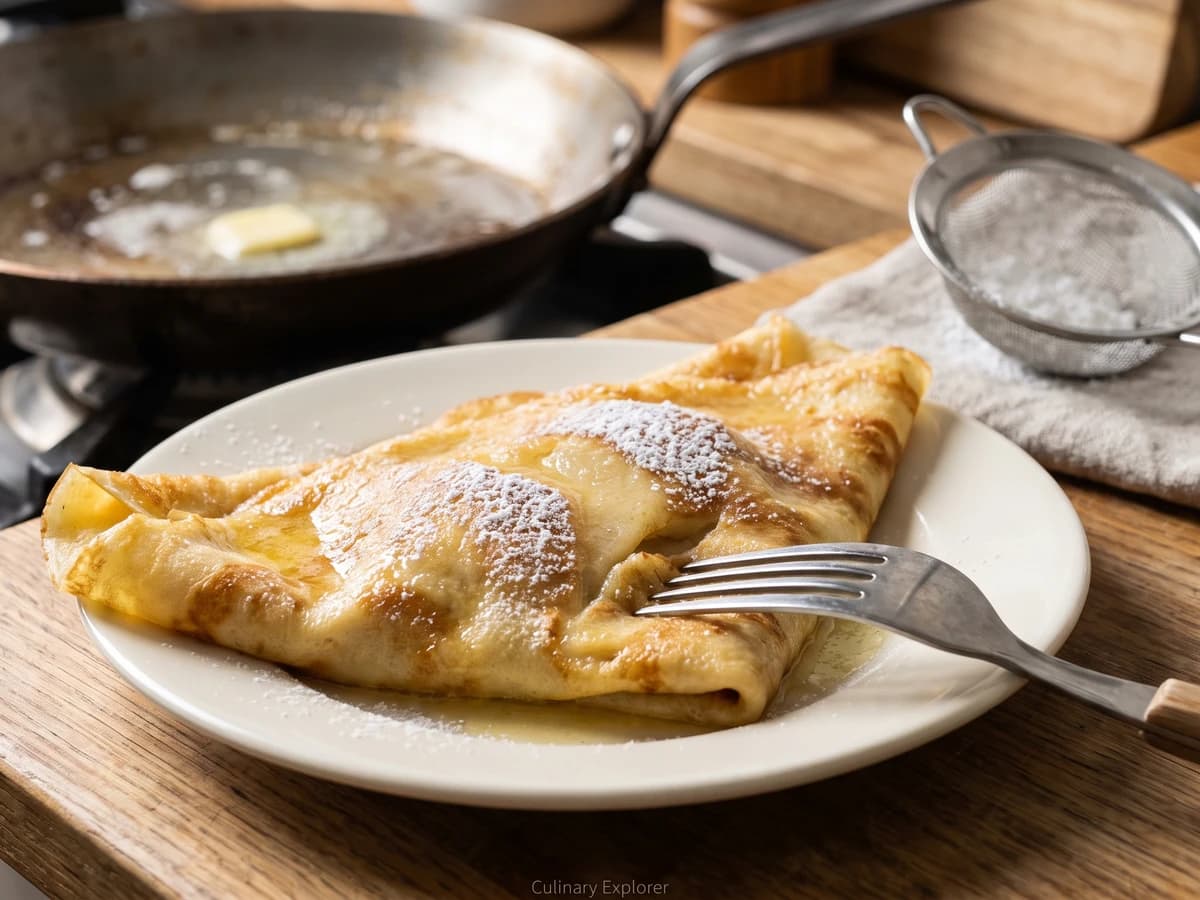
Four batters, one lesson: let the flour drink deeply before cooking, then spread the batter thinly in butter for crêpes and pannequets that bend without becoming tough.
Chef Juliette
Crêpes au Couvent trap ripe Williams pear dice between two thin pours of sweet batter, then turn in one clean toss and reach the table butter-gold, powdered, and burning hot.