Chef Juliette
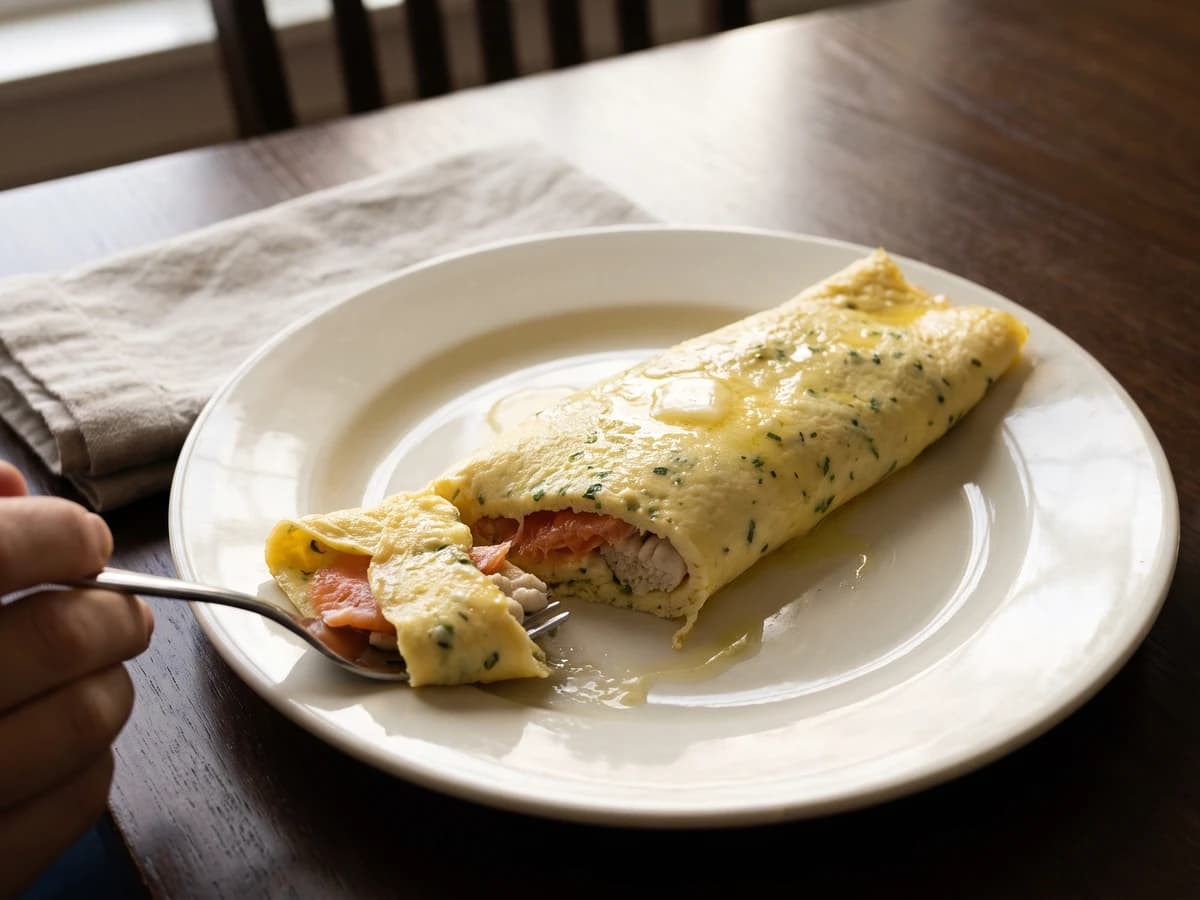
Omelette à l’Écossaise
A creamy omelette aux fines herbes closes around smoked-salmon-wrapped herring milts, gently poached in butter. Have the filling ready, then roll the eggs while they still shine.
A cooking platform built around craft, culture, and the stories behind what we eat.
Created by Chef Juliette
Based on No. 420, Poached Eggs à la Clamart, from Le Guide Culinaire (1907) by Auguste Escoffier
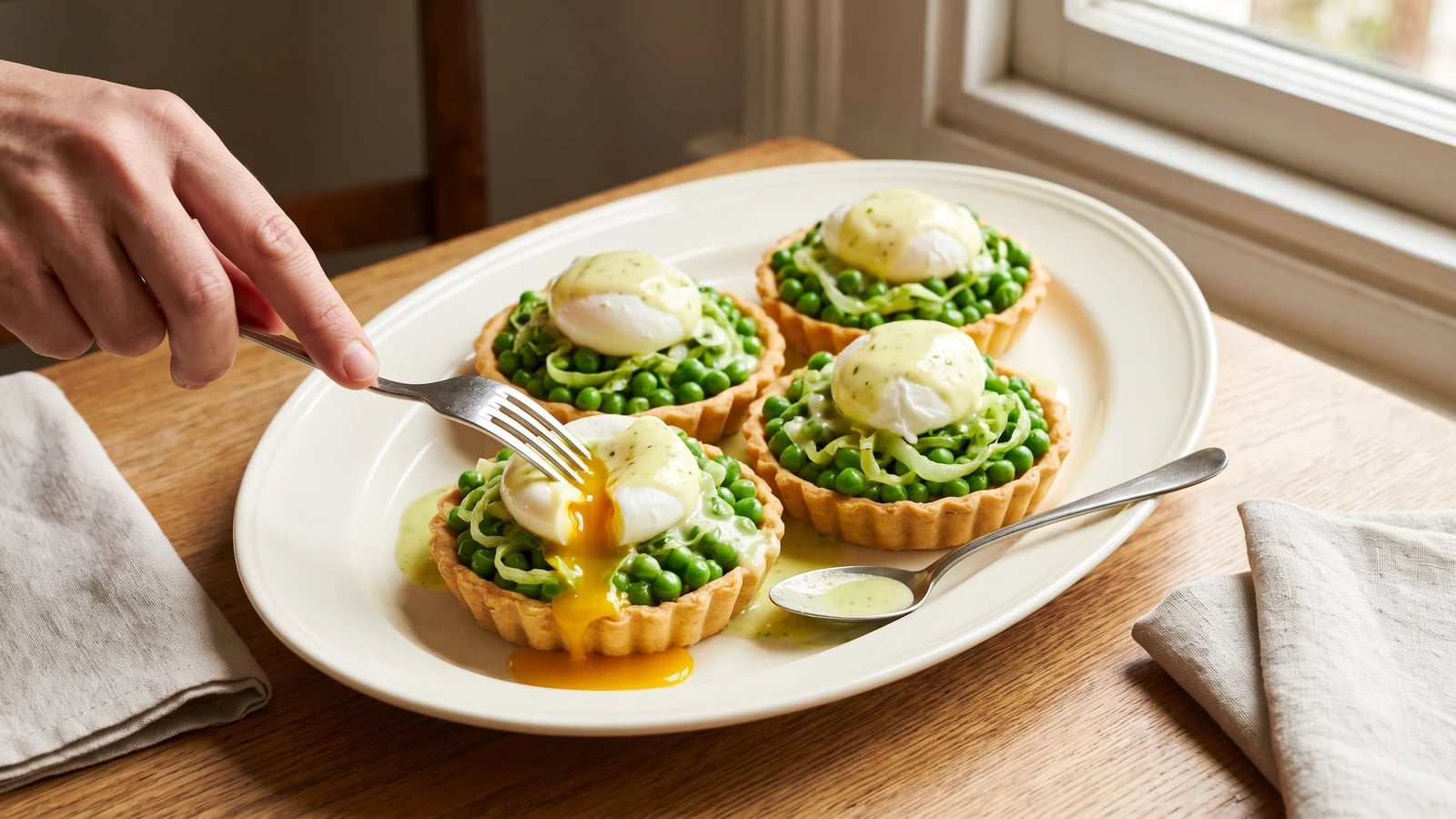
A crisp tartlet, peas à la française with ciseled lettuce, a trembling poached egg, and ivory cream sauce brightened by fresh-pea butter: a classical composition made workable for four.
Œufs pochés à la Clamart (poached eggs with peas à la française) teach controlled moisture. The tartlet stays crisp, the peas remain distinct, and the sauce clings only when every component reaches the plate at its proper consistency. The one true thing is simple: tender must never become watery.
The old formula assumed tartlet crusts from the pastry station, Petits Pois à la Française (No. 2193) already prepared, a saucier on staff, and another cook poaching eggs to order. It needs neither the stockpot kept perpetually on the fire nor a salamander, so the home version shouldn't invent them. Bake four shells ahead, warm the completed pea garnish, make one small saucepan of cream sauce, and poach two eggs at a time. Those separate stations were brigade scaffolding; the tartlet, ciseled lettuce, poached egg, cream sauce, and fresh-pea butter are the dish, and all remain.
When it lands, you should see vivid peas around a softly set egg, ivory sauce carrying a pale green sheen, and a pastry edge still crisp beneath the fork. Dry each poached egg thoroughly before it touches the tartlet. That small pause on the towel decides the dish.
Clamart, southwest of Paris, was known for generations for market gardens whose small green peas supplied the capital. In classical Parisian menu language, à la Clamart came to mean a garnish built around green peas, particularly beside eggs and delicate white sauces. This is formal service assembled from familiar foods, not a regional breakfast tradition: pastry, peas, lettuce, egg, cream, and butter arranged with exact timing.
Quantity
1 cup (240 ml / 125 g)
Quantity
6 tablespoons (90 ml / 85 g)
cubed
Quantity
¼ teaspoon (1.25 ml / 1.5 g)
Quantity
2 to 3 tablespoons (30 to 45 ml / 30 to 45 g)
Quantity
1 cup (240 ml / 210 g) Petits Pois à la Française (No. 2193)
with the cooked lettuce ciseled into fine ribbons
Quantity
⅓ cup (80 ml / 50 g)
frozen peas thawed, if using
Quantity
1½ tablespoons (22 ml / 21 g)
softened
Quantity
1 tablespoon (15 ml / 14 g)
Quantity
1 tablespoon (15 ml / 8 g)
Quantity
½ cup (120 ml / 123 g)
warmed
Quantity
½ cup (120 ml / 120 g)
warmed
Quantity
¼ teaspoon (1.25 ml / 1.5 g)
Quantity
⅛ teaspoon (0.6 ml / 0.25 g)
Quantity
4
very fresh and cold
Quantity
2 tablespoons (30 ml / 30 g)
| Ingredient | Quantity |
|---|---|
| all-purpose flour, for the tartlet shells | 1 cup (240 ml / 125 g) |
| cold unsalted buttercubed | 6 tablespoons (90 ml / 85 g) |
| fine sea salt, for the tartlet dough | ¼ teaspoon (1.25 ml / 1.5 g) |
| ice water | 2 to 3 tablespoons (30 to 45 ml / 30 to 45 g) |
| prepared pea-and-lettuce garnishwith the cooked lettuce ciseled into fine ribbons | 1 cup (240 ml / 210 g) Petits Pois à la Française (No. 2193) |
| shelled fresh peas, or frozen petits poisfrozen peas thawed, if using | ⅓ cup (80 ml / 50 g) |
| unsalted butter, for the fresh-pea buttersoftened | 1½ tablespoons (22 ml / 21 g) |
| unsalted butter, for the cream sauce | 1 tablespoon (15 ml / 14 g) |
| all-purpose flour, for the cream sauce | 1 tablespoon (15 ml / 8 g) |
| whole milkwarmed | ½ cup (120 ml / 123 g) |
| heavy creamwarmed | ½ cup (120 ml / 120 g) |
| fine sea salt, for the sauce | ¼ teaspoon (1.25 ml / 1.5 g) |
| ground white pepper | ⅛ teaspoon (0.6 ml / 0.25 g) |
| large eggsvery fresh and cold | 4 |
| white wine vinegar | 2 tablespoons (30 ml / 30 g) |
Mix the flour and salt, then rub in the cold butter until most of it resembles coarse crumbs but a few thin flakes remain. Add 2 tablespoons of ice water and press the mixture together; add the final tablespoon only if dry flour remains. Stop as soon as the dough holds. Flatten it into a disc, wrap it, and chill for 30 minutes so the flour hydrates and the pastry relaxes.
Heat the oven to 375°F (190°C). Roll the chilled dough about ⅛ inch (3 mm) thick and cut four rounds large enough to line 4-inch (10 cm) tartlet tins. Press the dough into the corners without stretching it, trim the rims, prick the bases, and chill for 15 minutes. Line each shell with parchment and pie weights, then bake for 15 minutes. Remove the weights and parchment and bake for another 8 to 10 minutes, until the bases are dry and the rims are an even butter-gold. Cool in the tins for 5 minutes, then unmold.
Cook the fresh peas in gently boiling salted water for 2 to 3 minutes, or frozen petits pois for about 1 minute, until tender and vivid green. Drain thoroughly and press away surface water. Crush the peas into a paste, force it through a fine sieve, and let it cool completely before working in the softened butter. If the paste looks loose, press it again before adding the butter; excess water would thin the finished sauce.
Melt the butter in a small saucepan over gentle heat. Stir in the flour and cook for 90 seconds without letting it color. Whisk in the warm milk gradually, keeping the mixture smooth, then add the warm cream. Simmer gently for 5 to 7 minutes, whisking often, until the sauce reaches nappant, thick enough to coat the back of a spoon while still flowing. Season with the salt and white pepper. If lumps form, pass the sauce through a fine sieve; if it tightens too far, whisk in a spoonful of warm milk. Hold it warm, but don't add the fresh-pea butter yet.
Set the tartlet shells in a 300°F (150°C) oven for 5 minutes. Meanwhile, warm the prepared Petits Pois à la Française (No. 2193) gently in a covered saucepan, just until hot and glossy. The ciseled lettuce should already be folded through the finished peas. If liquid has gathered, spoon the garnish from the pan without carrying that excess into the pastry. Divide it among the warm shells, filling generously but leaving the fluted rims visible.
Fill a wide pan with about 3 inches (7.5 cm) of water, add the vinegar, and bring it to a bare tremble, never a rolling boil. Crack each cold egg into a small cup. If the loose white looks watery, let the egg sit in a fine-mesh sieve for 5 seconds before returning it to the cup. Slip in two eggs at a time and poach for 3 to 3½ minutes, nudging the white around the yolk with a spoon, until the white is set and the yolk remains soft. If a white begins to feather, draw it gently back around the yolk rather than stirring the pan. Ça se rattrape. Lift each egg with a slotted spoon and drain it thoroughly on a clean towel.
Take the warm cream sauce off the heat and whisk in the fresh-pea butter a little at a time. It should turn pale green and glossy while remaining nappant. If it looks greasy, whisk in 1 teaspoon of cold cream until it comes together again. Set one well-drained poached egg on each filled tartlet and coat the egg generously with sauce, leaving a rim of green peas visible. Serve at once. À table!
1 serving (about 230g)
Culinary guides, cultural storytelling, and the editorial depth that makes cooking meaningful.
Discover Culinary ExplorerChef Juliette
A creamy omelette aux fines herbes closes around smoked-salmon-wrapped herring milts, gently poached in butter. Have the filling ready, then roll the eggs while they still shine.
Chef Juliette
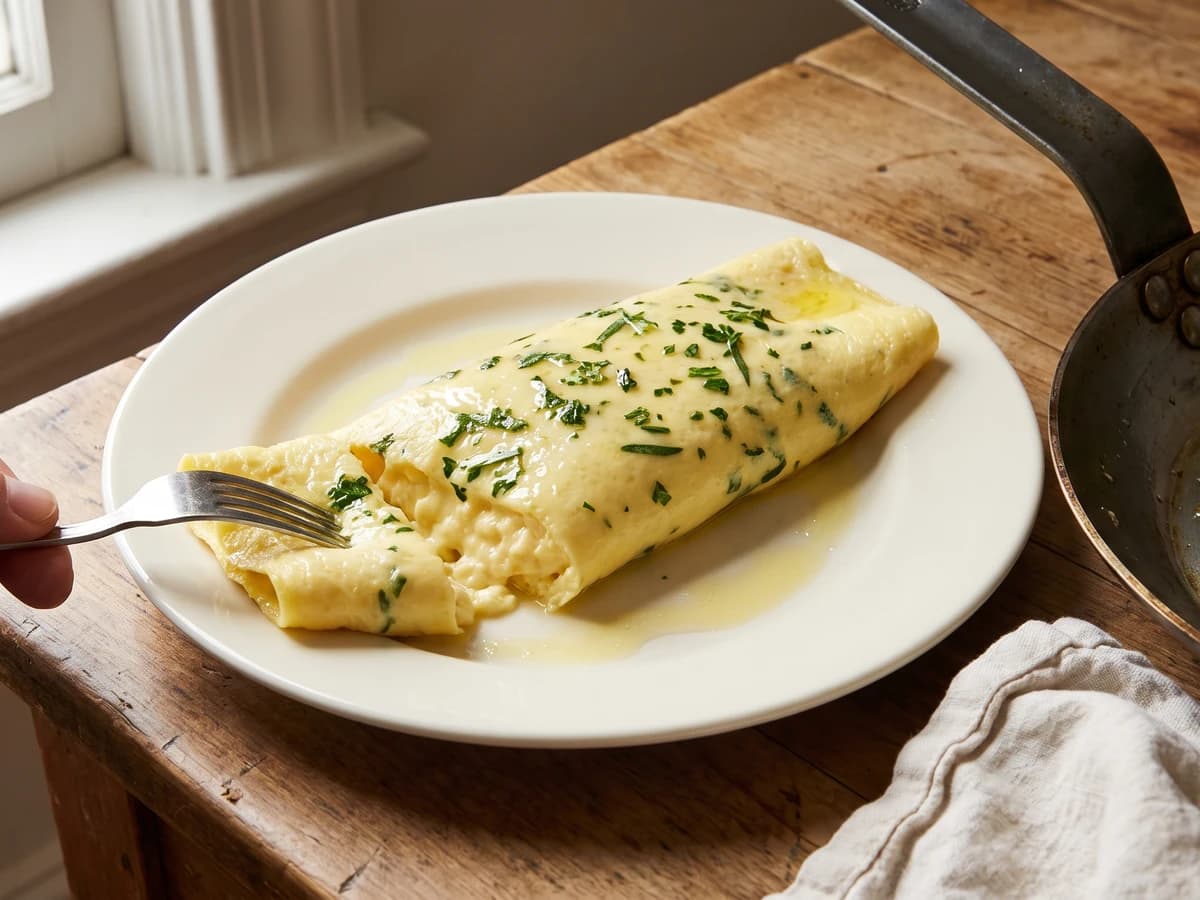
Four tender herbs, hot butter, and two eggs per pan: this rolled omelette teaches the quick hand and good judgment that keep the outside pale and the center creamy.
Chef Juliette
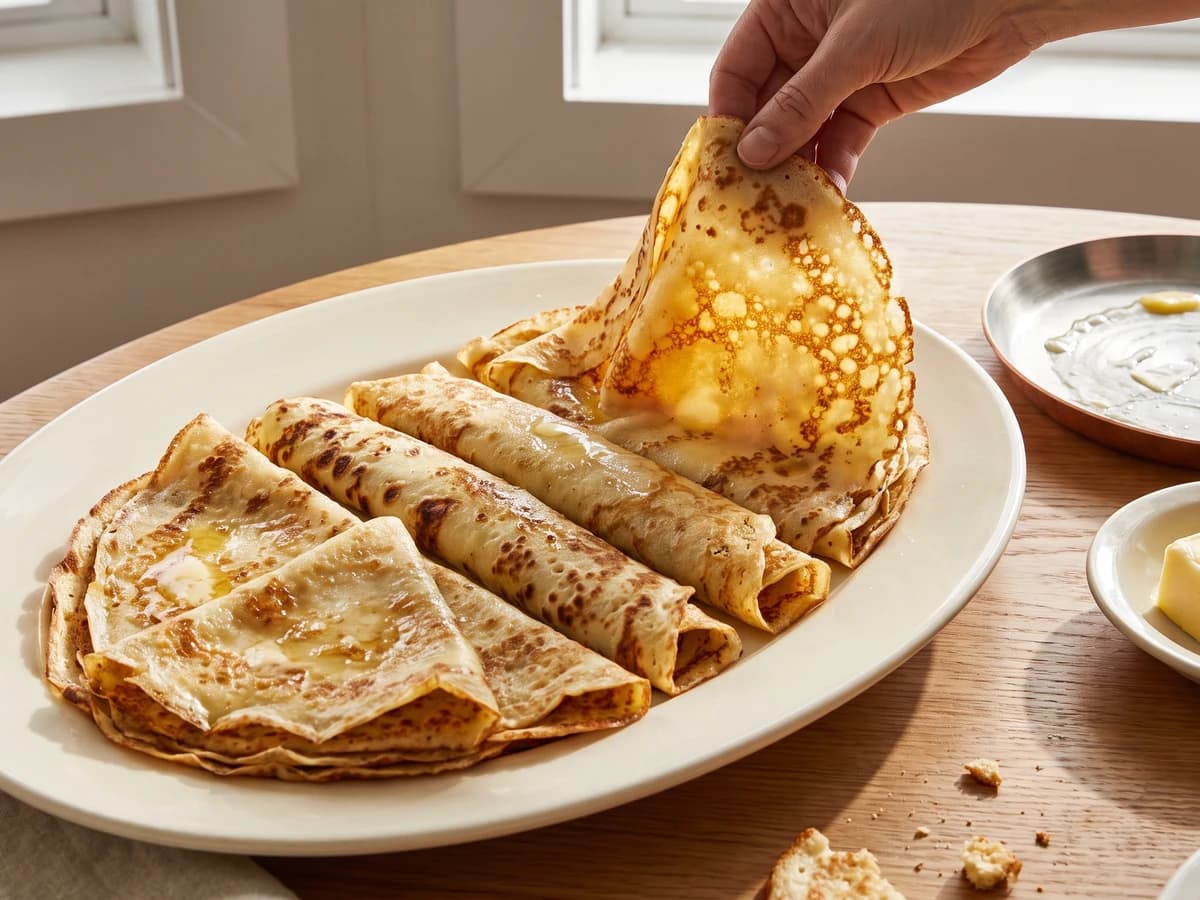
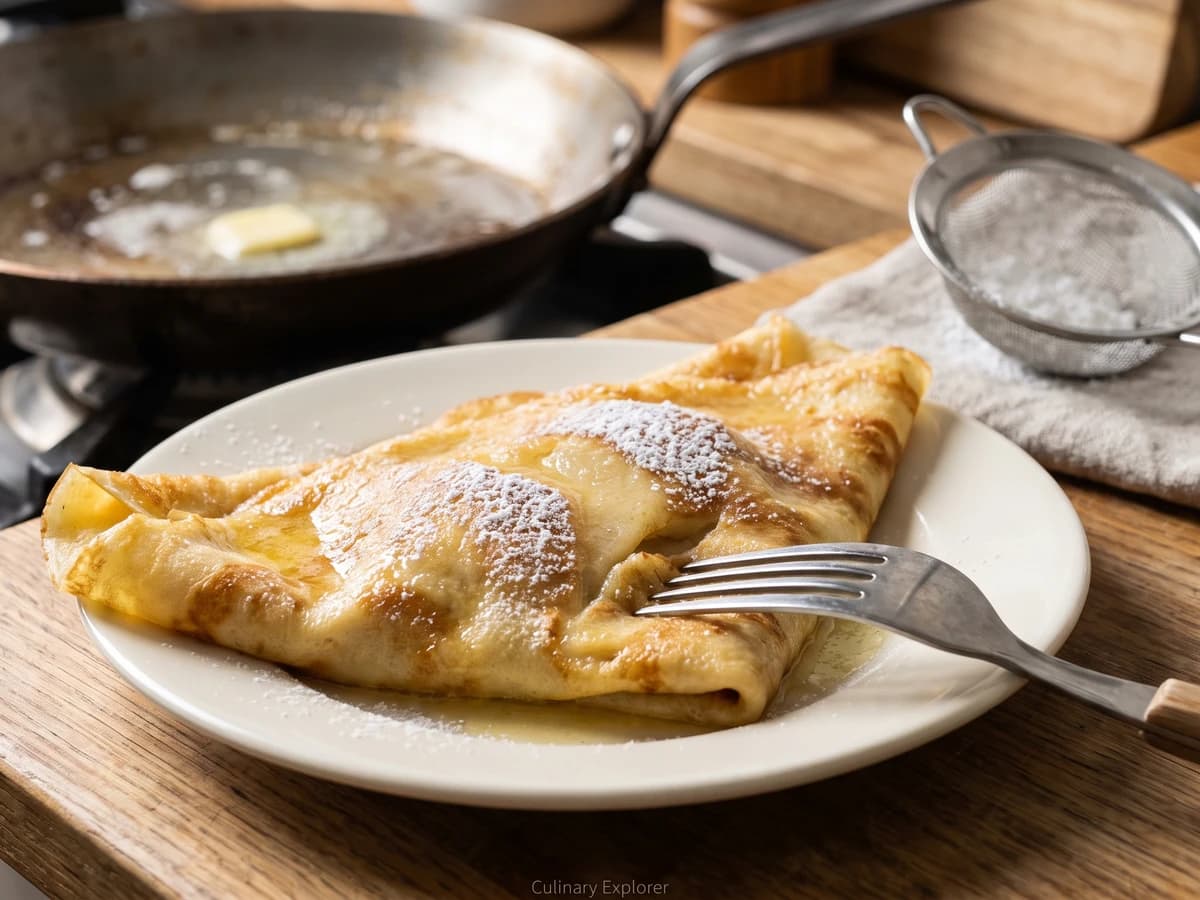
Four batters, one lesson: let the flour drink deeply before cooking, then spread the batter thinly in butter for crêpes and pannequets that bend without becoming tough.
Chef Juliette
Crêpes au Couvent trap ripe Williams pear dice between two thin pours of sweet batter, then turn in one clean toss and reach the table butter-gold, powdered, and burning hot.