Chef Juliette
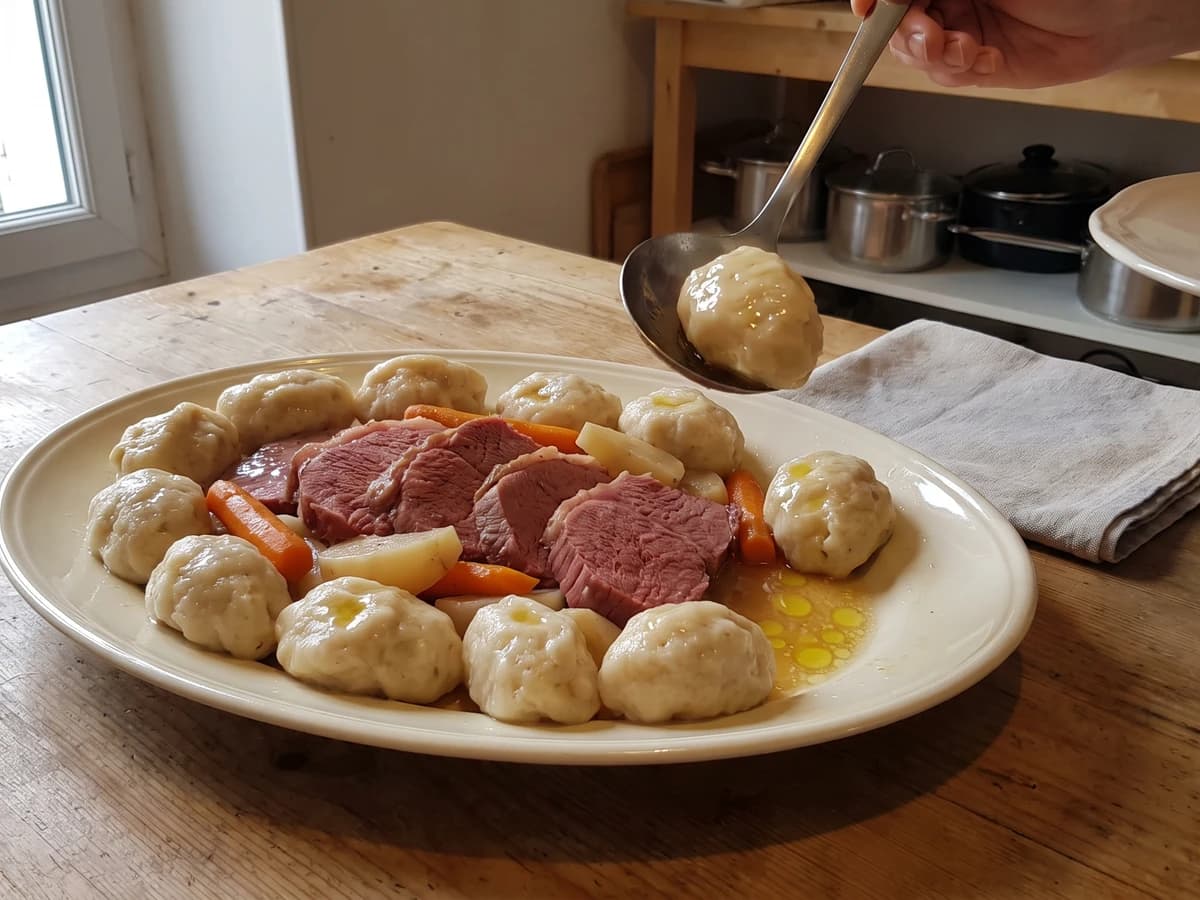
Suet Dumpling
Boulettes au suif, poached beside salt beef, turn equal weights of flour and finely chopped suet into tender, rich dumplings. Keep the beef liquor at a bare tremble and the old garnish works beautifully at home.
A cooking platform built around craft, culture, and the stories behind what we eat.
Created by Chef Juliette
Based on No. 2193, Petits Pois à la Française, from Le Guide Culinaire (1907) by Auguste Escoffier
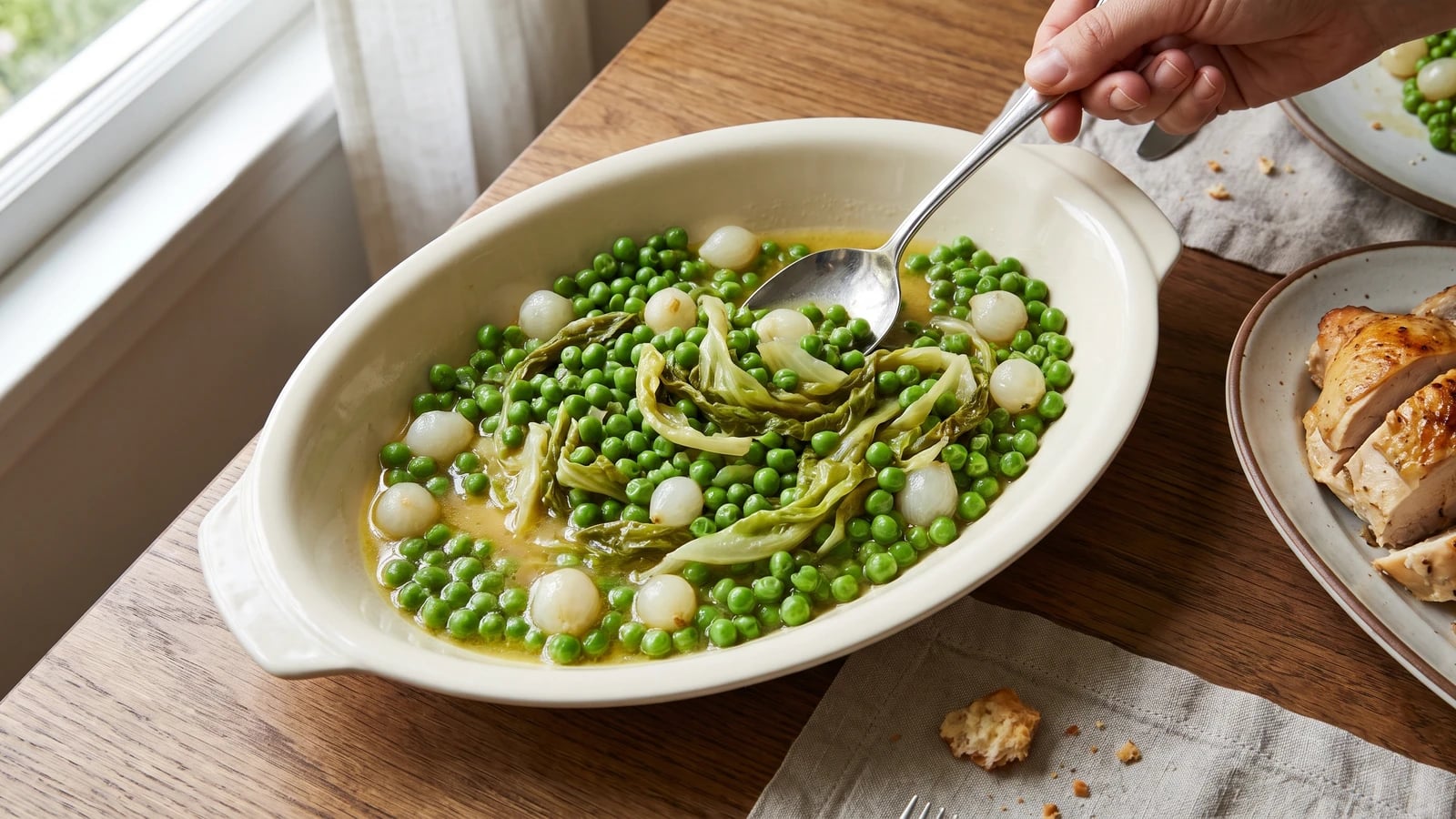
Petits Pois à la Française cook peas, tiny onions, lettuce, herbs, sugar, and butter under a tight lid, using three spoonfuls of water to make their own glossy liquor.
Petits Pois à la Française (peas cooked in the French manner) teaches cuisson à l'étuvée, gentle covered cooking in a vegetable's own moisture. The one true thing to know before touching the pan is that the three spoonfuls of water are not a broth. They only begin the cooking; the peas, lettuce, onions, and butter make the glossy liquor themselves.
The original assumed a saucier could pack the saucepan in advance, leave it in a cool larder, and put it over the fire at the precise moment service required. At home, use a snug lidded saucepan and the refrigerator. The source's faggot becomes a lettuce-and-herb bundle tied with kitchen twine, while obsolete loaf sugar becomes superfine sugar at the same weight so it dissolves evenly. This particular quart of peas is already right for four generous side portions. One cook, one stove, one evening.
The professional cold hold is scheduling scaffolding and can go if dinner is ready to move. The cold pack, the tight lid, the exact three spoonfuls of water, and the final monter au beurre must stay, because they are the dish. Guard the covered cooking above all: let the peas simmer gently in their own liquor, neither boiling hard nor drying out.
Petits Pois à la Française belongs to the Parisian cuisine bourgeoise and the codified national table, where spring peas were cooked with lettuce, small onions, butter, and a little sugar. It traveled from the household saucepan to the grand-kitchen garnish without losing its domestic method: the raw ingredients enter one pan and make their own liquor rather than borrowing stock. The traditional debate concerns the lettuce, which may be sliced back through the peas or served in quarters, but it is never merely decorative; it perfumes and moistens the pan.
Quantity
1 quart (4 cups / 950 ml / 600 g)
Quantity
12 (about 1 cup / 240 ml / 180 g)
peeled
Quantity
1 (about 2 loosely packed cups / 475 ml / 90 g)
kept whole
Quantity
2 sprigs
Quantity
2 sprigs
Quantity
1/2 cup (120 ml / 113 g)
cut into small pieces
Quantity
1 2/3 teaspoons (8 ml / 9.5 g)
Quantity
1 tablespoon plus 1 1/2 teaspoons (22 ml / 19 g)
Quantity
3 tablespoons (45 ml / 45 g)
Quantity
1 tablespoon (15 ml / 14 g)
diced
| Ingredient | Quantity |
|---|---|
| freshly shelled peas | 1 quart (4 cups / 950 ml / 600 g) |
| very small pearl or boiling onionspeeled | 12 (about 1 cup / 240 ml / 180 g) |
| small butter lettuce heartkept whole | 1 (about 2 loosely packed cups / 475 ml / 90 g) |
| flat-leaf parsley | 2 sprigs |
| chervil | 2 sprigs |
| unsalted buttercut into small pieces | 1/2 cup (120 ml / 113 g) |
| fine sea salt | 1 2/3 teaspoons (8 ml / 9.5 g) |
| superfine sugar | 1 tablespoon plus 1 1/2 teaspoons (22 ml / 19 g) |
| cold water | 3 tablespoons (45 ml / 45 g) |
| cold unsalted butter for finishingdiced | 1 tablespoon (15 ml / 14 g) |
Tuck the parsley and chervil against the lettuce heart, then tie the bundle securely in two places with kitchen twine. Keep the lettuce whole so it can soften without disappearing among the peas. The twine is the honest home equivalent of the source's compact faggot, and it lets you recover the herbs and lettuce cleanly at the end.
Choose a heavy 3-quart saucepan, just a little larger than the ingredients. Add the peas, onions, 1/2 cup butter, salt, and sugar, then nestle the lettuce bundle through the middle. Turn everything gently with a broad spoon until the butter is distributed and the ingredients settle into a compact mass without crushing the peas. Cover and cook immediately, or refrigerate for up to 4 hours if the rest of dinner isn't ready.
Pour the three tablespoons of cold water around the edge of the pan and cover tightly. Set the pan over medium-low heat until you hear the first quiet simmer, then reduce the heat to low and cook for 20 to 25 minutes, shaking the covered pan gently every 5 minutes. The peas should become tender while holding their shape, and a knife should enter an onion without resistance. If the pan sounds dry before that point, don't let the butter brown. Ça se rattrape: add one tablespoon of water, cover again, and continue gently. If the peas are tender but swimming in liquid, remove the bundle and simmer uncovered for a minute or two before the butter finish.
Lift out the bundle and cut away the twine. Discard the exhausted parsley and chervil, then cisel the cooked lettuce, cutting it crosswise into narrow ribbons as the source directs. Fold the lettuce through the peas with a soft hand. If you prefer the older alternate presentation, quarter the cooked heart and lay it over the peas instead.
Take the pan completely off the heat. Add the tablespoon of cold butter and swirl or fold the peas until their liquor and butter cohere into a light, glossy emulsion. This is monter au beurre, finishing with cold butter away from the fire. If the surface looks oily instead of glossy, add a teaspoon of cold water and swirl again. Ça se rattrape. Taste for salt, spoon the peas into a warm serving dish with every drop of their liquor, and serve at once. À table!
1 serving (about 240g)
Culinary guides, cultural storytelling, and the editorial depth that makes cooking meaningful.
Discover Culinary ExplorerChef Juliette
Boulettes au suif, poached beside salt beef, turn equal weights of flour and finely chopped suet into tender, rich dumplings. Keep the beef liquor at a bare tremble and the old garnish works beautifully at home.

Chef Juliette
Bread, flour, frangipane, and rice become four cool, supple panades for binding forcemeats, each changing body and flavor while preserving tenderness. The finest Mousselines need none, and knowing that distinction is the lesson.

Chef Juliette
Panade au pain is bread, milk, salt, heat, and attention: stir until the paste releases cleanly, butter it against a skin, and you have the quiet binder behind tender French farces.

Chef Juliette
Panade de farine teaches the drying stroke behind pâte à choux: flour meets boiling buttered water, then stays over the fire until the paste gathers, smooths, and quits the pan cleanly.