Chef Juliette
Omelette à l’Écossaise
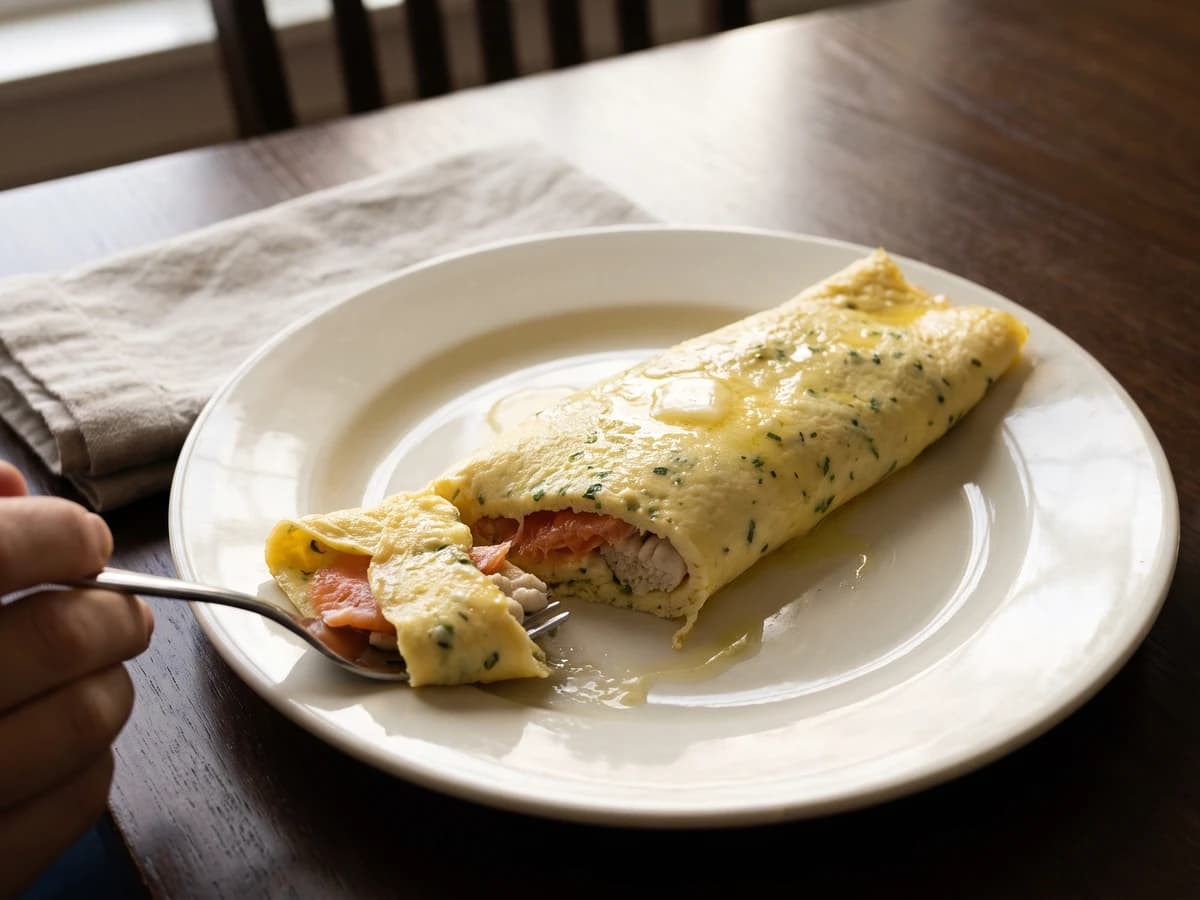
A creamy omelette aux fines herbes closes around smoked-salmon-wrapped herring milts, gently poached in butter. Have the filling ready, then roll the eggs while they still shine.
A cooking platform built around craft, culture, and the stories behind what we eat.
Created by Chef Juliette
Based on No. 407, Omer-pacha Eggs, from Le Guide Culinaire (1907) by Auguste Escoffier
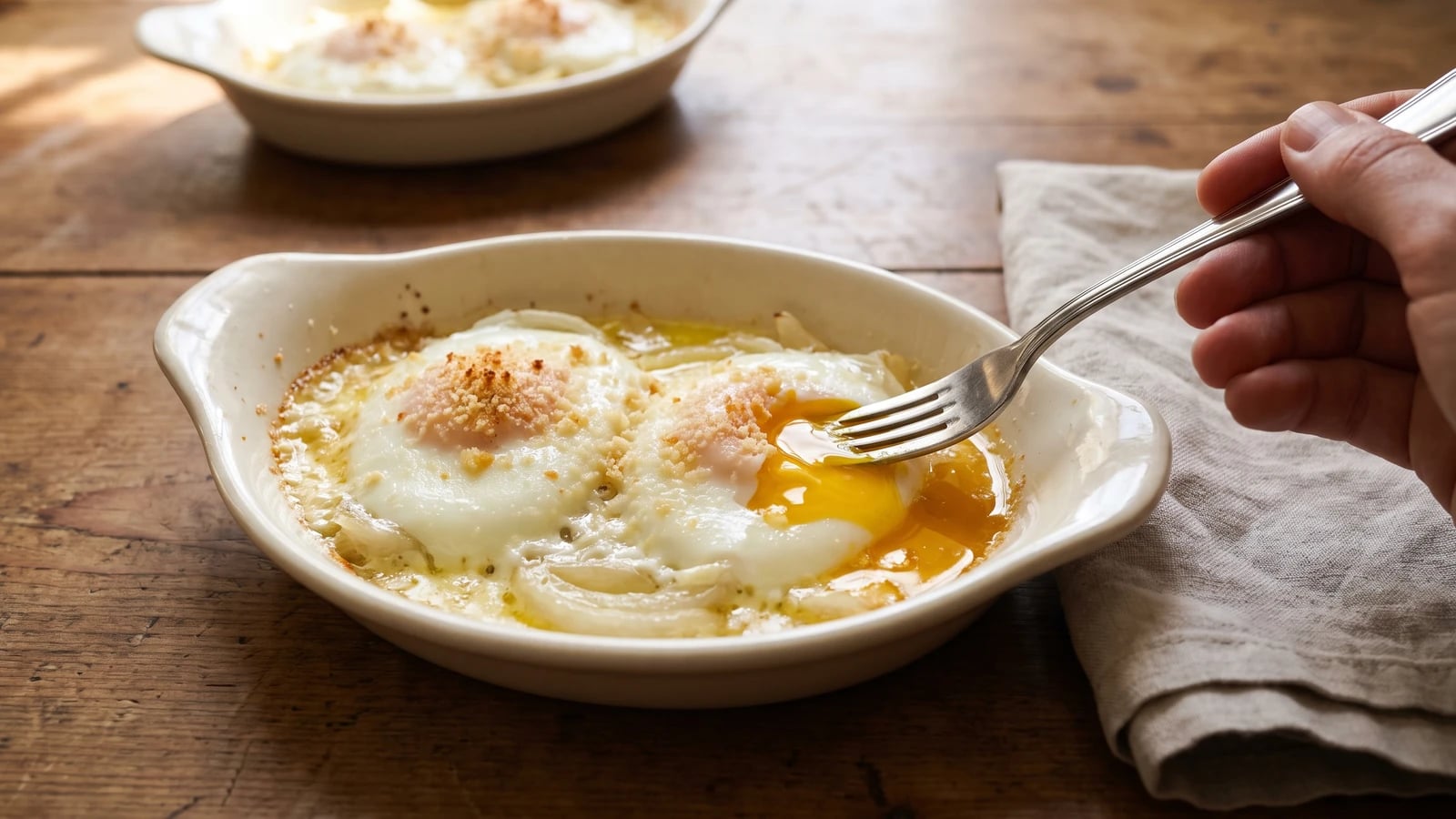
Eggs settle over onions stewed sweet and pale in butter, while dry Parmesan catches a light gratin above. The lesson is timing: browned cheese, tender whites, and yolks still generous.
Œufs Omer-pacha (eggs over pale butter-stewed onions beneath a light Parmesan gratin) teaches a small, exact lesson: the top heat must brown the cheese at the same moment the whites set. The onion is not a caramelized foundation. It must turn soft and sweet in butter while staying pale, because its gentleness is the contrast to the salty dry cheese.
The source assumes a fierce service oven capable of raising a light gratin as the eggs finish, the sort of immediate top heat a salamander supplied. It calls on neither a saucier nor a stockpot, so that usual brigade scaffolding disappears. For four at home, four two-egg dishes preserve the proportions, one generous spoonful of onion and one small spoonful of Parmesan for each, while a preheated metal sheet and, only if needed, a brief broiler finish provide the fierce heat. That is the honest change. One cook, one stove, one evening.
When the timing lands, the onions nearly melt under tender whites, the yolks remain generous, and the Parmesan forms a freckled gold veil rather than a hard crust. The step that decides the dish is faire suer, gently sweating the minced onion without browning, before any egg comes near the oven.
Œufs Omer-pacha belongs to the cosmopolitan Parisian grand-kitchen egg repertoire, not to a regional Ottoman breakfast table. Its name invokes Omer Pasha, an Ottoman soldier and statesman, following the French menu custom of attaching foreign names and titles to concise garnished preparations. Beneath the grand name sits a precise French service dish: onions sweated pale in butter, eggs laid directly above, and dry Parmesan brought to a light gratin just as the eggs set.
Quantity
1 medium (about 1 cup / 160 g)
very finely minced
Quantity
2 tablespoons (30 ml / 28 g)
Quantity
8
Quantity
1/4 cup (60 ml / 20 g)
very finely grated
Quantity
1 tablespoon (15 ml / 15 g)
only if needed to halt browning
| Ingredient | Quantity |
|---|---|
| medium yellow onionvery finely minced | 1 medium (about 1 cup / 160 g) |
| unsalted butter | 2 tablespoons (30 ml / 28 g) |
| large eggs | 8 |
| well-aged Parmesanvery finely grated | 1/4 cup (60 ml / 20 g) |
| Gratinsspecifically the Light Gratin finish | 1 application of Gratins (No. 268) |
| water (optional)only if needed to halt browning | 1 tablespoon (15 ml / 15 g) |
Set a rack in the upper third of the oven and heat it to 475°F (245°C), with a heavy rimmed baking sheet inside. Arrange four shallow individual gratin dishes nearby. The heated sheet gives their bases the sudden energy of a service oven, while the upper rack puts the cheese close enough to the top heat to color quickly.
Melt the butter in a 10-inch (25 cm) skillet over medium-low heat without letting it color. Add the minced onion, cover, and cook for 5 minutes, then uncover and continue for 6 to 8 minutes, stirring often, until the onion is translucent, collapsed, and sweet but still pale. The pan should hiss quietly, never crackle. If a few edges begin coloring, pull the pan from the heat, stir in the water, and transfer the pale onion to a bowl while leaving the darkest specks behind. Ça se rattrape. Divide the onion and its butter among the four gratin dishes, giving each a generous tablespoonful.
Break two eggs directly over the onion in each dish, taking care to keep the yolks whole. Sprinkle each portion evenly with one small tablespoonful of the finely grated Parmesan. Keep the layer light and even; a heavy mound insulates the eggs and turns the intended veil of gratin into a tough cheese lid.
Set the four dishes on the heated sheet and apply the Light Gratin specified in Gratins (No. 268). Bake for 4 to 6 minutes, beginning to watch after 3, until the whites are milky and just set around the yolks while the Parmesan freckles pale gold. If the whites are ready but the cheese remains pale, place the dishes under a fully heated broiler for 15 to 30 seconds. If the cheese colors first, move the dishes to the middle rack and finish with the oven alone. The gratin should arrive with the eggs, not several minutes before them.
Rest the dishes for 1 minute, no longer, on heatproof underplates. The residual heat finishes the last trace of white, and a long wait only hardens the yolks. Bring them directly to the table in their baking dishes. À table!
1 serving (about 125g)
Culinary guides, cultural storytelling, and the editorial depth that makes cooking meaningful.
Discover Culinary ExplorerChef Juliette
A creamy omelette aux fines herbes closes around smoked-salmon-wrapped herring milts, gently poached in butter. Have the filling ready, then roll the eggs while they still shine.
Chef Juliette
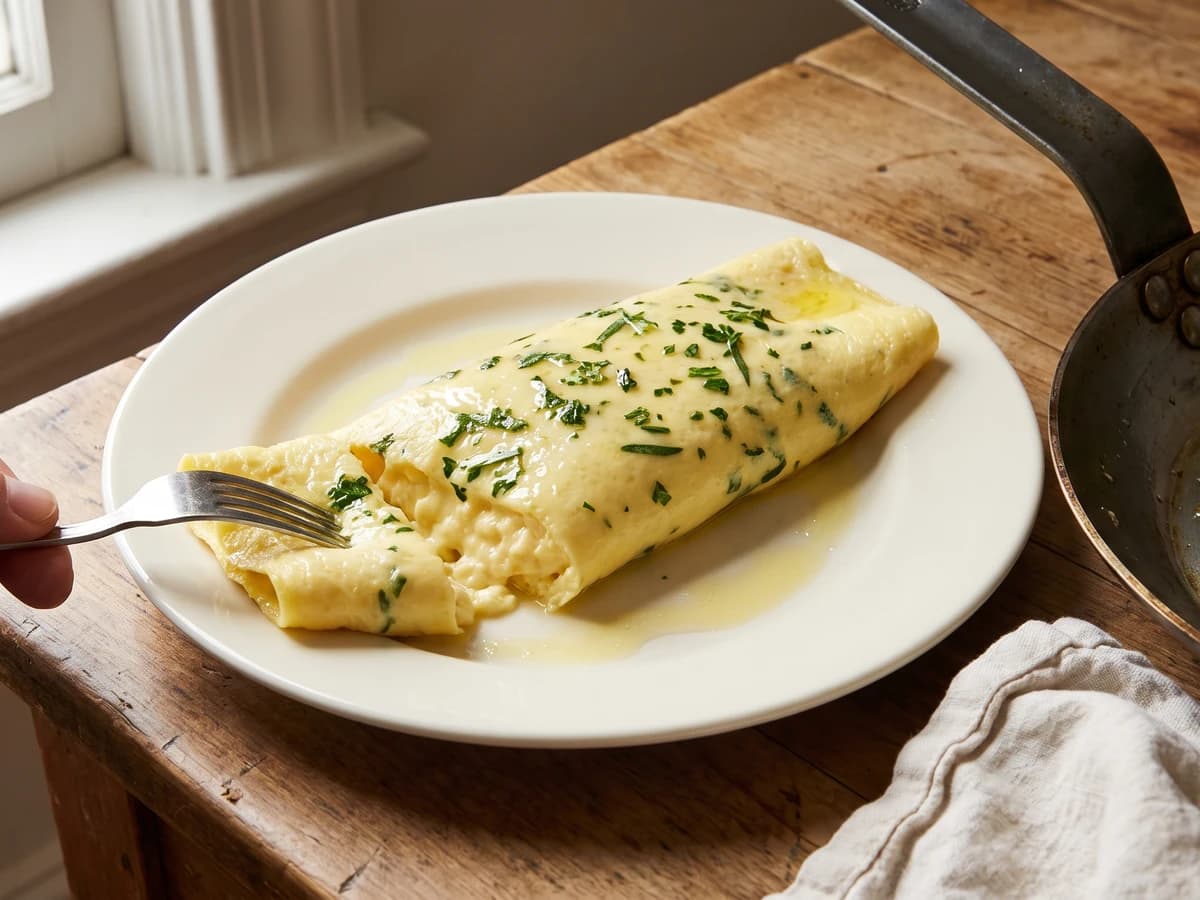
Four tender herbs, hot butter, and two eggs per pan: this rolled omelette teaches the quick hand and good judgment that keep the outside pale and the center creamy.
Chef Juliette
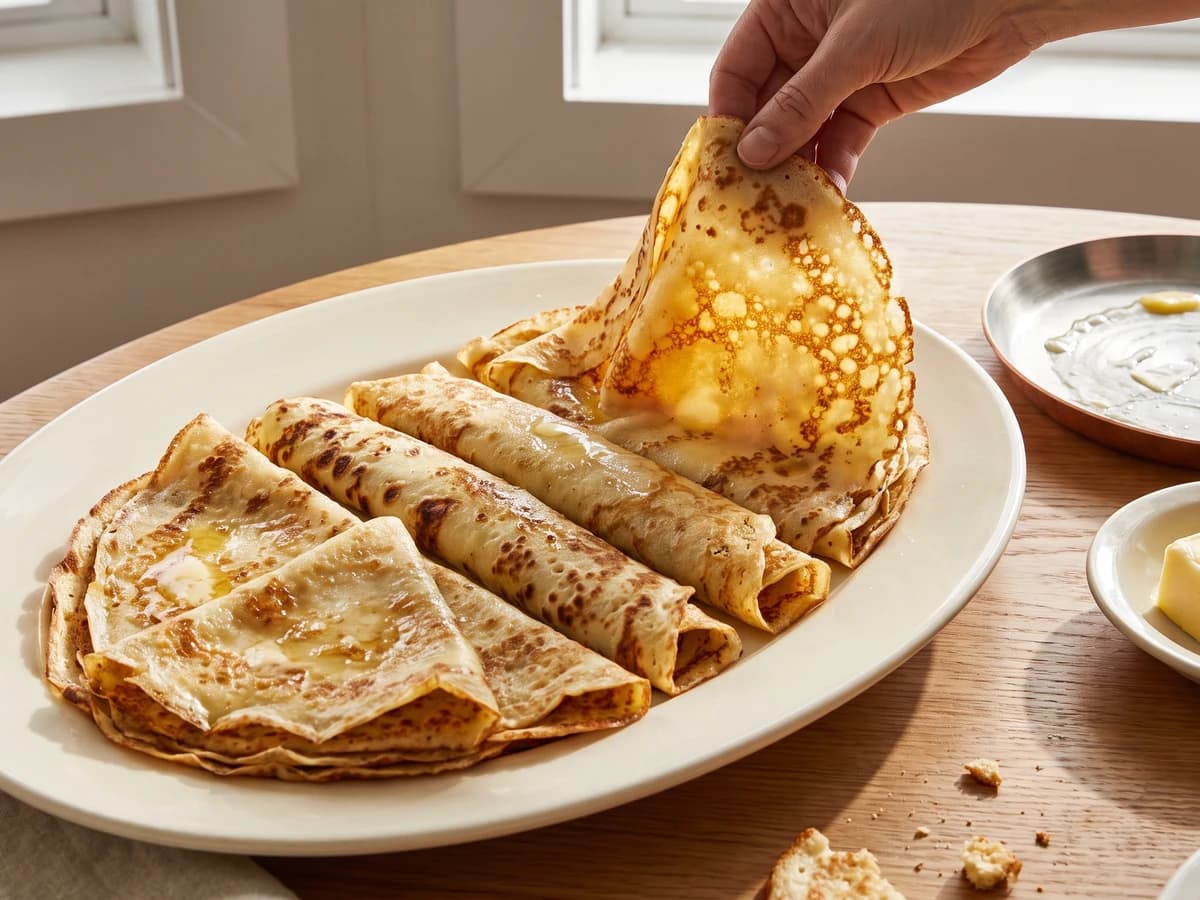
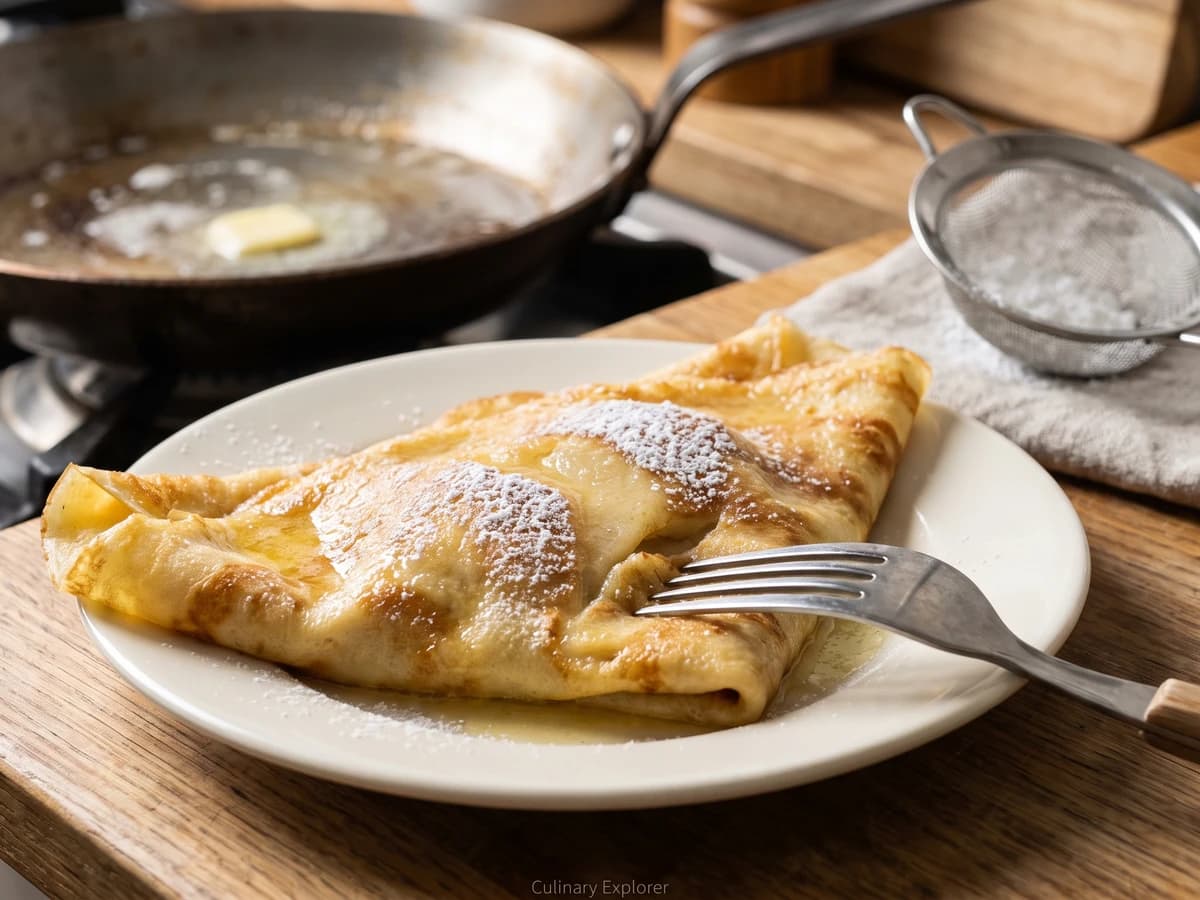
Four batters, one lesson: let the flour drink deeply before cooking, then spread the batter thinly in butter for crêpes and pannequets that bend without becoming tough.
Chef Juliette
Crêpes au Couvent trap ripe Williams pear dice between two thin pours of sweet batter, then turn in one clean toss and reach the table butter-gold, powdered, and burning hot.