Chef Juliette
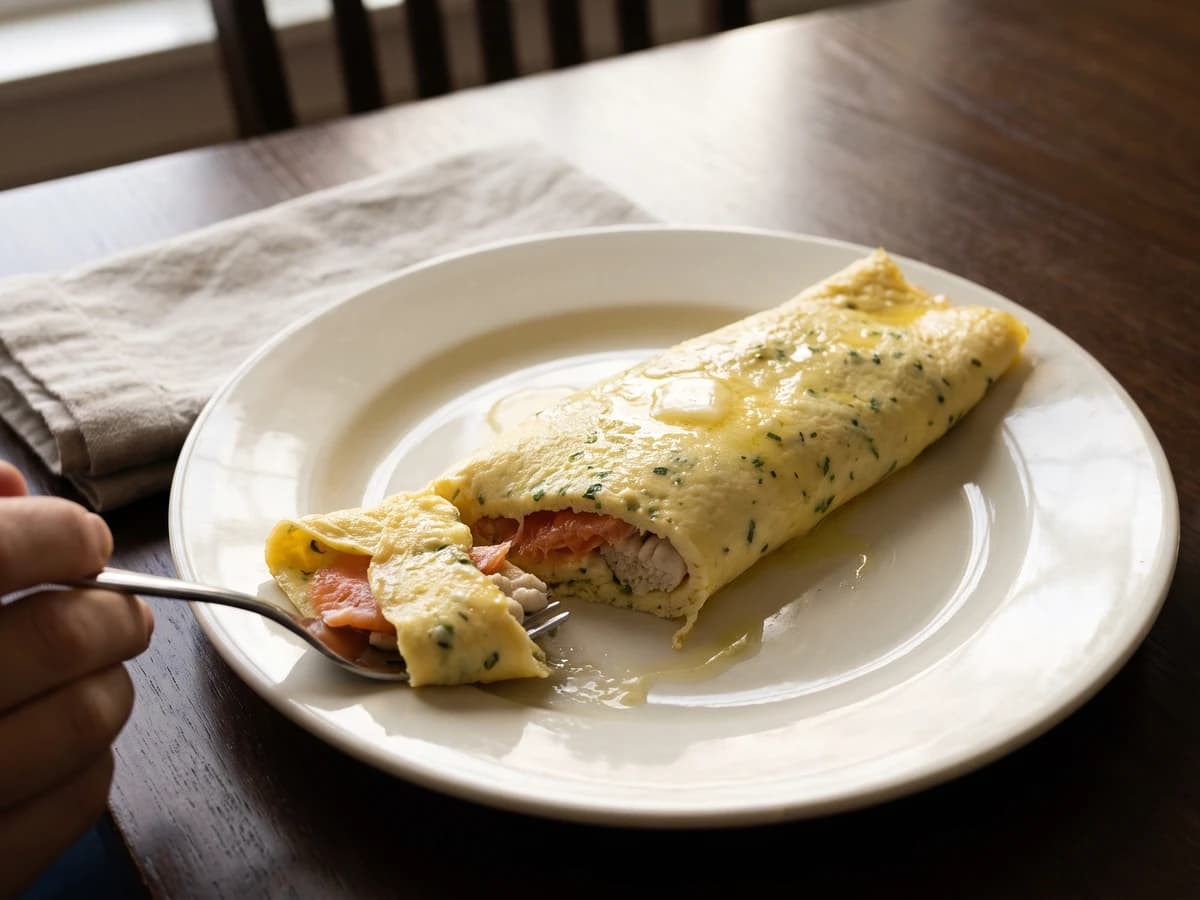
Omelette à l’Écossaise
A creamy omelette aux fines herbes closes around smoked-salmon-wrapped herring milts, gently poached in butter. Have the filling ready, then roll the eggs while they still shine.
A cooking platform built around craft, culture, and the stories behind what we eat.
Created by Chef Juliette
Based on No. 402, Isoline Eggs, from Le Guide Culinaire (1907) by Auguste Escoffier
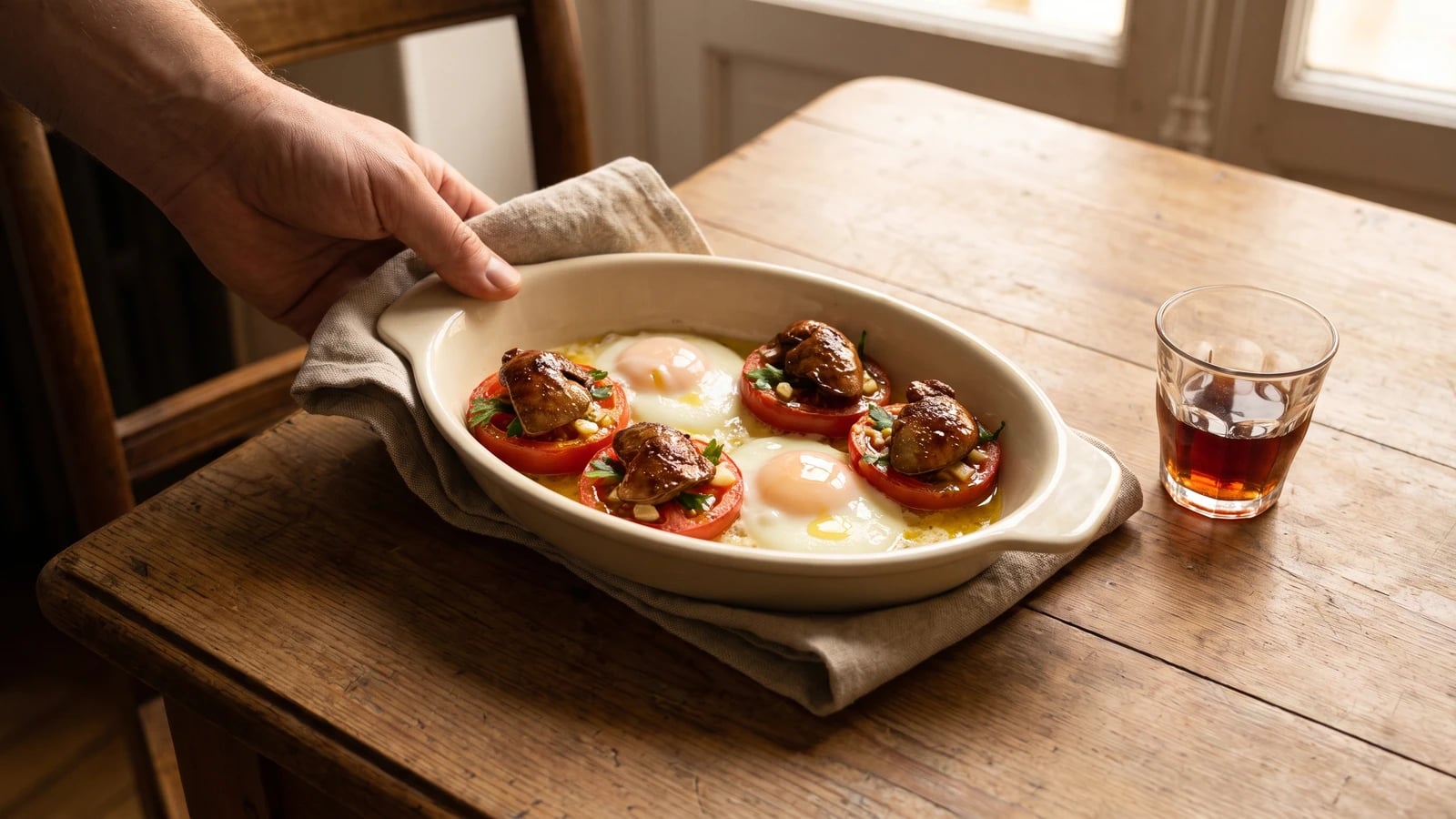
Soft eggs sur le plat, Provençal tomato halves, and Madeira-glazed chicken livers meet in one generous dish where timing is the technique and every garnish is ready before the yolks begin to set.
Œufs Isoline (soft eggs baked in their serving dishes with Provençal tomatoes and Madeira chicken livers) teach orchestration. Before you touch a pan, know the one true thing about them: the tomatoes and livers must be cooked, warm, and within reach before the Eggs on the Dish (No. 395) begin. The eggs wait for nothing.
The classical formula assumed several pairs of hands, one tending tomatoes, one sautéing livers, another watching individual egg dishes by the second. Your home equivalent is four small ovenproof dishes carried together on a sheet pan, a separate tray for the tomatoes, and one skillet whose fond becomes the Madeira glaze. Those parallel stations were brigade scaffolding and can go. The three elements are the dish and must stay: soft eggs, tomatoes à la Provençale (tomato halves cooked with olive oil, garlic, and parsley), and fine chicken livers sautéed with Madeira. One cook, one stove, one evening.
When it is right, the whites are milky and tender, the yolks remain liquid beneath their buttered sheen, and each bright tomato cup holds a bronzed, faintly sweet liver. Cook the Eggs on the Dish (No. 395) last and assemble immediately. That soft finish is the step that decides everything.
Œufs Isoline belongs to the codified French dining-room table rather than to one regional household repertoire; the name identifies the exact marriage of eggs sur le plat, tomatoes à la Provençale, and chicken livers with Madeira. Provençal here describes only the tomatoes, whose olive oil, garlic, and parsley speak to the southern larder, while the Madeira-glazed liver is a classical garnish with no claim to Provençal origin. The composition passed readily into bourgeois entertaining because its generosity comes from timing and assembly, not rare equipment.
Quantity
8 (about 18 oz / 500 g)
halved crosswise
Quantity
3 tablespoons (45 ml / 41 g)
Quantity
1/4 cup (60 ml / 15 g)
finely chopped
Quantity
2 cloves (about 10 g)
finely minced
Quantity
8 (about 1 lb / 450 g)
trimmed and separated into 16 neat lobes
Quantity
3 tablespoons (45 ml / 42 g)
Quantity
1/3 cup (80 ml / 80 g)
Quantity
1 1/2 teaspoons (7.5 ml / 9 g)
Quantity
3/4 teaspoon (4 ml / 1.5 g)
| Ingredient | Quantity |
|---|---|
| Eggs on the Dishprepared at the last moment | 4 two-egg portions Eggs on the Dish (No. 395) |
| small firm plum or Campari tomatoeshalved crosswise | 8 (about 18 oz / 500 g) |
| extra-virgin olive oil | 3 tablespoons (45 ml / 41 g) |
| flat-leaf parsleyfinely chopped | 1/4 cup (60 ml / 15 g) |
| garlicfinely minced | 2 cloves (about 10 g) |
| chicken liverstrimmed and separated into 16 neat lobes | 8 (about 1 lb / 450 g) |
| unsalted butter | 3 tablespoons (45 ml / 42 g) |
| medium-dry Madeira | 1/3 cup (80 ml / 80 g) |
| fine sea salt | 1 1/2 teaspoons (7.5 ml / 9 g) |
| freshly ground black pepper | 3/4 teaspoon (4 ml / 1.5 g) |
Heat the oven to 425°F / 220°C and set four shallow ovenproof egg dishes on a large sheet pan so they can enter and leave the oven together. Combine the parsley and garlic. Divide the butter into a larger portion for sautéing and a smaller reserve in case the pan needs rescuing. Trim away sinew and every green-stained trace of gall from the livers, separate them into 16 neat lobes, and keep them cold. This preparation is what replaces three cooks working at once.
Press each tomato half gently over a bowl to shed loose seeds and water without crushing its walls. Coat the halves with 2 tablespoons of the olive oil, half the salt, and half the pepper, then arrange them cut-side down on a bare metal tray. Roast for 7 minutes, turn them cut-side up, and divide the garlic-parsley mixture among their centres. Drizzle with the remaining oil and roast for another 6 to 8 minutes, until the edges are lightly bronzed and the flesh is tender but still holds a cup. Lift any half that softens early; if one tears, nestle it against the rim of its serving dish later and crown it confidently. Never apologize at your own table.
Blot the liver lobes thoroughly and season them with the remaining salt and pepper immediately before cooking. A wet liver spits, stews, and leaves no clean fond for the Madeira; a dry surface browns quickly while the centre stays tender. Keep the tomatoes warm nearby, uncovered so they do not collapse.
Heat 2 tablespoons of the butter in a wide heavy skillet over medium-high heat until its foam subsides. Sauté the livers in one uncrowded layer, working in two batches if necessary, until bronzed on both sides and cooked through to 165°F / 74°C at the thickest point, about 4 to 6 minutes depending on their size. Transfer them to a warm plate. If the butter develops black specks before the livers are ready, lift them out, wipe away the burnt solids, and continue with the reserved butter; bitterness is not fond. Pour the Madeira into the skillet and scrape up the bronze film. Boil until it reduces to a glossy glaze that coats a spoon, about 2 minutes, then return the livers and turn them through it. If the Madeira catches or tightens into sticky syrup, remove the pan from the heat and swirl in 1 tablespoon of water. Ça se rattrape. Keep the glazed livers warm for no longer than 10 minutes.
Adjust the oven as required by the linked preparation. Only when the tomatoes are warm, the livers are glazed, and the table is ready should you prepare the four two-egg portions of Eggs on the Dish (No. 395), exactly as directed in that formula. Move all four dishes on the sheet pan so they cook as one service. Do not hold them while another element catches up; the soft eggs are the dish, and a few extra seconds in hot porcelain will continue cooking them.
The moment the eggs leave the oven, arrange four tomato halves in each dish, one between the eggs and the others around them. Crown every tomato half with one Madeira-glazed liver lobe and spoon the remaining glaze over the livers, keeping the yolks clear and bright. Carry the dishes straight to the table while the whites are tender and the yolks still flow. À table!
1 serving (about 310g)
Culinary guides, cultural storytelling, and the editorial depth that makes cooking meaningful.
Discover Culinary ExplorerChef Juliette
A creamy omelette aux fines herbes closes around smoked-salmon-wrapped herring milts, gently poached in butter. Have the filling ready, then roll the eggs while they still shine.
Chef Juliette
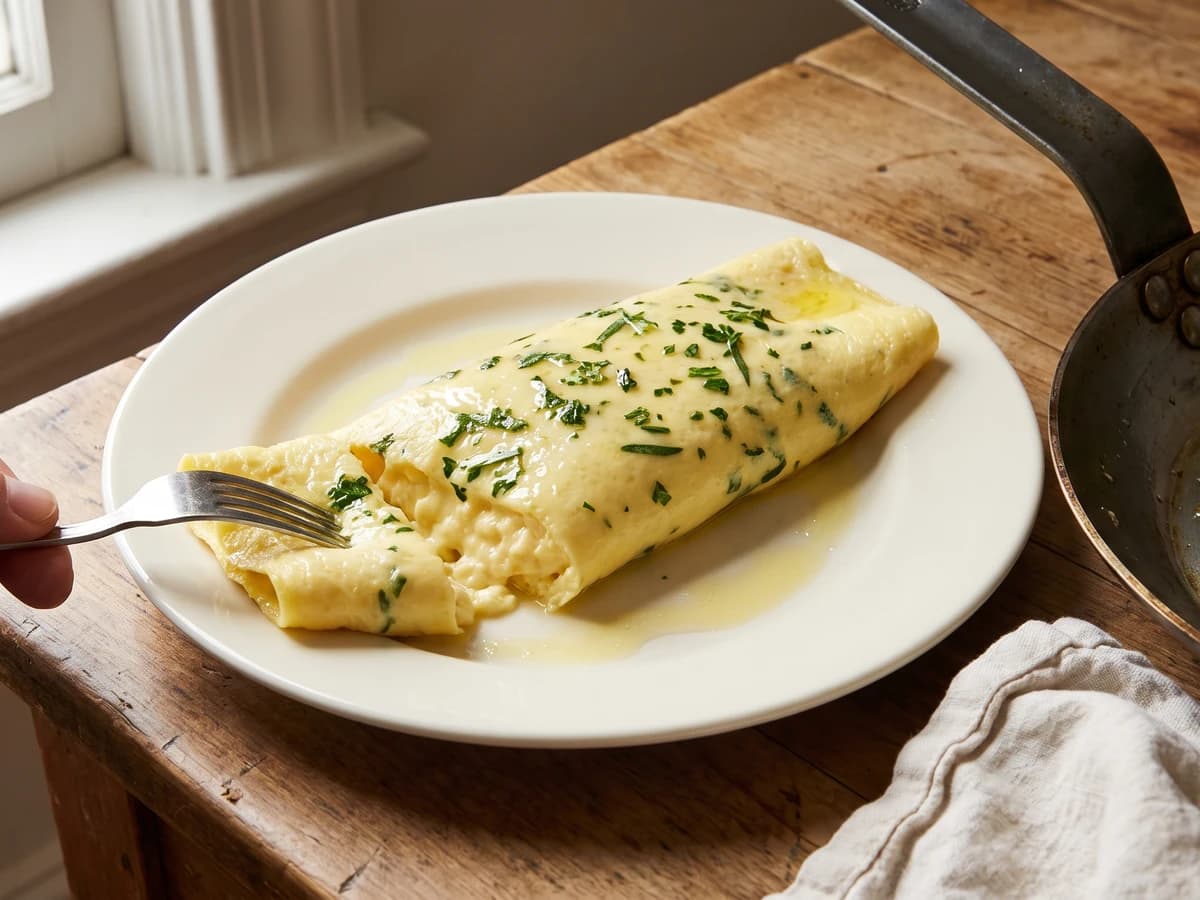
Four tender herbs, hot butter, and two eggs per pan: this rolled omelette teaches the quick hand and good judgment that keep the outside pale and the center creamy.
Chef Juliette
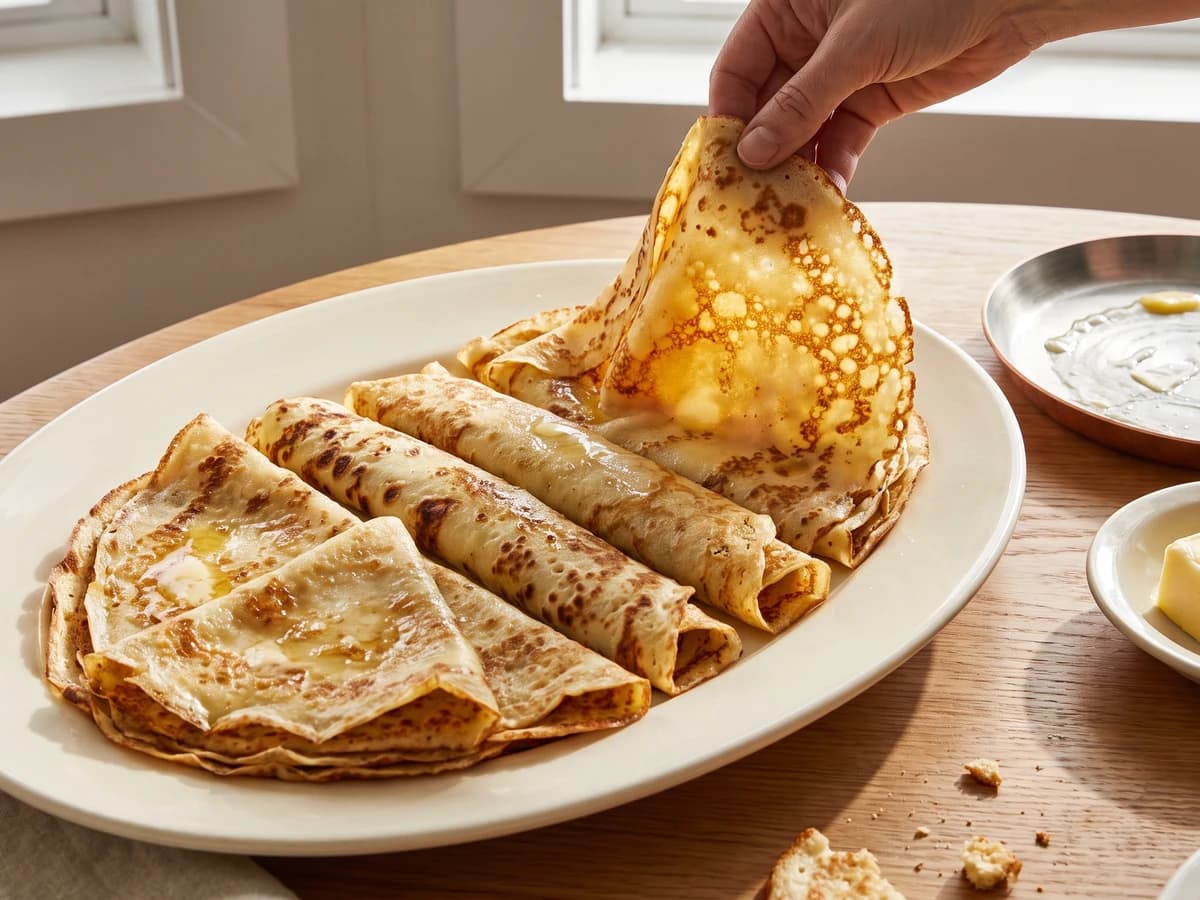
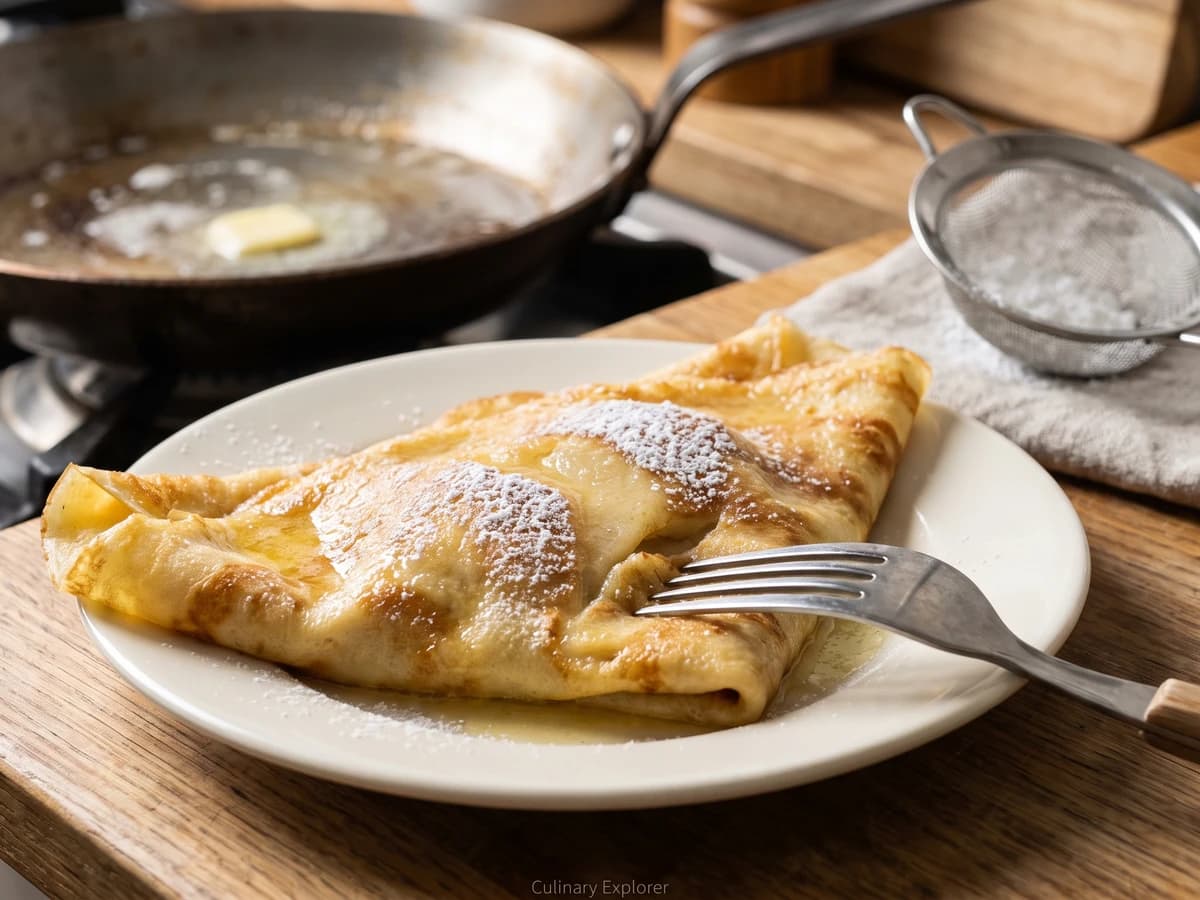
Four batters, one lesson: let the flour drink deeply before cooking, then spread the batter thinly in butter for crêpes and pannequets that bend without becoming tough.
Chef Juliette
Crêpes au Couvent trap ripe Williams pear dice between two thin pours of sweet batter, then turn in one clean toss and reach the table butter-gold, powdered, and burning hot.