Chef Juliette
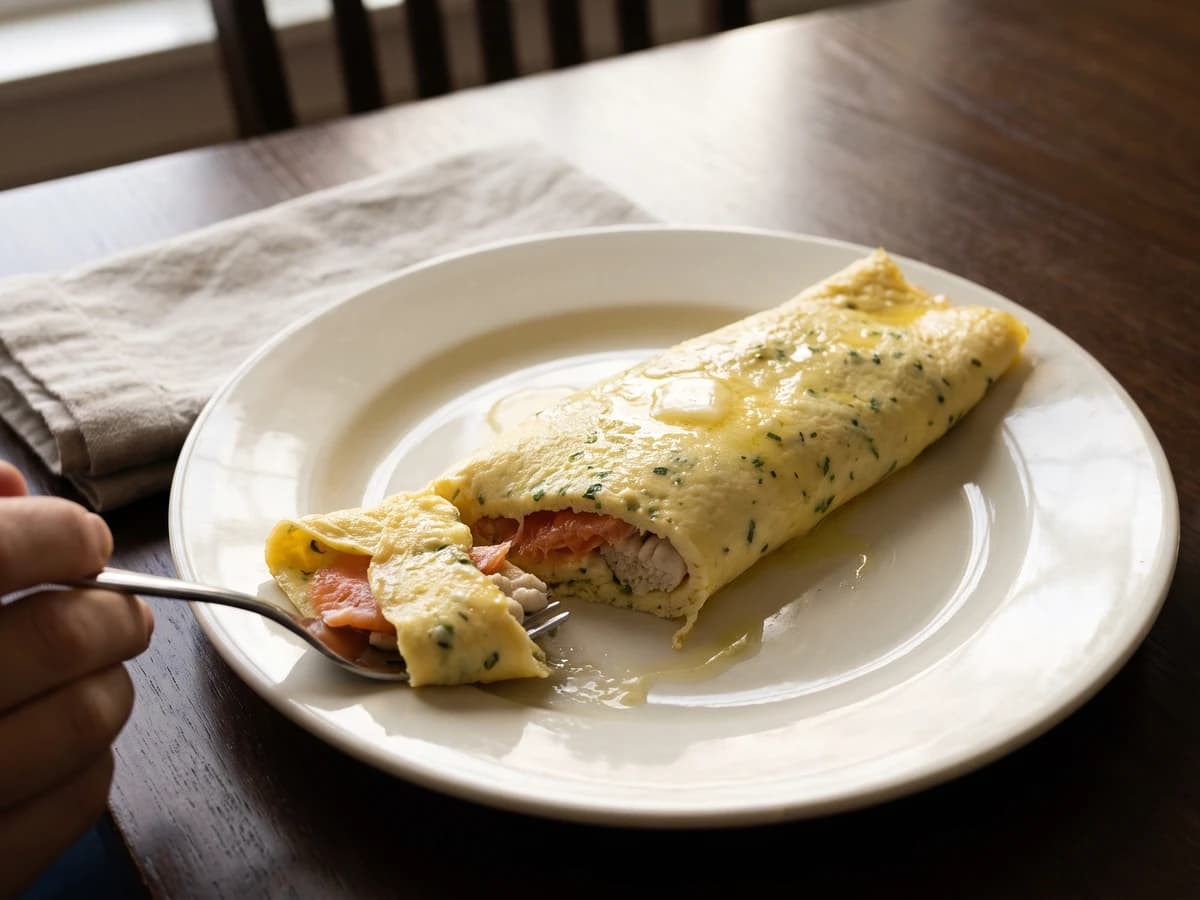
Omelette à l’Écossaise
A creamy omelette aux fines herbes closes around smoked-salmon-wrapped herring milts, gently poached in butter. Have the filling ready, then roll the eggs while they still shine.
A cooking platform built around craft, culture, and the stories behind what we eat.
Created by Chef Juliette
Based on No. 395, Eggs on the Dish, from Le Guide Culinaire (1907) by Auguste Escoffier
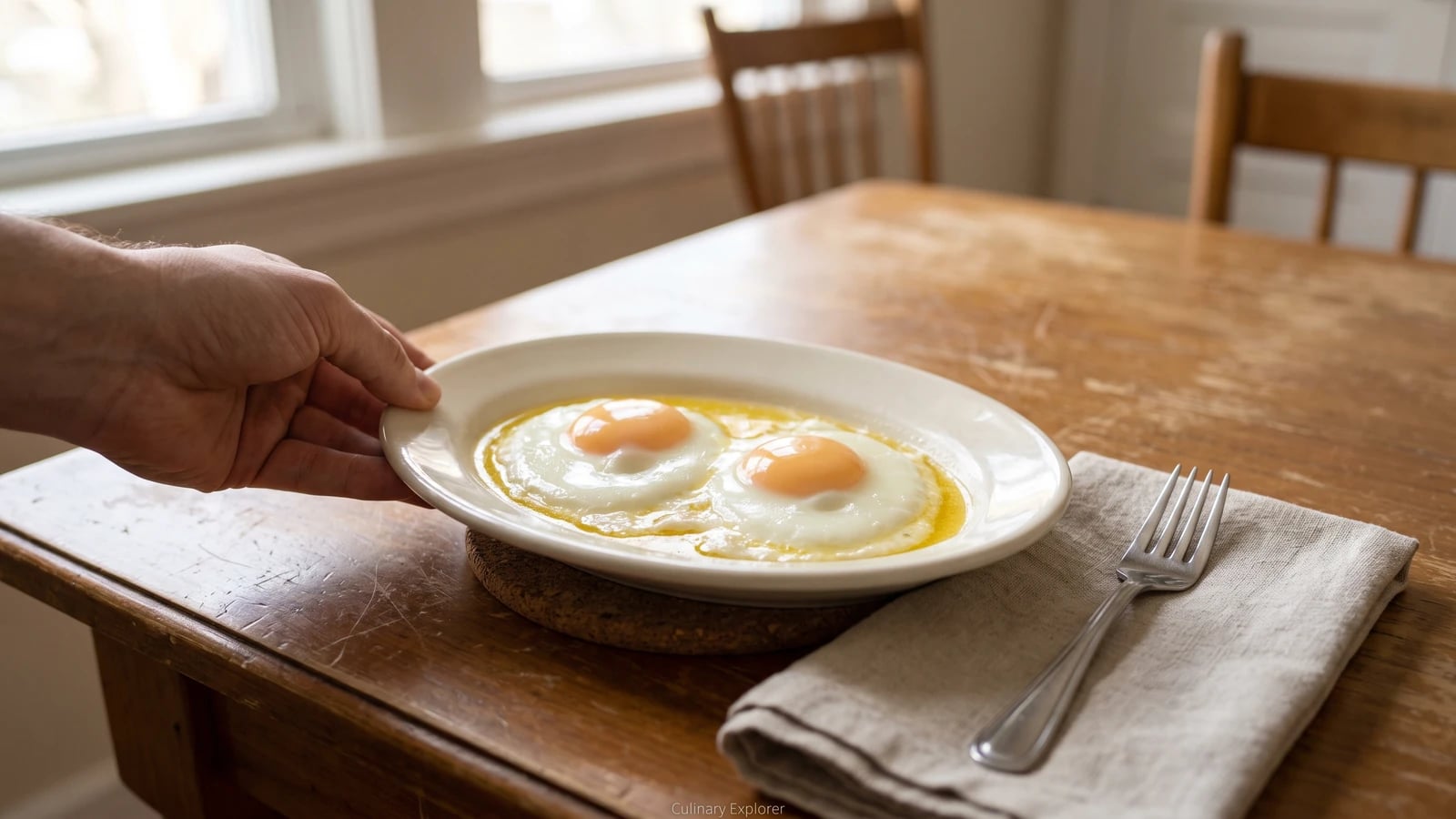
Œufs sur le plat teach the whole art of egg cookery in minutes: hot butter below, a light baste above, and the nerve to pull milky whites before the soft yolks set.
Œufs sur le plat (eggs cooked and served in their dish) teach timing in its purest form. The whites must turn evenly milky above and below while the yolks remain soft, and the one true thing to know is this: take the eggs out before they look completely finished. The hot dish supplies the final seconds.
The classical kitchen assumed thin metal egg dishes that could move from the range to the oven, plus a cook watching each portion closely. Most home porcelain should never meet a burner, so four shallow ovenproof dishes heated together on one rimmed sheet provide the same layer of hot butter without risking a cracked dish. The recipe simply repeats the classical working base four times, two eggs and half an ounce of butter per dish, to feed four. Purpose-made metalware and brigade choreography are scaffolding; hot butter, the light baste, gentle cooking, and immediate service are the dish itself.
When they are right, the whites look milky and tender rather than dry, the yolks sit glossy and loose, and a narrow ring of butter shines around the edge. Watch the colour, not the clock, and pull each dish the instant its white becomes opaque while still moist. One cook, one stove, one evening.
Œufs sur le plat belong to the French classical egg repertory and to bourgeois and bistro tables across France, rather than to one regional larder. Their defining practice is literal: the eggs cook and arrive in the same shallow dish, unlike œufs à la poêle (pan-cooked eggs), which are cooked in an omelet pan, trimmed, and transferred, the preparation English dining rooms commonly call fried eggs. Generations of classical service kept two eggs as the working portion because that thin layer cooks evenly before the retained heat firms the yolks.
Quantity
8
Quantity
4 tablespoons (60 ml / 57 g)
divided among the dishes
Quantity
¼ teaspoon (1.25 ml / 1.5 g)
| Ingredient | Quantity |
|---|---|
| exceedingly fresh large eggs | 8 |
| unsalted butterdivided among the dishes | 4 tablespoons (60 ml / 57 g) |
| fine salt | ¼ teaspoon (1.25 ml / 1.5 g) |
Heat the oven to 375°F (190°C) with a rack in the centre. Arrange four shallow 5-inch (12 cm) ovenproof egg dishes on a rimmed baking sheet, and have the eggs, salt, teaspoon, and heatproof underplates ready. Set the table now. Once the eggs meet the butter, there is no useful holding time.
Put 1 tablespoon (15 ml / 14 g) butter in each dish. Slide the sheet into the oven for 2 to 3 minutes, just until the butter is fully melted, very hot, and foaming while remaining butter-gold. Carefully tilt each dish so the butter covers its entire bottom. If it has browned or smells scorched, pour it away and begin again with fresh butter. Ça se rattrape, and the correction takes less time than serving bitter eggs.
Set the hot sheet on a heatproof surface. Working briskly, crack two eggs directly into each buttered dish without breaking the yolks. Tilt each dish slightly and use the teaspoon to draw a little very hot butter from the exposed edge over each yolk, just enough to glaze its surface. Divide the salt lightly among the four dishes, then return the sheet to the oven at once.
Bake for about 2 to 4 minutes, looking after the first 2 minutes and then every 20 seconds. The whites are ready when they have turned evenly milky-white and no longer run as the dish is gently tilted, yet remain moist and tender; the yolks should wobble. If a clear ring of white remains beside a yolk while the outer white is already set, spoon a few drops of the hot butter over that clear patch and return the dish for 15 to 20 seconds. Ça se rattrape. Do not wait for the whites to become dry or browned.
Remove each dish as soon as it is ready, even if another needs a few seconds more. Lift it off the hot baking sheet and place it on a heatproof underplate to slow the cooking beneath; the retained heat of the egg dish will finish the last softness in the white. Warn everyone that the dishes are hot and serve immediately. À table!
1 serving (about 110g)
Culinary guides, cultural storytelling, and the editorial depth that makes cooking meaningful.
Discover Culinary ExplorerChef Juliette
A creamy omelette aux fines herbes closes around smoked-salmon-wrapped herring milts, gently poached in butter. Have the filling ready, then roll the eggs while they still shine.
Chef Juliette
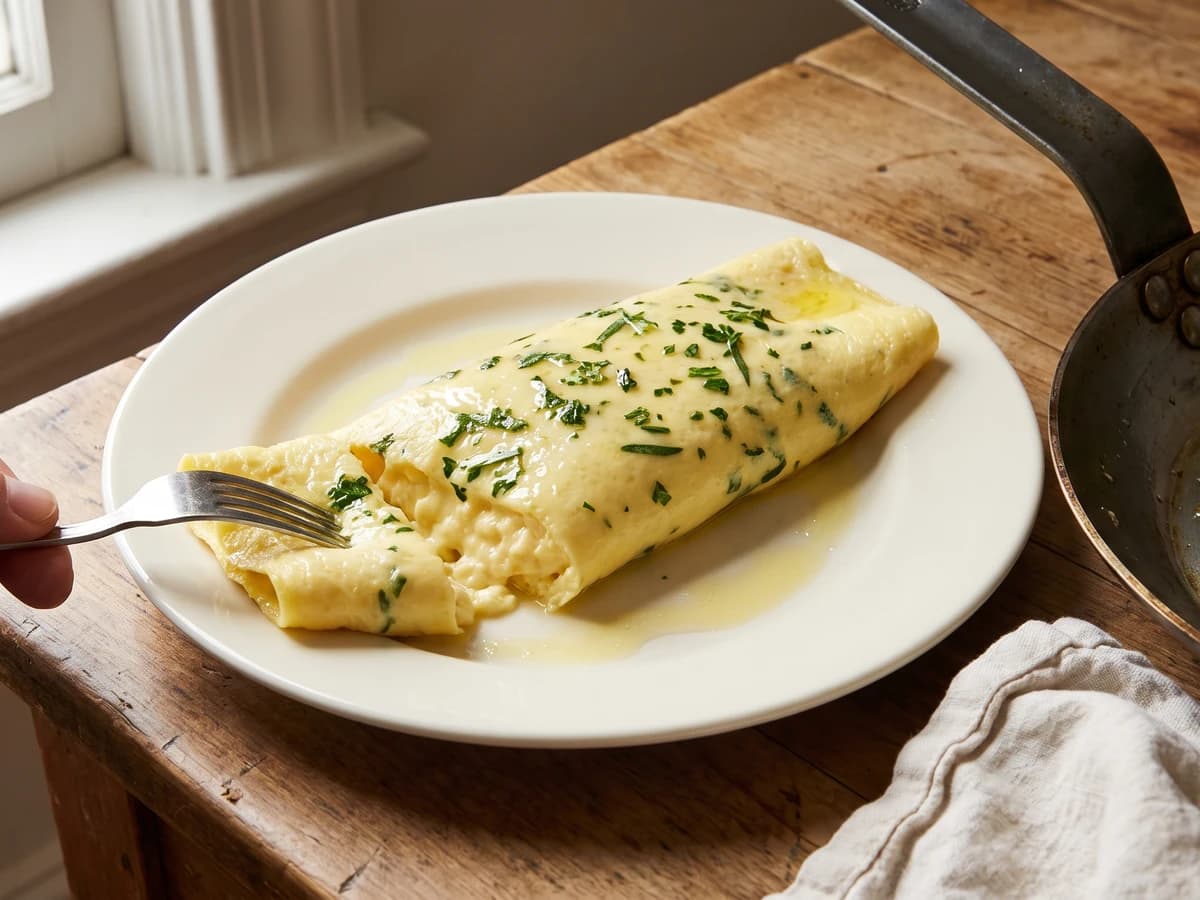
Four tender herbs, hot butter, and two eggs per pan: this rolled omelette teaches the quick hand and good judgment that keep the outside pale and the center creamy.
Chef Juliette
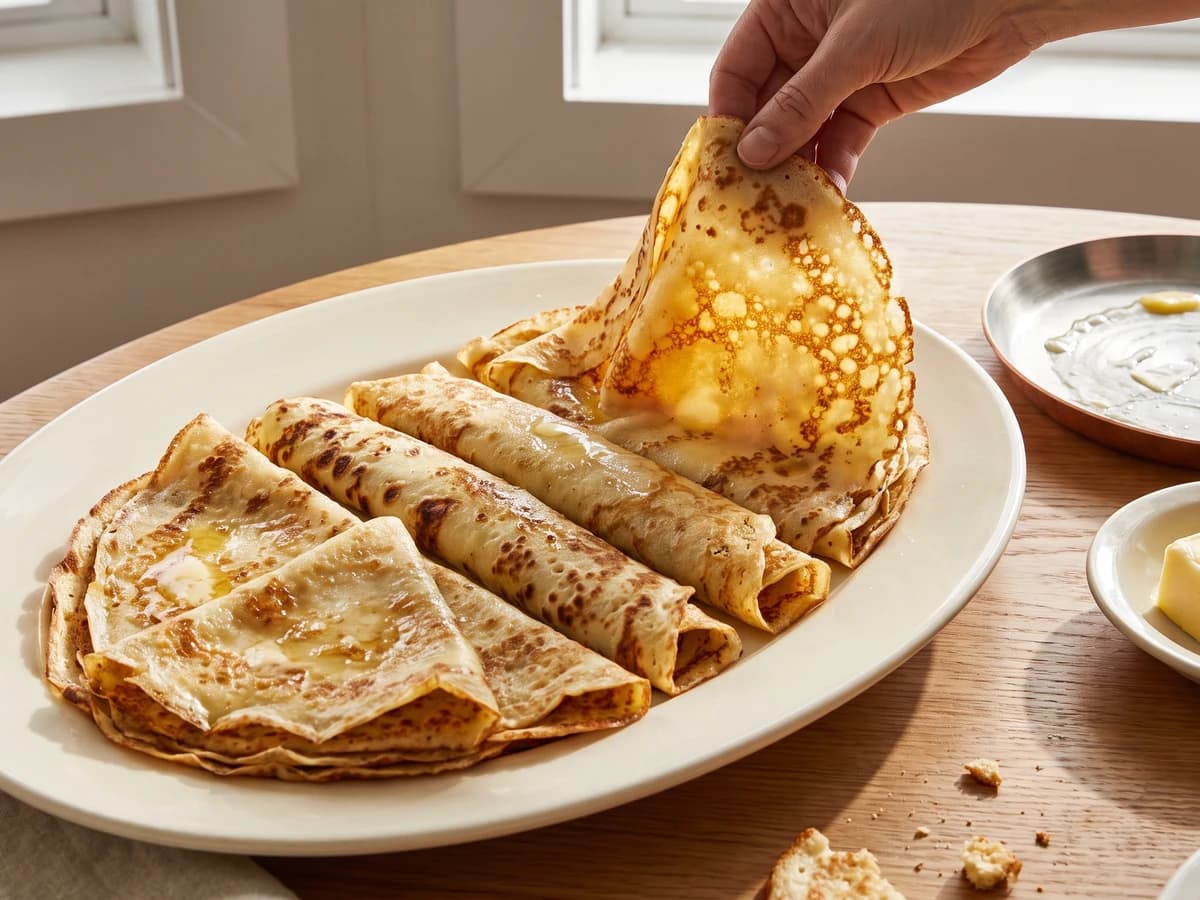
Four batters, one lesson: let the flour drink deeply before cooking, then spread the batter thinly in butter for crêpes and pannequets that bend without becoming tough.
Chef Juliette
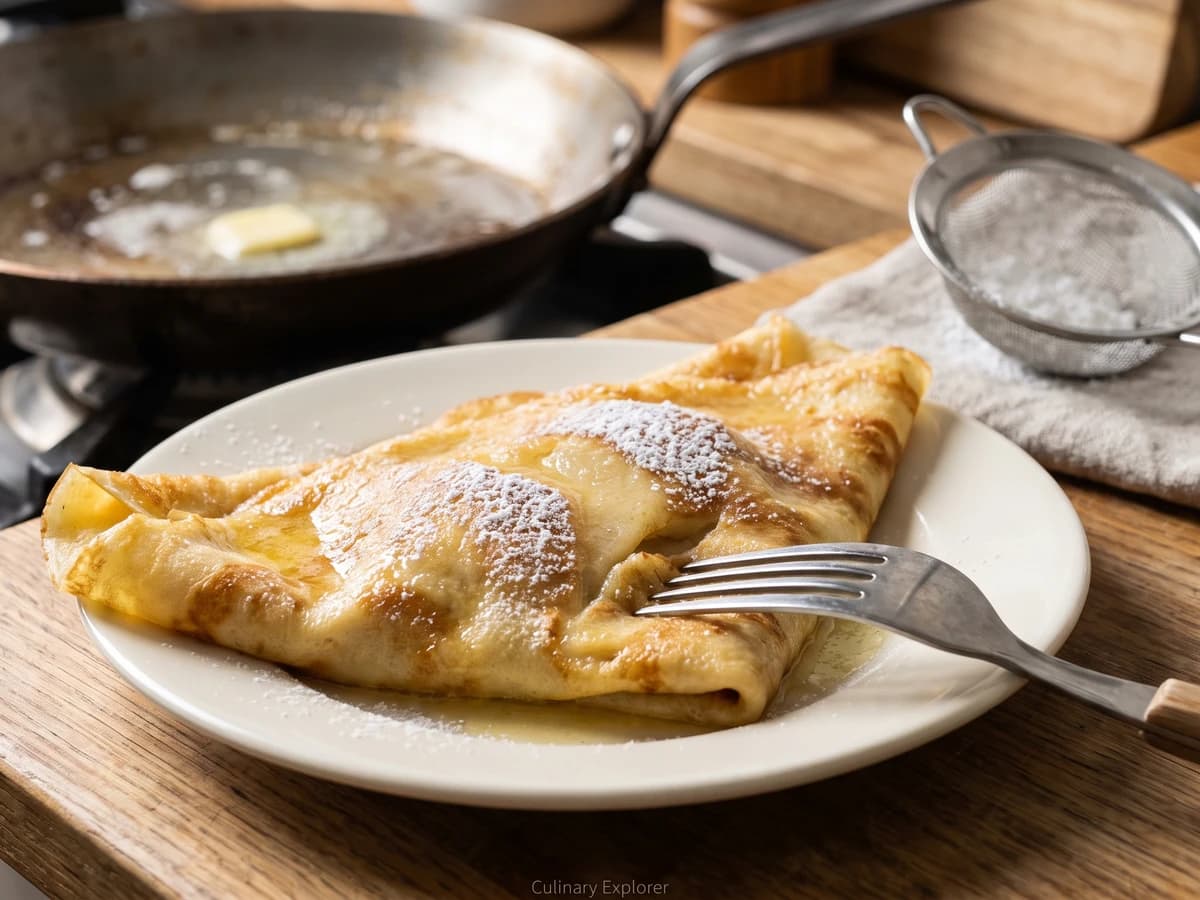
Crêpes au Couvent trap ripe Williams pear dice between two thin pours of sweet batter, then turn in one clean toss and reach the table butter-gold, powdered, and burning hot.