Chef Juliette
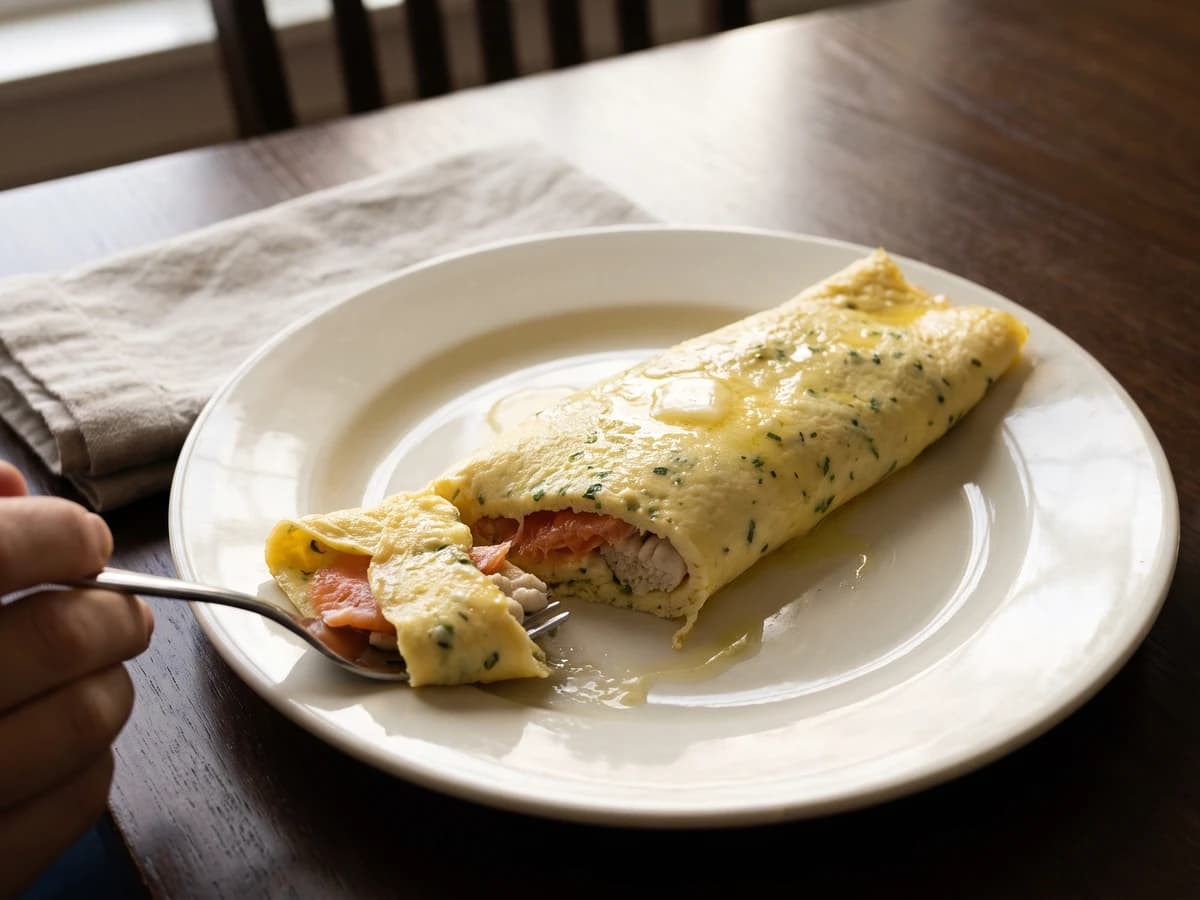
Omelette à l’Écossaise
A creamy omelette aux fines herbes closes around smoked-salmon-wrapped herring milts, gently poached in butter. Have the filling ready, then roll the eggs while they still shine.
A cooking platform built around craft, culture, and the stories behind what we eat.
Created by Chef Juliette
Based on No. 401, Eggs au Gratin, from Le Guide Culinaire (1907) by Auguste Escoffier
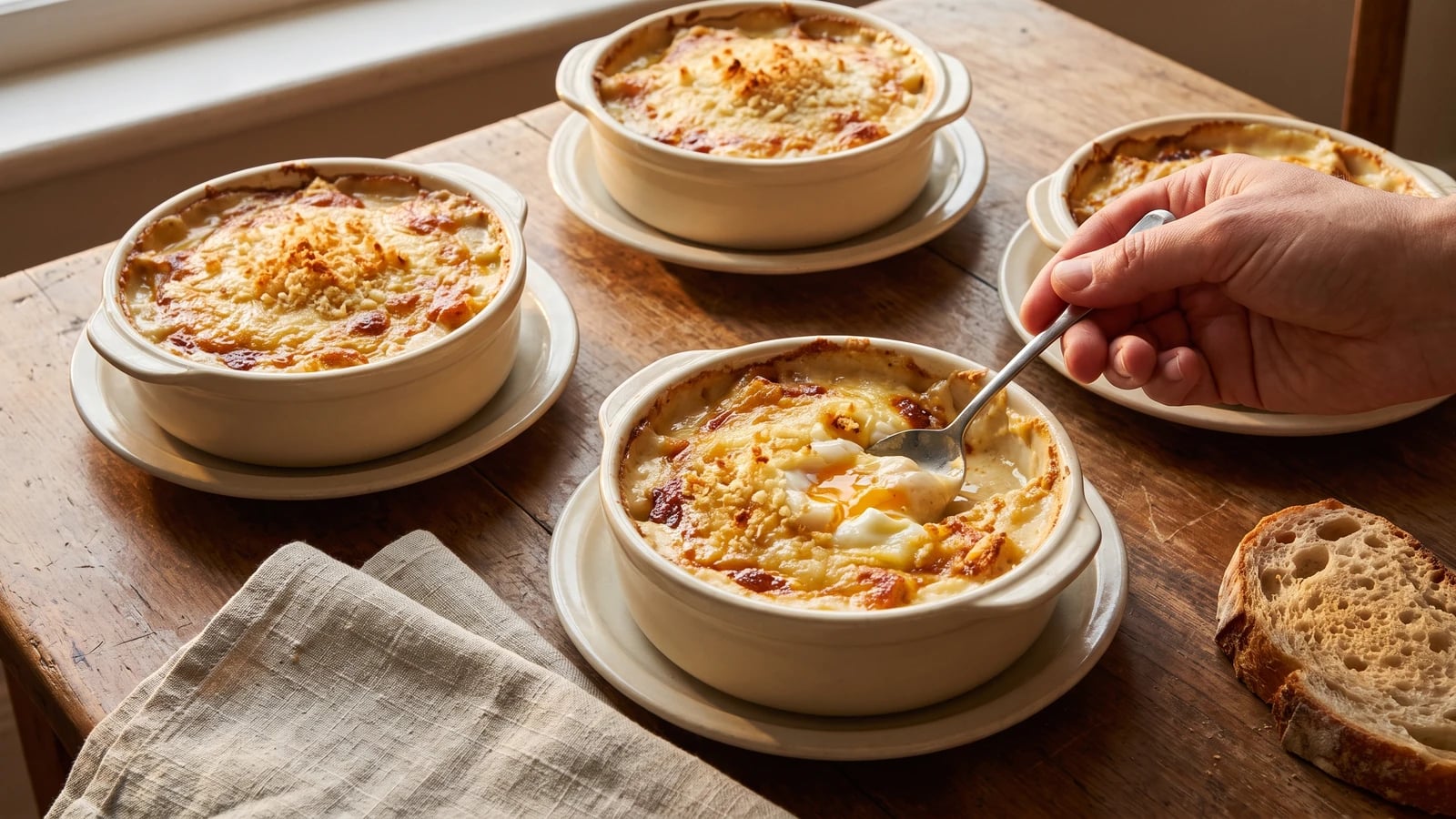
Hot Mornay below and above, two eggs between, then Gruyère and fine bread raspings under fierce heat: a rapid gratin whose crust must bronze at the same moment the whites set.
Œufs au gratin (eggs baked beneath a cheese crust) teach the timing of a rapid gratin. The Mornay must go into the dishes very hot, because the fierce bake is meant to colour the surface at the same instant the eggs set, not spend its first minutes warming cold sauce. That is the one true thing to know before touching a pan.
The source assumed a saucier keeping Mornay ready, stockpots that never cooled, small service dishes, and a fierce oven with a salamander close at hand. Your kitchen needs none of that brigade scaffolding: begin with the finished Mornay the entry calls for, arrange four shallow dishes on one tray, and let a fully heated oven with a brief broiler finish provide the fierce top heat. The hot sauce below and above, the cheese-and-raspings finish governed by Gratins (No. 268), and that hard heat are the dish, so they stay. Only the equipment and portion have changed, scaled to two eggs per person. One cook, one stove, one evening.
Done properly, the Mornay remains ivory and supple beneath a mottled bronze crust, the whites set tenderly and the yolks stay soft under their thin coat of sauce. Bring the Mornay nearly to a simmer, assemble without delay, and move the dishes straight into the oven. That hot beginning decides everything.
Œufs au gratin belong to Parisian cuisine bourgeoise and the classical dining room, where egg preparations formed a course of their own and gratin was understood as a family of techniques rather than a regional garnish. The preparation moved readily from grand kitchens to home tables because its architecture is compact: hot sauce, eggs, and a rapid finish under fierce heat. Its Mornay covering does not make it a cheese casserole; the identity lies in synchronizing the colour of the gratin with the setting of the eggs.
Quantity
1 cup (240 ml / 250 g)
heated until very hot and flowing
Quantity
8
brought to cool room temperature for 20 minutes
Quantity
1/4 cup (25 g) each, for Gratins (No. 268)
mixed together
| Ingredient | Quantity |
|---|---|
| Mornay sauceheated until very hot and flowing | 1 cup (240 ml / 250 g) |
| large eggsbrought to cool room temperature for 20 minutes | 8 |
| finely grated Gruyère and fine dry white bread raspingsmixed together | 1/4 cup (25 g) each, for Gratins (No. 268) |
Set a rack in the upper third of the oven, about 6 inches from the top element, and heat the oven to 475°F (245°C) for a full 20 minutes. Arrange four shallow 8-ounce gratin dishes on a rimmed baking sheet. Keep the broiler ready, but do not turn it on yet.
Warm the Mornay over medium-low heat, stirring constantly, until it is very hot and falls from the spoon in broad, smooth ribbons. Do not boil it, since fierce bubbling can make the cheese grainy. If a skin has formed or the sauce catches slightly at the edge, remove it from the heat and whisk briskly until smooth, then pass it through a fine sieve if needed. Hold it covered off the heat while you prepare the eggs.
Working quickly, spoon 1 tablespoon (15 ml) of hot Mornay into each gratin dish. Break two eggs into a small cup, check that no shell has followed, and slide them gently into one dish; repeat with the remaining eggs. Spoon the remaining Mornay over them, about 3 tablespoons (45 ml) per dish, making a complete but thin covering and keeping it slightly lighter over the yolk domes. Sprinkle each dish evenly with the prepared Gruyère and bread-raspings finish for Gratins (No. 268). Move the tray to the oven at once, because eggs left standing in hot sauce begin setting unevenly.
Bake for 5 to 7 minutes without opening the oven during the first 4 minutes. The Œufs au gratin are ready when the topping is mottled deep gold, the sauce bubbles brightly around the rim, the whites show no translucence, and the yolks still yield softly beneath the sauce. If the eggs are set but the top remains pale, switch to the broiler for 20 to 40 seconds and watch without looking away. If the crust colours before the whites set, cover only the dark areas loosely with small pieces of foil and move the tray one rack lower for another minute or two. Ça se rattrape: the aim is simultaneous doneness, not obedience to the clock.
Let the dishes stand for 1 minute, no longer, so the sauce settles while the yolks remain soft. Set each fiercely hot dish on a heatproof plate and serve immediately with bread for the Mornay. For diners who require fully cooked eggs, leave the dishes in the lower part of the oven until the yolks are firm, or use pasteurized eggs. À table!
1 serving (about 160g)
Culinary guides, cultural storytelling, and the editorial depth that makes cooking meaningful.
Discover Culinary ExplorerChef Juliette
A creamy omelette aux fines herbes closes around smoked-salmon-wrapped herring milts, gently poached in butter. Have the filling ready, then roll the eggs while they still shine.
Chef Juliette
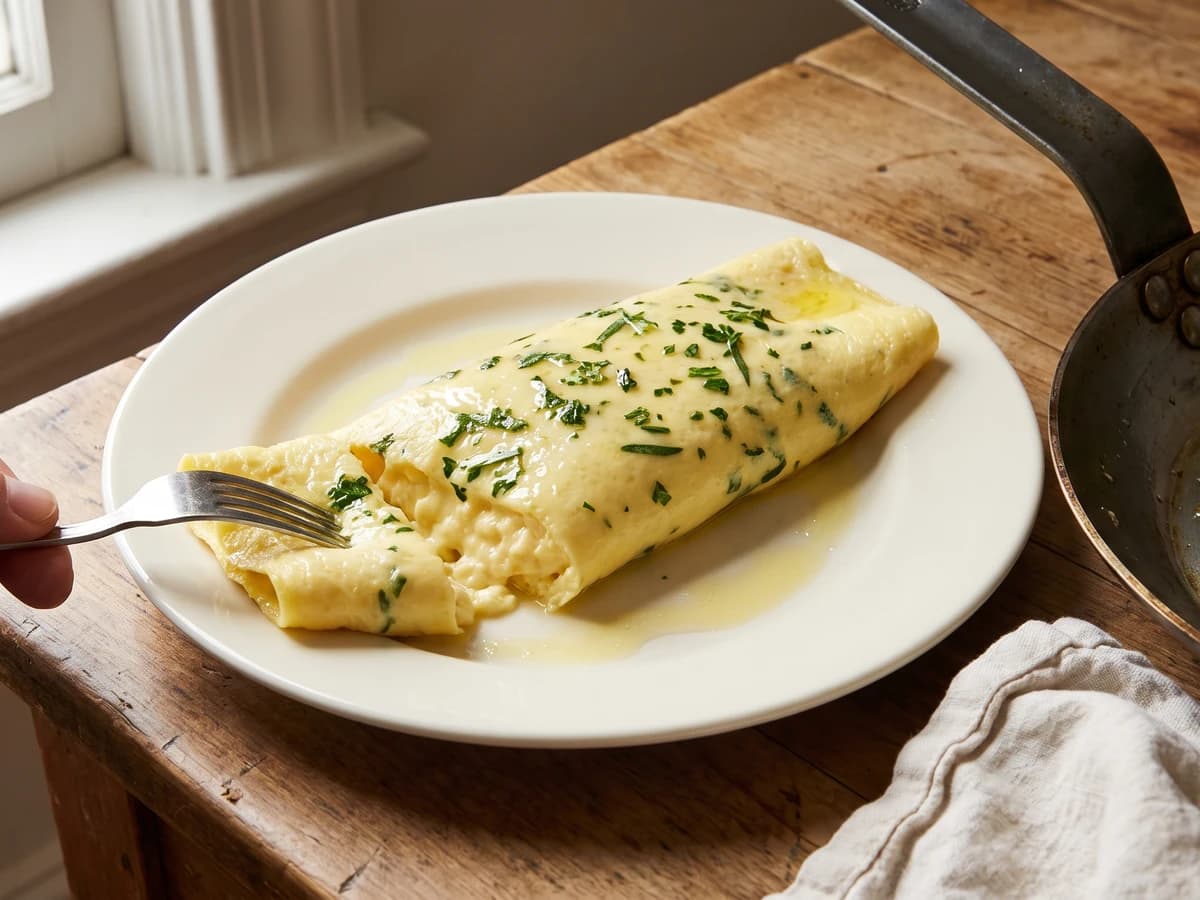
Four tender herbs, hot butter, and two eggs per pan: this rolled omelette teaches the quick hand and good judgment that keep the outside pale and the center creamy.
Chef Juliette
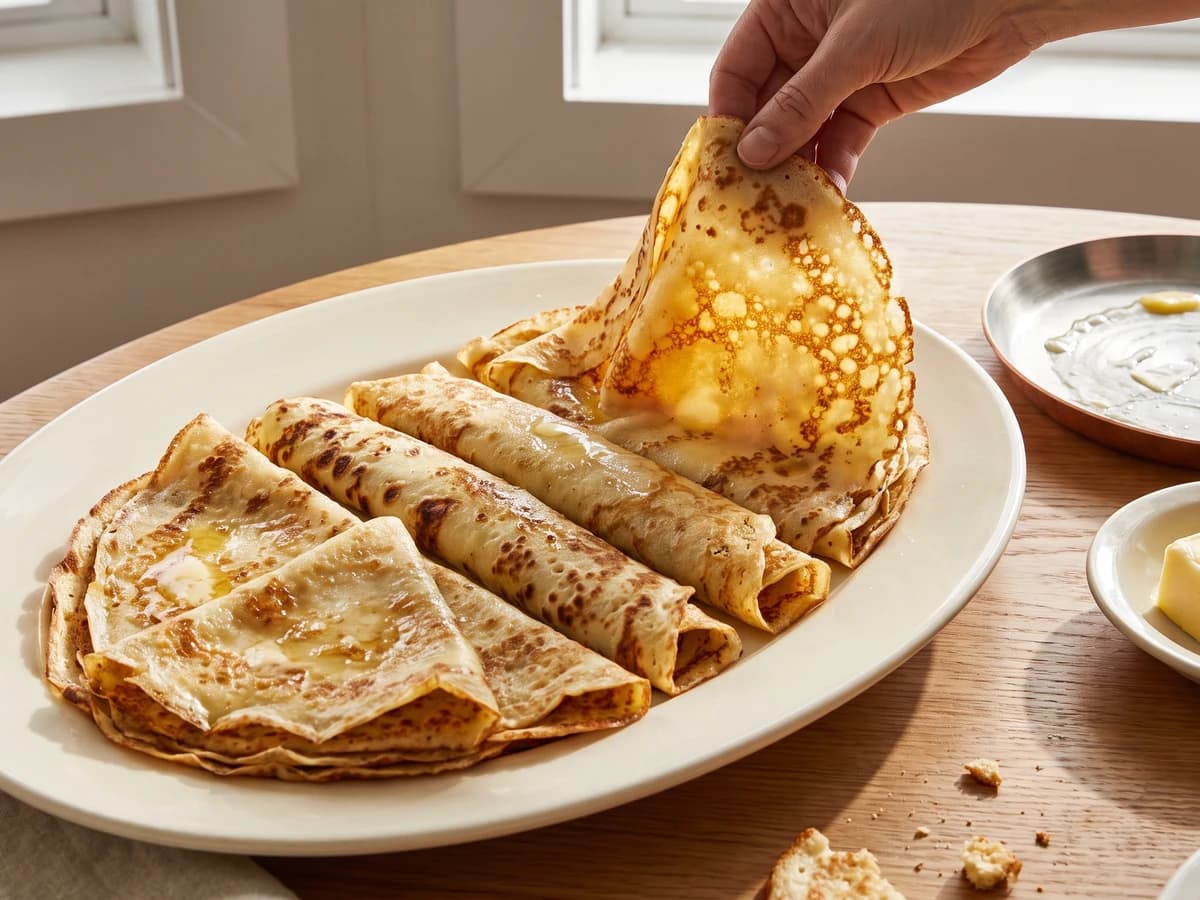
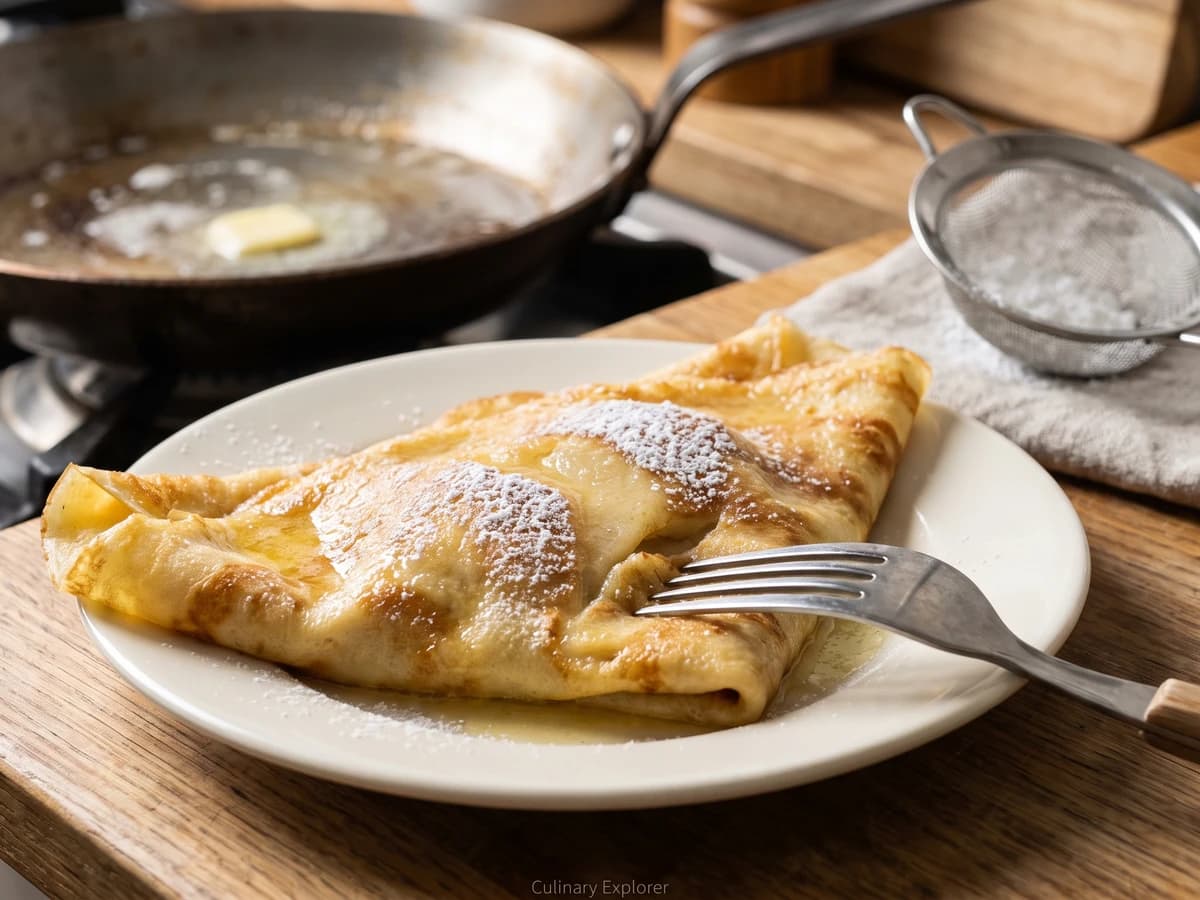
Four batters, one lesson: let the flour drink deeply before cooking, then spread the batter thinly in butter for crêpes and pannequets that bend without becoming tough.
Chef Juliette
Crêpes au Couvent trap ripe Williams pear dice between two thin pours of sweet batter, then turn in one clean toss and reach the table butter-gold, powdered, and burning hot.