Chef Juliette
Ordinary or White Consommé
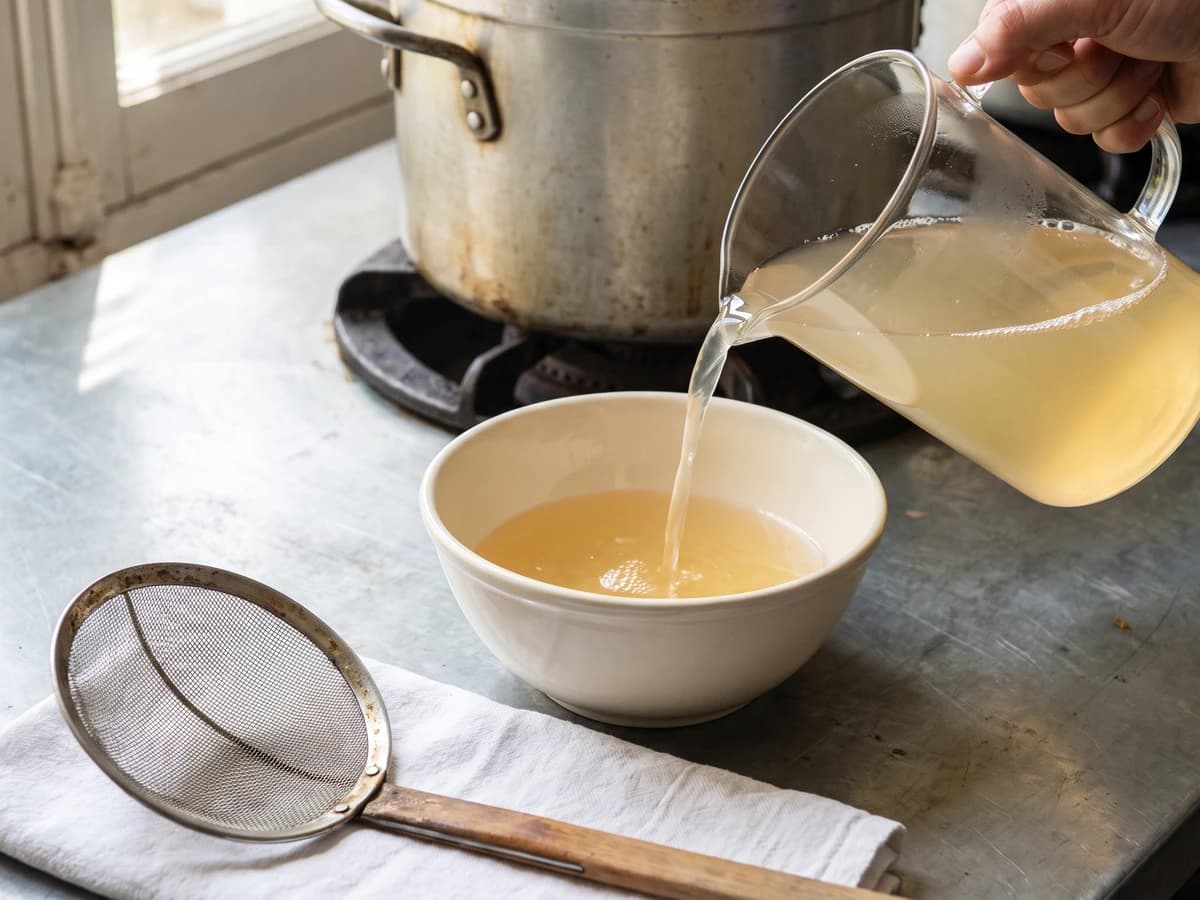
Beef shin, lean beef, and fowl begin in cold water and rise slowly toward a tremble. Skim before the boil, and you learn the quiet discipline that gives every clear French broth its backbone.
A cooking platform built around craft, culture, and the stories behind what we eat.
Created by Chef Juliette
Based on No. 40, Italian Sauce, from Le Guide Culinaire (1907) by Auguste Escoffier
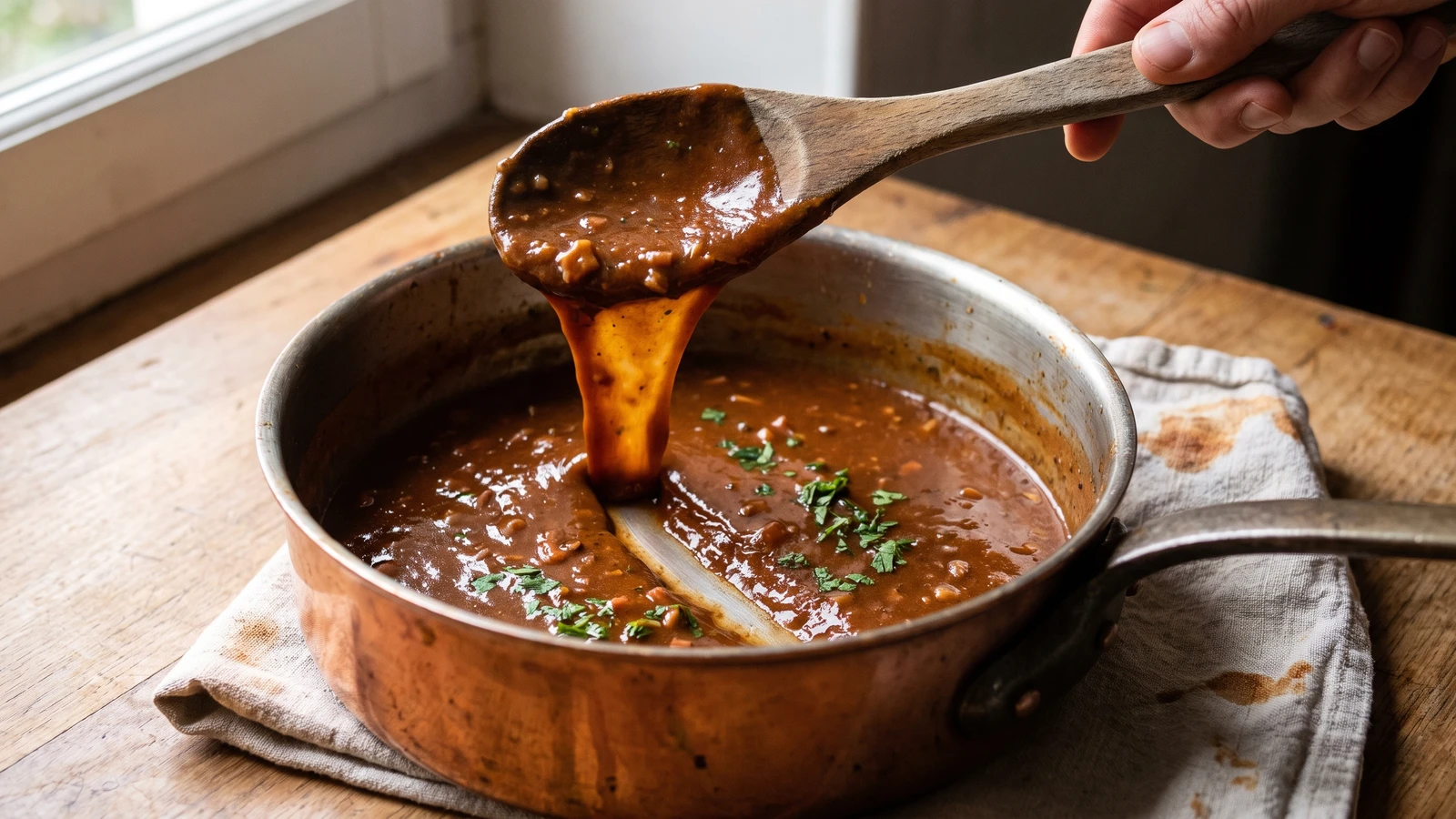
Sauce italienne proves a derivative sauce lives or dies by its foundations: dry duxelles, lean ham, and tomatoed demi-glace boiled together, then brightened with three herbs at the very last moment.
Sauce italienne (French tomatoed demi-glace with duxelles and ham) teaches the discipline of the derivative sauce. Its one true principle is simple: every flavor must sharpen the glaze, never cloud it. The duxelle must be dry, the cooked ham very lean and cut brunoise-fashion into tiny dice, and the herbs held until the final moment.
The original formula assumed a saucier with Ordinary or Dry Duxelle (No. 223) already prepared and a tomatoed half-glaze never far from the fire. At home, those foundations remain separate preparations, made ahead and brought together in one heavy saucepan. That brigade organization is scaffolding and can go. The ten-minute boil and last-second herb finish are the dish, so they stay exactly where the source puts them.
The source gives a compact service formula. This version multiplies its proportions fourfold to produce the requested home sauce yield of about two quarts, enough to portion and freeze, without changing the ratio or sequence. One cook, one stove, one evening. Keep the sauce moving during its ten-minute boil, because a concentrated glaze can catch quickly; if it does, ça se rattrape, and the rescue is waiting in the method.
Sauce italienne belongs to the French classical sauce system organized in the grand kitchens of Paris, where it developed as a derivative of tomatoed demi-glace rather than as an Italian regional sauce. Its name reflects the French canon's association of tomato, mushrooms, and fresh herbs with the Italian table, while lean ham gives the ordinary version its savory backbone. The source also preserves a Lenten form, omitting the ham and using a meatless Espagnole combined with fish fumet made from the fish the sauce accompanies.
Quantity
1½ cups (360 ml / 225 g)
cut brunoise-fashion into very small dice
Quantity
8 cups (1.9 L / 2 kg)
Quantity
4 teaspoons (20 ml / 5 g)
equal parts, finely minced
| Ingredient | Quantity |
|---|---|
| Ordinary or Dry Duxelle (No. 223)finished and well drained | 1½ cups (360 ml / 320 g) |
| very lean cooked hamcut brunoise-fashion into very small dice | 1½ cups (360 ml / 225 g) |
| half-glaze tomatée | 8 cups (1.9 L / 2 kg) |
| mixed fresh parsley, chervil, and tarragonequal parts, finely minced | 4 teaspoons (20 ml / 5 g) |
Cut the lean cooked ham brunoise-fashion, meaning into very small, even dice no larger than 3 mm. Trim away visible fat before cutting. The ham should season the sauce and disappear into its texture; large or fatty pieces interrupt the glaze and leave grease floating on its surface.
Put the Ordinary or Dry Duxelle (No. 223), diced ham, and half-glaze tomatée into a heavy 5-quart saucepan. Stir thoroughly over medium heat until the duxelle is evenly dispersed and the thick sauce begins bubbling across its whole surface. This is why the duxelle must already be dry: mushroom moisture would thin the glaze and make the flavors taste boiled rather than concentrated.
Adjust the heat to maintain a steady, controlled boil and cook for exactly 10 minutes, stirring across the bottom and into the corners every 20 to 30 seconds. The sauce is ready when the ham and mushrooms taste joined to the tomatoed glaze and the surface returns quickly after each stroke of the spoon. If it tightens before the time is up, lower the heat and loosen it with 2 to 4 tablespoons of hot water. If the bottom catches, stop stirring and pour the clean upper sauce into a fresh pan without scraping up the scorched layer. Ça se rattrape.
Take the pan off the heat. Fold in the finely minced parsley, chervil, and tarragon only at the moment of serving, then taste before considering any extra seasoning because the ham and half-glaze already carry salt. Do not boil the sauce after the herbs enter; their fresh lift is the final contrast to the dark glaze. Spoon the Sauce italienne into a warmed sauceboat or directly over the meat it accompanies. À table!
1 serving (about 63g)
Culinary guides, cultural storytelling, and the editorial depth that makes cooking meaningful.
Discover Culinary ExplorerChef Juliette
Beef shin, lean beef, and fowl begin in cold water and rise slowly toward a tremble. Skim before the boil, and you learn the quiet discipline that gives every clear French broth its backbone.
Chef Juliette
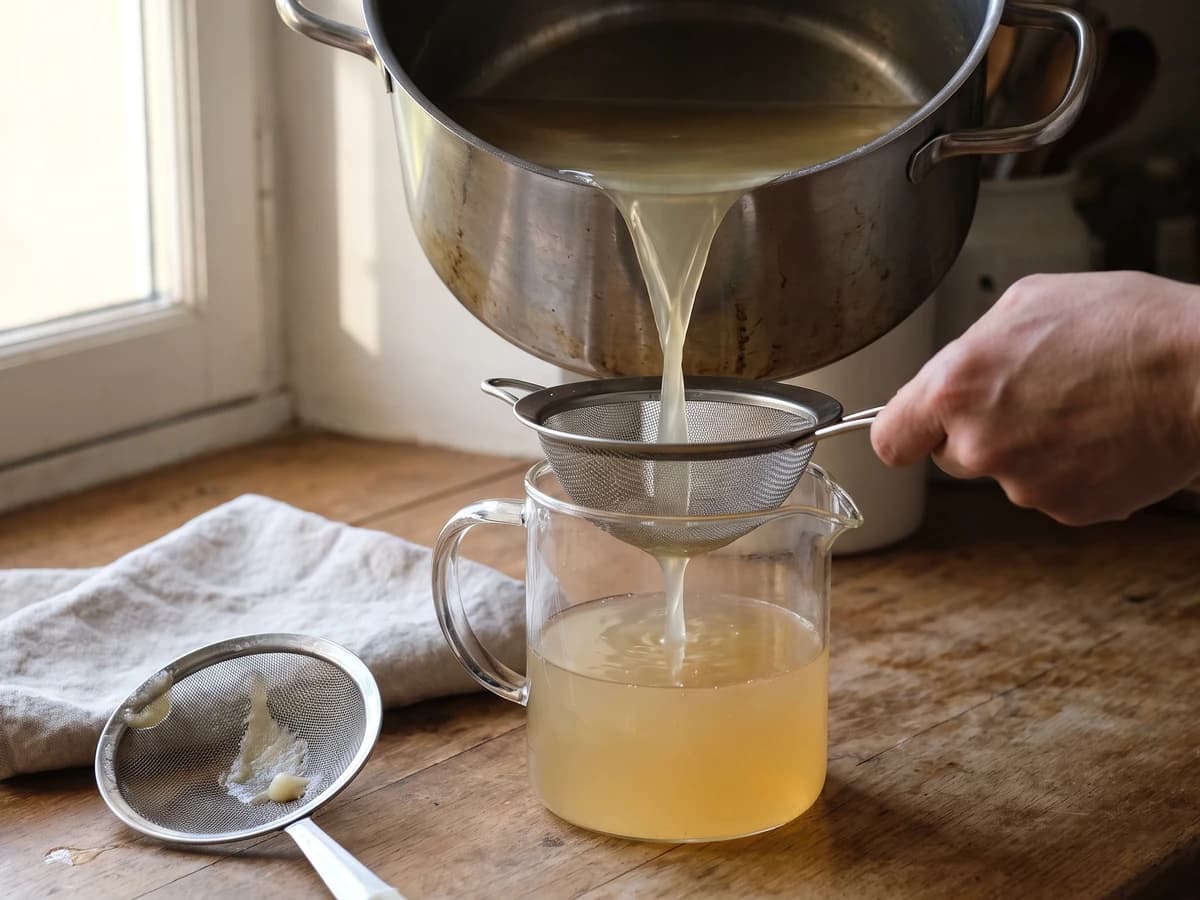
Break the veal bones small, then give them eight hours at a bare tremble. This pale, gelatinous fond becomes the quiet foundation beneath velouté, blanquette, and every sauce that must stay light.
Chef Juliette
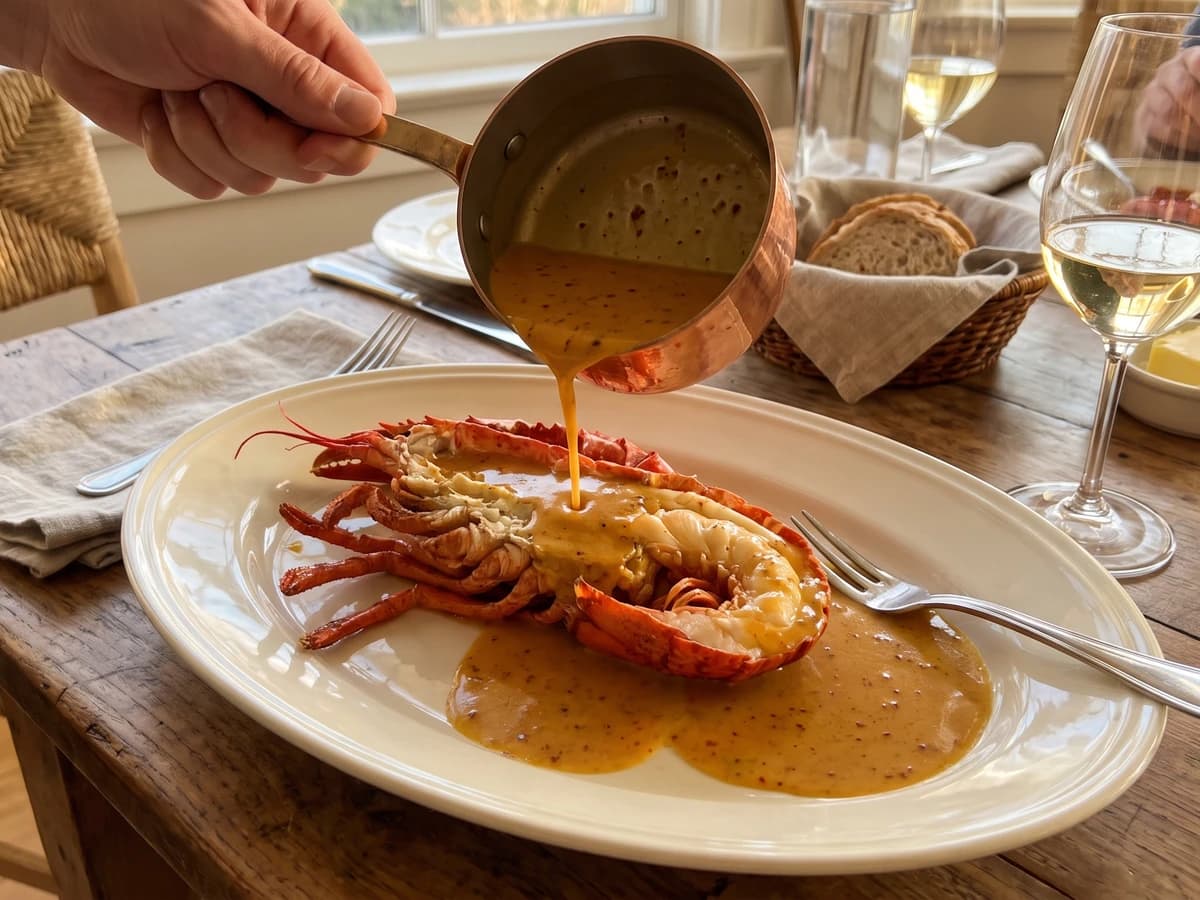
Sauce Orientale concentrates lobster-rich American Sauce with curry, then folds in cream away from the fire: a glossy, gently spiced derivative made for lobster, crayfish, and firm fish.
Chef Juliette
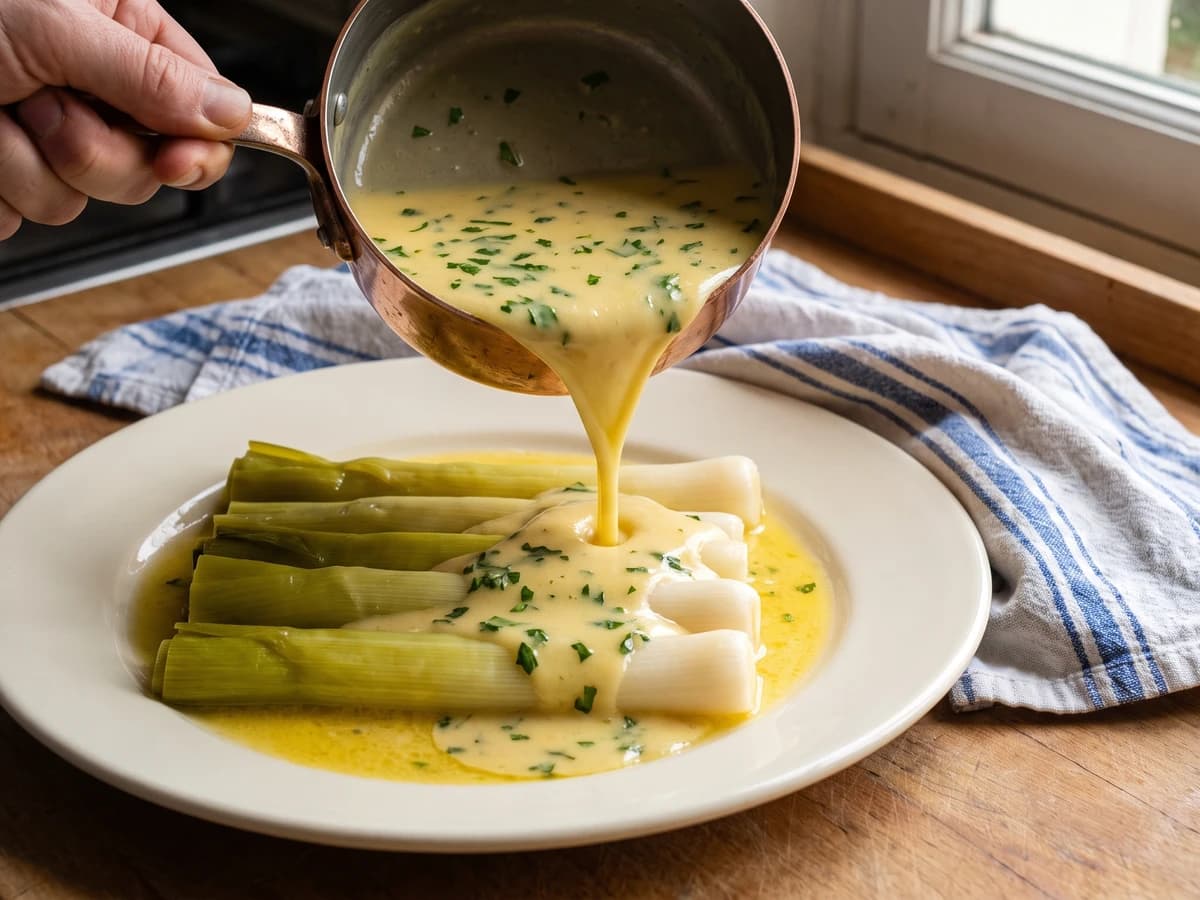
An old lesson in sauce families: Sauce Allemande takes mushroom liquor, then butter, lemon, and parsley, becoming a glossy Poulette for sheep's trotters, leeks, cauliflower, and anything needing gentle richness with a bright edge.