Chef Juliette
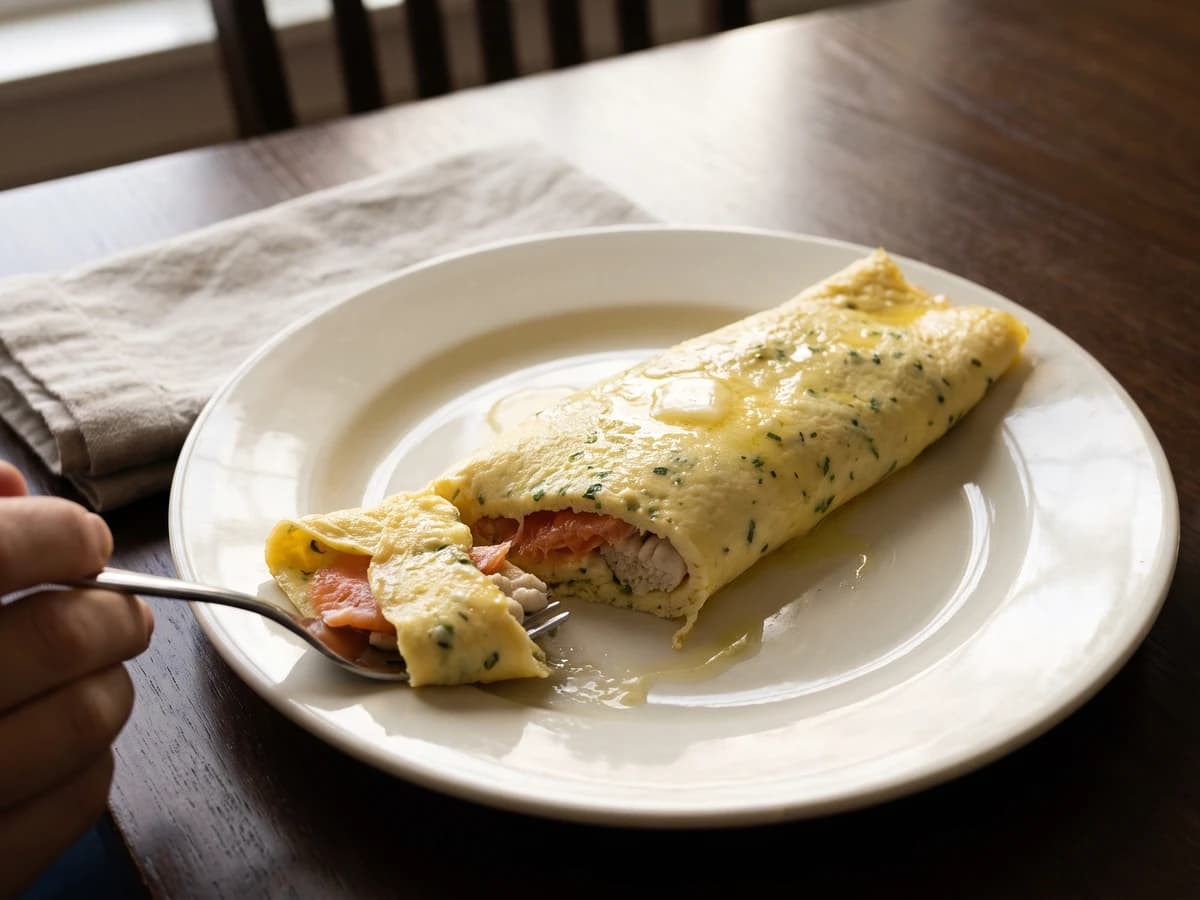
Omelette à l’Écossaise
A creamy omelette aux fines herbes closes around smoked-salmon-wrapped herring milts, gently poached in butter. Have the filling ready, then roll the eggs while they still shine.
A cooking platform built around craft, culture, and the stories behind what we eat.
Created by Chef Juliette
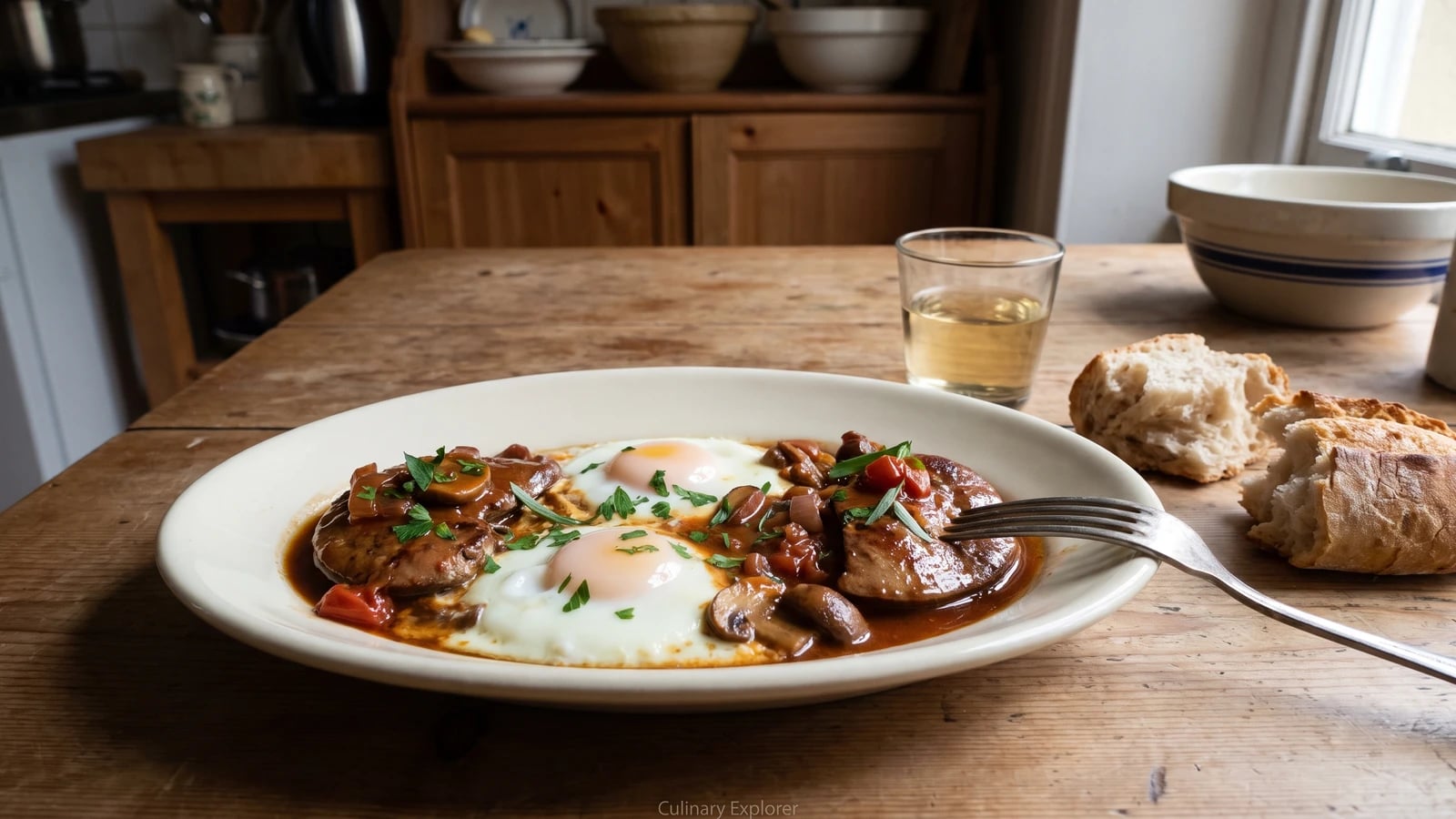
Based on No. 398, Eggs Chasseur, from Le Guide Culinaire (1907) by Auguste Escoffier
Tender eggs sur le plat, quickly sautéed chicken livers, and a glossy mushroom, shallot, white wine, and tomato sauce meet at the last moment, each still properly itself.
Œufs chasseur (eggs hunter's style) teaches timing before it teaches sauce work. The one true thing is that the eggs wait for nothing: the chasseur sauce must be reduced, the livers sautéed, and the table ready before the eggs begin. The eggs are cooked sur le plat, cooked and served in their own shallow dishes, so every lost second continues cooking them.
The original recipe assumed a saucier on staff, Chasseur sauce within reach, stock never off the fire, and a salamander or fierce oven ready for service. At home, one skillet builds the mushroom fond and wine reduction, strong chicken stock supplies the body, and a hot oven stands in for the salamander. The saucier and the holding pans were brigade scaffolding and can go; the reduction, rapid sauté, soft eggs, and immediate service are the dish and must stay. One cook, one stove, one evening.
Make only enough garnish for four, then have every spoon and plate in place before the eggs meet the oven. That final coordination matters more than anything else here.
Œufs chasseur belongs to the codified Paris kitchen and the bourgeois dining-room table rather than to one provincial breakfast tradition. Chasseur grew from the sauce vocabulary of game cookery, joining mushrooms, shallot, white wine, tomato, herbs, and a brown stock foundation before traveling across the canon as a named garnish. In this egg preparation, the rapidly sautéed chicken liver is essential rather than decorative, carrying the savory depth of the sauce to delicate eggs cooked sur le plat.
Quantity
4 portions Eggs on the Dish (No. 395)
freshly cooked according to its own entry
Quantity
1/2 cup (120 ml / 120 g)
trimmed and sliced 1/2 inch (1.25 cm) thick
Quantity
1 1/2 cups (360 ml / 120 g)
thinly sliced
Quantity
2 medium (about 1/3 cup / 80 ml / 60 g)
finely chopped
Quantity
4 tablespoons (60 ml / 56 g)
divided
Quantity
1/2 cup (120 ml / 120 g)
Quantity
1 cup (240 ml / 240 g)
Quantity
1/4 cup (60 ml / 60 g)
drained and finely chopped
Quantity
2 tablespoons (30 ml / 8 g)
finely chopped
Quantity
1 tablespoon (15 ml / 3 g)
finely chopped
Quantity
3/4 teaspoon (3.75 ml / 4.5 g)
divided
Quantity
1/4 teaspoon (1.25 ml / 0.6 g)
| Ingredient | Quantity |
|---|---|
| Eggs on the Dishfreshly cooked according to its own entry | 4 portions Eggs on the Dish (No. 395) |
| chicken liverstrimmed and sliced 1/2 inch (1.25 cm) thick | 1/2 cup (120 ml / 120 g) |
| small button mushroomsthinly sliced | 1 1/2 cups (360 ml / 120 g) |
| shallotsfinely chopped | 2 medium (about 1/3 cup / 80 ml / 60 g) |
| cold unsalted butterdivided | 4 tablespoons (60 ml / 56 g) |
| dry white wine | 1/2 cup (120 ml / 120 g) |
| strong unsalted chicken stock | 1 cup (240 ml / 240 g) |
| canned whole tomatoesdrained and finely chopped | 1/4 cup (60 ml / 60 g) |
| flat-leaf parsleyfinely chopped | 2 tablespoons (30 ml / 8 g) |
| fresh tarragon leavesfinely chopped | 1 tablespoon (15 ml / 3 g) |
| fine saltdivided | 3/4 teaspoon (3.75 ml / 4.5 g) |
| freshly ground black pepper | 1/4 teaspoon (1.25 ml / 0.6 g) |
Pat the liver slices very dry and keep them cold while you prepare the sauce ingredients. Reserve 2 tablespoons of the chicken stock for adjustments, and place the four shallow egg dishes and serving spoons within reach. Once the eggs begin, there is no useful pause.
Heat 1 tablespoon of the butter in a heavy 12-inch skillet over medium-high heat. When its foam subsides, spread in the mushrooms and leave them undisturbed until their undersides bronze, about 2 minutes. Toss and continue cooking until browned and the skillet is dry, then add the shallots and half the salt. Cook for 1 minute, just until the shallots soften without coloring. That brown glaze on the skillet floor is the fond, and it is the sauce's foundation.
Pour in the white wine and scrape every bit of fond from the skillet. Boil until only about 2 tablespoons remain and the wine no longer smells raw, 3 to 4 minutes. Stir in the tomatoes and all but the reserved stock, then simmer briskly until the sauce reaches nappe, a light coating that clings to the back of a spoon, about 8 to 10 minutes. If it becomes pasty, loosen it with reserved stock; if it runs straight off the spoon, keep reducing. Take the skillet off the heat and whisk in 2 tablespoons of cold butter, a little at a time, followed by the parsley and tarragon. If the butter separates into oily beads, whisk in 1 teaspoon of cold reserved stock away from the heat. Ça se rattrape. Transfer the sauce to a warm bowl and cover loosely.
Wipe the skillet and return it to medium-high heat with the remaining tablespoon of butter. Season the dry liver slices with the remaining salt and the pepper. Sauté the livers, cooking them rapidly in a little hot butter, in one uncrowded layer for about 90 seconds on the first side and 60 seconds on the second. They should be browned outside, just firm within, and reach 165°F (74°C) at the thickest point. If liquid gathers because the skillet was crowded, lift out the livers, pour away the liquid, reheat the skillet, and return them for 20 seconds. Spoon in just enough chasseur sauce to coat them and toss for 15 seconds, no longer. The liver should be cohered with the sauce, not simmered in it.
With the sauced livers off the heat and ready to serve, prepare four portions of Eggs on the Dish (No. 395) according to its own entry. Do not make them early or ask them to wait while the garnish catches up. Carry them directly from cooking to assembly.
Arrange 1 tablespoonful of the sliced liver mixture on either side of each portion, leaving the yolks uncovered. Spoon any remaining chasseur sauce over the livers rather than flooding the eggs. Serve immediately, while the sauce gleams and the eggs remain soft. À table!
1 serving (about 235g)
Culinary guides, cultural storytelling, and the editorial depth that makes cooking meaningful.
Discover Culinary ExplorerChef Juliette
A creamy omelette aux fines herbes closes around smoked-salmon-wrapped herring milts, gently poached in butter. Have the filling ready, then roll the eggs while they still shine.
Chef Juliette
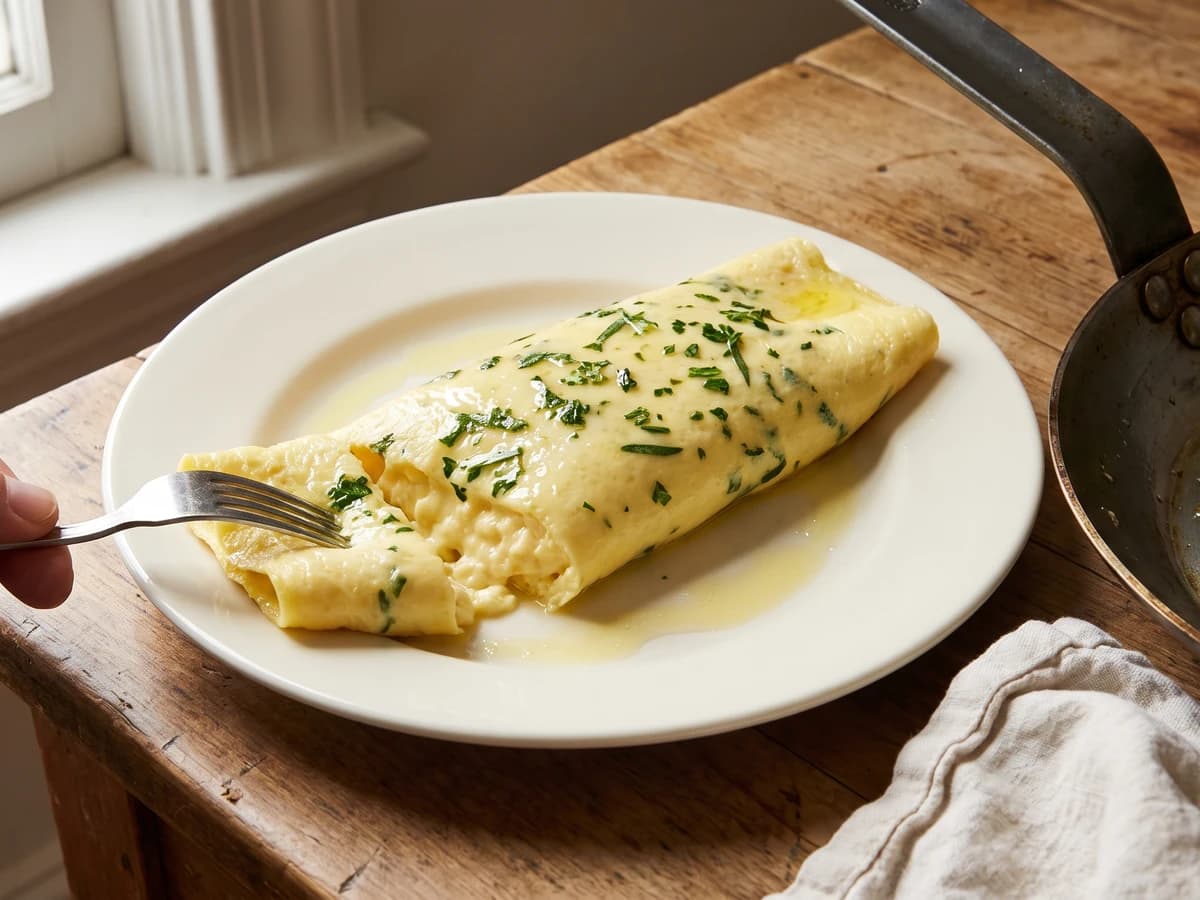
Four tender herbs, hot butter, and two eggs per pan: this rolled omelette teaches the quick hand and good judgment that keep the outside pale and the center creamy.
Chef Juliette
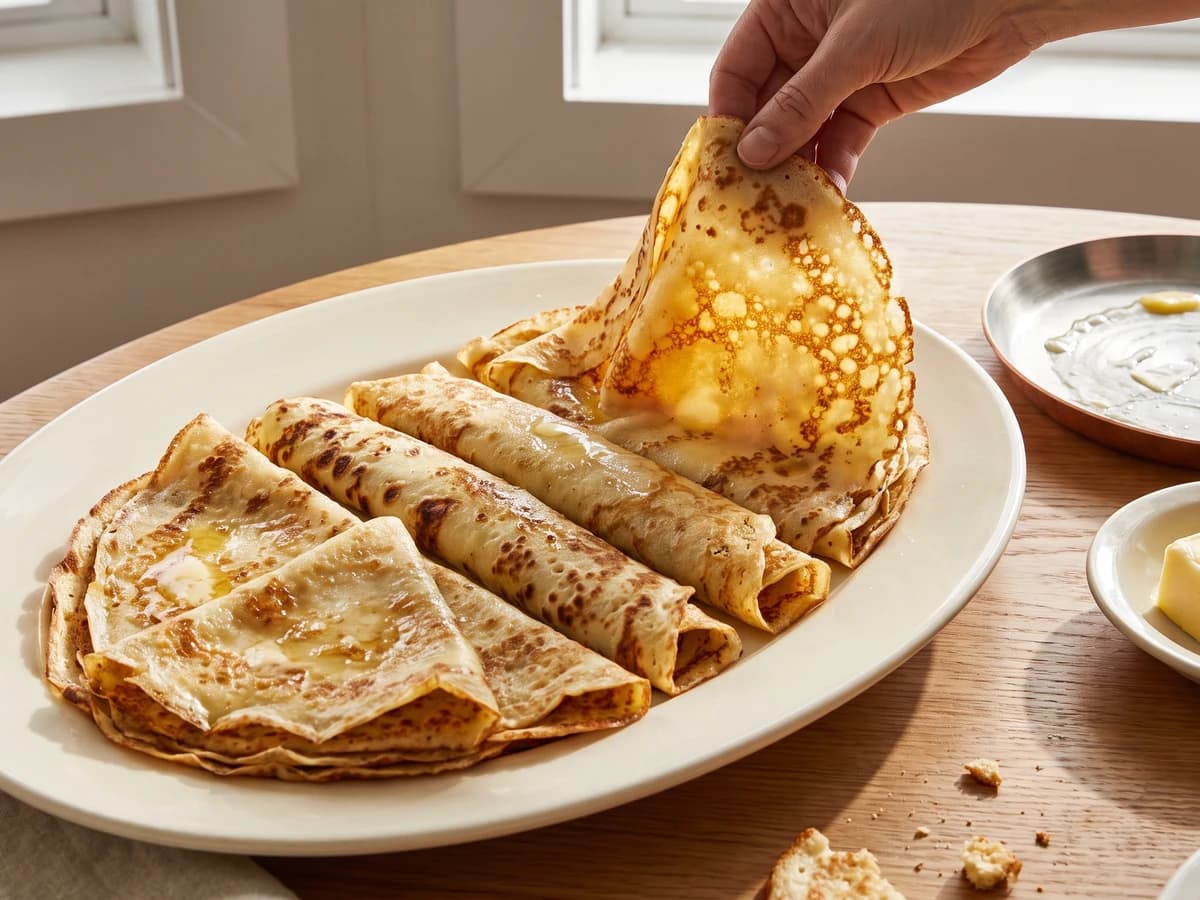
Four batters, one lesson: let the flour drink deeply before cooking, then spread the batter thinly in butter for crêpes and pannequets that bend without becoming tough.
Chef Juliette
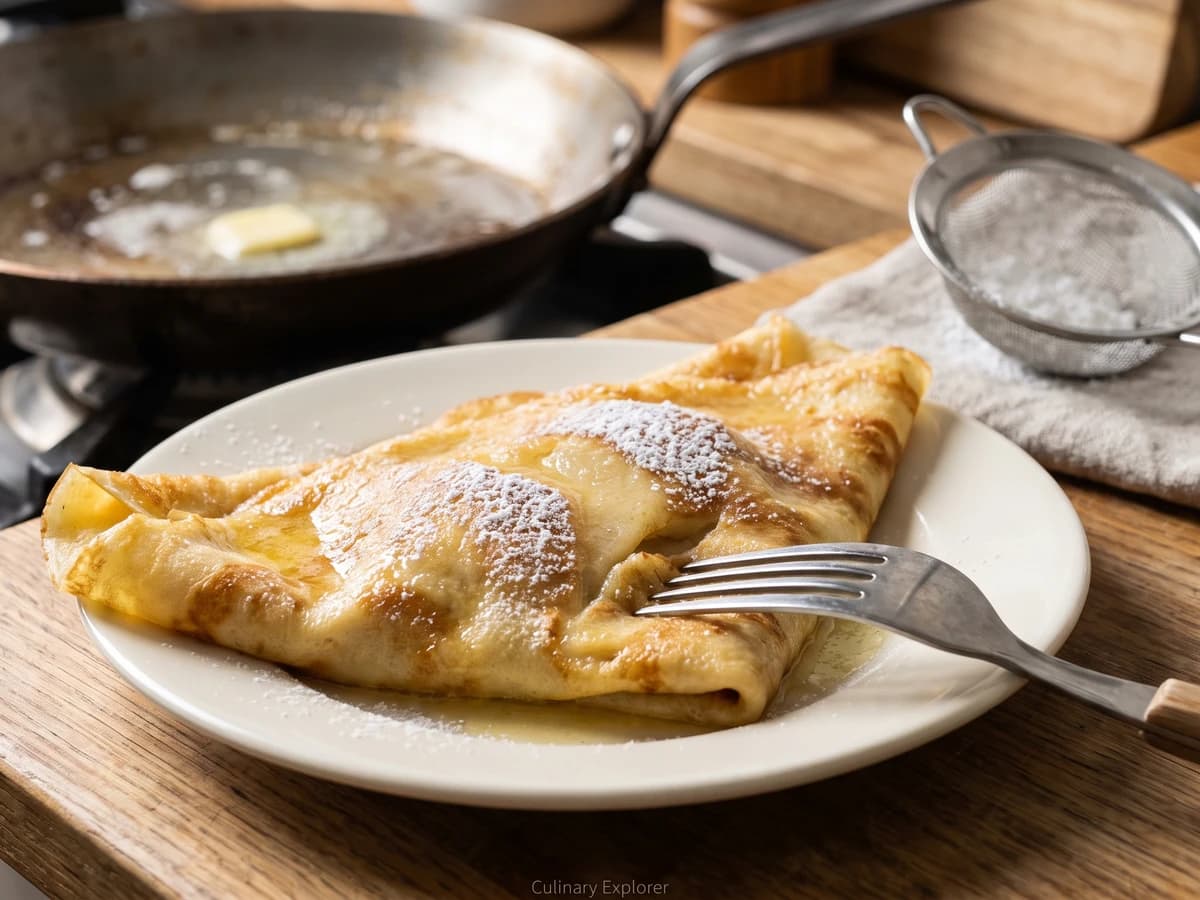
Crêpes au Couvent trap ripe Williams pear dice between two thin pours of sweet batter, then turn in one clean toss and reach the table butter-gold, powdered, and burning hot.