Chef Juliette
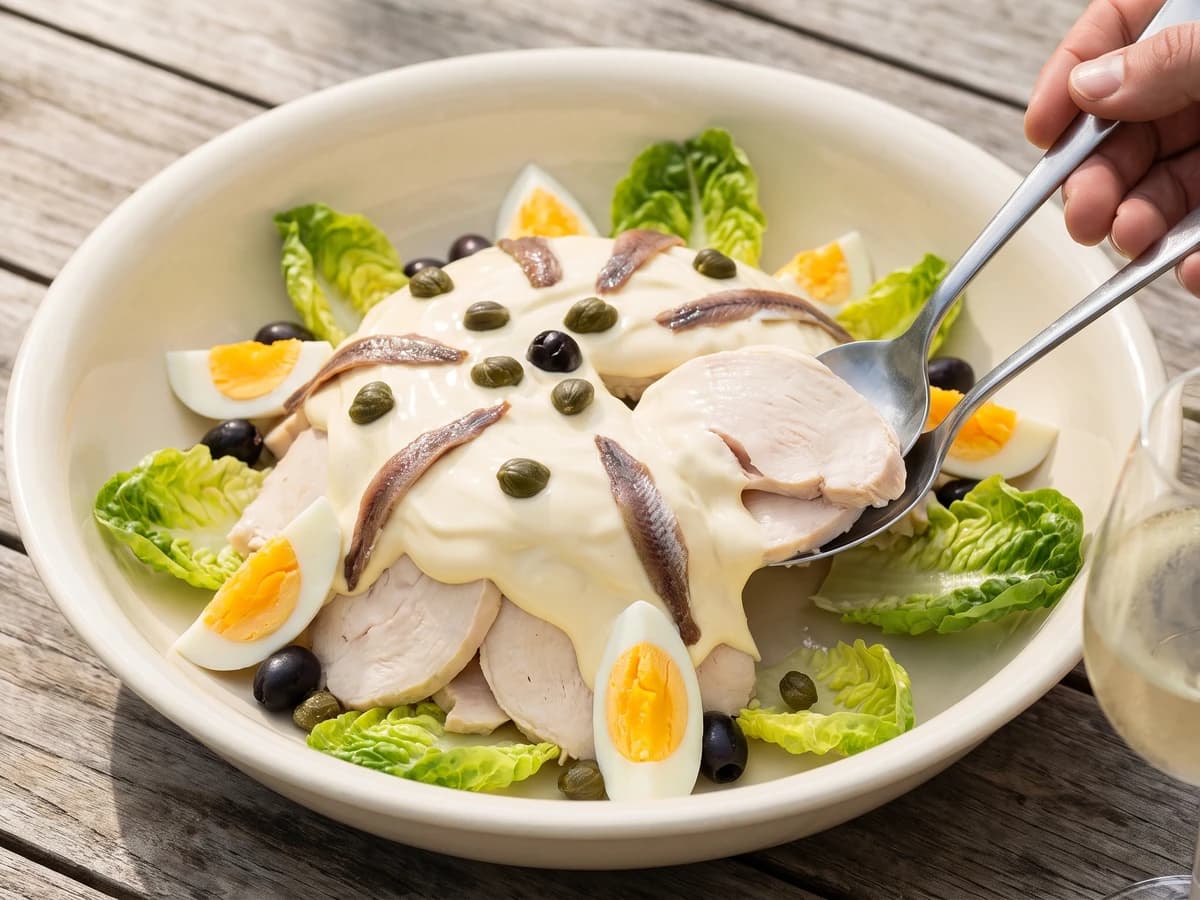
Mayonnaise de Volaille
Cold roast chicken, ciseled lettuce, and a shining coat of homemade mayonnaise, arranged with capers, olives, anchovies, eggs, and lettuce hearts, then tossed at the table as the canon intends.
A cooking platform built around craft, culture, and the stories behind what we eat.
Created by Chef Juliette
Based on No. 389, Tunny with Tomatoes, from Le Guide Culinaire (1907) by Auguste Escoffier
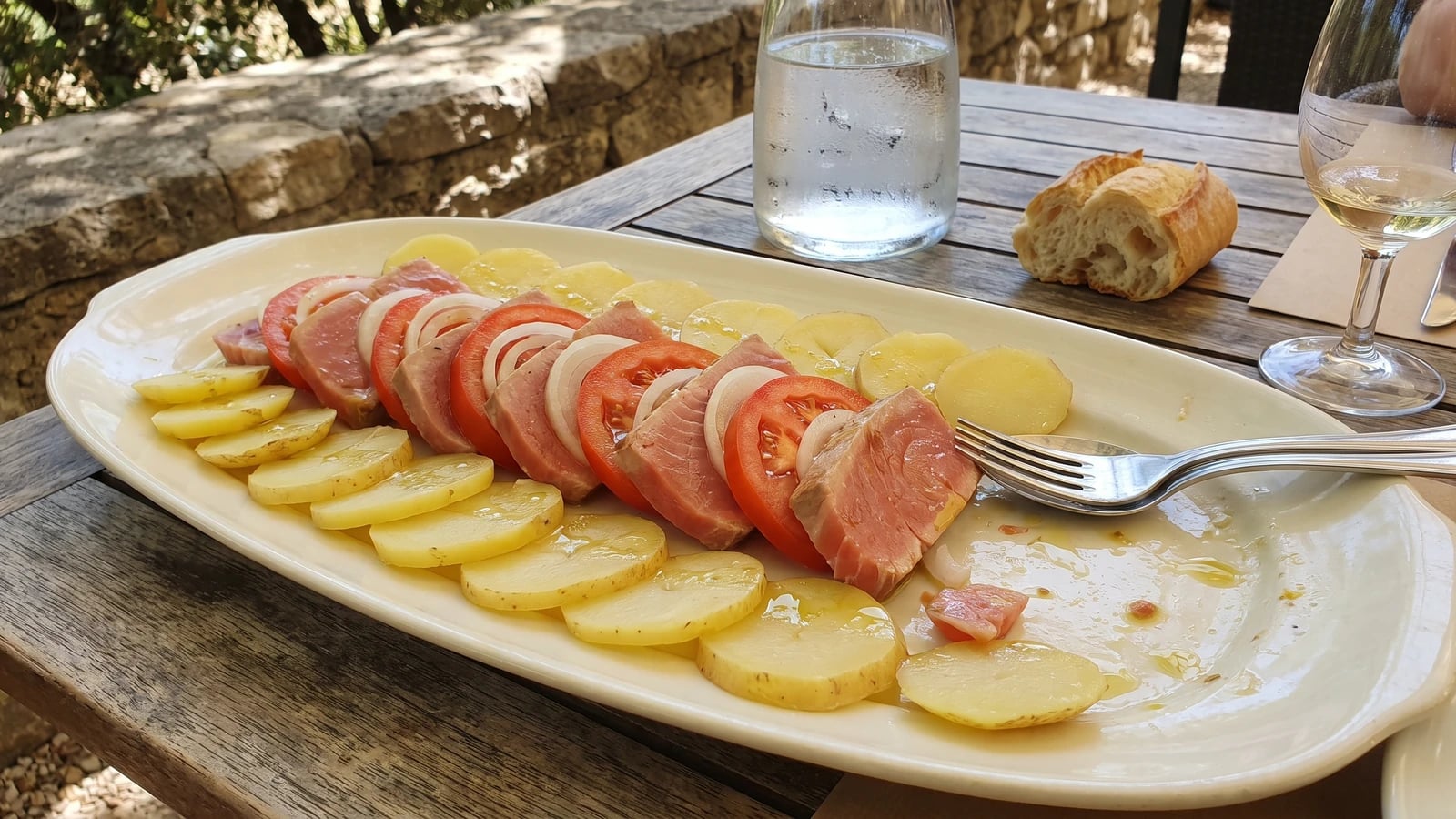
Thon aux tomates turns preserved tuna, ripe tomatoes, onion, and potato into a cool composed salad, with careful slicing and a plain vinaigrette doing all the work.
Thon aux tomates (tunny with tomatoes) teaches the quiet discipline of a composed salad: cut each ingredient with equal care, arrange it so every forkful carries the whole dish, and dress only after the platter is built. The one true thing to know before touching a pan is this: cold food magnifies water and mutes seasoning. The tomatoes and tuna must be well drained, the potatoes fully cooled, and the vinaigrette bright enough to wake them.
The source assumes prepared tuna and boiled potatoes waiting at a professional hors-d’œuvre station, then dispatches the arrangement in a sentence. It needed neither a saucier nor a stockpot; its brigade scaffolding was abundant mise en place and extra hands for slicing. Here, solid tuna loin preserved in oil supplies the prepared fish the entry leaves undefined, and the unwritten service quantity becomes one generous oval platter for four. One cook, one stove, one evening. The alternating slices, onion between them, potato border, and ordinary salad seasoning all stay because they are the dish.
The finished platter should be cool, bright, and orderly without becoming fussy: coral tuna, scarlet tomato, translucent onion, and pale potato under a light sheen of vinaigrette. Drying every slice before it reaches the platter is the step that decides whether those flavours remain distinct or disappear into a watery dressing.
Thon aux tomates belongs to the Mediterranean pantry of Provence, where preserved tuna, ripe tomatoes, onions, potatoes, and wine vinegar naturally met on the cold table. Grand kitchens carried that pantry combination into the formal hors-d’œuvre repertoire, imposing alternate slices and a precise border on food that port households served more freely. Despite ingredients shared with better-known southern salads, this is not salade niçoise: its potato border and deliberate tuna-and-tomato arrangement mark a separate composed preparation.
Quantity
1¼ pounds (570 g / about 3 medium)
scrubbed
Quantity
1 tablespoon (15 ml / 15 g)
for the potato water
Quantity
12 ounces drained (340 g / about 2½ cups)
Quantity
4 medium (about 1½ pounds / 680 g)
cored
Quantity
1 small (about 3½ ounces / 100 g)
peeled
Quantity
2 tablespoons (30 ml / 30 g)
Quantity
6 tablespoons (90 ml / 82 g)
Quantity
½ teaspoon (2.5 ml / 3 g)
Quantity
½ teaspoon (2.5 ml / 1 g)
| Ingredient | Quantity |
|---|---|
| waxy potatoesscrubbed | 1¼ pounds (570 g / about 3 medium) |
| coarse sea saltfor the potato water | 1 tablespoon (15 ml / 15 g) |
| solid tuna loin preserved in olive oil | 12 ounces drained (340 g / about 2½ cups) |
| ripe but firm tomatoescored | 4 medium (about 1½ pounds / 680 g) |
| white or red onionpeeled | 1 small (about 3½ ounces / 100 g) |
| red wine vinegar | 2 tablespoons (30 ml / 30 g) |
| extra-virgin olive oil | 6 tablespoons (90 ml / 82 g) |
| fine sea salt | ½ teaspoon (2.5 ml / 3 g) |
| freshly ground black pepper | ½ teaspoon (2.5 ml / 1 g) |
Put the whole potatoes in a 3-quart saucepan, cover them with cold water by 1 inch, and add the coarse salt. Bring slowly to a simmer, then cook gently for 18 to 25 minutes. A paring knife should enter the centre with slight resistance; the potatoes must be tender enough to eat but firm enough to slice. Drain them at once. When they are cool enough to handle, peel them, then chill for about 30 minutes. If one splits or softens at the edges, drain and chill it immediately. Ça se rattrape: use its firm central rounds for the border and save the broken ends for another meal.
Drain the tuna in a sieve for 10 minutes, then blot away excess oil without pressing the flesh dry. Cut the loin across the grain into broad slices about ⅓ inch (8 mm) thick. Slice the tomatoes to the same thickness and lay them on a clean towel for 5 minutes, blotting the upper surfaces as well. Cut the onion into nearly transparent rounds. If the tuna separates into flakes, overlap the largest pieces into broad sections; the alternating rhythm matters more than perfect circles.
Make the vinaigrette ordinaire, the ordinary salad seasoning: whisk the vinegar with the fine salt and pepper until the salt dissolves, then add the olive oil gradually while whisking. It should form a loose emulsion and taste one shade sharper than you would drink from a spoon, because potato and tuna soften its edge. A mustard-free vinaigrette naturally separates while it waits. Whisk it again just before dressing.
Slice the chilled potatoes into rounds about ¼ inch (6 mm) thick. Across the centre of a long oval hors-d’œuvre dish, arrange alternating slices of tuna and tomato with a thin onion round between each one, overlapping them just enough to hold the line together. Build a continuous border of potato slices around the edge. This arrangement is not decoration added after the fact; it controls every serving, giving each person fish, tomato, onion, and potato in the intended proportion.
Whisk the vinaigrette once more, then spoon it evenly over the tuna, tomatoes, onions, and potato border. Let the salad stand for 10 minutes so the surfaces take the seasoning, but do not leave it dressed for hours or the tomatoes will release their water. If liquid gathers on the platter, tilt it carefully and spoon off the excess before serving. Bring the dish to the table cool rather than numb from the refrigerator. À table!
1 serving (about 450g)
Culinary guides, cultural storytelling, and the editorial depth that makes cooking meaningful.
Discover Culinary ExplorerChef Juliette
Cold roast chicken, ciseled lettuce, and a shining coat of homemade mayonnaise, arranged with capers, olives, anchovies, eggs, and lettuce hearts, then tossed at the table as the canon intends.

Chef Juliette
Cold roast or poached chicken with fine ribbons of lettuce, dressed at the final moment with oil and vinegar: a composed salad whose freshness depends entirely on timing.

Chef Juliette
Five leaves, one living rule: laitue, romaine, chicorée, mâche, or pissenlit must be washed, dried, and dressed only as they go to the table, while every leaf still carries its light vinaigrette.

Chef Juliette
Salade de Betteraves proves that baking, not boiling, is the whole argument: concentrated garnet sweetness, tender baked onion, sharp mustard, and herbs cut into a weeknight salad worth making ahead.