Chef Juliette
Ordinary or White Consommé
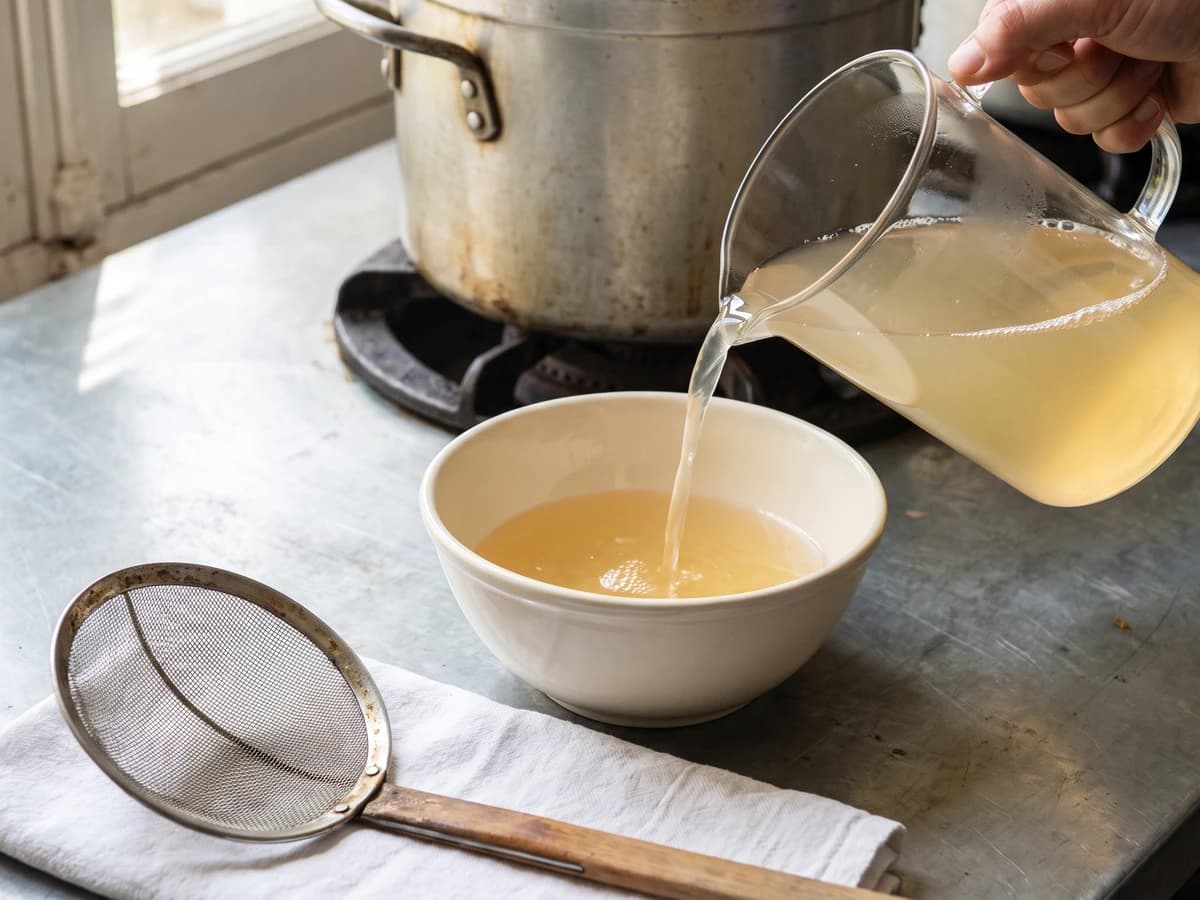
Beef shin, lean beef, and fowl begin in cold water and rise slowly toward a tremble. Skim before the boil, and you learn the quiet discipline that gives every clear French broth its backbone.
A cooking platform built around craft, culture, and the stories behind what we eat.
Created by Chef Juliette
Based on No. 38, Genevoise Sauce, from Le Guide Culinaire (1907) by Auguste Escoffier
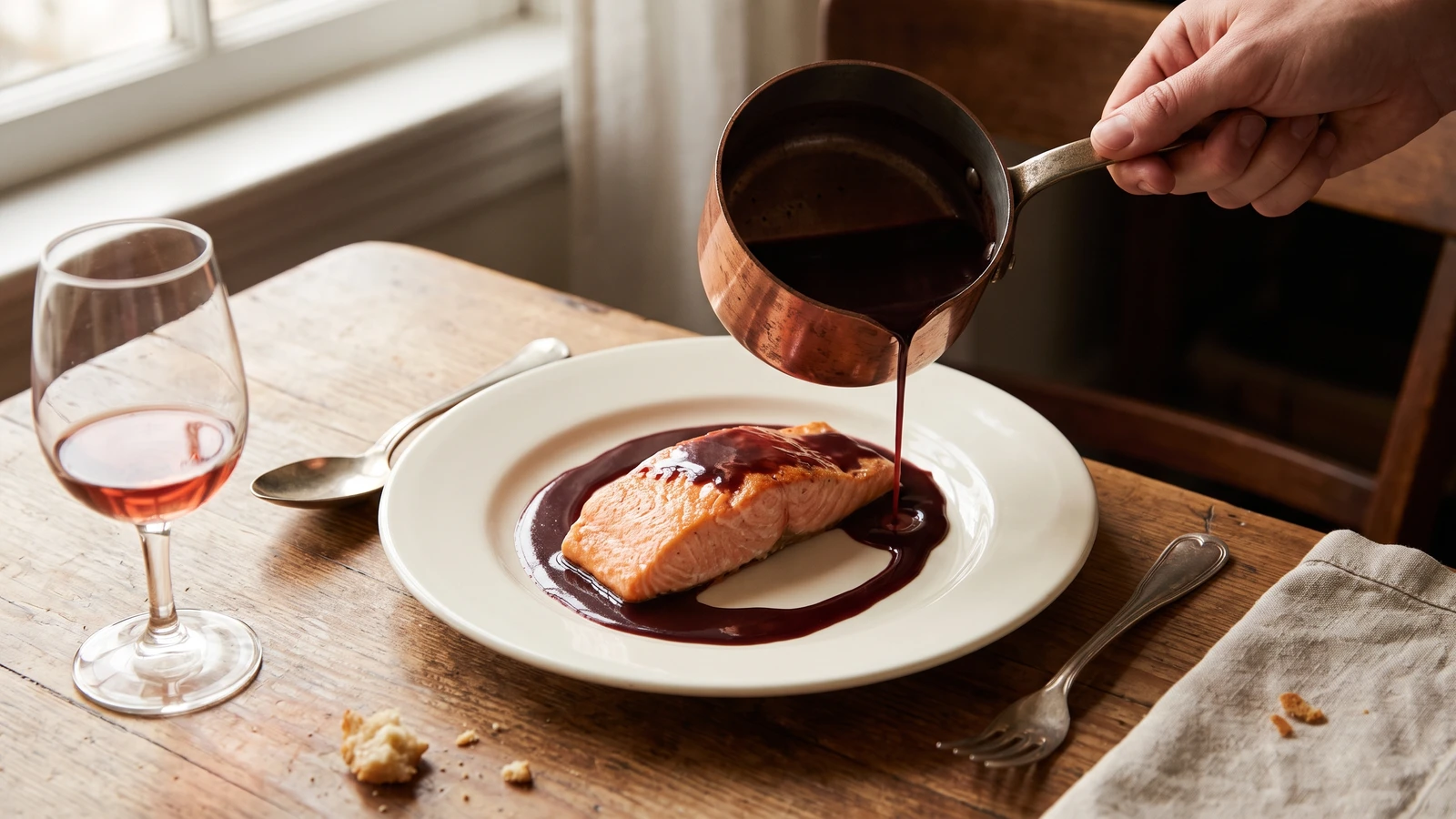
The classical red-wine sauce for salmon, built from bones, mirepoix, Lenten Espagnole, fumet and patient skimming, then mellowed with brandy, anchovy essence and cold butter until it gleams garnet.
Sauce Genevoise (a red-wine sauce for salmon) teaches one exact lesson: extraction and purification are separate jobs. First you draw every ounce of character from salmon bones, Mirepoix (No. 228), butter and wine. Then you stop stirring, lower the heat and dépouiller, to purify by slow simmering and skimming, until the sauce turns garnet and clear. Clarity is made at the simmer, not repaired by finer cloth at the end.
The original assumed a saucier at the range, Mirepoix and Lenten Espagnole already prepared, fish fumet, a concentrated fish essence, never far from the fire, and a tammy waiting for the final straining. The brigade workflow is consolidated here into one two-quart home batch. A heavy nonreactive pot replaces the stock stove, damp muslin replaces the tammy, the smallest burner replaces the side of the range, and gently simmered brandy replaces flaming it. Those are scaffolding changes. The two additions of wine, the draining and resting, the long dépouillement and the last cold butter are the dish, so they remain.
One cook, one stove, one evening. The step that decides the Genevoise is the quiet second simmer: keep it barely trembling, skim without stirring, and clarity and proper reduction will arrive together.
Sauce Genevoise takes its name from Geneva and the Lake Geneva table, then enters the French grand-sauce repertoire as a wine-dark accompaniment made particularly for salmon. Its meatless Mirepoix and Lenten Espagnole place it among sauces suited to fish and fasting tables, yet its construction follows the same disciplined extraction and reduction used for the grand brown sauces. The surprising distinction is its clarity: the salmon remains are pressed hard for flavour at the first straining, then the sauce is purified patiently and passed through cloth without pressure at the last.
Quantity
1/2 cup (120 ml / 113 g)
Quantity
About 4 quarts, loosely packed (3.8 L / 1.8 kg)
cut into 2 to 3 inch pieces with gills and bloodline removed
Quantity
2 bottles (6 1/3 cups / 1.5 L / about 1.49 kg)
Quantity
4 3/4 cups (1.14 L / about 1.14 kg)
Quantity
1/4 cup (60 ml / 57 g)
Quantity
2 1/3 cups (570 ml / 565 g)
Quantity
2 1/3 cups (570 ml / about 570 g)
Quantity
10 to 12 drops (about 1/8 teaspoon / 0.6 ml / 0.6 g)
Quantity
1 cup (240 ml / 227 g)
cubed
| Ingredient | Quantity |
|---|---|
| unsalted butter | 1/2 cup (120 ml / 113 g) |
| Mirepoixprepared without bacon | About 7 cups (1.7 L / 910 g) Mirepoix (No. 228) |
| salmon heads, frames, trimmings and bonescut into 2 to 3 inch pieces with gills and bloodline removed | About 4 quarts, loosely packed (3.8 L / 1.8 kg) |
| excellent dry, light-bodied red wine for the first reduction | 2 bottles (6 1/3 cups / 1.5 L / about 1.49 kg) |
| Lenten Espagnole | 4 3/4 cups (1.14 L / about 1.14 kg) |
| brandy | 1/4 cup (60 ml / 57 g) |
| excellent dry, light-bodied red wine for the second wetting | 2 1/3 cups (570 ml / 565 g) |
| fish fumet | 2 1/3 cups (570 ml / about 570 g) |
| anchovy essence | 10 to 12 drops (about 1/8 teaspoon / 0.6 ml / 0.6 g) |
| cold unsalted buttercubed | 1 cup (240 ml / 227 g) |
Have the Mirepoix (No. 228), prepared without bacon, the Lenten Espagnole and the fish fumet ready before heating the pot. Rinse the salmon pieces briefly under very cold water, pull away every trace of gill and dark blood, then dry them well. Gills make the sauce bitter and blood muddies its colour; removal now saves an argument with the sauce later.
Melt the first butter in a 10 to 12 quart heavy, nonreactive stockpot over medium heat. Add the Mirepoix (No. 228) and cook for 10 to 12 minutes, stirring regularly, until the edges take a light hazelnut colour. Slightly browned is the instruction, not deeply caramelized; if the butter darkens too quickly, pull the pot off the heat, stir until the foaming settles, then continue more gently.
Add the salmon heads, frames, trimmings and bones, turning them through the buttery mirepoix. Cover and cook over low heat for 20 minutes. The fish will turn opaque, release its juices and smell distinctly of cooked salmon, while moisture beads beneath the lid. Keep the heat low enough that the pot murmurs without frying the bones hard.
Push the solids carefully toward one side and let the pot stand at a slight, stable angle, or simply gather the pooled fat with a shallow ladle. Remove and discard as much butter and rendered fish fat as possible without losing the juices underneath. This draining matters: fat left now emulsifies during reduction and works against the clear garnet sauce you are building.
Pour in the two bottles of red wine and bring them to a lively simmer, scraping the pot floor gently to release anything caught there. Reduce until the wine has lost half its volume, about 25 to 35 minutes. Its raw alcoholic smell should soften into something round and wine-dark. Judge by volume, not merely by time; a clean wooden skewer dipped when the wine first simmers gives you an honest mark to compare against.
Stir in the Lenten Espagnole and return the pot to a bare simmer. Cook gently for 30 minutes, uncovered, stirring only often enough to prevent catching on the bottom. The sauce will deepen in colour and begin to carry the salmon rather than merely smell of wine.
Pass the contents through a large fine-mesh sieve into a heatproof bowl, pressing firmly with the back of a ladle to extract the essence from the bones and mirepoix. Let the strained sauce rest undisturbed for 15 minutes, then skim every visible bead and sheet of fat from the surface. Pressing is correct at this first straining because extraction is still the job; clarity comes during the next cooking.
Clean the stockpot. Simmer the brandy in a small saucepan for about 60 seconds, just until its sharp alcoholic edge softens, then remove it from the heat. This is the home equivalent of burnt brandy and avoids an unnecessary open flame. Return the strained sauce to the clean pot with the cooked brandy, the second measure of red wine and all but 1/4 cup of the fish fumet. Bring everything to one full boil, then immediately lower the heat.
Set the pot over the smallest burner at its lowest useful setting and let it dépouiller, purify through slow simmering and skimming, for about 1 1/2 hours. Only one or two bubbles should break the surface at a time. Do not stir. Skim away foam, protein and fat whenever they rise, especially during the first half hour, until the sauce is clear, garnet and reduced to roughly 7 cups. It should reach nappe, coating the back of a spoon in a thin even film, as it becomes clear. If it thickens before it clears, loosen it with some reserved fumet and continue gently. If it boils hard and clouds, stop the heat, rest it for 10 minutes, skim carefully, then resume at the barest tremble. Ça se rattrape.
Dampen muslin or a double layer of cheesecloth, line a clean sieve and let the sauce pass through without pressing. Return it to gentle heat only if needed, then remove the pot from the burner. Add the anchovy essence drop by drop, tasting after ten; it should deepen the salmon without announcing itself. Monter au beurre, whisk in the cold butter, a few cubes at a time, until all 1 cup is incorporated and the sauce gleams with a mellow satin finish. This keeps the source proportion of four ounces of butter per quart. Never boil it after mounting. If yellow butter droplets appear, place 1 tablespoon of reserved cold fumet in a clean warm bowl and whisk the broken sauce into it gradually, one ladle at a time. Ça se rattrape. Serve at once beside salmon. À table!
1 serving (about 60g)
Culinary guides, cultural storytelling, and the editorial depth that makes cooking meaningful.
Discover Culinary ExplorerChef Juliette
Beef shin, lean beef, and fowl begin in cold water and rise slowly toward a tremble. Skim before the boil, and you learn the quiet discipline that gives every clear French broth its backbone.
Chef Juliette
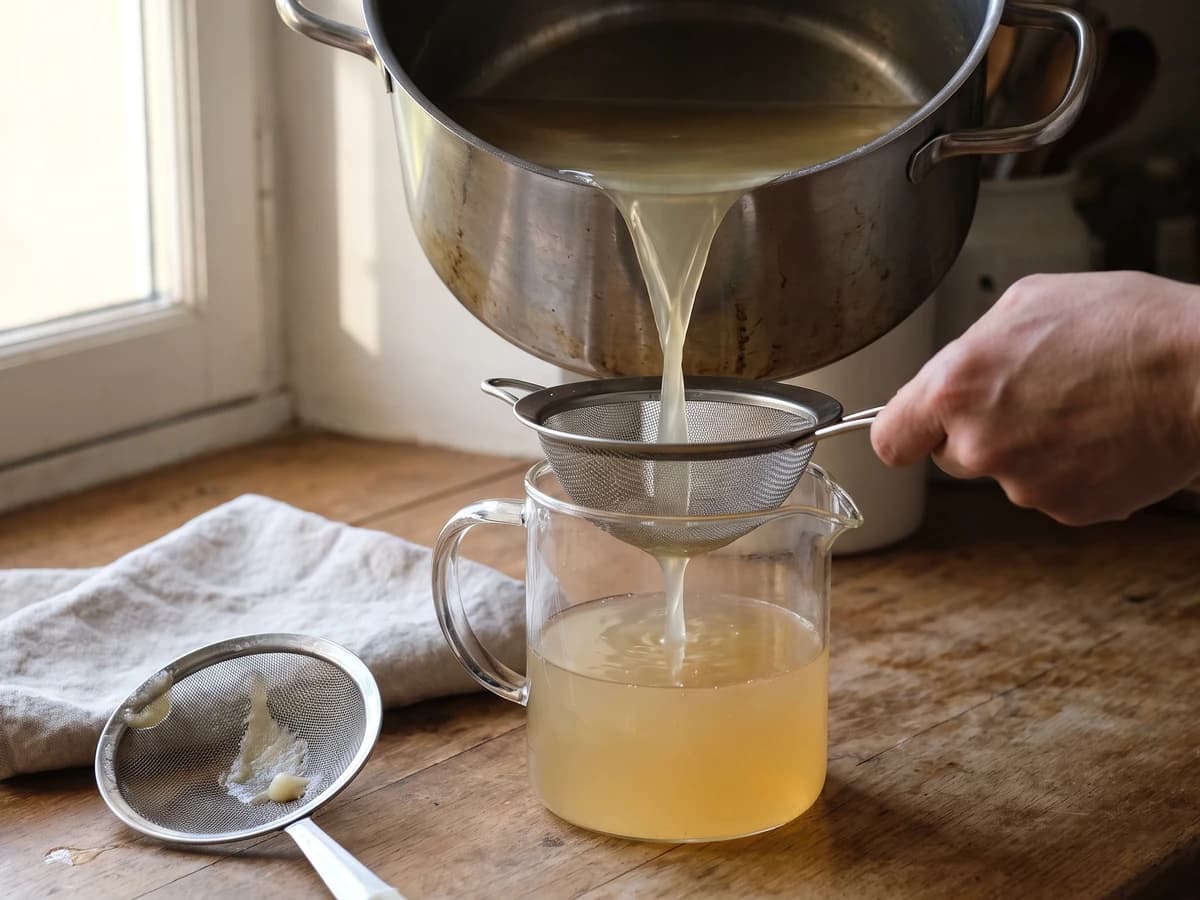
Break the veal bones small, then give them eight hours at a bare tremble. This pale, gelatinous fond becomes the quiet foundation beneath velouté, blanquette, and every sauce that must stay light.
Chef Juliette
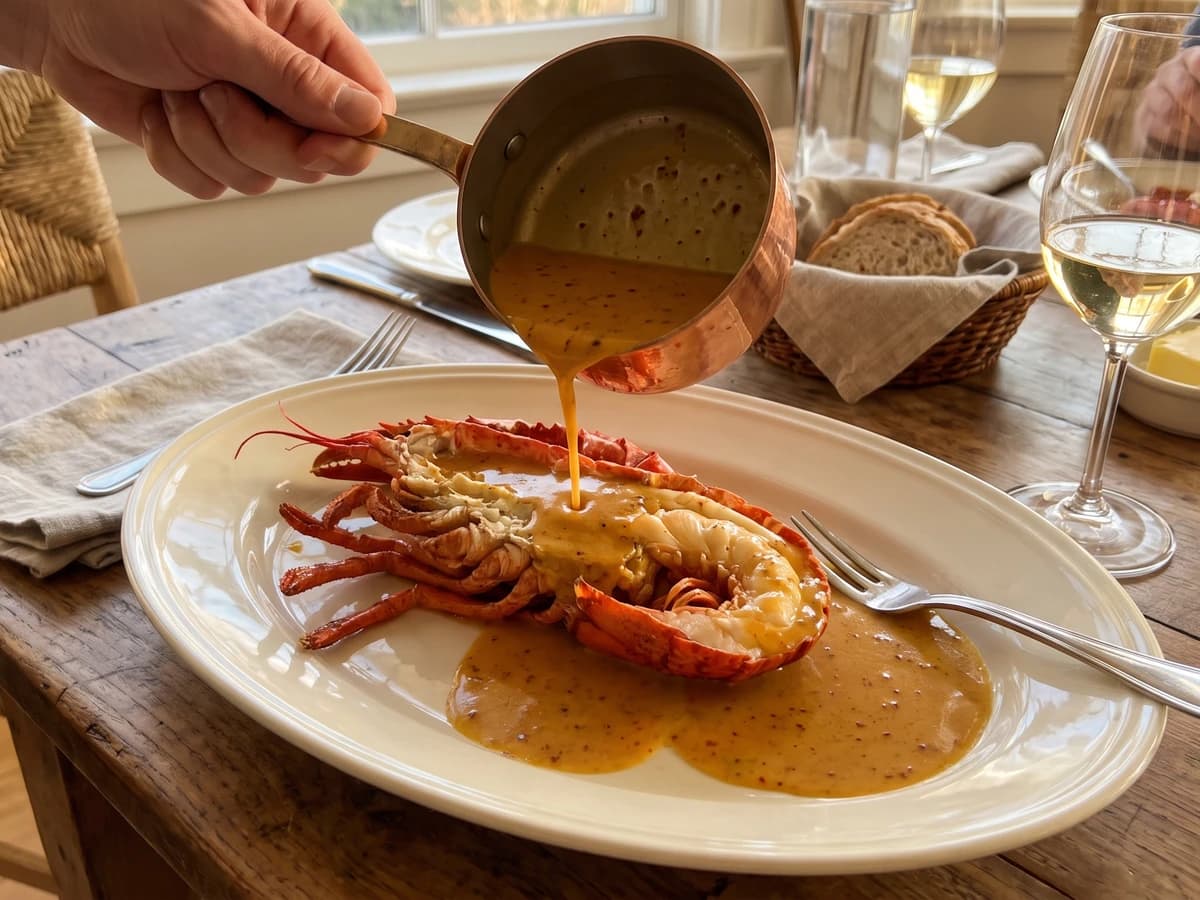
Sauce Orientale concentrates lobster-rich American Sauce with curry, then folds in cream away from the fire: a glossy, gently spiced derivative made for lobster, crayfish, and firm fish.
Chef Juliette
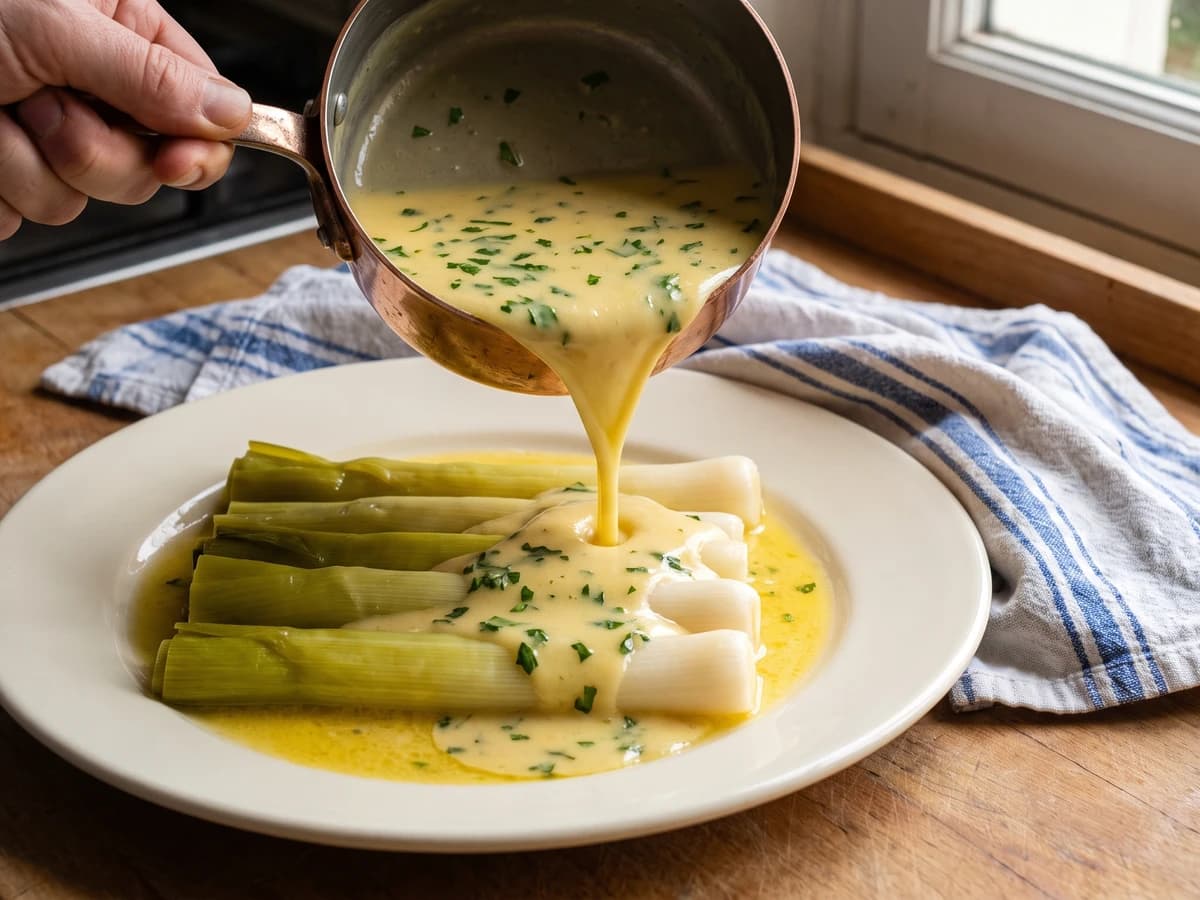
An old lesson in sauce families: Sauce Allemande takes mushroom liquor, then butter, lemon, and parsley, becoming a glossy Poulette for sheep's trotters, leeks, cauliflower, and anything needing gentle richness with a bright edge.