Chef Juliette
Mayonnaise de Volaille
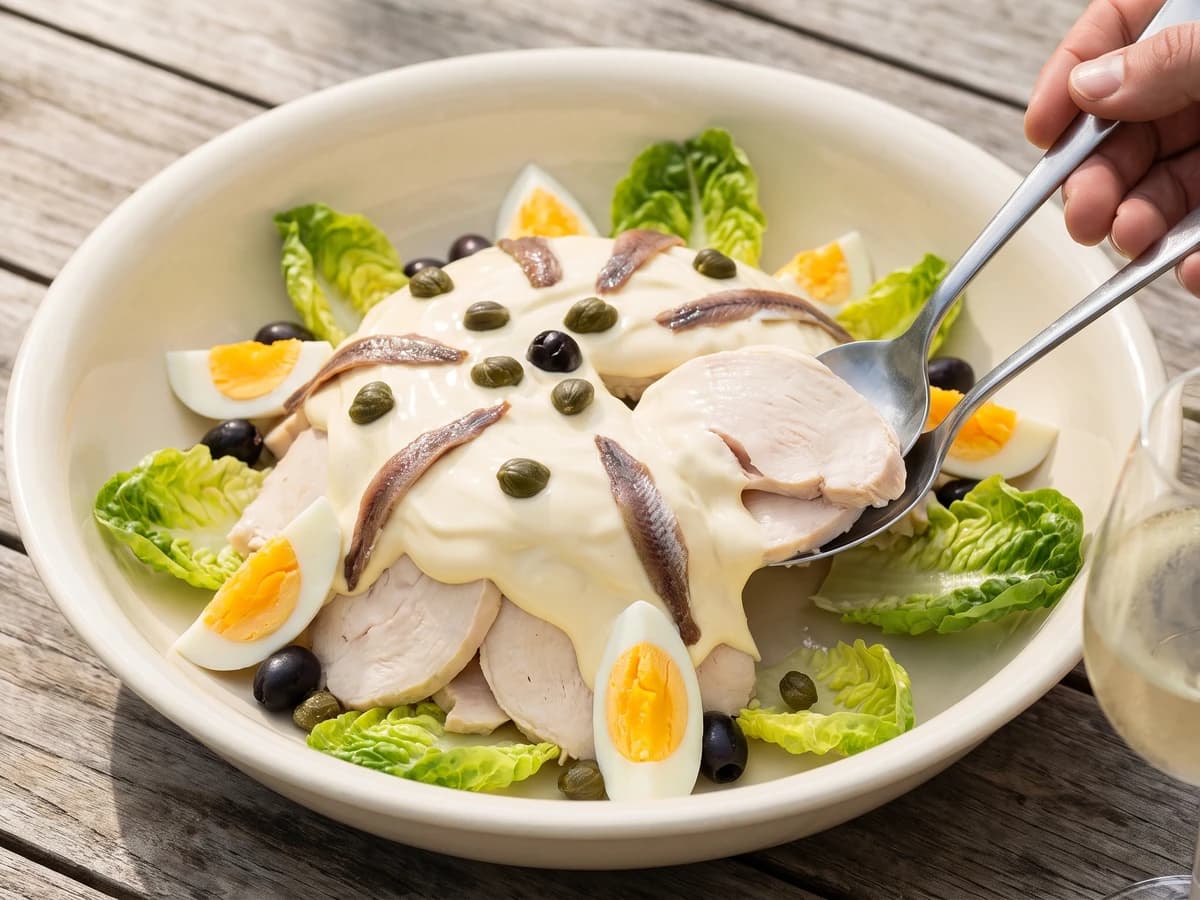
Cold roast chicken, ciseled lettuce, and a shining coat of homemade mayonnaise, arranged with capers, olives, anchovies, eggs, and lettuce hearts, then tossed at the table as the canon intends.
A cooking platform built around craft, culture, and the stories behind what we eat.
Created by Chef Juliette
Based on No. 375, Mild, Grilled Capsicum, from Le Guide Culinaire (1907) by Auguste Escoffier
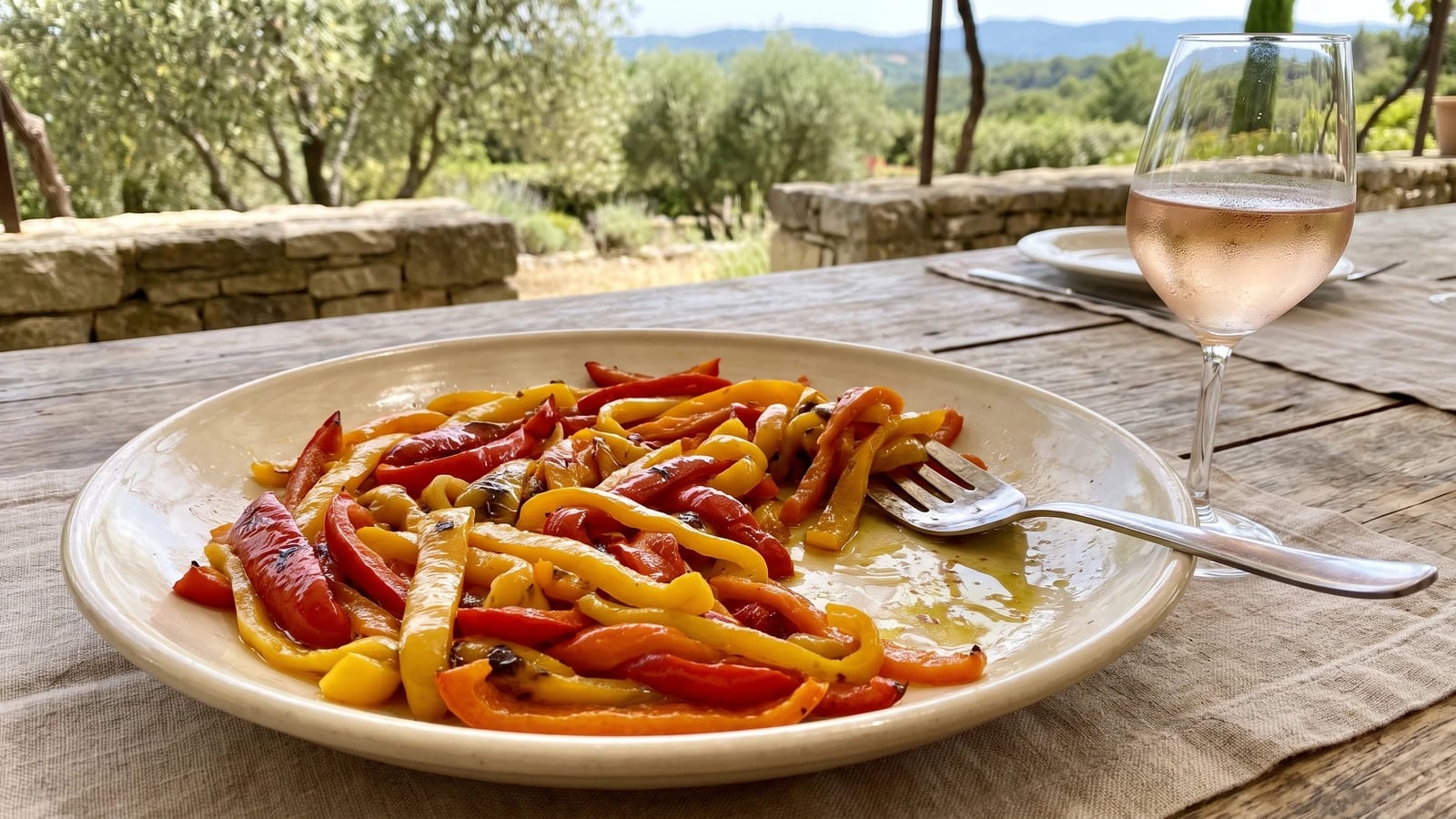
Scorch the skins with conviction, peel while the flesh is warm, then cut the sweet peppers in julienne and dress them simply. This composed salad proves that blackened skin is sacrifice, not spoiled flesh.
Poivrons doux grillés (mild grilled capsicum) teach a useful courage: the skin must go black before the flesh beneath becomes sweet, supple, and easy to peel. The scorch belongs to the skin you discard, while the pepper keeps a faint smoky edge and a satin texture. Stop at politely blistered and the skin clings, which is the dish telling you it isn't ready.
The original entry assumed a moderate live fire and a cook standing beside it; a classical kitchen could finish the work beneath a salamander. Your overhead broiler is the honest home equivalent, with an outdoor grill equally good. This version scales the unspecified quantity to four peppers and gives the unmeasured oil and vinegar a repeatable three-to-one proportion, enough for four composed-salad servings. No garlic, herbs, or salt are added because the entry calls for none. The live fire and brigade handling are scaffolding; the full scorching, warm peeling, julienne, and oil-and-vinegar dressing are the dish.
One cook, one stove, one evening. The step that matters is blackening every side before the peppers rest; if a patch of skin clings, return it to the heat rather than scraping away the sweet flesh.
Poivrons grillés belong to the Mediterranean French table, particularly Provence and the cooking around Nice, where sweet peppers appear as hors-d'oeuvre, picnic fare, and part of composed salads. The preparation traveled easily from the household grill into the wider French salad repertoire because oil and wine vinegar preserve the peppers' colour while sharpening their sweetness. The blackened exterior is not burnt flesh: it is a skin deliberately sacrificed so the tender pepper beneath can be peeled clean and dressed.
Quantity
4 large (about 800 g / 1 lb 12 oz)
washed, dried, and kept whole; preferably red, yellow, or orange
Quantity
3 tablespoons (45 ml / 41 g)
Quantity
1 tablespoon (15 ml / 15 g)
| Ingredient | Quantity |
|---|---|
| large mild sweet capsicumswashed, dried, and kept whole; preferably red, yellow, or orange | 4 large (about 800 g / 1 lb 12 oz) |
| mild olive oil | 3 tablespoons (45 ml / 41 g) |
| wine vinegar | 1 tablespoon (15 ml / 15 g) |
Set an oven rack about 15 cm (6 inches) beneath the broiler and heat it fully. Alternatively, prepare an outdoor grill over a moderate fire. Dry the whole capsicums thoroughly and place them on a heavy rimmed baking sheet or directly on the grill grate. A wet surface delays scorching, and scorching is the work here.
Grill the capsicums for 15 to 20 minutes, turning them with tongs every 4 minutes, until nearly the entire skin is blistered and black and the flesh yields slightly beneath the tongs. Be bold. Brown freckles aren't enough. If the peppers soften before their skins blacken, move them closer to the broiler or strengthen the fire so the surface colours faster without cooking the flesh to collapse.
Transfer the hot capsicums to a heatproof bowl, cover, and leave them for 10 minutes. As soon as they are safe to handle but still very warm, pull away the scorched skins with your fingers. If a patch clings, don't gouge at the flesh. Blot that spot dry, return it to the heat for 1 to 2 minutes, then cover it again briefly. Ça se rattrape. Never rinse the peppers, or their concentrated sweetness goes down the drain with the skin.
Pull out the stems, open the peppers, and remove the seeds and pale ribs. Lay the flesh flat, glossy side down, and cut it julienne-fashion into match-shaped rods about 5 mm (1/4 inch) wide. Keep the strips long enough to lie in loose ribbons rather than collapsing into a mince. The word carries the technique.
Whisk the wine vinegar in a small bowl, then pour in the olive oil in a thin stream while whisking until the vinaigrette, the oil-and-vinegar emulsion, turns lightly clouded. It may separate as it stands; nothing is spoiled. Whisk it once more before dressing the peppers.
Turn the warm julienne gently through the vinaigrette and any collected pepper juices until every strip gleams. Rest for at least 30 minutes so the vinegar settles into the sweetness, then arrange the peppers loosely on a shallow serving dish. Serve cool or at room temperature, giving them one final turn through the dressing before they reach the table. À table!
1 serving (about 175g)
Culinary guides, cultural storytelling, and the editorial depth that makes cooking meaningful.
Discover Culinary ExplorerChef Juliette
Cold roast chicken, ciseled lettuce, and a shining coat of homemade mayonnaise, arranged with capers, olives, anchovies, eggs, and lettuce hearts, then tossed at the table as the canon intends.

Chef Juliette
Cold roast or poached chicken with fine ribbons of lettuce, dressed at the final moment with oil and vinegar: a composed salad whose freshness depends entirely on timing.

Chef Juliette
Five leaves, one living rule: laitue, romaine, chicorée, mâche, or pissenlit must be washed, dried, and dressed only as they go to the table, while every leaf still carries its light vinaigrette.

Chef Juliette
Salade de Betteraves proves that baking, not boiling, is the whole argument: concentrated garnet sweetness, tender baked onion, sharp mustard, and herbs cut into a weeknight salad worth making ahead.