Chef Juliette
Mayonnaise de Volaille
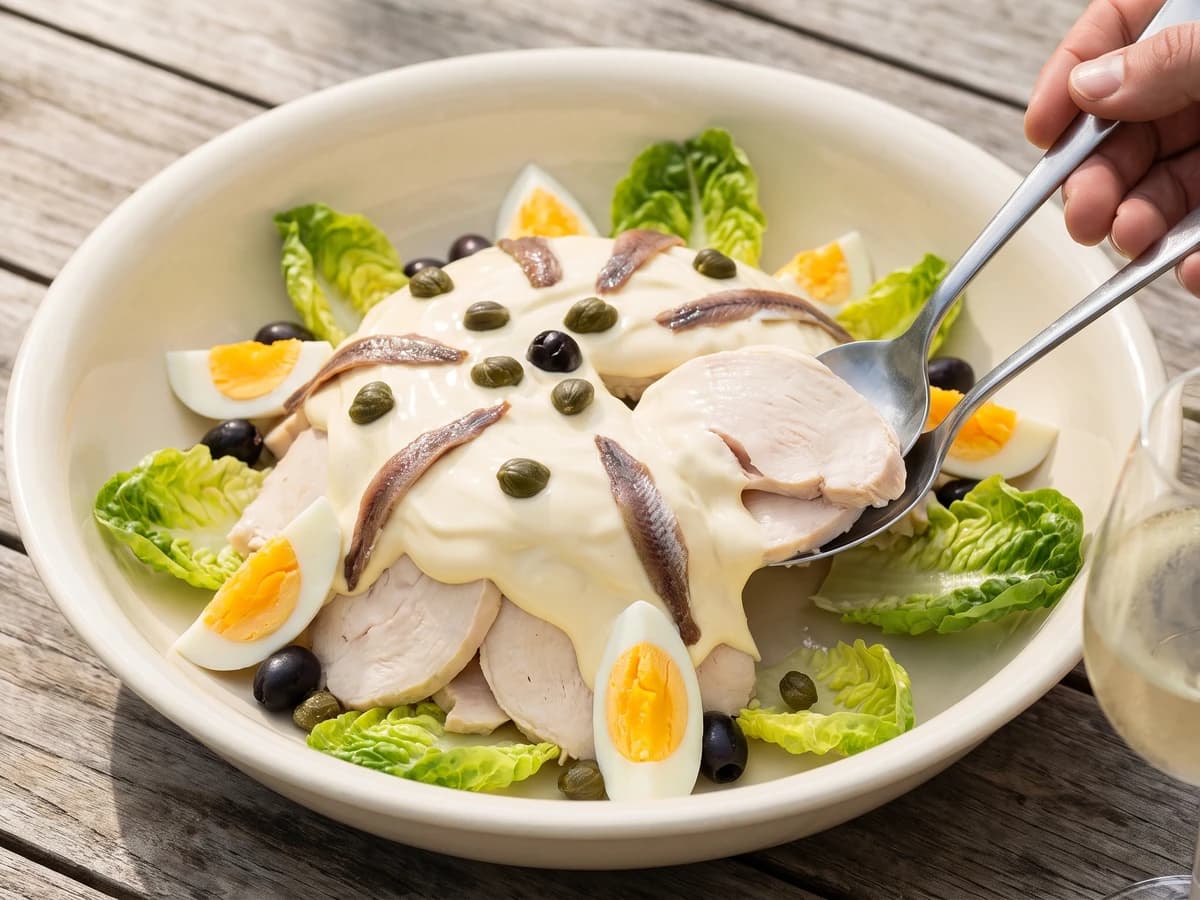
Cold roast chicken, ciseled lettuce, and a shining coat of homemade mayonnaise, arranged with capers, olives, anchovies, eggs, and lettuce hearts, then tossed at the table as the canon intends.
A cooking platform built around craft, culture, and the stories behind what we eat.
Created by Chef Juliette
Based on No. 363, Various Melons, from Le Guide Culinaire (1907) by Auguste Escoffier
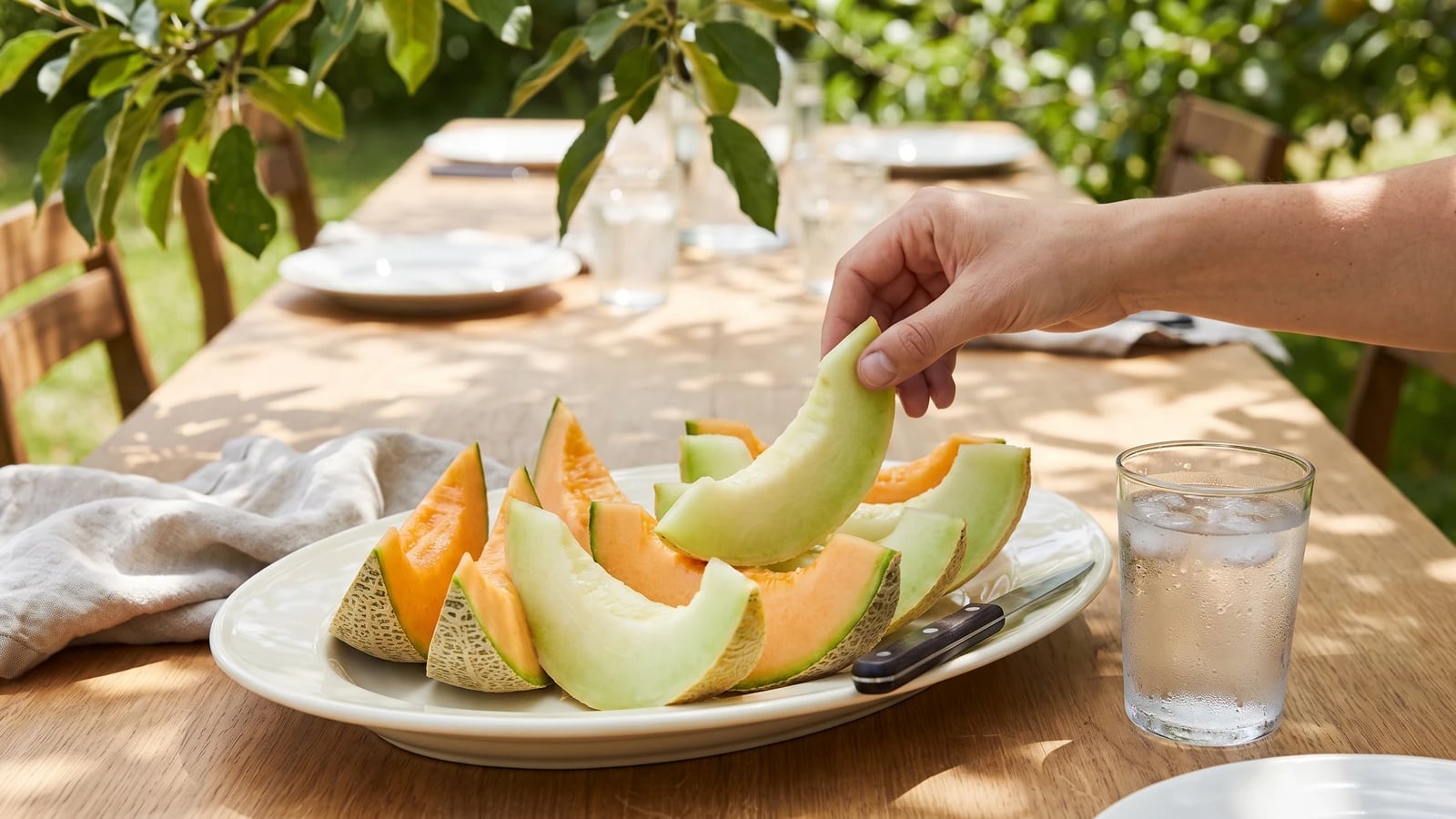
Melons Divers asks almost nothing and teaches everything about fruit service: choose several ripe, fragrant melons, chill them without numbing their perfume, then cut generous wedges and let each variety speak.
Melons divers (various melons) teaches the first rule of fruit service: ripeness is the preparation. When several melons arrive together, their differences become the pleasure, one honeyed, another musky, another almost floral. The variety is the note here, so no syrup, citrus, mint, or liqueur is invited to speak over it.
The source assumed access to the named cultivars of French market gardens and enough hands to chill and cut several fruits just before service. For one home table, three small melons feed four generously, and the refrigerator replaces the fruit room or ice chest. Sorting a grand display was brigade scaffolding and can go. Keeping several distinct varieties, serving them cold, and preserving their individual perfumes must stay. One cook, one stove, one evening, though the stove may remain cold.
Cut the melons into generous skin-on wedges rather than reducing them to anonymous cubes. Their flesh should look moist and saturated, their perfume should rise as the knife passes through, and each wedge should taste unmistakably of itself. Judge every melon before it is chilled; that is the one step that decides the dish.
Melons divers belongs to France's summer fruit service and records the named produce of its market gardens: Sucrin de Tours from Touraine, Saint-Laud associated with Angers, and Noir des Carmes, prized for its dark young rind and orange flesh. The entry is a market gardener's catalogue rather than a composed fruit salad, with every cultivar served as cantaloupe, opened and sliced without a unifying syrup. Its restraint corrects a common misconception: the classical canon did not always improve fruit by cooking it, and perfect ripeness was treated as a finished preparation.
Quantity
1 whole melon, about 1½ lb (700 g)
Quantity
1 whole melon, about 1½ lb (700 g)
Quantity
1 whole melon, about 1½ lb (700 g)
| Ingredient | Quantity |
|---|---|
| ripe Sucrin de Tours melon or small netted muskmelon | 1 whole melon, about 1½ lb (700 g) |
| ripe Saint-Laud melon or aromatic cantaloupe | 1 whole melon, about 1½ lb (700 g) |
| ripe Noir des Carmes melon or dark-rinded orange-fleshed muskmelon | 1 whole melon, about 1½ lb (700 g) |
Smell each melon at the stem scar and press the blossom end very gently. A ready melon feels heavy, carries a clear floral perfume, and yields just slightly without feeling soft. The varieties needn't smell identical, but each must smell alive. If a melon is hard and silent, leave it at room temperature and change tonight's plan; refrigeration preserves ripeness, it doesn't create it.
Refrigerate the ripe whole melons for about 2 hours. They should be thoroughly cool but still aromatic; if your refrigerator runs very cold, let them stand for 10 minutes before cutting. Fruit served numb tastes of water, while fruit merely cooled keeps its perfume.
Rinse and scrub each rind under cool running water, then dry it well so the knife doesn't carry anything from the surface into the flesh. Cut each melon from end to end and lift out the seeds and loose fibres with a spoon, taking care not to gouge away the sweetest flesh around the cavity.
Cut a narrow tasting piece from each melon before committing it to the platter. If one is pleasantly ripe but has lost its perfume through over-chilling, give it another 10 minutes at room temperature. If it proves firm and underripe after cutting, don't bury it in sugar or liqueur. Ça se rattrape: leave it off the platter, serve the two good melons generously, and reserve the firm one for a cooked compote.
Slice each half into 6 to 8 generous wedges, depending on its size, and leave the rind attached as a natural handle. Wipe the knife between varieties so their juices and perfumes remain distinct. This is the dish, not decorative fuss: ripe fruit, cold enough to refresh, cut cleanly enough to eat with pleasure.
Group the wedges by variety on a chilled platter, alternating their colours without tossing them together. Pour away any juice that collects before serving; if the platter begins to look watery, blot its bare surface and return it to the cold for 5 minutes. Bring it out at once and let everyone compare the melons for themselves. À table!
1 serving (about 270g)
Culinary guides, cultural storytelling, and the editorial depth that makes cooking meaningful.
Discover Culinary ExplorerChef Juliette
Cold roast chicken, ciseled lettuce, and a shining coat of homemade mayonnaise, arranged with capers, olives, anchovies, eggs, and lettuce hearts, then tossed at the table as the canon intends.

Chef Juliette
Cold roast or poached chicken with fine ribbons of lettuce, dressed at the final moment with oil and vinegar: a composed salad whose freshness depends entirely on timing.

Chef Juliette
Five leaves, one living rule: laitue, romaine, chicorée, mâche, or pissenlit must be washed, dried, and dressed only as they go to the table, while every leaf still carries its light vinaigrette.

Chef Juliette
Salade de Betteraves proves that baking, not boiling, is the whole argument: concentrated garnet sweetness, tender baked onion, sharp mustard, and herbs cut into a weeknight salad worth making ahead.