Chef Juliette
Mayonnaise de Volaille
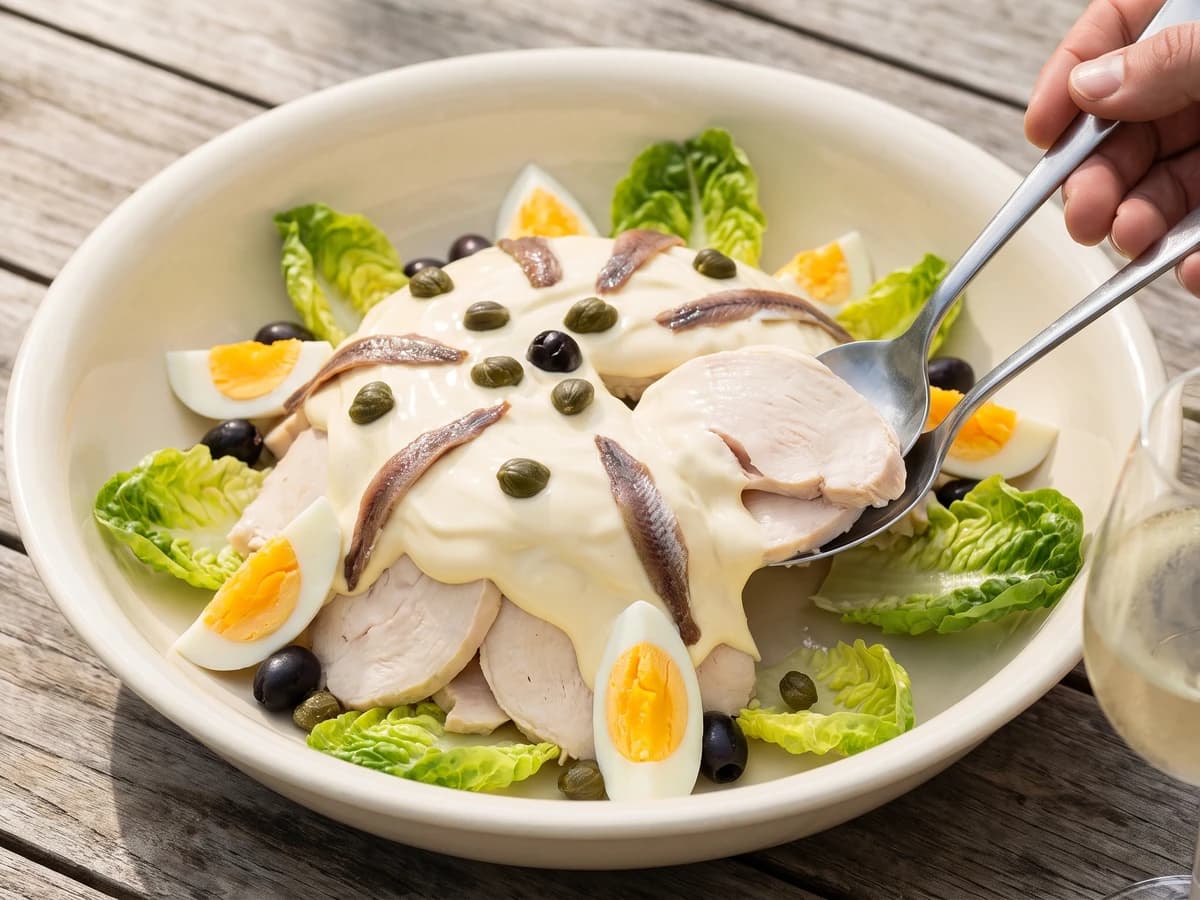
Cold roast chicken, ciseled lettuce, and a shining coat of homemade mayonnaise, arranged with capers, olives, anchovies, eggs, and lettuce hearts, then tossed at the table as the canon intends.
A cooking platform built around craft, culture, and the stories behind what we eat.
Created by Chef Juliette
Based on No. 362, Melon with Port, Marsala, or Sherry, etc., from Le Guide Culinaire (1907) by Auguste Escoffier
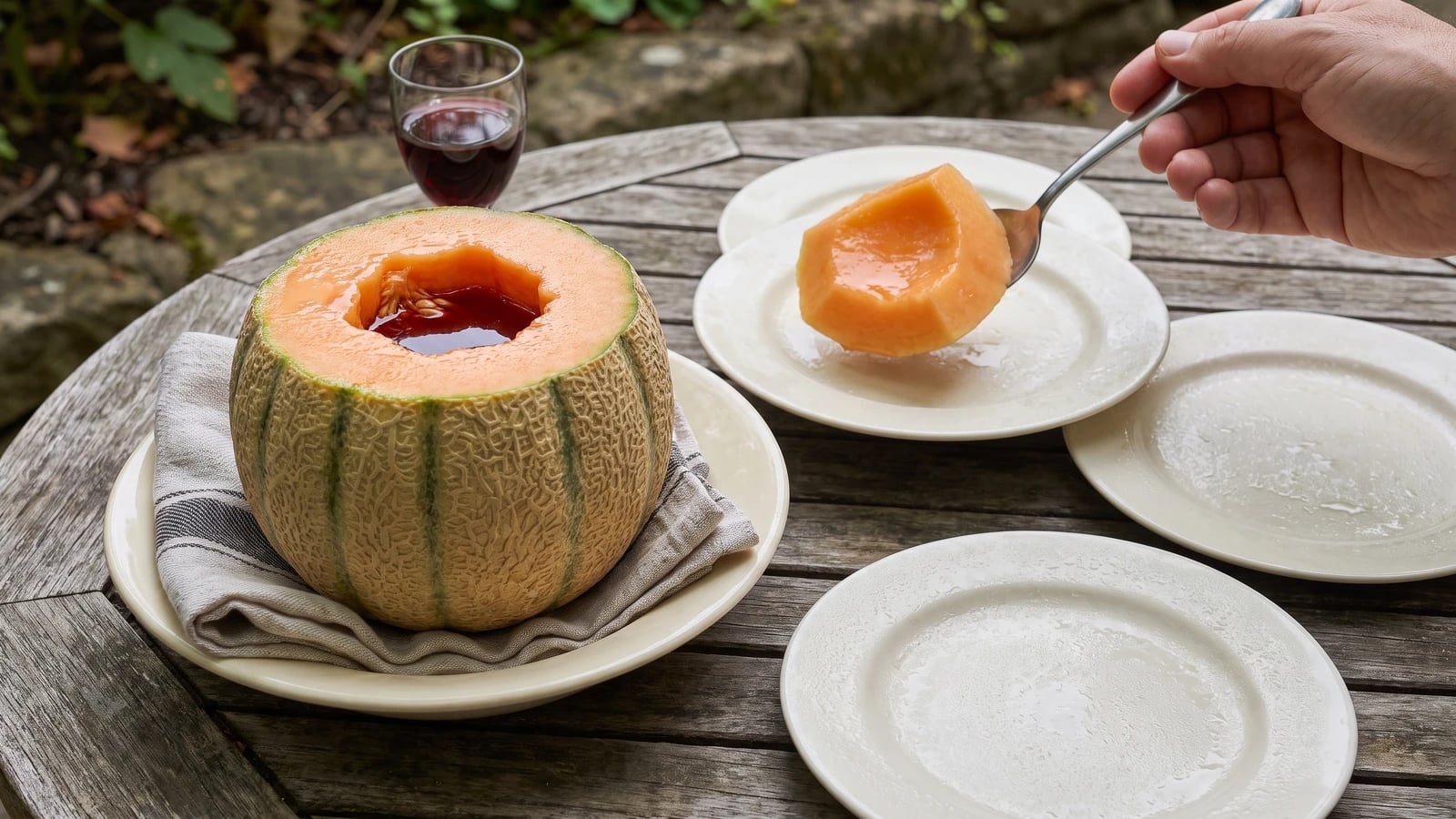
A whole just-ripe melon drinks in Port, Marsala, or Sherry as it chills, then comes to the table intact, ready to be opened and spooned into shell-like pieces with its fragrant wine.
Melon au Porto, au Marsala ou au Xérès (whole melon steeped with fortified wine) teaches the discipline of doing very little to very good fruit. Before the knife touches it, know the one true thing: wine perfumes ripeness, it does not create it. A just-ripe melon stays firm enough to spoon into curved pieces while its flesh drinks in the wine; an overripe one collapses, and no grand bottle can bully it back into shape.
The original entry assumed a cooler kept packed with broken ice, a silver spoon, and plates chilled for service. At home, the refrigerator replaces the ice-packed cooler, a sturdy stainless-steel spoon replaces silver without changing the taste, and four freezer-chilled plates do the dining-room work. Those details are service scaffolding. The round stalk plug, thoroughly emptied cavity, full half-pint of wine, two-to-three-hour chill, and whole tableside presentation are the dish, and they stay. One cook, no stove, one evening.
After its cold rest, the cap lifts to reveal salmon-colored flesh slicked with ruby, amber, or tawny wine, cool enough to bead the plates with condensation. Bring it whole and carve with the spoon at the table. Choose the melon by fragrance, weight, and the faintest give at the blossom end before you do anything else. That is the step that decides the dish.
Melon au Porto belongs to the French bourgeois and grand-hotel table rather than to a single province, where a fragrant Charentais-type cantaloupe could be chilled, carried in whole, and opened before the guests. The preparation traveled easily into home entertaining because its ceremony needs no brigade: cut a stalk cap, remove the seeds, fill the cavity with fortified wine, then spoon the fruit from its own shell. Though it is often mistaken for dessert abroad, melon at a French table commonly opens the meal, and Port, Marsala, or Xérès turns that first course toward the dining room rather than the market stall.
Quantity
1 large (about 3 lb / 1.4 kg)
washed and dried
Quantity
½ Imperial pint / 1¼ cups (285 ml / about 285 g)
Quantity
10 cups (2.4 L / about 1.5 kg)
only if using a cooler instead of a refrigerator
| Ingredient | Quantity |
|---|---|
| just-ripe Charentais-type cantaloupe or similar melonwashed and dried | 1 large (about 3 lb / 1.4 kg) |
| best Port, Marsala, or Sherry | ½ Imperial pint / 1¼ cups (285 ml / about 285 g) |
| broken or crushed ice (optional)only if using a cooler instead of a refrigerator | 10 cups (2.4 L / about 1.5 kg) |
Choose a melon that feels heavy, smells distinctly floral at the blossom end, and yields only slightly beneath a thumb. The rind must be sound, with no wet bruises or soft patches. Rinse it under cool running water, scrub the rind with a clean produce brush, and dry it thoroughly so the knife does not carry anything from the surface into the cavity. A hard, scentless melon will remain hard and scentless; an overripe one will slump under the wine. Save either for another preparation and begin this dish with fruit that is just ripe.
With a sharp paring knife, cut a round incision about 3 inches (7.5 cm) across around the stalk, angling the blade slightly inward so the piece will sit back like a stopper. Cut down to the seed cavity, withdraw the plug carefully, and keep it intact. Through the opening, use a sturdy stainless-steel spoon to remove every pip and strand of loose membrane. Scrape cleanly but do not gouge toward the rind; the flesh must remain thick enough to hold the wine.
Stand the melon upright in a snug bowl and slowly pour in the Port, Marsala, or Sherry. If the wine reaches the rim before the full measure is inside, wait five minutes, then top it up as the flesh begins to absorb a little; any final spoonful can be chilled separately and added halfway through the rest. Replace the stalk plug firmly. If a hidden nick in the rind begins to leak, ça se rattrape: keep the melon upright in its bowl, collect the escaped wine, and spoon that wine over the portions at the table.
Refrigerate the plugged melon upright in its bowl for two to three hours at 34 to 40°F (1 to 4°C). For a picnic cooler, surround it closely with the broken ice, keep the cooler drained so the melon does not float, and replenish the ice if needed. Chill four serving plates during the final twenty minutes. Do not leave the filled melon overnight; too long in the wine softens the flesh and buries its perfume.
Carry the melon to the table whole, still upright, and remove the stalk plug before the guests. Hold the cold fruit steady with a folded cloth and use the spoon to follow the curve of the rind, lifting broad, shell-like pieces rather than cutting conventional wedges. Divide the flesh among the iced plates and spoon a little of the accompanying wine over each serving. Serve at once. À table!
1 serving (about 250g)
Culinary guides, cultural storytelling, and the editorial depth that makes cooking meaningful.
Discover Culinary ExplorerChef Juliette
Cold roast chicken, ciseled lettuce, and a shining coat of homemade mayonnaise, arranged with capers, olives, anchovies, eggs, and lettuce hearts, then tossed at the table as the canon intends.

Chef Juliette
Cold roast or poached chicken with fine ribbons of lettuce, dressed at the final moment with oil and vinegar: a composed salad whose freshness depends entirely on timing.

Chef Juliette
Five leaves, one living rule: laitue, romaine, chicorée, mâche, or pissenlit must be washed, dried, and dressed only as they go to the table, while every leaf still carries its light vinaigrette.

Chef Juliette
Salade de Betteraves proves that baking, not boiling, is the whole argument: concentrated garnet sweetness, tender baked onion, sharp mustard, and herbs cut into a weeknight salad worth making ahead.