Chef Juliette
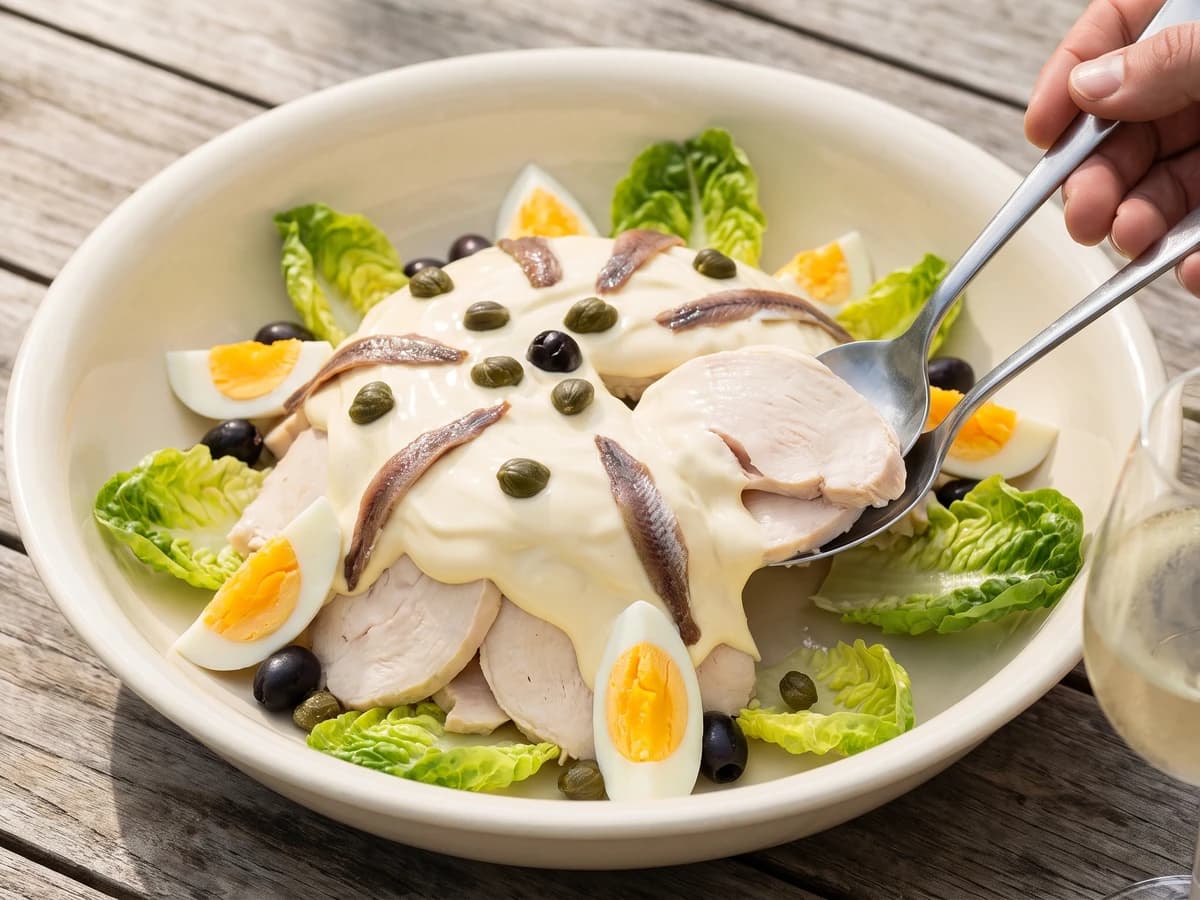
Mayonnaise de Volaille
Cold roast chicken, ciseled lettuce, and a shining coat of homemade mayonnaise, arranged with capers, olives, anchovies, eggs, and lettuce hearts, then tossed at the table as the canon intends.
A cooking platform built around craft, culture, and the stories behind what we eat.
Created by Chef Juliette
Based on No. 360, Cantaloup Melon, from Le Guide Culinaire (1907) by Auguste Escoffier
Melon cantaloup proves that selection is technique: catch the fruit at its perfumed moment, chill it without numbing it, then serve it plainly as the first course of a summer luncheon.
Melon cantaloup teaches selection, the rare technique completed before the knife touches the fruit. It must be just ripe, heavy in the hand, fragrant at the blossom end, and yielding only slightly beneath a thumb. There is nowhere for a disappointing melon to hide.
The original entry assumes neither a saucier nor a stockpot kept on the fire. It assumes something equally valuable: a buyer who recognizes ripe fruit, a cool larder, and service hands ready to cut it at the last moment. The home equivalent is one medium melon for four, chilled whole in the refrigerator and opened just before the plates go out. Bulk purchasing, ice beds, and perfect service trimming are brigade scaffolding and can go; ripeness and last-minute freshness are the dish and must stay. Only the scale and method of chilling have been supplied, because the source gives no quantity and adds no flavoring. One cook, no stove at all, one summer evening.
Judge the melon before cutting. If it is hard and mute, leave it whole at room temperature and choose another first course tonight; sugar cannot manufacture perfume after the knife falls. If the flesh proves a shade too tender for wedges, spoon it generously into cold bowls. Ça se rattrape. Catching the ripe moment is the one step that decides everything.
Melon served chilled as an hors-d’œuvre belongs to the French bourgeois summer luncheon table, where fruit could begin the meal rather than wait for dessert. Provence, especially Cavaillon, became France's great market name for small, fragrant cantaloup and Charentais melons, which passed naturally from market stalls into formal household and hotel service. Port, sugar, mint, and cured ham belong to distinct preparations; the canonical plain service is complete when the melon itself is excellent.
Quantity
1 medium, about 3 lb (1.35 kg)
| Ingredient | Quantity |
|---|---|
| ripe, perfumed cantaloupe melon | 1 medium, about 3 lb (1.35 kg) |
Hold the whole melon in both hands. It should feel heavy for its size, smell distinctly sweet at the blossom end, and yield there under gentle pressure without feeling soft. A rock-hard, odorless melon is not ready, so leave it whole at room temperature for a day or two and do not cut it. A melon with leaking spots, collapsed flesh, or a fermented smell has gone too far and should be discarded.
Refrigerate the ripe melon whole for about 2 hours. The cold should freshen the flesh without silencing its perfume. If it has spent all day in a very cold refrigerator, let it stand for 5 to 10 minutes before cutting; cool and fragrant is the mark, not numb.
Rinse the rind thoroughly under cool running water, rubbing its entire surface, then dry it with a clean towel. Set it on a clean board and use a clean knife. The rind is not eaten, but the blade passes through it into the flesh, so this small piece of discipline matters.
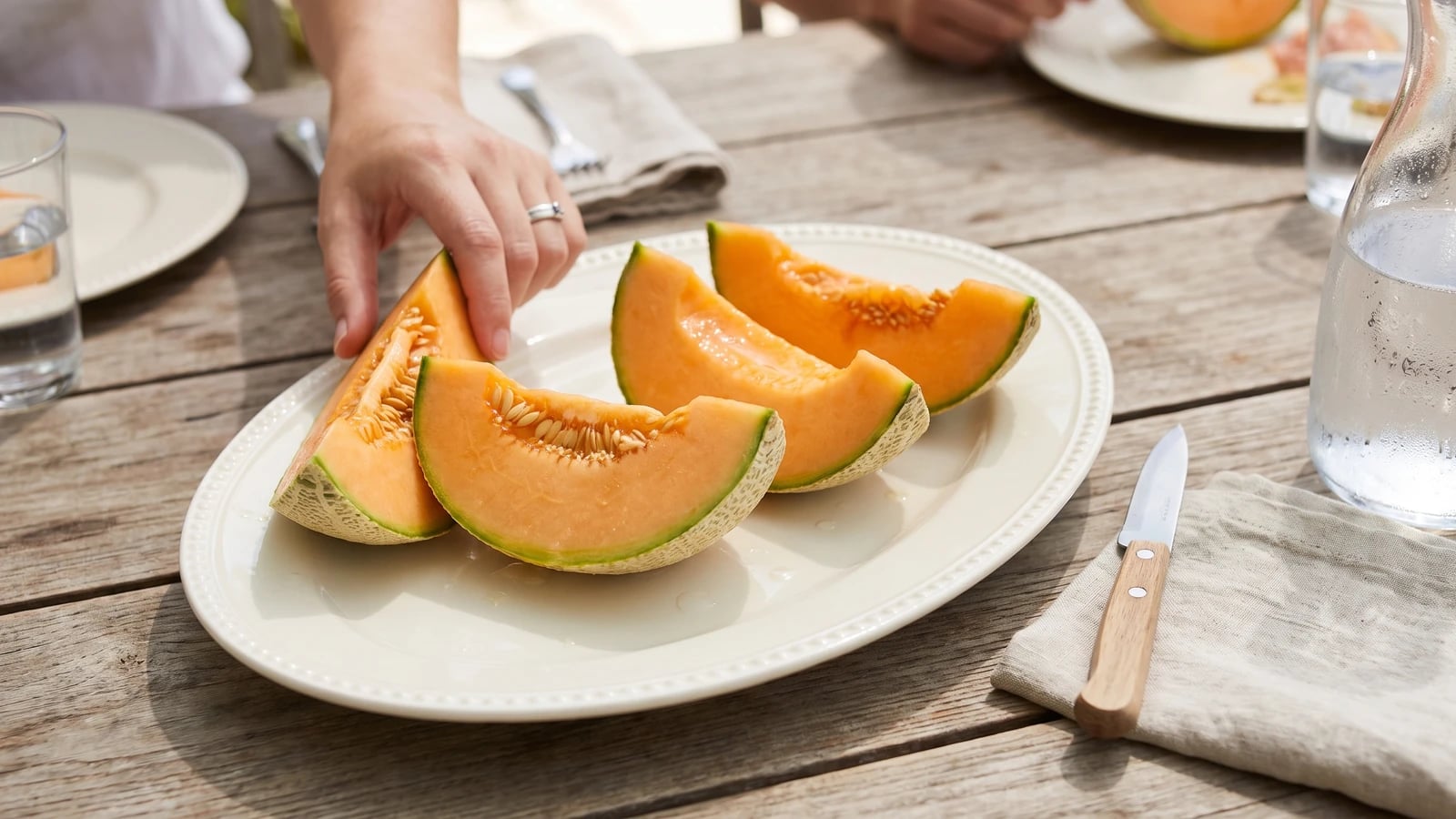
Cut the melon lengthwise through the stem and blossom ends. Scoop out the seeds and loose wet fibers with a large spoon, following the natural hollow without gouging away good flesh. Cut each half into two generous wedges, or divide the quarters again for eight narrower pieces. Keep the rind attached so each portion reaches the table intact. If the flesh is ripe but too soft to hold a clean wedge, scoop it into four chilled shallow bowls instead. Ça se rattrape.
Arrange one broad wedge or two narrow wedges on each cold plate, cut side upward, and serve immediately. Add nothing. The fragrance, cold flesh, and accumulated juice in the seed hollow are the whole preparation. À table!
1 serving (about 170g)
Culinary guides, cultural storytelling, and the editorial depth that makes cooking meaningful.
Discover Culinary ExplorerChef Juliette
Cold roast chicken, ciseled lettuce, and a shining coat of homemade mayonnaise, arranged with capers, olives, anchovies, eggs, and lettuce hearts, then tossed at the table as the canon intends.

Chef Juliette
Cold roast or poached chicken with fine ribbons of lettuce, dressed at the final moment with oil and vinegar: a composed salad whose freshness depends entirely on timing.

Chef Juliette
Five leaves, one living rule: laitue, romaine, chicorée, mâche, or pissenlit must be washed, dried, and dressed only as they go to the table, while every leaf still carries its light vinaigrette.

Chef Juliette
Salade de Betteraves proves that baking, not boiling, is the whole argument: concentrated garnet sweetness, tender baked onion, sharp mustard, and herbs cut into a weeknight salad worth making ahead.