Chef Juliette
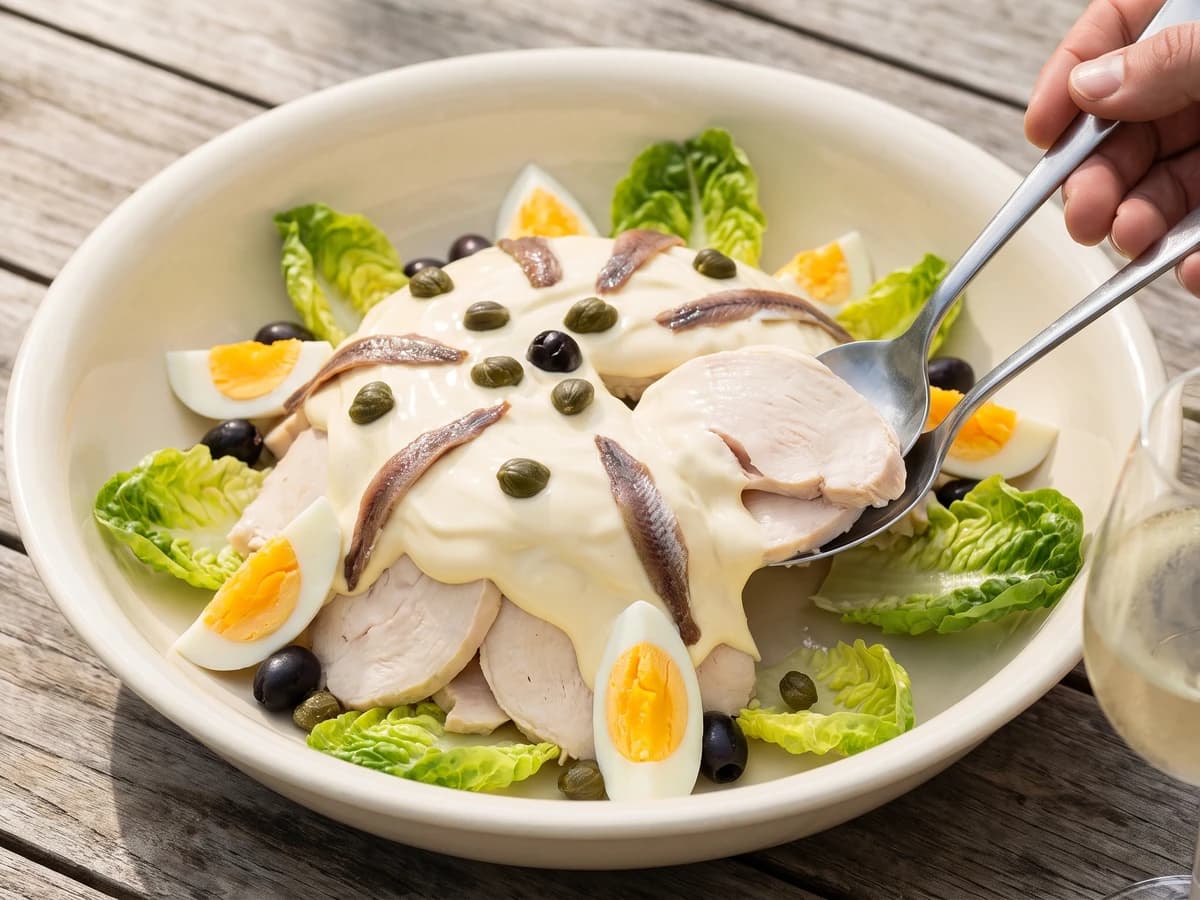
Mayonnaise de Volaille
Cold roast chicken, ciseled lettuce, and a shining coat of homemade mayonnaise, arranged with capers, olives, anchovies, eggs, and lettuce hearts, then tossed at the table as the canon intends.
A cooking platform built around craft, culture, and the stories behind what we eat.
Created by Chef Juliette
Based on No. 348, Fresh Figs, from Le Guide Culinaire (1907) by Auguste Escoffier
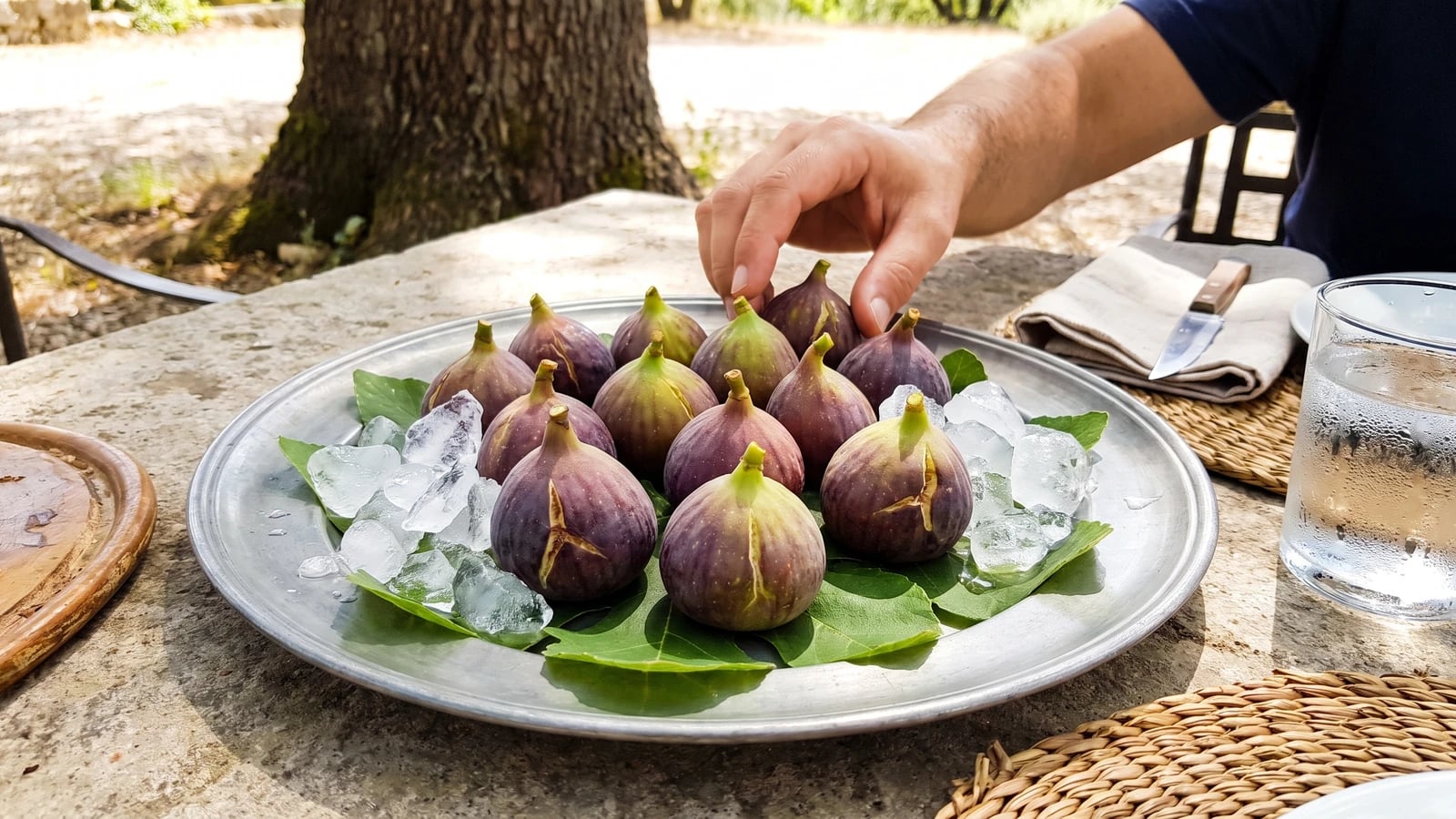
Perfect summer figs, chilled but never drowned, laid over vivid leaves and banked with broken ice: a classical hors-d'oeuvre proving that restraint is a technique, not an absence of one.
Figues Fraîches (fresh figs) teach restraint. The one true thing to know before touching a pan is that there is no pan: heat, dressing, and clever additions would only obscure fruit that is already complete. A fig will not improve meaningfully after picking, so choose one that yields gently at the neck, smells faintly of honey, and feels heavy without leaking.
Unlike a sauce dish, the original entry assumed no saucier, stockpot, or salamander. Its professional luxury was cold service: a well-supplied ice chest, a cold larder, and enough hands to arrange the fruit just before it entered the dining room. The home equivalent is a chilled rimmed platter and ordinary ice cracked inside a towel. Exact decorative geometry was brigade scaffolding and can go; the green leaf bed, whole ripe fruit, and bank of broken ice are the dish and must stay. Because the entry gave no quantity, this version sets three figs per person, enough for four without inventing another flavor.
When it is right, the leaves stay vivid, the ice remains angular, and the figs sit cool and fragrant above the meltwater rather than soaking in it. The step that decides everything comes before the arranging: choose the figs carefully, because no technique can rescue fruit picked too soon.
Figues fraîches belong most naturally to Mediterranean France, especially Provence and Roussillon, where generations of cooks have served ripe figs quickly because the delicate fruit travels poorly and does not improve once picked. Their leaf-and-ice presentation belongs to formal French fruit service, which treated perfect raw produce as a complete hors-d'oeuvre and used broken ice for both preservation and display. Despite its salad classification, this is not a dressed fruit salad: the green leaves form a cold bed, and the whole fig supplies every flavor.
Quantity
12 (about 1⅓ lb / 600 g)
stems intact
Quantity
8 large leaves
washed and dried completely
Quantity
4 cups (1 L / about 600 g), plus more if needed
| Ingredient | Quantity |
|---|---|
| perfectly ripe fresh figsstems intact | 12 (about 1⅓ lb / 600 g) |
| very green food-safe grape leaves or broad lettuce leaveswashed and dried completely | 8 large leaves |
| broken ice made from drinking water | 4 cups (1 L / about 600 g), plus more if needed |
Examine each fig before chilling it. The skin should be richly colored and intact, perhaps with fine natural cracks, while the neck gives gently beneath a fingertip and the fruit carries a light honeyed scent. Reject any fig that is hard, sour-smelling, fermented, or leaking. An underripe fig cannot be corrected here; save it for a cooked preparation and choose another for this platter.
Rinse the figs briefly under cold running water only if needed, then dry them immediately and completely with a soft towel. Never soak them; their skins drink water and quickly turn dull. Arrange them in one layer in the refrigerator with the platter and chill for 30 minutes. They should be cool through, not frozen or numbed by hours of excessive cold.
Wrap the ice in a clean kitchen towel and strike it firmly with a rolling pin until most pieces are between hazelnut and walnut size. Large cubes look clumsy and leave the fruit unevenly chilled; ice crushed to snow melts too quickly. Keep the broken ice in a colander or perforated bowl so loose water drains away before it reaches the platter.
Overlap the very green leaves across the chilled platter, covering its base while keeping their tips visible around the edge. Stand the figs on the leaves with their stems upward, leaving a little breathing room between them, then bank the broken ice around the outer edge. The ice should surround the fruit, exactly as the source directs, but never bury it or leave it sitting in water. If the ice melts before service, ça se rattrape: lift the figs onto a dry plate, pour off the water, dry the leaf bed, and add fresh broken ice.
Serve the platter immediately, while the ice is still angular and the fruit remains fragrant. A natural split in a perfectly ripe fig is not a failure; turn it upward, where its garnet interior can be seen, and serve that fig first. Give each guest a small fruit knife and a napkin, and make clear that the leaves are a bed rather than part of the salad. Three figs per person make a generous summer hors-d'oeuvre. À table!
1 serving (about 150g)
Culinary guides, cultural storytelling, and the editorial depth that makes cooking meaningful.
Discover Culinary ExplorerChef Juliette
Cold roast chicken, ciseled lettuce, and a shining coat of homemade mayonnaise, arranged with capers, olives, anchovies, eggs, and lettuce hearts, then tossed at the table as the canon intends.

Chef Juliette
Cold roast or poached chicken with fine ribbons of lettuce, dressed at the final moment with oil and vinegar: a composed salad whose freshness depends entirely on timing.

Chef Juliette
Five leaves, one living rule: laitue, romaine, chicorée, mâche, or pissenlit must be washed, dried, and dressed only as they go to the table, while every leaf still carries its light vinaigrette.

Chef Juliette
Salade de Betteraves proves that baking, not boiling, is the whole argument: concentrated garnet sweetness, tender baked onion, sharp mustard, and herbs cut into a weeknight salad worth making ahead.