Chef Juliette
Mayonnaise de Volaille
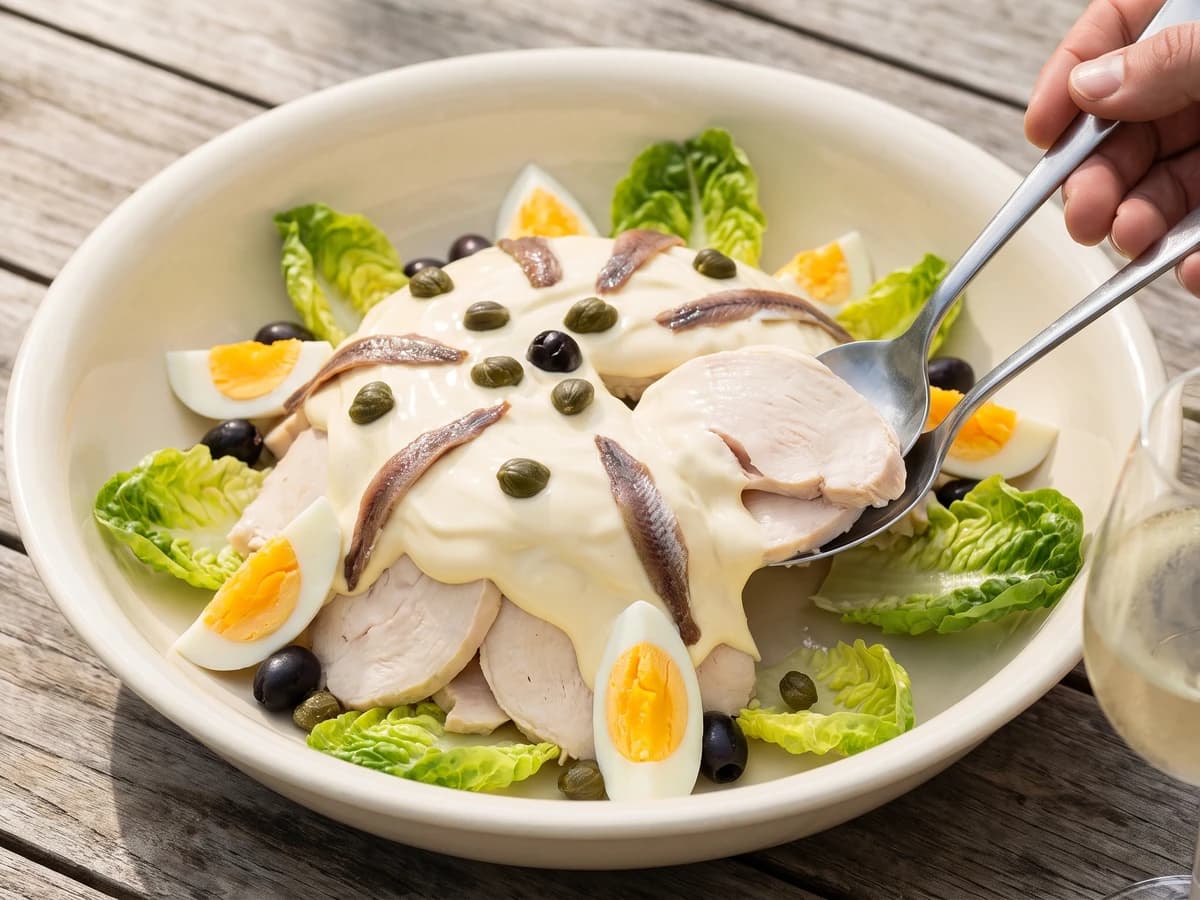
Cold roast chicken, ciseled lettuce, and a shining coat of homemade mayonnaise, arranged with capers, olives, anchovies, eggs, and lettuce hearts, then tossed at the table as the canon intends.
A cooking platform built around craft, culture, and the stories behind what we eat.
Created by Chef Juliette
Based on No. 331, Cucumber Salad, from Le Guide Culinaire (1907) by Auguste Escoffier
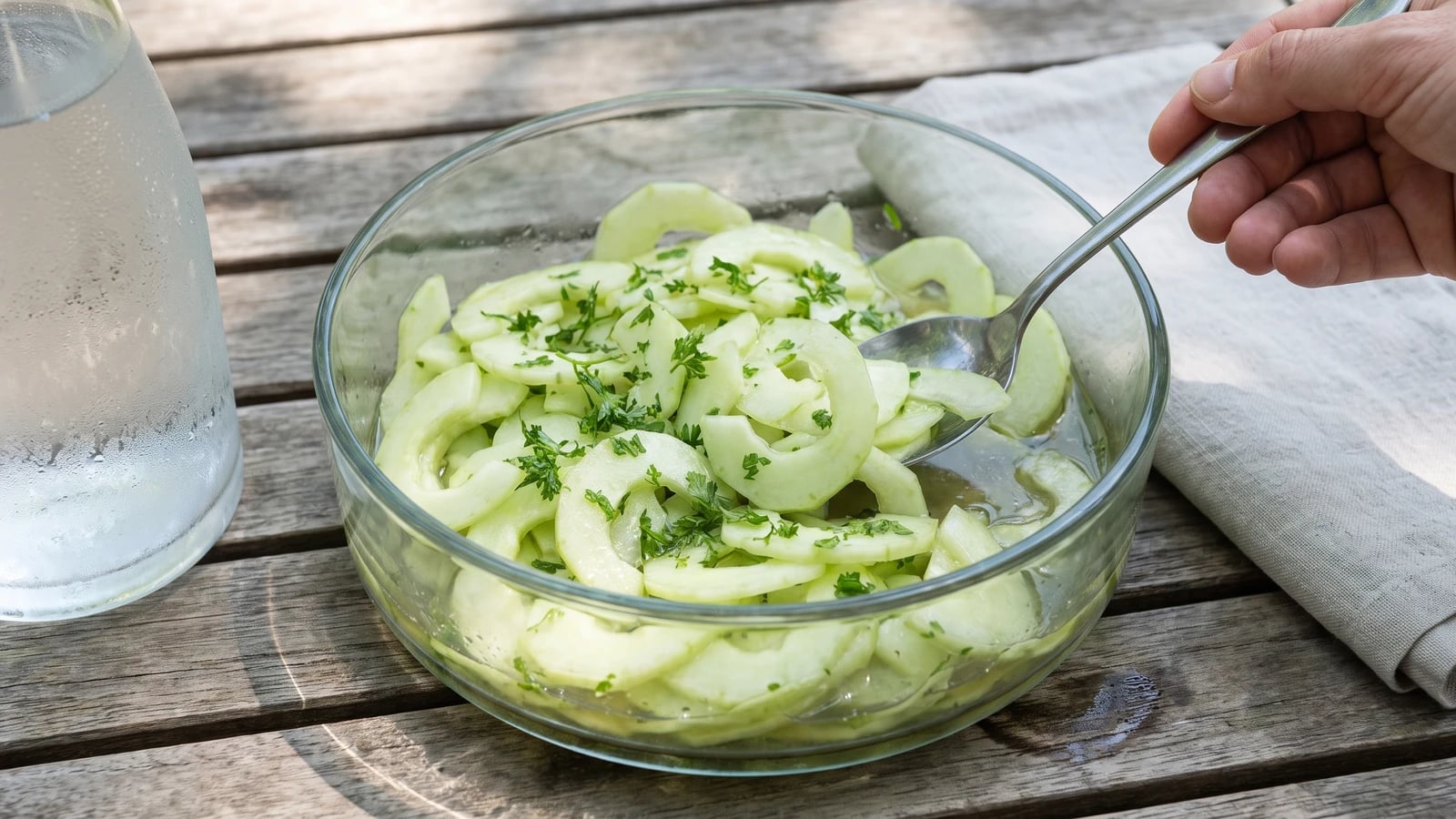
Salade de concombres proves that salting is not busywork: press away the cucumber’s excess water, then dress it with oil, vinegar, pepper, and chervil for clean crunch.
Salade de concombres teaches dégorgement (drawing out moisture with salt), a small technique that opens the door to better raw vegetable salads across the French canon. There is no pan to touch here, but before you lift the knife, know the one true thing: cucumber must lose its excess water before it meets the dressing, or it will dilute its own seasoning.
The source assumes the rhythm of a professional kitchen, not a saucier on staff, a stockpot never off the fire, or a salamander, but spare hands to peel, seed, salt, wait, and wring the cucumbers in linen at precisely the right moment. At home, two large cucumbers, one bowl, and a clean towel do the same work for four. Only the scale and ordinary tools have changed; the peeling, seeding, twenty-five-minute salting, and pressing remain because those steps are the dish, not brigade scaffolding.
When it is right, the cucumber stays crisp beneath the teeth while a bright vinaigrette and the faint anise note of chervil cling to every pale-green slice. Nothing watery, nothing heavy. The step that decides it is the press: remove enough moisture for the dressing to hold, but leave the cucumber crisp.
Salade de concombres belongs to Parisian cuisine bourgeoise and to the disciplined French household table, where watery vegetables were routinely dégorged before service. The method traveled from domestic kitchens into the codified dining-room repertoire without acquiring extra ornament: cucumber, salt, oil, vinegar, pepper, and chervil remained sufficient. The salt is not chiefly there to correct bitterness, as is sometimes claimed; its essential work is controlling water so the vinaigrette stays properly seasoned.
Quantity
2 large (about 3½ cups / 700 g sliced before salting)
peeled, halved, seeded, and very finely sliced
Quantity
2 teaspoons (10 ml / 12 g)
Quantity
¼ teaspoon (1.25 ml / 0.6 g)
Quantity
3 tablespoons (45 ml / 41 g)
Quantity
1 tablespoon (15 ml / 15 g)
Quantity
2 tablespoons (30 ml / 4 g), loosely packed
finely chopped
| Ingredient | Quantity |
|---|---|
| large field cucumberspeeled, halved, seeded, and very finely sliced | 2 large (about 3½ cups / 700 g sliced before salting) |
| fine table salt | 2 teaspoons (10 ml / 12 g) |
| freshly ground black pepper | ¼ teaspoon (1.25 ml / 0.6 g) |
| mild sunflower oil | 3 tablespoons (45 ml / 41 g) |
| white wine vinegar | 1 tablespoon (15 ml / 15 g) |
| fresh chervilfinely chopped | 2 tablespoons (30 ml / 4 g), loosely packed |
Peel the cucumbers completely and trim the ends. Halve them lengthwise, then scrape out every seed and the soft surrounding pulp with a sturdy teaspoon. Set each half cut-side down and slice it crosswise as finely as you comfortably can, about 2 mm thick. Even slices lose their water at the same rate and remain pleasantly crisp; thick and thin pieces mixed together do neither.
Put the sliced cucumber in a large bowl, sprinkle the table salt evenly over it, and toss thoroughly with clean hands. Leave it for exactly twenty-five minutes. The cucumber will soften slightly and release a surprising puddle of clear liquid. Do not shorten this wait: dégorgement is not preparation around the salad, it is the technique that keeps the finished vinaigrette from becoming cucumber water.
Tip the cucumber into a colander and let the loose liquid drain away. Spread it over the center of a clean, smooth-weave kitchen towel, gather the corners, and press firmly over the sink until no more than an occasional drop escapes. Do not grind or twist so fiercely that the slices break. Taste one now; if it is aggressively salty, rinse the cucumber under cold water for only a few seconds, then press it dry again. Ça se rattrape.
Wipe the bowl dry and return the pressed cucumber to it. Add the pepper first, then the oil, and toss until every slice wears a fine sheen. Add the vinegar and chopped chervil, then toss again until the oil and vinegar cling as a light vinaigrette with no watery pool beneath. Taste before adding anything else; the salt carried by the cucumber should season the whole salad.
Serve the salade de concombres at once, or cover and chill it for no more than thirty minutes before giving it one final toss. If liquid gathers at the bottom, the cucumber was not pressed quite far enough; drain the bowl, press the slices once more, and toss them again with a teaspoon of oil and a few drops of vinegar. Bring it to the table cold and bright. À table!
1 serving (about 160g)
Culinary guides, cultural storytelling, and the editorial depth that makes cooking meaningful.
Discover Culinary ExplorerChef Juliette
Cold roast chicken, ciseled lettuce, and a shining coat of homemade mayonnaise, arranged with capers, olives, anchovies, eggs, and lettuce hearts, then tossed at the table as the canon intends.

Chef Juliette
Cold roast or poached chicken with fine ribbons of lettuce, dressed at the final moment with oil and vinegar: a composed salad whose freshness depends entirely on timing.

Chef Juliette
Five leaves, one living rule: laitue, romaine, chicorée, mâche, or pissenlit must be washed, dried, and dressed only as they go to the table, while every leaf still carries its light vinaigrette.

Chef Juliette
Salade de Betteraves proves that baking, not boiling, is the whole argument: concentrated garnet sweetness, tender baked onion, sharp mustard, and herbs cut into a weeknight salad worth making ahead.