
Chef Juliette
Various Almond Preparations
Five almond preparations, one discipline: remove the skins cleanly, dry every kernel through, then cut, toast, or cloak it in pale caramel without letting its fragrant oils escape.
A cooking platform built around craft, culture, and the stories behind what we eat.
Created by Chef Juliette
Based on No. 2900, Bombe Santiago, from Le Guide Culinaire (1907) by Auguste Escoffier
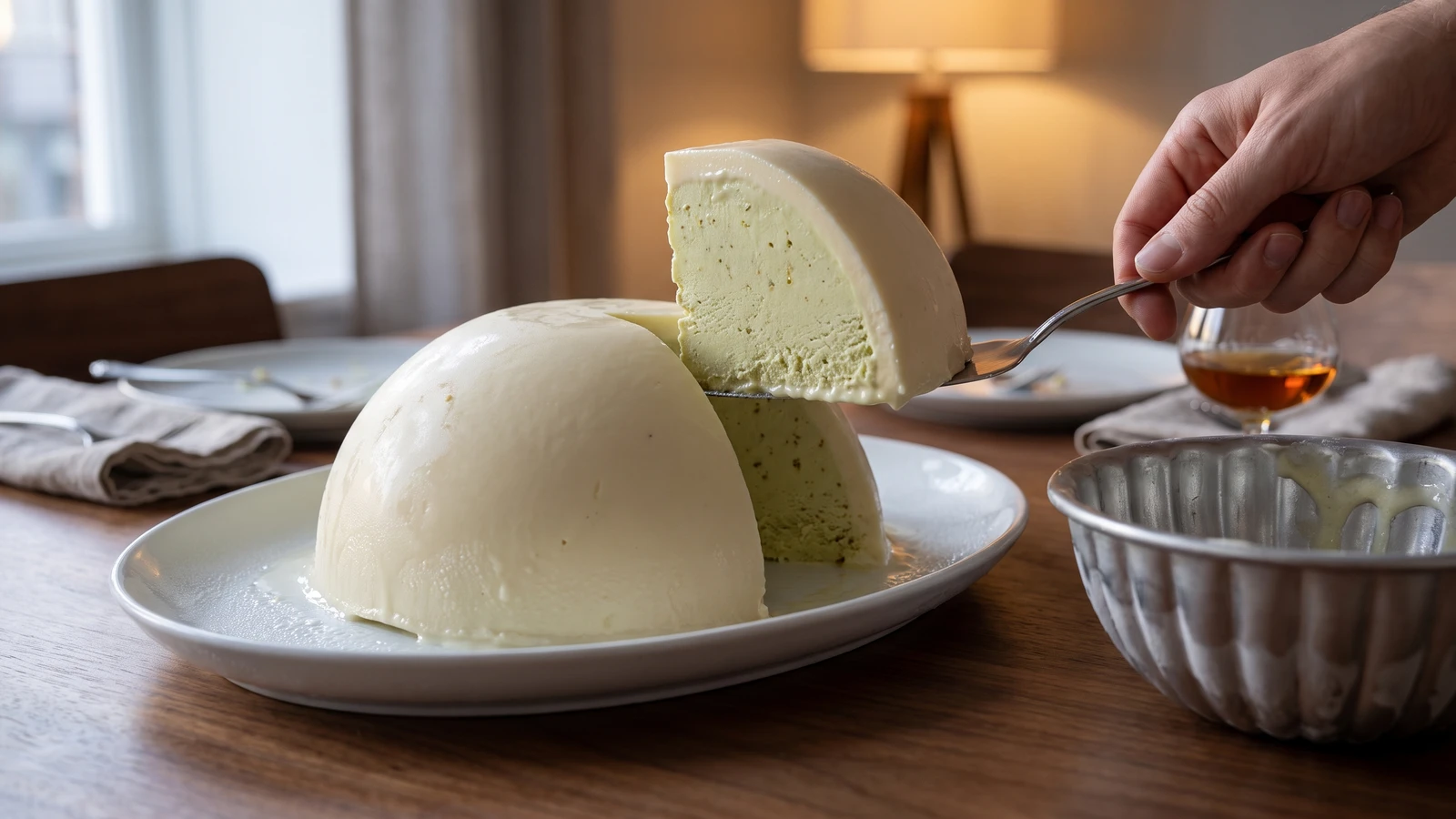
A cold lesson in structure: Cognac-scented ice forms the clean outer shell, pistachio pâte à bombe makes the silken heart, and three patient hours in the freezer let both release in one handsome slice.
Bombe Santiago (a moulded Cognac ice with pistachio cream) teaches the first law of frozen desserts: cold is not merely storage, it is structure. The shell must be firm enough to hold a clean curve, while the filling must stay supple enough to slice. Its centre is pâte à bombe, an egg-yolk foam cooked with hot syrup, then folded with pure pistachio and whipped cream. Alcohol lowers the freezing point of the outer ice, so measure the Cognac with the same care you give the syrup.
The original recipe assumed a dedicated ice station, prepared bases, and a bombe mould buried in salted broken ice. For one cook, one stove, one evening, the salted-ice packing and brigade quantity are scaffolding, so they go; a 1.5 litre metal mould, a countertop ice-cream machine, and the coldest part of a home freezer do the same work cleanly. What stays is the dish itself: Brandy ice outside, pistachio Bombe-preparation within, each frozen separately enough to keep its character.
Cut it and you should see an ivory ring around a pale pistachio centre, with no gaps and no puddling at the edge. The one step that decides that slice is clothing the mould evenly while the Brandy ice is spreadable but no longer flowing. Get that shell cold and level before the filling goes in; the rest is patient packing.
Bombes glacées belong to the Parisian classical repertoire, their rounded metal moulds giving the dessert its name and their layers set by packing the vessel in salted ice. Santiago is the canon's specific composition of a Brandy ice lining around pistachio Bombe-preparation; the name identifies that pairing, not a version of Galicia's almond tarta de Santiago. The form moved readily from formal dining rooms to home freezers because its logic survives scaling: a firmer outer ice, a richer centre, and enough cold to turn both out as one.
Quantity
about 2 cups (480 ml / 450 g) (No. 916)
Quantity
1 cup (240 ml / 245 g)
Quantity
½ cup (120 ml / 120 g)
Quantity
⅓ cup plus 1 tablespoon (95 ml / 80 g)
Quantity
3
Quantity
⅛ teaspoon (0.6 ml / 0.7 g)
Quantity
¼ cup (60 ml / 57 g)
Quantity
about 3¾ cups (900 ml / 670 g)
Quantity
4
at room temperature
Quantity
½ cup (120 ml / 100 g)
Quantity
¼ cup (60 ml / 60 g)
divided, with 1 tablespoon reserved
Quantity
½ cup (120 ml / 125 g)
Quantity
1½ cups (360 ml / 360 g)
well chilled
Quantity
⅛ teaspoon (0.6 ml / 0.7 g)
| Ingredient | Quantity |
|---|---|
| Brandy ice component, made from the ingredients below and used to clothe the mould by Another Method of Preparing Aspics de Filets de Soles | about 2 cups (480 ml / 450 g) (No. 916) |
| whole milk | 1 cup (240 ml / 245 g) |
| heavy cream | ½ cup (120 ml / 120 g) |
| granulated sugar | ⅓ cup plus 1 tablespoon (95 ml / 80 g) |
| large egg yolks | 3 |
| fine sea salt | ⅛ teaspoon (0.6 ml / 0.7 g) |
| Cognac | ¼ cup (60 ml / 57 g) |
| pistachio Bombe-preparation component, made from the ingredients below | about 3¾ cups (900 ml / 670 g) |
| large egg yolksat room temperature | 4 |
| granulated sugar | ½ cup (120 ml / 100 g) |
| waterdivided, with 1 tablespoon reserved | ¼ cup (60 ml / 60 g) |
| unsweetened pure pistachio paste | ½ cup (120 ml / 125 g) |
| heavy creamwell chilled | 1½ cups (360 ml / 360 g) |
| fine sea salt | ⅛ teaspoon (0.6 ml / 0.7 g) |
Put a 1.5 litre metal bombe mould or stainless-steel bowl in the coldest part of the freezer, ideally at 0°F or -18°C, for at least 30 minutes. Chill a small offset spatula or sturdy spoon beside it. Metal takes the cold quickly and releases cleanly; glass insulates, which makes the shell slow to set and awkward to unmould.
Warm the milk, cream, half the sugar, and the salt in a small heavy saucepan until small bubbles gather at the edge. Whisk the 3 yolks with the remaining sugar, pour in a third of the hot dairy while whisking, then return everything to the pan. Stir constantly over gentle heat until the custard reaches 174°F to 180°F or 79°C to 82°C and nappes the spoon, meaning it leaves a clean line when you draw a finger through it. If the first fine grains appear, remove it from the heat, whisk hard, and pass it through a fine sieve. Do not let it boil. Cool the custard over an ice bath, stir in the Cognac only when it is cold, then cover and chill for 1 hour.
Churn the cold Brandy ice base according to your machine's directions until it is dense, smooth, and able to hold the furrows made by the paddle, usually 20 to 25 minutes. It will remain softer than ordinary ice cream because of the Cognac. If it still flows instead of mounding, spread it in a shallow metal pan and freeze for 15 to 20 minutes, stirring once halfway through, until it becomes spreadable.
Use the clothing principle from Another Method of Preparing Aspics de Filets de Soles (No. 916). The fish preparation is not part of this dessert; the shared grammar is coating a cold mould evenly. Working quickly, press the Brandy ice over the bottom and sides of the frozen mould with the chilled spoon or spatula, making a continuous layer ¼ inch to ⅜ inch or 6 to 8 mm thick. Inspect the rim and base for thin patches, then freeze the shell for 45 minutes. If the ice slides or exposes a bald patch, stop and return both mould and remaining ice to the freezer for 10 minutes before patching it. Ça se rattrape.
Begin whisking the 4 yolks at low speed. Put the sugar and 3 tablespoons (45 ml / 45 g) of the water in a small saucepan, leaving the final tablespoon in reserve, and boil without stirring until the syrup reaches 244°F to 248°F or 118°C to 120°C. If crystals form on the pan wall, cover it for 30 seconds so condensation dissolves them; if they remain, remove the pan from the heat, add the reserved water, dissolve the sugar completely, and resume cooking. Pour the hot syrup in a thin thread between the whisk and the bowl while beating continuously, then increase the speed and whisk until the pâte à bombe is pale, thick, and cool enough that the bowl no longer feels warm, about 7 minutes.
Beat the pistachio paste and salt into the pâte à bombe until the colour is even. Whip the cold cream to soft peaks in a separate bowl. The pistachio mixture must be below 75°F or 24°C before the cream enters; if it is warmer, set the bowl over ice and whisk until cool, because warmth melts the cream and makes the filling heavy. Fold in one-third of the whipped cream to loosen the base, then fold in the remainder with broad strokes until no white streaks remain.
Confirm that the Brandy ice shell is firm, then spoon in the pistachio Bombe-preparation a little at a time, pressing it gently against the sides so no air pockets remain. Fill the mould to the rim, level the surface, press parchment directly against it, and cover tightly with the lid or foil. Set it in the coldest part of the freezer for a full 3 hours at minimum; 6 hours or overnight gives the cleanest slices. This long freeze is part of the dish, not brigade scaffolding. The alcohol-softened shell and rich centre need time to set together.
Chill the serving platter for 20 minutes. Remove the covering, wrap the mould in a warm damp towel for 5 seconds, then invert it over the platter and lift straight upward. If it holds, repeat the towel for another 3 seconds rather than forcing it. If the shell begins to shine or soften, return the covered mould to the freezer for 15 minutes and try again. Cut with a knife dipped in warm water and wiped completely dry between slices. Serve at once. À table!
1 serving (about 140g)
Culinary guides, cultural storytelling, and the editorial depth that makes cooking meaningful.
Discover Culinary ExplorerChef Juliette
Five almond preparations, one discipline: remove the skins cleanly, dry every kernel through, then cut, toast, or cloak it in pale caramel without letting its fragrant oils escape.

Chef Juliette
A pastry pantry lesson in one tray: filberts warmed only until their red skins release, rubbed clean, cooled, and chopped into a fragrant mise-en-place for cakes, creams, pralines, and petits fours.

Chef Juliette
The smallest pâtisserie discipline decides whether a cake leaves its mould intact: clarified butter in every corner, followed by the lightest veil of dry flour or fécule.

Chef Juliette
Four whites, one spotless bowl, and a patient change of speed: whisk gently until loosened, then briskly to glossy stiffness, with powdered sugar waiting if the foam begins to granulate.