
Chef Juliette
Various Almond Preparations
Five almond preparations, one discipline: remove the skins cleanly, dry every kernel through, then cut, toast, or cloak it in pale caramel without letting its fragrant oils escape.
A cooking platform built around craft, culture, and the stories behind what we eat.
Created by Chef Juliette
Based on No. 2898, Bombe Rosette, from Le Guide Culinaire (1907) by Auguste Escoffier
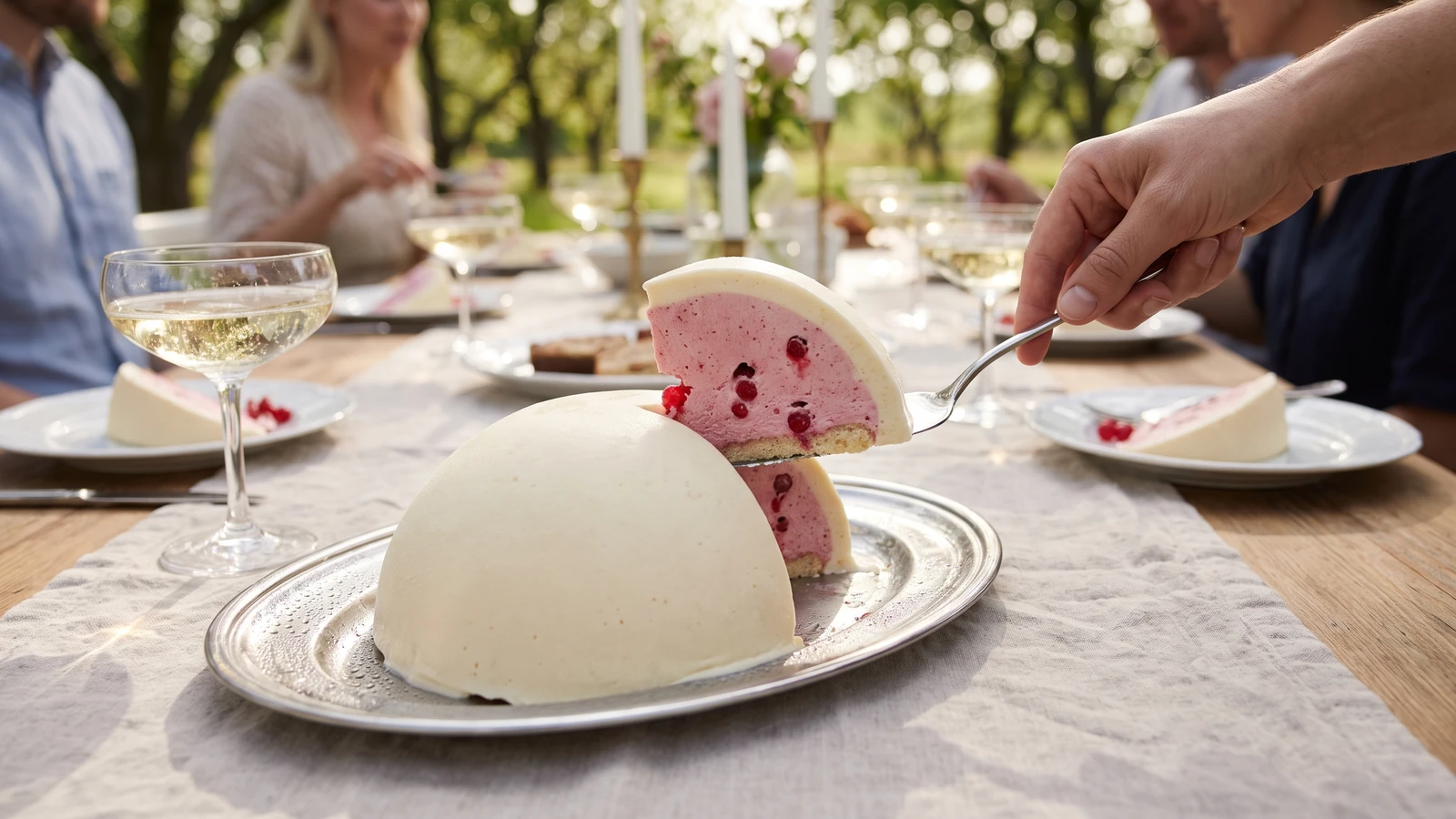
Bombe Rosette hides red-currant Chantilly and whole scarlet berries beneath a smooth vanilla shell, a frozen celebration whose success rests on cold fruit, an even lining, and a gentle fold.
Bombe Rosette (a vanilla ice-cream shell filled with red-currant Chantilly, sweetened whipped cream) teaches temperature discipline. The vanilla shell must be frozen hard before the filling enters, and the currants must stay cold, dry, and whole. Lose either condition and the clean layers blur.
The original recipe assumed a pastry station with vanilla ice cream ready, metal bombe moulds waiting, and freezing equipment made for continuous service. Your honest equivalent is dense vanilla ice cream, a stainless-steel bowl, an offset spatula, and the coldest part of the home freezer. Making a separate custard base is brigade scaffolding because the entry calls for vanilla ice cream as a finished component; clothing the mould and folding whole currants through red-currant Chantilly are the dish itself, so those stay exactly where they belong. One cook, one stove, one evening's work, then the freezer keeps watch.
Strip the currants while they're thoroughly chilled and fold them in last. A crushed currant leaves ragged crimson streaks through the cream, so this quiet little movement is the step that decides the whole bombe.
Bombe Rosette belongs to the Parisian repertoire of entremets glacés, where ice creams and whipped fillings were layered in rounded metal moulds and turned out whole for celebrations. Bombe describes the domed form and assembly, while Rosette identifies this red-currant variation, with its pale vanilla exterior concealing a rosy centre. The entry's cross-reference to Another Method of Preparing Aspics de Filets de Soles (No. 916) records a useful classical connection: clothing the mould was shared grammar between the cold larder and the pastry kitchen, though no fish preparation enters this dessert.
Quantity
4 cups (960 ml / 850 g)
softened only until spreadable
Quantity
2 cups (480 ml / 225 g)
washed, dried thoroughly, and chilled
Quantity
1/3 cup (80 ml / 67 g)
Quantity
2 tablespoons (30 ml / 30 g)
Quantity
1 2/3 cups (400 ml / 400 g)
thoroughly chilled
Quantity
1/4 cup (60 ml / 30 g)
Quantity
Technique reference (No. 916)
consulted only for clothing the mould; no fish preparation enters the dessert
| Ingredient | Quantity |
|---|---|
| dense vanilla ice creamsoftened only until spreadable | 4 cups (960 ml / 850 g) |
| fresh red currants on their stemswashed, dried thoroughly, and chilled | 2 cups (480 ml / 225 g) |
| granulated sugar | 1/3 cup (80 ml / 67 g) |
| cold water | 2 tablespoons (30 ml / 30 g) |
| heavy cream with at least 36 percent milk fatthoroughly chilled | 1 2/3 cups (400 ml / 400 g) |
| confectioners' sugar | 1/4 cup (60 ml / 30 g) |
| Another Method of Preparing Aspics de Filets de Solesconsulted only for clothing the mould; no fish preparation enters the dessert | Technique reference (No. 916) |
Place the metal mould, mixing bowl, beaters, and serving platter in the freezer. Keep the dried currants chilled on their stems until the moment you need them, then strip the berries gently over a tray with the tines of a fork. Set aside 3/4 cup (180 ml / 90 g) for the flavouring and keep the remaining 1 1/4 cups (300 ml / 135 g) cold and untouched. If a few berries burst, add those to the flavouring portion rather than the whole-fruit portion. Ça se rattrape.
Put the 3/4 cup (180 ml / 90 g) flavouring currants in a small saucepan with the granulated sugar and cold water. Crush this portion deliberately, bring it to a gentle simmer, and cook for 3 to 5 minutes, just until the berries collapse and the liquid turns clear garnet. Press it through a fine sieve, then return the liquid to the pan and reduce it to about 1/3 cup (80 ml). Chill it completely. If it sets too firmly, whisk in a teaspoon of cold water; if it remains watery, reduce it again before chilling. Warm syrup must never meet the cream.
The source reaches for Another Method of Preparing Aspics de Filets de Soles (No. 916) to define clothing the mould, the formation of an even inner layer before filling. No part of that fish preparation enters Bombe Rosette. Press about three-quarters of the softened vanilla ice cream over the bottom and sides of the frozen mould with an offset spatula, making an even shell about 1/2 inch (1.25 cm) thick. Hold the remaining ice cream in the freezer for the base. Freeze the lined mould for 45 minutes, then inspect it carefully and patch every thin spot. A soft or broken shell will mingle with the filling, but a patched shell freezes as neatly as the first coat.
Reserve 2 tablespoons (30 ml / 30 g) of the cold cream for a possible rescue. Whip the rest with the confectioners' sugar until it holds soft peaks. Fold in the completely cold currant concentrate in three additions, turning the bowl and lifting from underneath, until the Chantilly is evenly rose-pink and holds a soft mound. If it loosens, chill it for 10 minutes and whisk briefly. If it turns grainy from overwhipping, fold in the reserved cold cream a spoonful at a time until smooth. Ça se rattrape.
Scatter the chilled whole currants over the Chantilly and fold only three or four times with a broad spatula. Stop as soon as they're distributed. This is the movement that matters: stirring crushes the berries and leaves muddy streaks, while a late, gentle fold keeps each currant bright and distinct inside the rosy cream.
Spoon the Chantilly into the frozen vanilla shell without pressing hard enough to burst the fruit. Fill every curve, level the surface, and spread the reserved vanilla ice cream across the opening to make a complete base. Cover the surface directly with parchment and freeze for at least 6 hours, preferably overnight, until the bombe is solid through the centre.
Remove the parchment and invert the mould onto the frozen serving platter. Wrap the outside with a warm, wrung-out towel for 5 seconds, then lift. If the bombe resists, repeat in brief intervals; prolonged warmth melts the vanilla shell before the centre releases. Return a softened bombe to the freezer for 20 minutes. Let it temper for 8 to 10 minutes before slicing with a knife dipped in hot water and wiped dry between cuts. À table!
1 serving (about 190g)
Culinary guides, cultural storytelling, and the editorial depth that makes cooking meaningful.
Discover Culinary ExplorerChef Juliette
Five almond preparations, one discipline: remove the skins cleanly, dry every kernel through, then cut, toast, or cloak it in pale caramel without letting its fragrant oils escape.

Chef Juliette
A pastry pantry lesson in one tray: filberts warmed only until their red skins release, rubbed clean, cooled, and chopped into a fragrant mise-en-place for cakes, creams, pralines, and petits fours.

Chef Juliette
The smallest pâtisserie discipline decides whether a cake leaves its mould intact: clarified butter in every corner, followed by the lightest veil of dry flour or fécule.

Chef Juliette
Four whites, one spotless bowl, and a patient change of speed: whisk gently until loosened, then briskly to glossy stiffness, with powdered sugar waiting if the foam begins to granulate.