Culinary Explorer

A cooking platform built around craft, culture, and the stories behind what we eat.
Discover Culinary Explorer
Bombe Richelieu

Bombe Richelieu

Created by Chef Juliette

Based on No. 2897, Bombe Richelieu, from Le Guide Culinaire (1907) by Auguste Escoffier

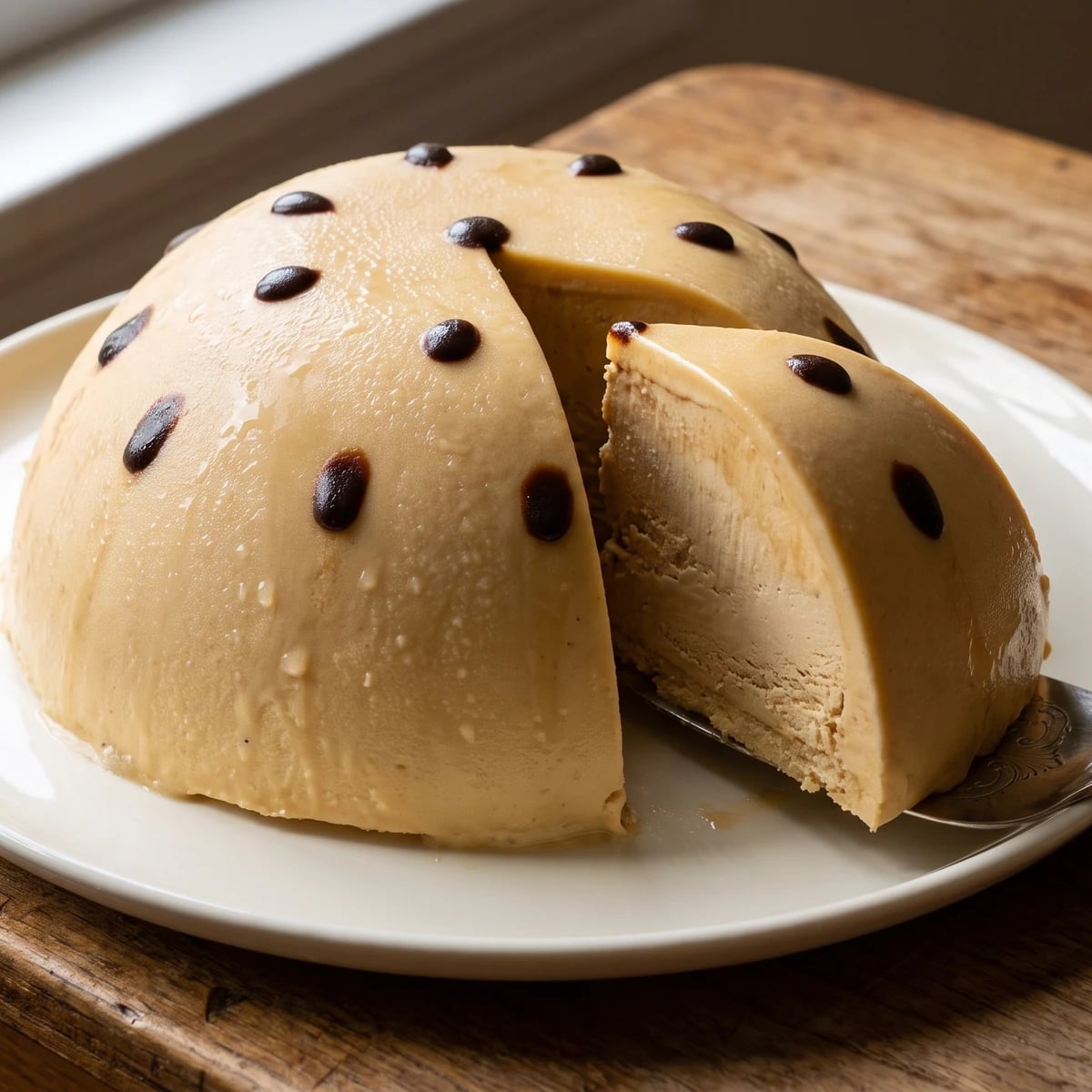
Bombe Richelieu sets rum ice around a coffee pâte à bombe, a formal frozen dessert made practical at home by one patient shell, one silky filling, and a very long freeze.

Desserts
French
Dinner Party
Date Night
Special Occasion
1 hr
Active Time
15 min cook15 hr total
Yield8 servings

Bombe Richelieu (a rum-lined coffee ice bombe) teaches the architecture of a bombe: the outside must set before the centre goes in. The one true thing to know before touching a pan is that rum lowers the freezing point. The shell will always be softer than plain ice, so it needs a long, undisturbed freeze before the coffee filling comes anywhere near it.

The original assumed rum ice and coffee Bombe-preparation waiting in separate freezers, a confectioner's mould packed in salted ice, and a tray of coffee drops ready for service. At home, one small batch of rum ice, a freezer-cold metal bowl, an electric mixer, and purchased coffee fondant drops do the same work. The salted-ice chest and its constant repacking were brigade scaffolding, so they go. The rum shell, coffee pâte à bombe, and coffee drops added after turning are the dish itself, and they stay exactly where they belong.

If the rum ice slides while you line the mould, stop and chill both mould and ice until they are firm enough to hold. Ça se rattrape. This is one cook, one stove, one evening of active work, followed by the cold doing its part overnight. Freezing the completed shell until it feels hard beneath your fingertip is the step that matters most.

Bombe Richelieu belongs to the Parisian grand-kitchen and confectionery repertoire, where layered ices were assembled in metal moulds and given honorific names suited to a formal table. Its construction borrows the same chemiser logic used for aspics: a thin outer layer sets against the mould before a contrasting preparation fills the centre. Richelieu here signals a grand presentation rather than a regional larder, while rum, coffee, and coffee drops supply the dessert's actual identity.

The technique, the tradition, and the story behind every dish.

Discover Culinary Explorer

Ingredients

water for the rum ice

Quantity

1½ cups (360 ml / 360 g)

granulated sugar for the rum ice

Quantity

¾ cup (180 ml / 150 g)

dark or amber rum

Quantity

¼ cup (60 ml / 56 g), for the shell clothed according to Another Method of Preparing Aspics de Filets de Soles (No. 916)

instant espresso powder

Quantity

2 tablespoons (30 ml / 12 g)

boiling water for the espresso

Quantity

2 tablespoons (30 ml / 30 g)

large egg yolks

Quantity

4

granulated sugar for the coffee pâte à bombe

Quantity

½ cup (120 ml / 100 g)

water for the sugar syrup

Quantity

¼ cup (60 ml / 60 g)

heavy cream

Quantity

1½ cups (360 ml / 355 g)

very cold

small coffee fondant drops

Quantity

24 (about 60 g)

Equipment Needed

  • 1.4-litre metal bombe mould or smooth stainless-steel bowl
  • Ice cream machine or shallow metal freezing pan
  • Electric hand mixer or stand mixer
  • Sugar thermometer
  • Chilled serving platter

Instructions

  1. 1

    Make the rum ice

    Put the water and sugar for the rum ice in a small saucepan. Warm gently, stirring until the sugar dissolves, then boil for one minute. Cool completely and chill for at least two hours before stirring in the rum. Churn until the ice is dense, fine-textured, and able to mound on a spoon. Rum keeps it soft, so don't add an extra celebratory splash. If it remains pourable, transfer it to a shallow metal pan and freeze for twenty minutes at a time, stirring between spells, until it becomes spreadable. Ça se rattrape.

    Without an ice cream machine, freeze the chilled mixture in a shallow metal pan and whisk it thoroughly every thirty minutes until smooth and firm enough to spread.
  2. 2

    Clothe the mould

    Freeze a 1.4-litre metal bombe mould or smooth stainless-steel bowl for thirty minutes. Following the clothing principle in Another Method of Preparing Aspics de Filets de Soles (No. 916), spoon the rum ice into the cold mould and press it evenly over the bottom and sides in a layer about 1.5 cm thick. Rotate the mould as you work and inspect it against the light for thin patches. If the ice slides, it is too soft; freeze everything for fifteen minutes, then patch the shell. Cover and freeze for at least four hours, until the lining feels hard and cannot be marked easily with a fingertip.

  3. 3

    Prepare the coffee

    Dissolve the espresso powder completely in the boiling water, then let this concentrate cool to room temperature. Undissolved coffee leaves bitter specks in the filling, so rub out any stubborn granules before proceeding.

  4. 4

    Build the pâte

    Put the sugar and water for the filling in a clean saucepan, stirring only long enough to moisten the sugar. Cook without further stirring to 118°C. As the syrup approaches temperature, beat the yolks until foamy. With the mixer running at medium speed, pour the syrup in a thin stream down the inside of the bowl, avoiding the beaters, then whip at high speed until the pâte à bombe is pale, thick, and no warmer than the room, about seven minutes. Beat in the cooled coffee concentrate. If the syrup crystallizes in its pan, add a tablespoon of water and dissolve it again over low heat. If the finished pâte remains warm, set the bowl over ice and keep beating; warm pâte melts the cream.

  5. 5

    Fold and fill

    Hold back two tablespoons of the cold cream, then whip the remainder to soft peaks that curl rather than stand rigidly. Fold one-third into the coffee pâte à bombe to loosen it, then fold in the rest with broad strokes until no white streaks remain. If the cream becomes grainy from overwhipping, fold in the reserved liquid cream a spoonful at a time until smooth. Take the mould from the freezer only when its rum shell is thoroughly firm, fill it with the coffee preparation, and level the base without pressing out the air.

  6. 6

    Freeze it firm

    Cover the filling directly with baking parchment, then wrap the whole mould tightly. Freeze on a level shelf for at least eight hours, preferably overnight. This long freeze is not idle waiting: the alcohol-softened shell must become firm enough to release while the coffee centre sets into a clean, creamy slice.

  7. 7

    Turn and finish

    Chill the serving platter for twenty minutes. Remove the wrapping, dip the mould in warm water for five to eight seconds, dry it, and invert it onto the platter. If the bombe doesn't release, wrap the mould briefly in a warm, damp cloth rather than dipping it repeatedly. Once turned out, distribute the coffee drops over the dome exactly as the dish requires. If the shell softens during unmoulding, return the bombe to the freezer for fifteen minutes. Slice with a warmed, thoroughly dried knife and serve at once. À table!

Chef Tips

  • Use a dark or amber rum with a clean sugarcane character, not a spiced rum. Vanilla and added spice turn the shell into a different dessert, while the original asks for rum itself.
  • Don't increase the rum. Alcohol lowers the freezing point, and the measured amount already keeps the shell softer than the coffee centre. More rum gives you a lining that slides from the mould.
  • A smooth metal mould conducts cold quickly and releases cleanly. Glass is slower to freeze, awkward to warm evenly, and less forgiving at the turning-out moment.
  • Coffee drops belong on the bombe after turning, never before freezing. Use small coffee-flavoured fondant drops rather than large hard sweets, which become unpleasantly stubborn beside the frozen filling.
  • Serve with small cups of black coffee or a modest glass of the same rum. The bombe already carries its own ceremony and needs no sauce.

Advance Preparation

  • The rum syrup can be cooked and chilled up to two days ahead. Add the rum only before churning so its aroma remains clear.
  • The lined mould can wait in the freezer for up to three days before filling, provided it is wrapped tightly against freezer odours.
  • The completed bombe keeps well for three days. Turn it out and add the coffee drops only when you are ready to serve.

Frequently Asked Questions

Nutrition Information

1 serving (about 150g)

Calories
355 calories
Total Fat
18 g
Saturated Fat
11 g
Trans Fat
1 g
Unsaturated Fat
6 g
Cholesterol
145 mg
Sodium
20 mg
Total Carbohydrates
41 g
Dietary Fiber
0 g
Sugars
40 g
Protein
3 g

Note: Chef personas and recipes are created with AI assistance. Cook with care: follow safe food-handling practices, check doneness with a thermometer when needed, and adapt for allergies and your kitchen.

Where cooking meets culture.

Culinary guides, cultural storytelling, and the editorial depth that makes cooking meaningful.

Discover Culinary Explorer

More from Ices and Sherbets - Various Bombes

Browse the full collection