
Chef Juliette
Various Almond Preparations
Five almond preparations, one discipline: remove the skins cleanly, dry every kernel through, then cut, toast, or cloak it in pale caramel without letting its fragrant oils escape.
A cooking platform built around craft, culture, and the stories behind what we eat.
Created by Chef Juliette
Based on No. 2875, Bombe Mathilde, from Le Guide Culinaire (1907) by Auguste Escoffier
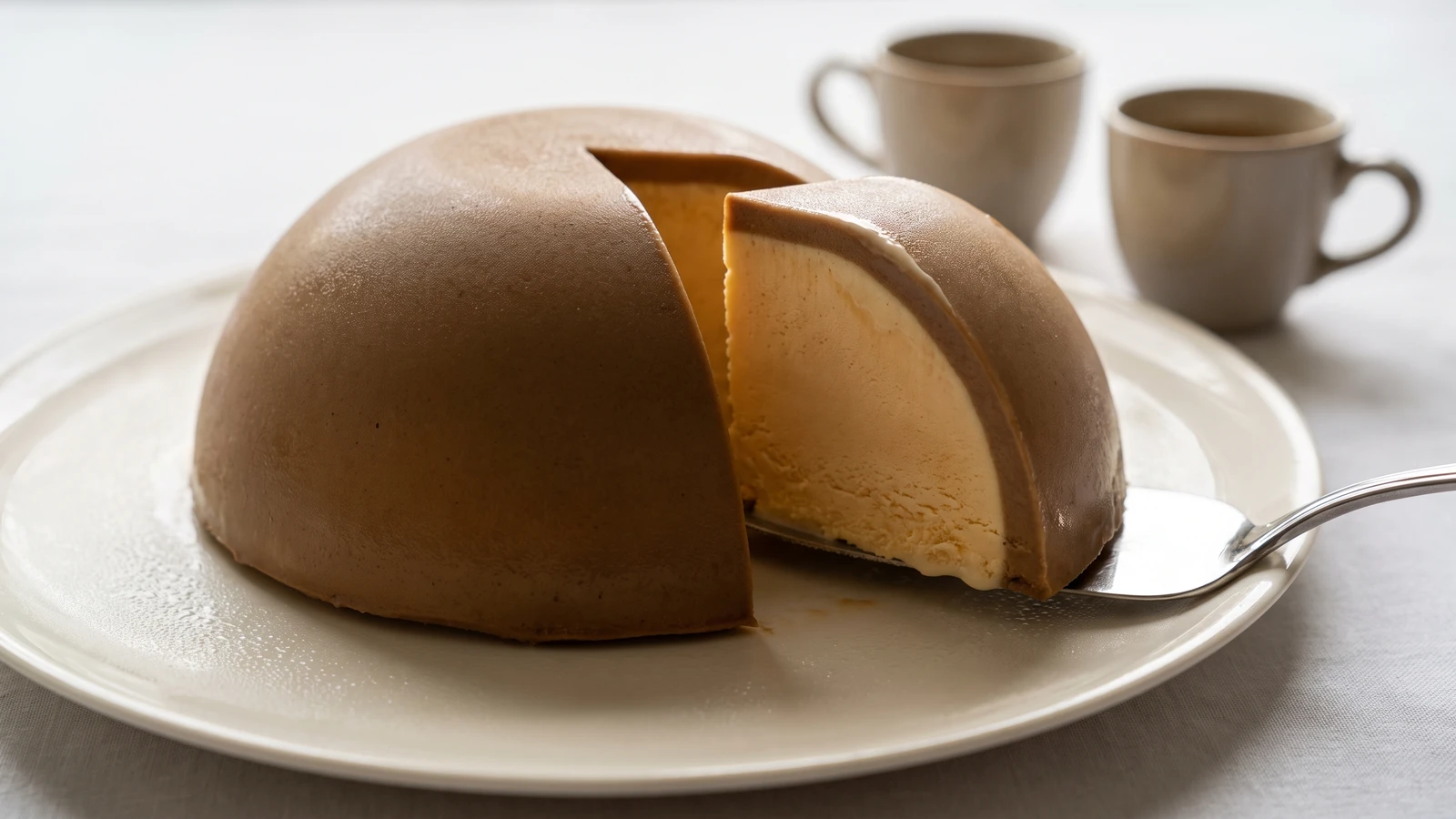
A dark coffee-ice shell gives way to apricot pâte à bombe, pale gold, feather-light, and scented with the almond note classical kitchens drew from the fruit's own stone.
Bombe Mathilde (coffee ice enclosing an apricot yolk-and-cream mousse) teaches architecture in the cold: every layer must be properly frozen or properly cool before the next touches it. Its center is pâte à bombe, a hot-syrup yolk foam lightened with cream and concentrated apricot. The coffee shell should cut cleanly around it, firm enough to hold the dome yet soft enough to surrender to a dessert spoon.
The original assumed a pâtissier with prepared ices, dedicated bombe moulds, and tubs of broken ice and salt for turning and setting the shell. Your honest equivalents are a pre-frozen ice-cream machine, a metal bowl, and the coldest part of a home freezer. The repeated rocking over ice was brigade scaffolding and can go; the even coffee shell surrounding the softer apricot center is the dish and must stay. One cook, one stove, one evening handles the work, then the freezer finishes it overnight.
The traditional apricot preparation drew its noyau, the almond scent of stone fruit, from kernels taken from cracked stones. Their cyanide content is too variable for sensible home use, so this version carries the same intention with two drops of regulated culinary bitter-almond extract. That is the only flavoring changed, and safety is the reason. Freeze the coffee shell until absolutely firm before filling it; that clean boundary is the whole Bombe Mathilde.
Bombe Mathilde sits in the Parisian classical repertoire of named bombes, frozen creams packed in a domed mould and brought whole to the table. Its coffee shell and apricot filling show the form's characteristic contrast between a firm flavored ice and a softer, parfait-like center, while the cross-reference to Another Method of Preparing Aspics de Filets de Soles (No. 916) reveals that pastry and garde-manger shared the same mould-coating technique. No sole or aspic belongs in this dessert; the cited preparation supplies only the geometry of clothing the mould.
Quantity
1½ cups (360 ml / 370 g)
Quantity
1 cup (240 ml / 240 g)
Quantity
¼ cup (60 ml / 30 g)
coarsely crushed
Quantity
5
Quantity
½ cup (120 ml / 100 g)
Quantity
⅛ teaspoon (0.6 ml / 0.7 g)
Quantity
8 medium (about 4 cups / 950 ml / 600 g)
halved and stoned; frozen and thawed fruit may be substituted
Quantity
⅓ cup (80 ml / 65 g)
Quantity
1 tablespoon (15 ml / 15 g)
Quantity
2 tablespoons (30 ml / 30 g)
Quantity
2 drops (about 0.1 ml)
Quantity
3
Quantity
½ cup (120 ml / 100 g)
Quantity
3 tablespoons (45 ml / 45 g)
Quantity
1 cup (240 ml / 240 g)
Quantity
Clothing-the-mould method (No. 916); no edible quantity
| Ingredient | Quantity |
|---|---|
| whole milk for the coffee ice | 1½ cups (360 ml / 370 g) |
| heavy cream for the coffee ice | 1 cup (240 ml / 240 g) |
| medium-roast coffee beanscoarsely crushed | ¼ cup (60 ml / 30 g) |
| large egg yolks for the coffee ice | 5 |
| granulated sugar for the coffee ice | ½ cup (120 ml / 100 g) |
| fine sea salt | ⅛ teaspoon (0.6 ml / 0.7 g) |
| ripe apricotshalved and stoned; frozen and thawed fruit may be substituted | 8 medium (about 4 cups / 950 ml / 600 g) |
| granulated sugar for the apricots | ⅓ cup (80 ml / 65 g) |
| fresh lemon juice | 1 tablespoon (15 ml / 15 g) |
| water for the apricots | 2 tablespoons (30 ml / 30 g) |
| commercial food-grade bitter-almond extract | 2 drops (about 0.1 ml) |
| large pasteurized egg yolks for the pâte à bombe | 3 |
| granulated sugar for the pâte à bombe | ½ cup (120 ml / 100 g) |
| water for the syrup | 3 tablespoons (45 ml / 45 g) |
| cold heavy cream for the pâte à bombe | 1 cup (240 ml / 240 g) |
| Technique reference: Another Method of Preparing Aspics de Filets de Soles | Clothing-the-mould method (No. 916); no edible quantity |
Combine the milk, cream, and crushed coffee beans in a saucepan. Heat gently until small bubbles gather at the edge, without letting the dairy boil, then cover and leave it for 20 minutes. Strain through a fine sieve, pressing lightly but not grinding the beans through; the infusion should taste deeper than drinking coffee because freezing will quiet it.
Whisk the five yolks with the coffee-ice sugar and salt until smooth. Pour in the warm coffee infusion gradually while whisking, then return everything to the saucepan. Cook over low heat, stirring constantly and reaching into every corner, until the crème anglaise is nappé, meaning it coats the back of the spoon, at about 82°C or 180°F. If you see tiny curds, pull it off the heat immediately, strain it into a cold bowl, and blend briefly over an ice bath. Ça se rattrape unless it has become scrambled. Chill the custard thoroughly, at least 2 hours.
Put the apricots, their sugar, lemon juice, and water in a saucepan. Cover and cook gently until the fruit collapses, then uncover and stir until the juices reduce to a thick compote. Blend smooth and pass it through a sieve. Measure 1¼ cups (300 ml / 300 g), reducing it a little longer if you have more; excess water makes an icy center. Stir in exactly two drops of bitter-almond extract, then chill the purée completely. Do not replace the extract with raw or bitter apricot kernels, whose cyanide content cannot be judged safely in a home kitchen.
Churn the cold coffee custard until it holds like soft ice cream. Reserve about ¾ cup (180 ml) in a shallow covered container for the lid. Pack the rest against the bottom and sides of a pre-chilled 1.5-liter metal bombe mould, forming an even shell about 1.5 cm thick. This is chemiser le moule, to clothe the mould. Apply the coating geometry preserved in Another Method of Preparing Aspics de Filets de Soles (No. 916), rotating the mould as you spread so no bare metal remains. Freeze the shell and reserved coffee ice for 45 to 60 minutes. If light shows through a thin spot, patch it with softened coffee ice and refreeze; ça se rattrape.
Put the three pasteurized yolks in the mixer bowl and begin whisking at medium speed. Heat the pâte à bombe sugar and water in a small saucepan without stirring until the syrup reaches 118°C or 244°F. If crystals form, lower the heat and let them dissolve fully before continuing; grainy syrup must never meet the yolks. With the mixer running, pour the hot syrup in a narrow stream down the inside of the bowl, avoiding the whisk. Increase the speed and whip until the mixture is very thick, pale, and cool enough that the bowl no longer feels warm, about 7 minutes.
Fold the cold apricot purée into the pâte à bombe in three additions. In a separate cold bowl, whip the cream to soft peaks, reserving one spoonful unwhipped, then fold it gently into the apricot mixture. The finished filling should be airy but hold a broad ribbon. If it loosens because either component was too warm, set the bowl over ice and fold slowly until it regains body. If the cream begins to look grainy, fold in the reserved liquid cream and stop whisking.
Make certain the coffee shell is hard before filling it. Spoon in the apricot pâte à bombe, pressing gently into the curve without crushing out its air, and leave about 1 cm clear at the rim. Let the reserved coffee ice soften just enough to spread, then use it to cap the filling completely and smooth the base flush with the mould. Cover tightly and freeze for at least 6 hours, preferably overnight.
Chill the serving platter. Dip the mould in warm water for 3 seconds, dry it, invert it onto the platter, and lift straight upward. If it holds, repeat with a 1-second dip rather than forcing it. Return the unmoulded bombe to the freezer for 15 minutes so its surface settles, then rest it at room temperature for 5 minutes before cutting with a warmed, dry knife. The slice should reveal a clean coffee arc around a pale apricot center. À table!
1 serving (about 215g)
Culinary guides, cultural storytelling, and the editorial depth that makes cooking meaningful.
Discover Culinary ExplorerChef Juliette
Five almond preparations, one discipline: remove the skins cleanly, dry every kernel through, then cut, toast, or cloak it in pale caramel without letting its fragrant oils escape.

Chef Juliette
A pastry pantry lesson in one tray: filberts warmed only until their red skins release, rubbed clean, cooled, and chopped into a fragrant mise-en-place for cakes, creams, pralines, and petits fours.

Chef Juliette
The smallest pâtisserie discipline decides whether a cake leaves its mould intact: clarified butter in every corner, followed by the lightest veil of dry flour or fécule.

Chef Juliette
Four whites, one spotless bowl, and a patient change of speed: whisk gently until loosened, then briskly to glossy stiffness, with powdered sugar waiting if the foam begins to granulate.