
Chef Juliette
Various Almond Preparations
Five almond preparations, one discipline: remove the skins cleanly, dry every kernel through, then cut, toast, or cloak it in pale caramel without letting its fragrant oils escape.
A cooking platform built around craft, culture, and the stories behind what we eat.
Created by Chef Juliette
Based on No. 2724, Milk Junket, from Le Guide Culinaire (1907) by Auguste Escoffier
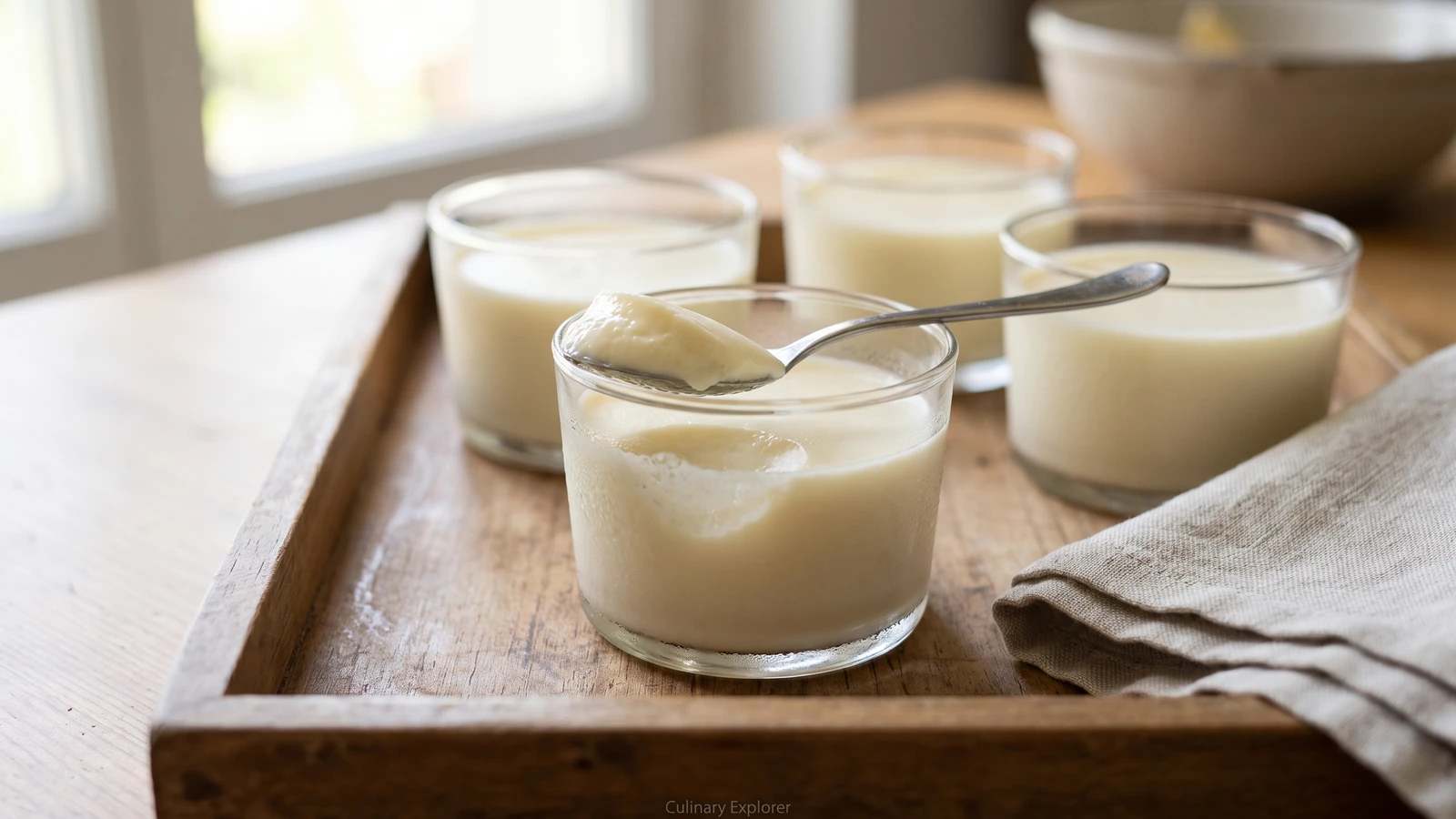
Warm milk, sugar, vanilla, and three drops of rennet become a cool, trembling entremets without egg or oven. The whole lesson is temperature: stop at 95°F, then leave it alone.
Lait caillé à la présure teaches one clean principle: présure (rennet) sets warm milk; heat does not cook it. Take the milk off at 95°F (35°C). Drive it toward a simmer and the delicate coagulation is lost; once the rennet enters, stillness finishes the work.
The source assumed a standardized bottle of russet-apple essence or its pastils, a dropper, one large timbale, and a cold larder. What it calls russet-apple essence is carried forward through single-strength liquid rennet, the dependable household setting equivalent, at the same six-drops-per-quart proportion. The quart is halved to a pint for four small cups; a digital thermometer, room-temperature ramekins, and the refrigerator replace the service equipment. The timbale and cold larder were scaffolding. The 95°F stop, the sugar-then-flavor-then-rennet sequence, and the undisturbed set are the dish.
The finished lait caillé is ivory, cold, and softly tremulous, with vanilla behind the clean taste of milk. Your decisive act comes before the pour: lift the saucepan from the heat at 95°F, then do not hurry the set.
Lait caillé à la présure belongs to the classical French entremets table rather than to one province, carrying a farmhouse dairy practice into the dessert course: fresh milk made to hold with présure. Grand kitchens perfumed and portioned that simple coagulation, but they did not turn it into custard; no egg, starch, or oven belongs here. In this formula, russet-apple essence names the setting drops, not an apple flavor, and the pastil alternative confirms the working principle.
Quantity
2 cups (475 ml / 490 g)
pasteurized but not UHT
Quantity
2 tablespoons plus 2½ teaspoons (42 ml / 35 g)
Quantity
½ teaspoon (2.5 ml / 2 g)
Quantity
3 drops (about 0.15 ml / 0.15 g), or 1 dessert rennet tablet
use one form only
Quantity
1 tablespoon (15 ml / 15 g)
for dissolving the rennet tablet
| Ingredient | Quantity |
|---|---|
| whole milkpasteurized but not UHT | 2 cups (475 ml / 490 g) |
| granulated sugar | 2 tablespoons plus 2½ teaspoons (42 ml / 35 g) |
| pure vanilla extract | ½ teaspoon (2.5 ml / 2 g) |
| russet-apple essence setting equivalent, using single-strength liquid rennetuse one form only | 3 drops (about 0.15 ml / 0.15 g), or 1 dessert rennet tablet |
| cool non-chlorinated water (optional)for dissolving the rennet tablet | 1 tablespoon (15 ml / 15 g) |
Set four 4-to-5-fluid-ounce ramekins or small glass cups on a level tray and leave them at room temperature. If using the tablet, crush it finely and dissolve it completely in the cool non-chlorinated water; set it beside the stove. The cups are the final serving vessels, so there will be no unmolding or transferring later.
Pour the milk into a small heavy saucepan and warm it over the lowest heat, stirring slowly so the bottom never catches. Watch the thermometer closely and lift the pan from the heat at exactly 95°F (35°C). This is blood heat, not custard heat. If it slips a degree or two higher, let it fall back to 95°F before continuing. If it reaches a simmer, reserve that milk for another use and begin again; milk heated that far will not give this delicate rennet set.
Off the heat, add the sugar and stir gently for about 20 seconds, only until the granules disappear. Stir in the vanilla. Keep the movement quiet and brief so the milk remains close to its setting temperature and no froth forms on the surface.
Add the three drops of liquid rennet, or all of the dissolved tablet, and stir with two or three slow passes of the spoon, no more than five seconds. Do not whisk. Divide the milk immediately among the prepared cups. It will look unchanged. That is exactly right.
Leave the tray perfectly still on a level counter for 30 minutes. The lait caillé is ready to chill when its surface moves as one soft sheet rather than flowing like milk. If it is merely loose, wait up to an hour. If it remains completely liquid, pour it gently back into the saucepan, return it to 95°F, add one fresh drop of liquid rennet or one-quarter of a freshly dissolved tablet, and repour it. The texture may be slightly less fine, but ça se rattrape. Once the cups hold a soft set, cover them without touching the surface and refrigerate for at least 4 hours.
Serve the lait caillé directly from its cups, very cold and without garnish. A spoon should pass through the ivory surface with almost no resistance, leaving a soft, clean hollow while the rest trembles gently. À table!
1 serving (about 132g)
Culinary guides, cultural storytelling, and the editorial depth that makes cooking meaningful.
Discover Culinary ExplorerChef Juliette
Five almond preparations, one discipline: remove the skins cleanly, dry every kernel through, then cut, toast, or cloak it in pale caramel without letting its fragrant oils escape.

Chef Juliette
A pastry pantry lesson in one tray: filberts warmed only until their red skins release, rubbed clean, cooled, and chopped into a fragrant mise-en-place for cakes, creams, pralines, and petits fours.

Chef Juliette
The smallest pâtisserie discipline decides whether a cake leaves its mould intact: clarified butter in every corner, followed by the lightest veil of dry flour or fécule.

Chef Juliette
Four whites, one spotless bowl, and a patient change of speed: whisk gently until loosened, then briskly to glossy stiffness, with powdered sugar waiting if the foam begins to granulate.