Chef Juliette
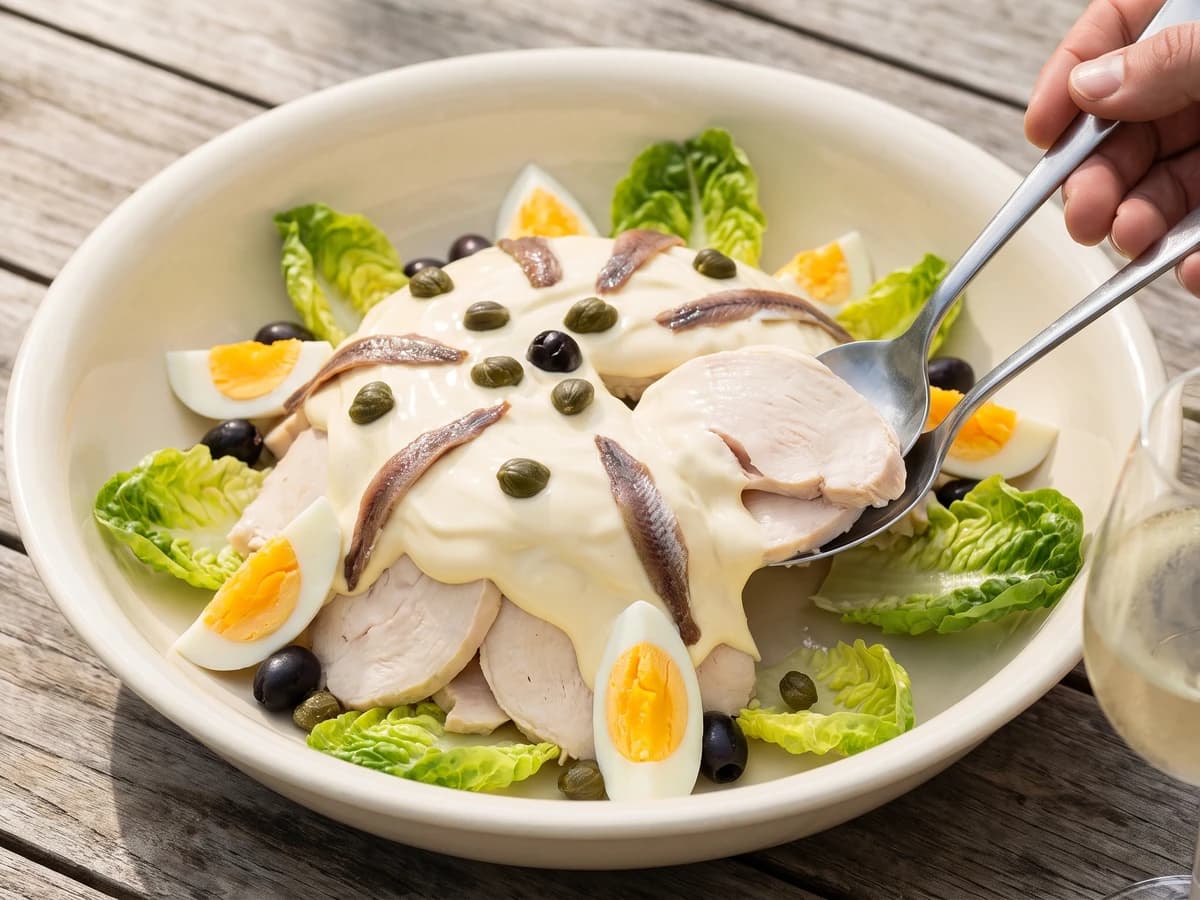
Mayonnaise de Volaille
Cold roast chicken, ciseled lettuce, and a shining coat of homemade mayonnaise, arranged with capers, olives, anchovies, eggs, and lettuce hearts, then tossed at the table as the canon intends.
A cooking platform built around craft, culture, and the stories behind what we eat.
Created by Chef Juliette
Based on No. 2704, Pêches Rose-Chéri, from Le Guide Culinaire (1907) by Auguste Escoffier
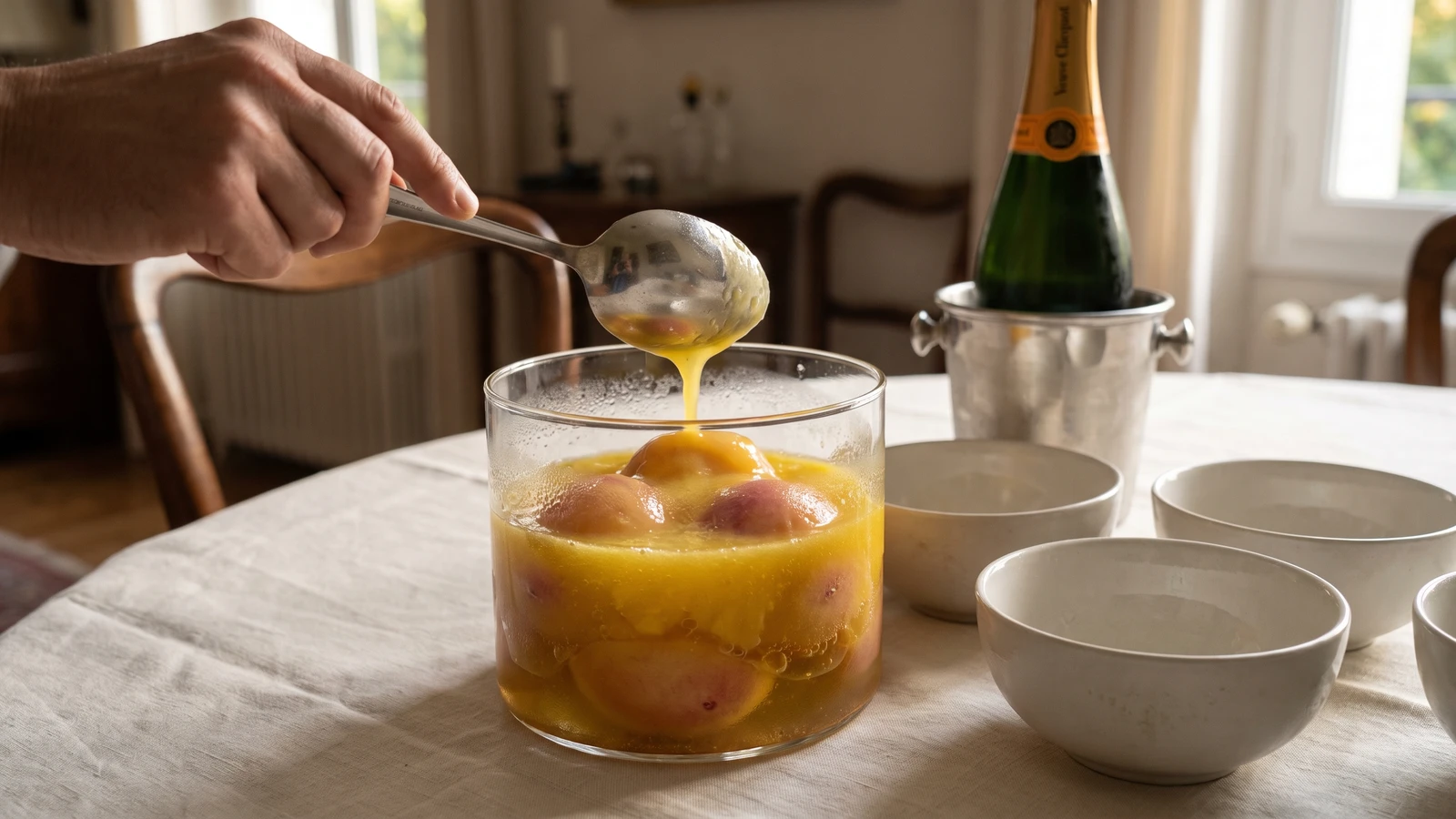
Silken vanilla-poached peaches, a sharp-sweet pineapple purée, and Clicquot added only after everything is cold: a composed fruit salad whose elegance depends on restraint, timing, and a properly chilled timbale.
Pêches Rose-Chéri (vanilla-poached peaches with pineapple and Champagne) teaches the discipline of cold fruit cookery: chill every component fully, then let the Clicquot into the pineapple purée off the heat and at the last possible moment. Warm purée steals its perfume, and impatient stirring beats out its lively sparkle. That is the dish.
The original is only a sentence because it assumed a pâtissier with vanilla syrup already made, pineapple passed through a tamis, a timbale waiting over ice, and enough fruit prepared for a dining room. At home, one saucepan, a blender, a fine sieve, and the refrigerator replace that brigade. I have scaled the preparation to four peaches and removed the separate service mise en place because it is scaffolding, not flavour. The poaching, complete chilling, and last-minute Clicquot remain untouched. One cook, one stove, one evening.
When it reaches the table, the peaches should be tender but still shapely, the pineapple vivid and smooth, and the chilled timbale lightly beaded with condensation. The one step that matters most is patience: add no Champagne until the peaches, purée, bowl, and wine are thoroughly cold.
Pêches Rose-Chéri belongs to the Parisian repertoire of named entremets, composed sweets that grand kitchens dedicated to celebrated figures of the stage and dining room. Rose Chéri was a noted actress of the Parisian stage, and her name became attached to this polished combination of poached fruit, pineapple, and Clicquot. Despite its place among fruit salads, the dish is not tossed together: the peaches are arranged in a timbale and covered with purée, preserving the formality of a composed dessert.
Quantity
4 medium (about 1½ lb / 680 g)
ripe but firm
Quantity
3 cups (720 ml / 720 g)
Quantity
1½ cups (360 ml / 300 g)
Quantity
1
split lengthwise
Quantity
2½ cups (590 ml / 400 g)
trimmed and cut into chunks
Quantity
½ cup (120 ml / 118 g)
thoroughly chilled
| Ingredient | Quantity |
|---|---|
| yellow peachesripe but firm | 4 medium (about 1½ lb / 680 g) |
| water | 3 cups (720 ml / 720 g) |
| granulated sugar | 1½ cups (360 ml / 300 g) |
| vanilla beansplit lengthwise | 1 |
| ripe fresh pineappletrimmed and cut into chunks | 2½ cups (590 ml / 400 g) |
| Clicquot Brut Champagnethoroughly chilled | ½ cup (120 ml / 118 g) |
Combine the water and sugar in a narrow nonreactive saucepan. Scrape in the vanilla seeds, add the pod, and bring the syrup slowly to a simmer, stirring only until the sugar dissolves. Let it simmer gently for 5 minutes so the vanilla perfumes the whole syrup, then lower the heat until the surface barely trembles.
Peel the peaches thinly, halve them along their seams, and remove the pits. If a skin refuses to come away cleanly, dip that peach in the simmering syrup for 20 seconds, lift it out, and slip the skin off once it is cool enough to handle. Lower the peach halves into the syrup and poach at the barest tremble, turning once, until a small knife enters with faint resistance, 4 to 8 minutes depending on ripeness. They must keep their shape. If they begin to slump, lift them immediately and cool them apart from the hot syrup. Ça se rattrape: reunite fruit and syrup only after the syrup has cooled.
Remove the pan from the heat and leave the peaches in the vanilla syrup for about 30 minutes, until barely warm; they will finish tenderizing as they rest. Transfer the fruit, vanilla pod, and enough syrup to cover into a shallow nonreactive dish. Cover and refrigerate for at least 3 hours, until very cold.
Blend the pineapple until completely smooth, then press it through a fine sieve to remove the stubborn fibres. Reserve ¼ cup of the thick purée for correcting the consistency later, cover both portions, and chill them thoroughly. Place the empty timbale or deep serving bowl in the refrigerator as well. If the pineapple is unusually watery, let the purée drain in the sieve for 10 minutes rather than cooking it down; heat would flatten the fresh flavour.
Wait until the peaches, pineapple purée, timbale, and Champagne are all thoroughly cold. Reserve 1 tablespoon of the measured Clicquot, then pour the rest around the edge of the main portion of pineapple purée and fold gently with a broad spoon or spatula. Do not return it to the blender. If the sauce becomes too loose to cloak a peach, fold in the reserved thick purée. If it was stirred too eagerly and lost its sparkle, ça se rattrape: fold in the final tablespoon of Clicquot immediately before serving.
Drain the peach halves well so their syrup does not thin the pineapple. Arrange them closely in the chilled timbale, cut sides down, and cover them generously with the pineapple and Clicquot purée. Fold in the reserved tablespoon of Champagne if you have not already used it, then carry the timbale straight to the table. Serve very cold, spooning fruit and plenty of purée into each chilled bowl. À table!
1 serving (about 280g)
Culinary guides, cultural storytelling, and the editorial depth that makes cooking meaningful.
Discover Culinary ExplorerChef Juliette
Cold roast chicken, ciseled lettuce, and a shining coat of homemade mayonnaise, arranged with capers, olives, anchovies, eggs, and lettuce hearts, then tossed at the table as the canon intends.

Chef Juliette
Cold roast or poached chicken with fine ribbons of lettuce, dressed at the final moment with oil and vinegar: a composed salad whose freshness depends entirely on timing.

Chef Juliette
Five leaves, one living rule: laitue, romaine, chicorée, mâche, or pissenlit must be washed, dried, and dressed only as they go to the table, while every leaf still carries its light vinaigrette.

Chef Juliette
Salade de Betteraves proves that baking, not boiling, is the whole argument: concentrated garnet sweetness, tender baked onion, sharp mustard, and herbs cut into a weeknight salad worth making ahead.