Chef Juliette
Ordinary or White Consommé
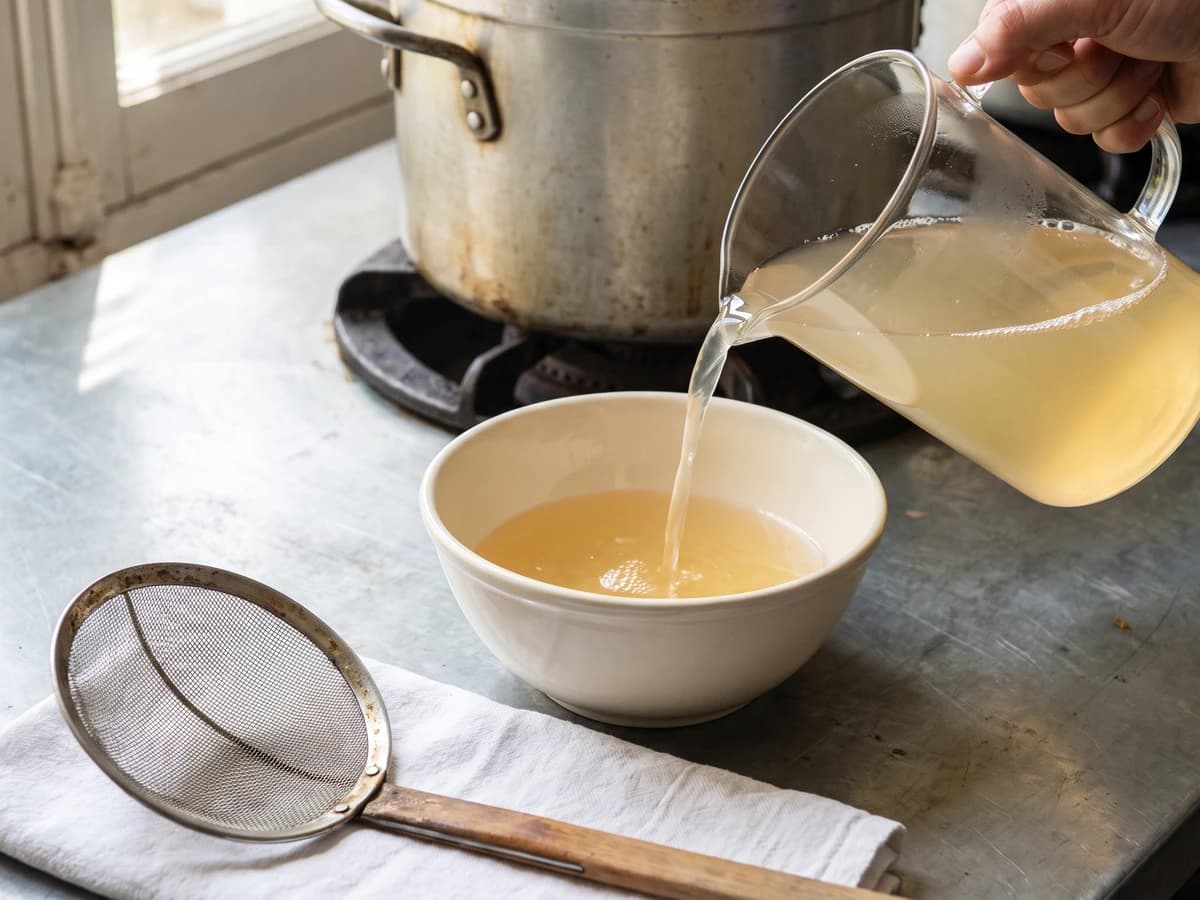
Beef shin, lean beef, and fowl begin in cold water and rise slowly toward a tremble. Skim before the boil, and you learn the quiet discipline that gives every clear French broth its backbone.
A cooking platform built around craft, culture, and the stories behind what we eat.
Created by Chef Juliette
Based on No. 26a, Fish Velouté, from Le Guide Culinaire (1907) by Auguste Escoffier
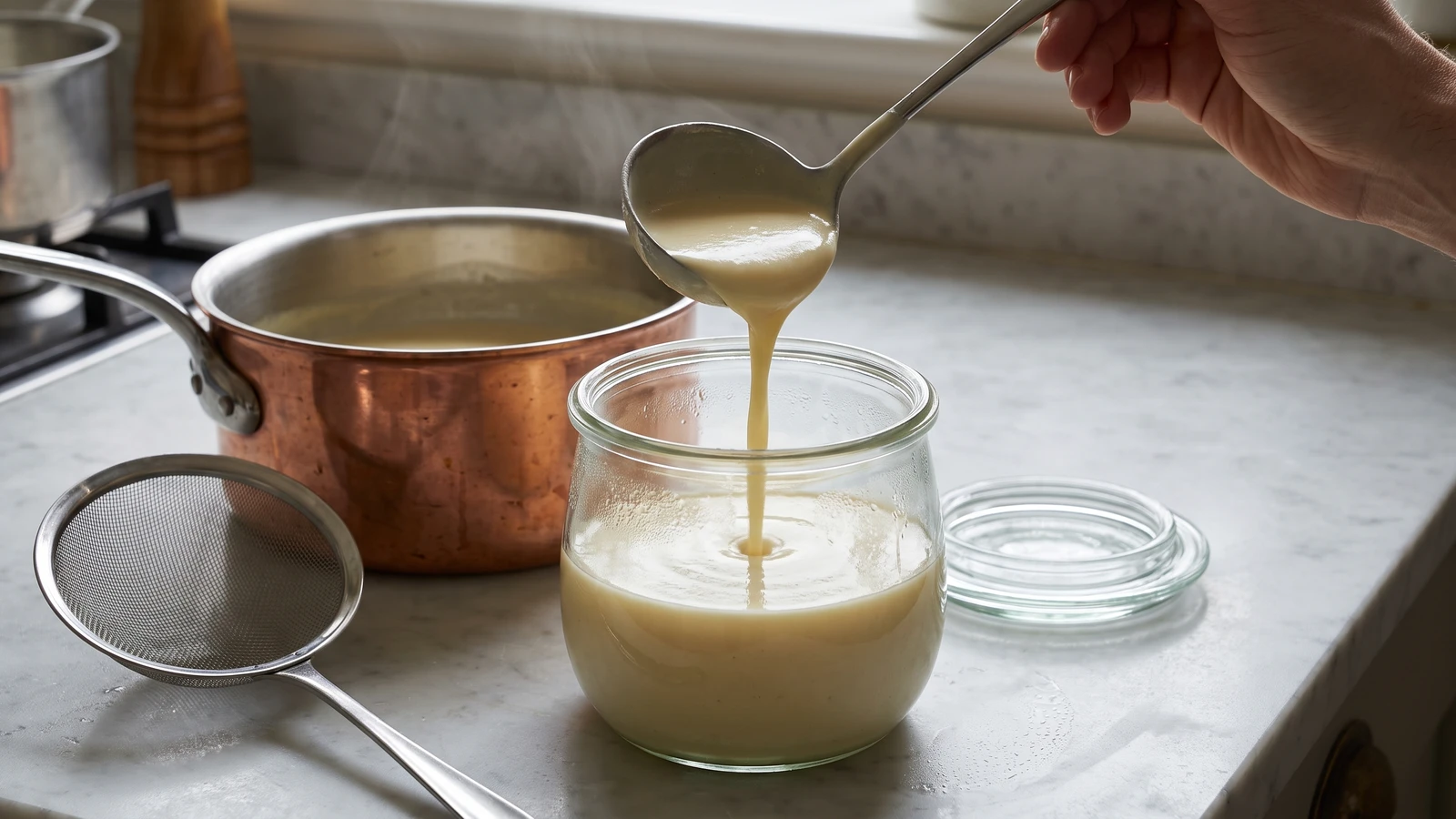
Velouté de poisson begins with clear fumet and a pale roux, then asks only twenty minutes of watchful skimming. Master that restraint and the whole family of classical fish sauces opens.
Velouté de poisson (fish velouté) teaches restraint. A fumet, the concentrated essence drawn from fish bones, gives up its savour quickly; simmer it longer in hope of greater depth and you get the opposite, a dull sauce with its freshness cooked away. Twenty minutes means twenty minutes.
The original kitchen assumed a saucier on staff and clear stock never far from the fire. At home, a heavy saucepan, a whisk, and a fine sieve do the work honestly. The brigade quantity has been scaled to about two quarts, enough to divide and freeze, while repeated passing and service holding have gone. Those were scaffolding. The pale roux, clear fumet, and brief cooking are the dish itself. One cook, one stove, one evening.
Make a roux, butter and flour cooked together, without letting it color, then introduce the cold fumet gradually. Dépouiller means skimming away the foam and fat while the sauce barely simmers; do it patiently, because that is how the velouté becomes clear, supple, and clean-tasting. The twenty-minute skim is the step that matters most.
Velouté de poisson belongs to the classical sauce system of Parisian professional kitchens, where a pale roux was matched to a clear fumet according to what the sauce would accompany. Its brief cooking is the surprising rule: fish bones surrender their aroma and gelatin quickly, so twenty minutes of skimming clarifies the sauce while longer simmering dulls it. From the sauce station it passed into bourgeois home cooking as a make-ahead foundation, ready to be finished according to the fish on the table.
Quantity
9 tablespoons (135 ml / 125 g)
Quantity
1 cup (240 ml / 125 g)
| Ingredient | Quantity |
|---|---|
| unsalted butter | 9 tablespoons (135 ml / 125 g) |
| plain flour | 1 cup (240 ml / 125 g) |
| White Fish Stockvery clear and chilled | 8 cups (1.9 L / 1.9 kg) White Fish Stock (No. 11) |
Measure everything before the pan reaches the heat. Keep the White Fish Stock (No. 11) chilled, set a whisk beside the stove, and place a fine-mesh sieve over a clean heatproof bowl. Once the sauce simmers, its twenty-minute clock must not wait for you to find a tool.
Melt the butter in a heavy 4-quart saucepan over medium-low heat. When it is fully melted but not browned, add the flour and stir continuously with a wooden spoon for 3 to 4 minutes. The roux should loosen slightly, smell gently of warm flour, and remain ivory. If it turns biscuit-colored, begin again; browned roux brings a toasted flavor and muddy color that do not belong in this velouté.
Take the pan off the heat and whisk in about 1 cup of the White Fish Stock (No. 11), a little at a time, until the roux becomes a perfectly smooth paste. Add the remaining fumet in four additions, whisking each one smooth before the next. If lumps appear, stop adding liquid, lift the pan from the heat, and whisk firmly with another small splash of the fumet; any stubborn lumps can be removed through the sieve before simmering.
Return the pan to medium heat and stir gently along the bottom until the velouté reaches its first bare simmer. Lower the heat at once and set a timer for exactly 20 minutes. Skim the grey-white froth and beads of butter from the surface with a shallow spoon as they collect, sweeping the pan floor gently between skimmings so the roux cannot catch. Never let the sauce roll. If it boils hard and the foam breaks back into the velouté, take it off the heat, let the surface settle for a minute, then return it to gentler heat and resume skimming. Ça se rattrape. Longer cooking, however, cannot restore aroma once it is gone.
At 20 minutes, remove the velouté from the heat and pour it through the prepared fine-mesh sieve without pressing. It should be pale ivory, glossy, and fluid enough to fall from a spoon in a smooth ribbon while leaving a thin veil on its back. Do not season it now; this is a foundation, and its final sauce will supply its own reduction and seasoning.
If the velouté is not being used immediately, set its bowl in an ice bath and stir until cool, then divide it among shallow containers and refrigerate promptly. Press parchment directly against the surface before covering to prevent a skin. Reheat only the portion you need over low heat, whisking gently until the original smooth consistency returns.
1 serving (about 270g)
Culinary guides, cultural storytelling, and the editorial depth that makes cooking meaningful.
Discover Culinary ExplorerChef Juliette
Beef shin, lean beef, and fowl begin in cold water and rise slowly toward a tremble. Skim before the boil, and you learn the quiet discipline that gives every clear French broth its backbone.
Chef Juliette
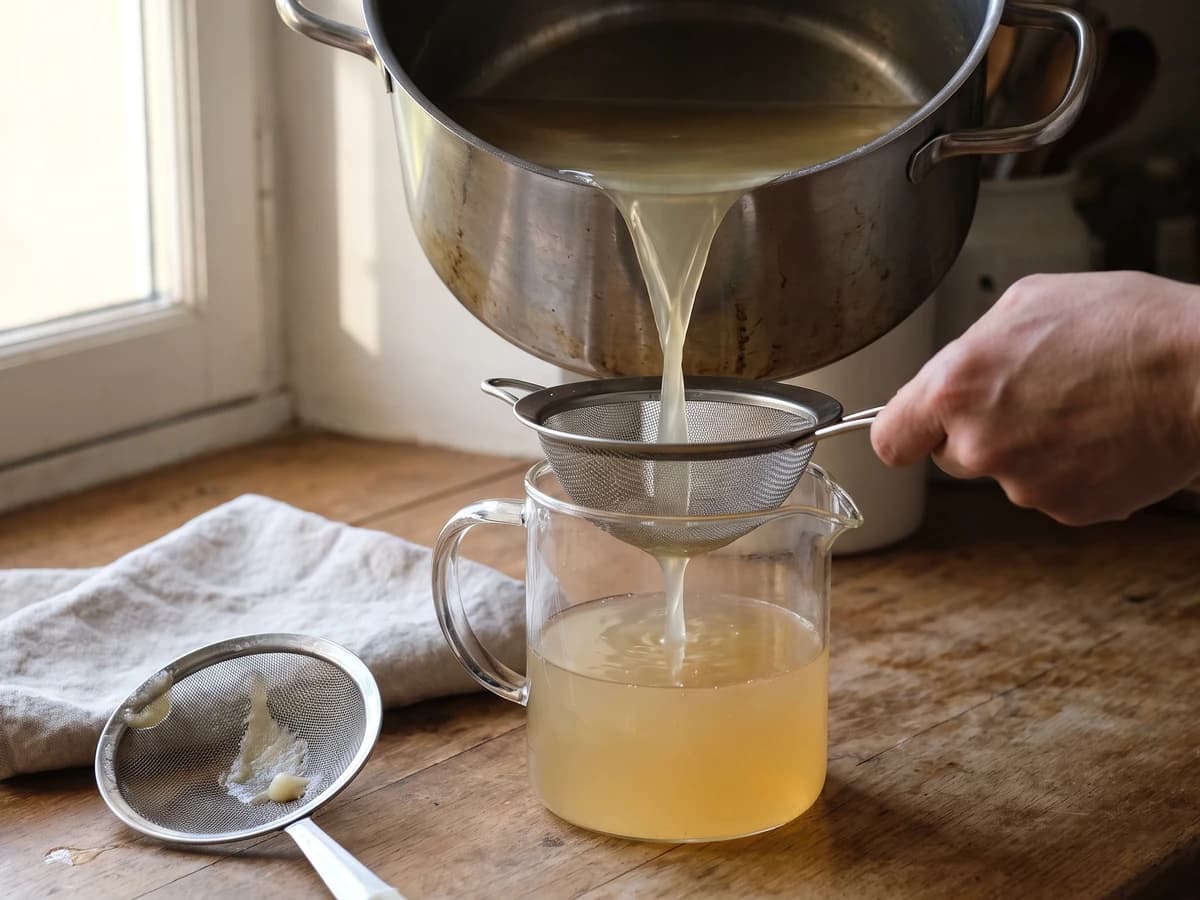
Break the veal bones small, then give them eight hours at a bare tremble. This pale, gelatinous fond becomes the quiet foundation beneath velouté, blanquette, and every sauce that must stay light.
Chef Juliette
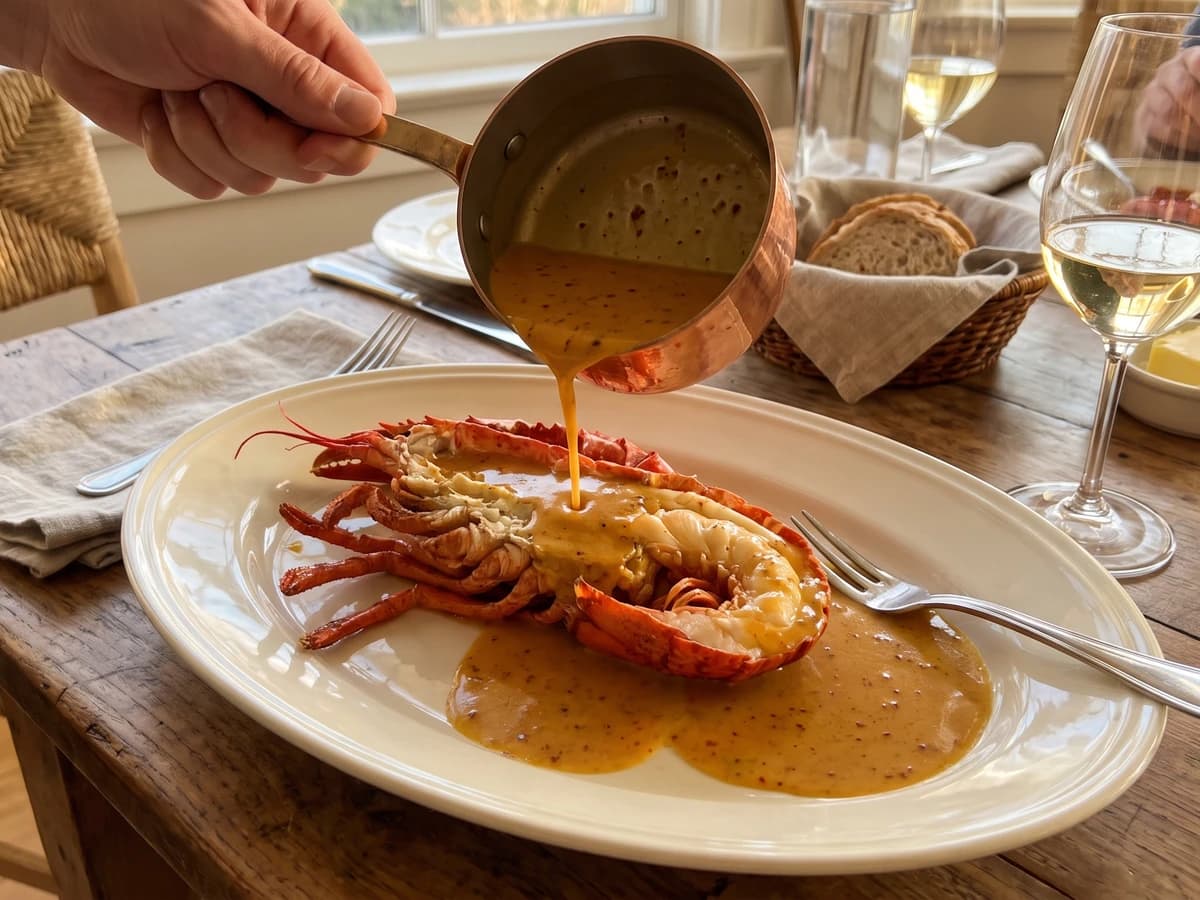
Sauce Orientale concentrates lobster-rich American Sauce with curry, then folds in cream away from the fire: a glossy, gently spiced derivative made for lobster, crayfish, and firm fish.
Chef Juliette
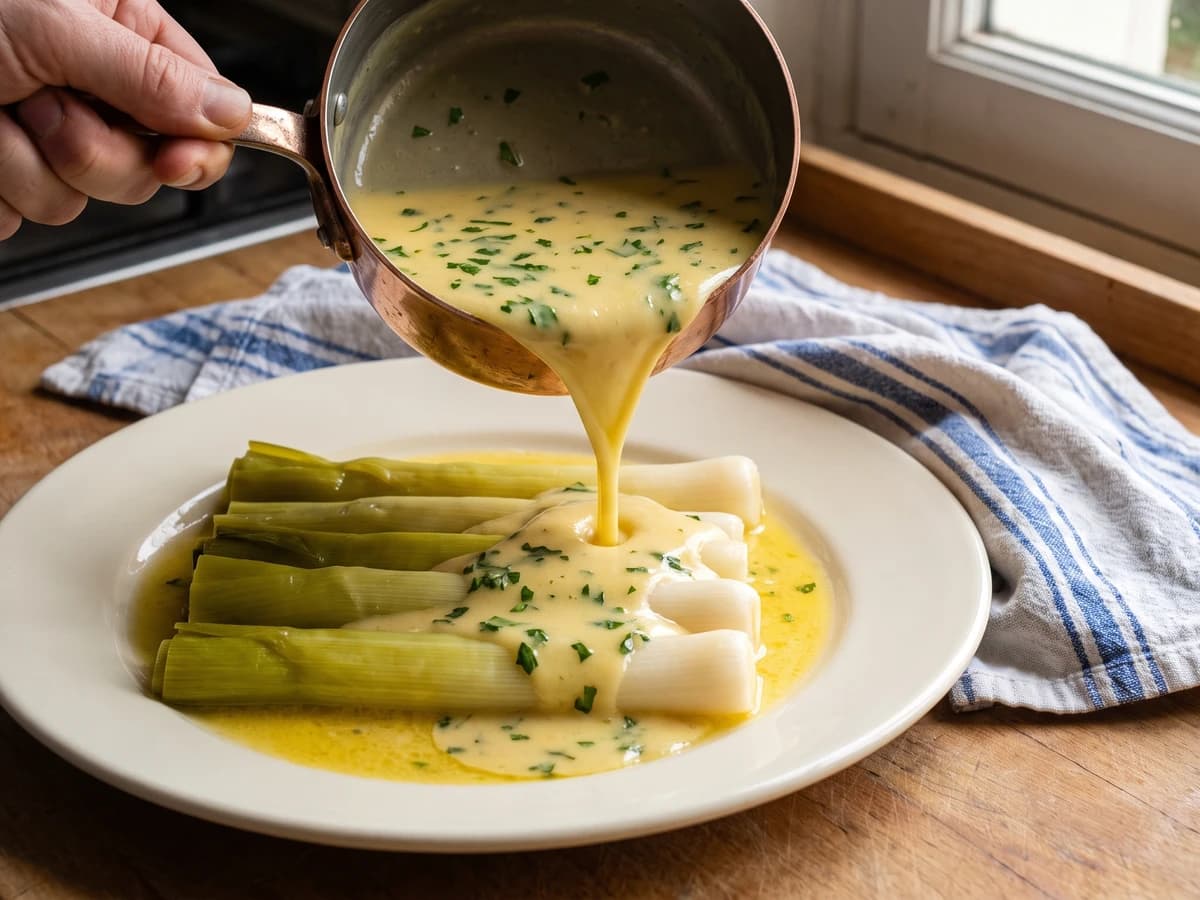
An old lesson in sauce families: Sauce Allemande takes mushroom liquor, then butter, lemon, and parsley, becoming a glossy Poulette for sheep's trotters, leeks, cauliflower, and anything needing gentle richness with a bright edge.