Chef Juliette
Suet Dumpling
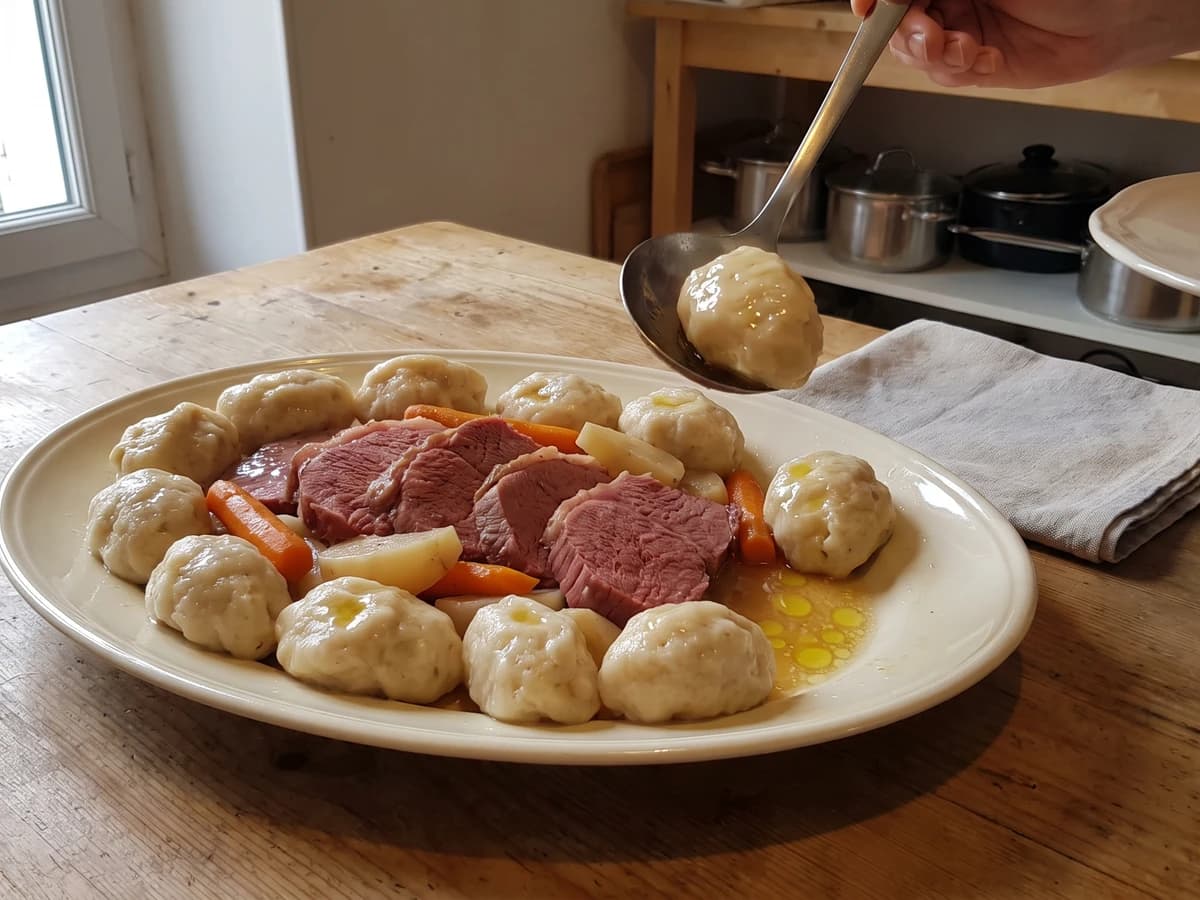
Boulettes au suif, poached beside salt beef, turn equal weights of flour and finely chopped suet into tender, rich dumplings. Keep the beef liquor at a bare tremble and the old garnish works beautifully at home.
A cooking platform built around craft, culture, and the stories behind what we eat.
Created by Chef Juliette
Based on No. 269, Complete Gratin, from Le Guide Culinaire (1907) by Auguste Escoffier
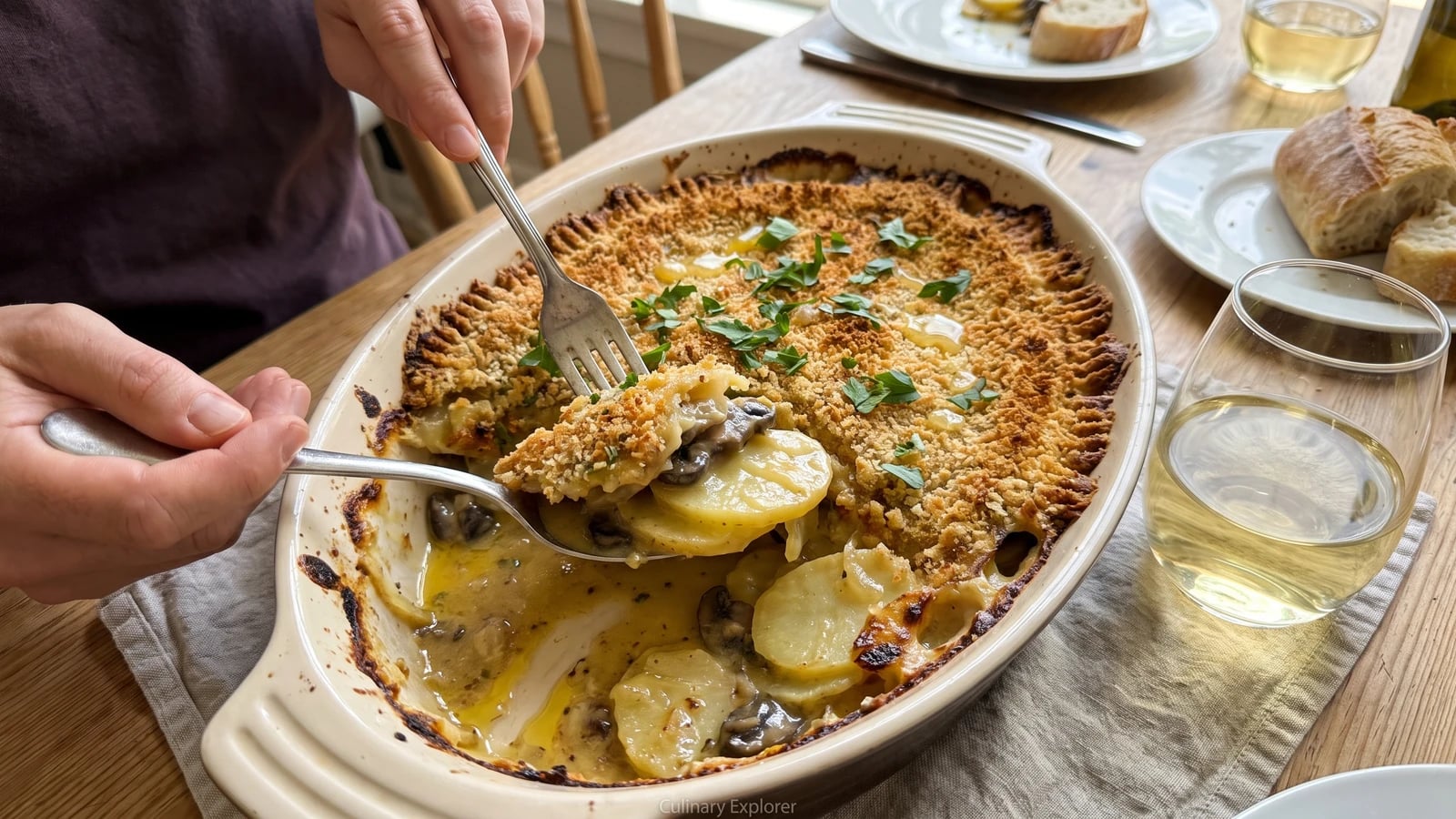
Raw potatoes, duxelle sauce, and buttered chapelure meet the oven together, then finish as one: tender slices below, a properly reduced border, and a bronzed crust that stays crisp.
Gratin complet de pommes de terre (complete potato gratin) teaches timing by proportion. The one true thing to know before touching a pan is this: the potatoes, the sauce, and the crust must finish together. Too much sauce leaves cooked potatoes swimming beneath a finished crust; too little disappears while the potatoes are still firm. Match the quantity of sauce to the thickness of the food and the heat of the oven. That is the dish.
The original method assumed a saucier balancing reductions, a stockpot that never cooled, and a salamander ready to correct the surface at the final moment. At home, a shallow gratin dish, evenly sliced potatoes, measured sauce, and the upper third of the oven do the same work. A brief pass beneath the broiler replaces the salamander only if the crust needs it. The separate pan reduction used to repair careless scaling is brigade scaffolding and goes; the simultaneous finish stays. One cook, one stove, one evening.
When it is right, a knife slips through the potatoes without resistance, the duxelle-rich sauce bubbles thickly at the rim, and the chapelure forms a crimped, butter-gold crust rather than a loose scattering of crumbs. The one step that decides it is calibration: slice every potato 3 mm thick and begin with sauce that coats a spoon while still pouring freely.
The gratin complet belongs to the codified Parisian classical kitchen, where gratins were distinguished by whether their principal ingredient entered the dish raw or already cooked. In a complete gratin, the raw food cooks while the sauce reduces and the surface forms its crust; cheese is not the definition, because gratin names the browned coating itself. The method traveled naturally from the grand kitchen to bourgeois home tables, where one oven and a well-judged baking dish replaced the separate hands of the brigade.
Quantity
2 pounds (900 g)
peeled and sliced 1/8 inch (3 mm) thick
Quantity
2 cups (480 ml / 180 g)
thinly sliced
Quantity
1/4 cup (60 ml / 40 g)
finely chopped
Quantity
1 cup (240 ml / 200 g) Ordinary or Dry Duxelle (No. 223)
prepared and ready to use
Quantity
3/4 cup (180 ml / 180 g)
divided
Quantity
3/4 cup (180 ml / 180 g)
Quantity
6 tablespoons (90 ml / 85 g)
divided
Quantity
3/4 cup (180 ml / 45 g)
Quantity
1 1/2 teaspoons (7.5 ml / 9 g)
Quantity
1/2 teaspoon (2.5 ml / 1 g)
Quantity
2 teaspoons (10 ml / 10 g)
Quantity
2 tablespoons (30 ml / 8 g)
finely chopped
| Ingredient | Quantity |
|---|---|
| Yukon Gold or Charlotte potatoespeeled and sliced 1/8 inch (3 mm) thick | 2 pounds (900 g) |
| button or cremini mushroomsthinly sliced | 2 cups (480 ml / 180 g) |
| shallotsfinely chopped | 1/4 cup (60 ml / 40 g) |
| Ordinary or Dry Duxelleprepared and ready to use | 1 cup (240 ml / 200 g) Ordinary or Dry Duxelle (No. 223) |
| unsalted chicken stockdivided | 3/4 cup (180 ml / 180 g) |
| heavy cream | 3/4 cup (180 ml / 180 g) |
| unsalted butterdivided | 6 tablespoons (90 ml / 85 g) |
| chapelure (fine fresh breadcrumbs) | 3/4 cup (180 ml / 45 g) |
| fine sea salt | 1 1/2 teaspoons (7.5 ml / 9 g) |
| freshly ground black pepper | 1/2 teaspoon (2.5 ml / 1 g) |
| fresh lemon juice | 2 teaspoons (10 ml / 10 g) |
| flat-leaf parsleyfinely chopped | 2 tablespoons (30 ml / 8 g) |
Heat the oven to 375°F (190°C) with a rack in the upper third. Stir the Ordinary or Dry Duxelle (No. 223) with 1/2 cup (120 ml) of the stock and all the cream in a small saucepan. Bring it just to a simmer, stirring, then judge the consistency: it should coat the spoon and fall from it in a broad ribbon while remaining loose enough to run between the potato slices. If it stands like paste, add the reserved stock a tablespoon at a time; if it runs like broth, simmer it for two or three minutes. Keep any remaining stock hot for the rescue later.
Butter a shallow 2-quart (2-liter) gratin dish with 1 tablespoon (15 ml / 14 g) of the butter. Arrange half the potatoes in close overlapping rows, season with half the salt and pepper, then tuck half the raw mushroom slices and shallots between the rows and around the perimeter. Repeat with the remaining potatoes, seasoning, mushrooms, and shallots. Do not rinse the sliced potatoes; their surface starch helps bind the reducing sauce.
Pour the warm duxelle sauce evenly over the potatoes, nudging the dish so it settles into every gap. The sauce should rise close to, but not cover, the uppermost slices. Sprinkle the chapelure over the entire surface without pressing it down. Melt the remaining 5 tablespoons (75 ml / 71 g) butter and spoon it generously across the crumbs, leaving no dry islands. We don't apologize for butter. Bake immediately, before the raw mushrooms begin releasing their moisture.
Bake uncovered for 50 to 60 minutes. Begin checking at 45 minutes: a thin knife should slide through the center without a firm or crunchy spot, the sauce should bubble slowly and glossily around the rim, and the chapelure should be deeply bronzed. If the crust darkens while the potatoes remain firm, cover only the browned surface loosely with parchment, lower the oven to 350°F (175°C), and continue cooking. If the sauce disappears before the potatoes soften, pour a few tablespoons of the reserved hot stock down the inside edge of the dish, never over the crust. If the potatoes are tender but the sauce remains loose, shield the crust and bake for another 5 to 10 minutes. Ça se rattrape.
Remove any parchment. If the surface needs its final color, place the dish beneath a hot broiler for 30 to 60 seconds, watching without looking away; this replaces the salamander and is only a finish, not a second cooking. Take the gratin from the oven, squeeze the lemon juice over the crust, and scatter with the chopped parsley. Rest for 10 minutes so the sauce settles around the potatoes without softening the top, then carry the baking dish straight to the table. À table!
1 serving (about 390g)
Culinary guides, cultural storytelling, and the editorial depth that makes cooking meaningful.
Discover Culinary ExplorerChef Juliette
Boulettes au suif, poached beside salt beef, turn equal weights of flour and finely chopped suet into tender, rich dumplings. Keep the beef liquor at a bare tremble and the old garnish works beautifully at home.

Chef Juliette
Bread, flour, frangipane, and rice become four cool, supple panades for binding forcemeats, each changing body and flavor while preserving tenderness. The finest Mousselines need none, and knowing that distinction is the lesson.

Chef Juliette
Panade au pain is bread, milk, salt, heat, and attention: stir until the paste releases cleanly, butter it against a skin, and you have the quiet binder behind tender French farces.

Chef Juliette
Panade de farine teaches the drying stroke behind pâte à choux: flour meets boiling buttered water, then stays over the fire until the paste gathers, smooths, and quits the pan cleanly.