
Chef Juliette
Various Almond Preparations
Five almond preparations, one discipline: remove the skins cleanly, dry every kernel through, then cut, toast, or cloak it in pale caramel without letting its fragrant oils escape.
A cooking platform built around craft, culture, and the stories behind what we eat.
Created by Chef Juliette
Based on No. 2686, Gooseberry Fool, from Le Guide Culinaire (1907) by Auguste Escoffier
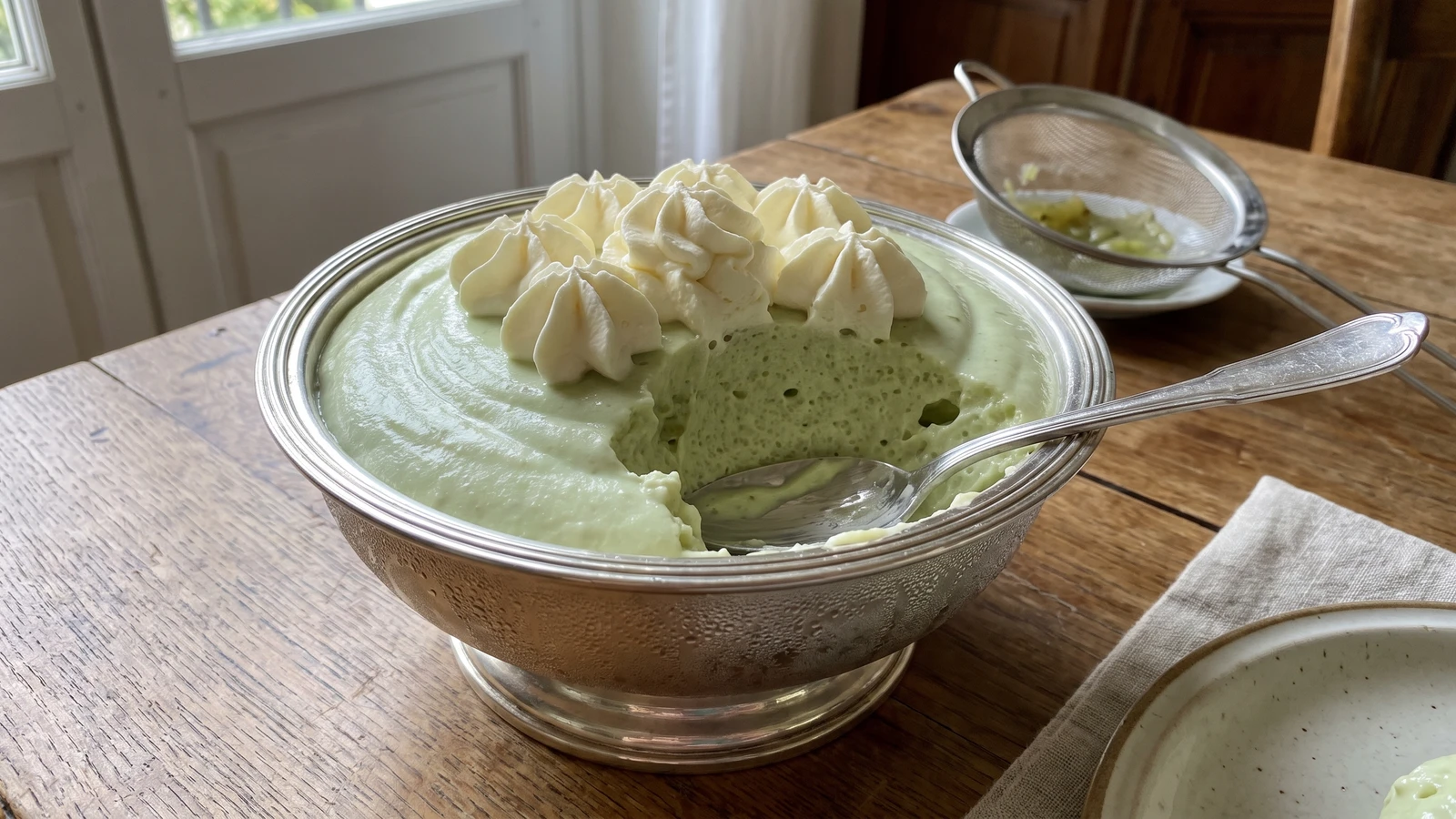
Green gooseberries, poached and sieved, meet their equal volume of stiff cream in this cold English fool, where acidity decides the sugar and temperature decides the texture.
Groseilles à maquereau en fool teaches the discipline of temperature. The fruit purée and whipped cream must meet thoroughly cold, or the cream loses its body and the fool slumps. Keep them cold and the result is light but generous, pale green, sharply fruity, and softened by cream without burying the gooseberries.
The original entry assumes a flat saucepan worked over cracked ice, a fine sieve, and enough hands to cool fruit while cream is whipped. A wide metal bowl nested in ice water and an electric mixer perform the same work at home. Its pound of berries already makes four generous servings, so the quantity stays; the equipment changes because it cools faster for one cook, while the sequence and equal-volume ratio remain untouched. One cook, one stove, one evening.
The flat pan and bed of cracked ice are brigade scaffolding. Passing the berries through a sieve, chilling the purée completely, folding it with an equal quantity of very stiffly whipped cream, and finishing with piped Crème Chantilly are the dish itself. Cool the purée all the way through before you whip the cream. That is the step that decides the fool.
The fool belongs to the English table, where tart fruit was crushed or sieved and softened with cream; gooseberry became a natural favorite because its acidity keeps the cream from tasting heavy. Its place in the French classical Guide is not evidence of a French regional origin, but of a canon willing to receive a useful English preparation and discipline it through poaching, sieving, measured folding, and a Chantilly finish. Household fools may leave the fruit coarse, while this entry insists upon a smooth purée and an equal quantity of very stiffly whipped cream.
Quantity
3½ cups (830 ml / 450 g)
topped and tailed
Quantity
1¼ cups (300 ml / 300 g)
Quantity
½ cup (120 ml / 100 g)
Quantity
2 to 8 tablespoons (30 to 120 ml / 15 to 60 g)
sifted
Quantity
¾ cup (180 ml / 180 g)
very cold
Quantity
½ cup (120 ml / 120 g)
very cold
Quantity
1 tablespoon (15 ml / 8 g)
sifted
Quantity
¼ teaspoon (1.25 ml / 1 g)
| Ingredient | Quantity |
|---|---|
| green gooseberriestopped and tailed | 3½ cups (830 ml / 450 g) |
| water | 1¼ cups (300 ml / 300 g) |
| granulated sugar | ½ cup (120 ml / 100 g) |
| icing sugar for the puréesifted | 2 to 8 tablespoons (30 to 120 ml / 15 to 60 g) |
| heavy cream for foldingvery cold | ¾ cup (180 ml / 180 g) |
| heavy cream for the Crème Chantillyvery cold | ½ cup (120 ml / 120 g) |
| icing sugar for the Crème Chantillysifted | 1 tablespoon (15 ml / 8 g) |
| pure vanilla extract | ¼ teaspoon (1.25 ml / 1 g) |
Set a wide metal mixing bowl inside a larger bowl filled with ice and a little cold water. Chill the serving timbale or bowl as well. This replaces the professional flat saucepan worked directly over cracked ice and gives one cook the same quick, even cooling.
Combine the water and granulated sugar in a wide saucepan and bring them gently to a simmer, stirring only until the sugar dissolves. Add the gooseberries and poach at the barest tremble for 6 to 10 minutes, turning them carefully once or twice, until every berry is tender and collapsing. A hard boil dulls their fresh acidity and drives the fruit toward jam; gentle heat keeps the flavour clear.
Drain the gooseberries thoroughly in the sieve for 10 minutes, then press the warm fruit through it into the metal bowl, leaving the skins and seeds behind. Nest the bowl in the prepared ice bath and work the purée with a flexible spatula until cold. Add the icing sugar one tablespoon at a time, tasting after each addition; gooseberries decide their own sugar, and the sweetness should soften the acidity without erasing it. Keep working over ice until the purée is cold through and thick enough to mound softly.
Measure the chilled purée by volume. Whip the ¾ cup of cream until it forms very stiff but still smooth peaks, then measure an equal volume of whipped cream. If the cream turns grainy, stop immediately. Ça se rattrape: fold in a tablespoon of the reserved unwhipped Chantilly cream until it becomes smooth again. Fold one-third of the whipped cream into the purée to lighten it, then fold in the rest with broad strokes until no white streaks remain. If the fool loosens because the fruit was not cold enough, return the bowl to the ice bath and fold gently until it regains body; don't beat it.
Spoon the fool into the chilled timbale or serving bowl and shape it into a generous dome with the back of a spoon. Cover without touching the surface and refrigerate for at least 2 hours, until very cold and softly set. The fool should hold a spoon mark but remain lighter than a firm mousse.
Whip the remaining cream with its icing sugar and vanilla until it holds firm, clean peaks. Transfer the Crème Chantilly to a piping bag fitted with a medium star nozzle and pipe a simple border or rosettes over the cold dome. If the Chantilly begins to look rough, fold in a teaspoon of cold cream before piping. Serve immediately, very cold. À table!
1 serving (about 270g)
Culinary guides, cultural storytelling, and the editorial depth that makes cooking meaningful.
Discover Culinary ExplorerChef Juliette
Five almond preparations, one discipline: remove the skins cleanly, dry every kernel through, then cut, toast, or cloak it in pale caramel without letting its fragrant oils escape.

Chef Juliette
A pastry pantry lesson in one tray: filberts warmed only until their red skins release, rubbed clean, cooled, and chopped into a fragrant mise-en-place for cakes, creams, pralines, and petits fours.

Chef Juliette
The smallest pâtisserie discipline decides whether a cake leaves its mould intact: clarified butter in every corner, followed by the lightest veil of dry flour or fécule.

Chef Juliette
Four whites, one spotless bowl, and a patient change of speed: whisk gently until loosened, then briskly to glossy stiffness, with powdered sugar waiting if the foam begins to granulate.