Chef Juliette
Mayonnaise de Volaille
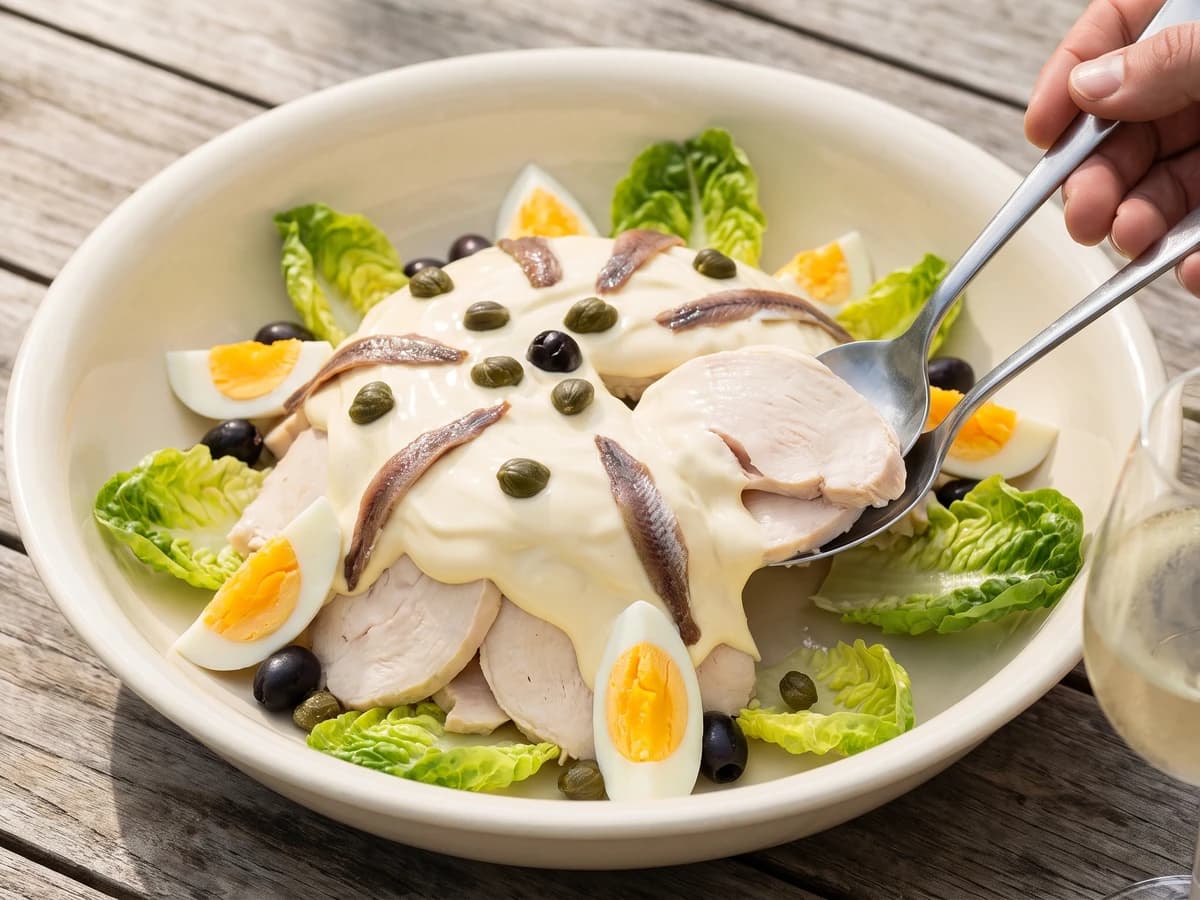
Cold roast chicken, ciseled lettuce, and a shining coat of homemade mayonnaise, arranged with capers, olives, anchovies, eggs, and lettuce hearts, then tossed at the table as the canon intends.
A cooking platform built around craft, culture, and the stories behind what we eat.
Created by Chef Juliette
Based on No. 2680, Fraises Wilhelmine, from Le Guide Culinaire (1907) by Auguste Escoffier
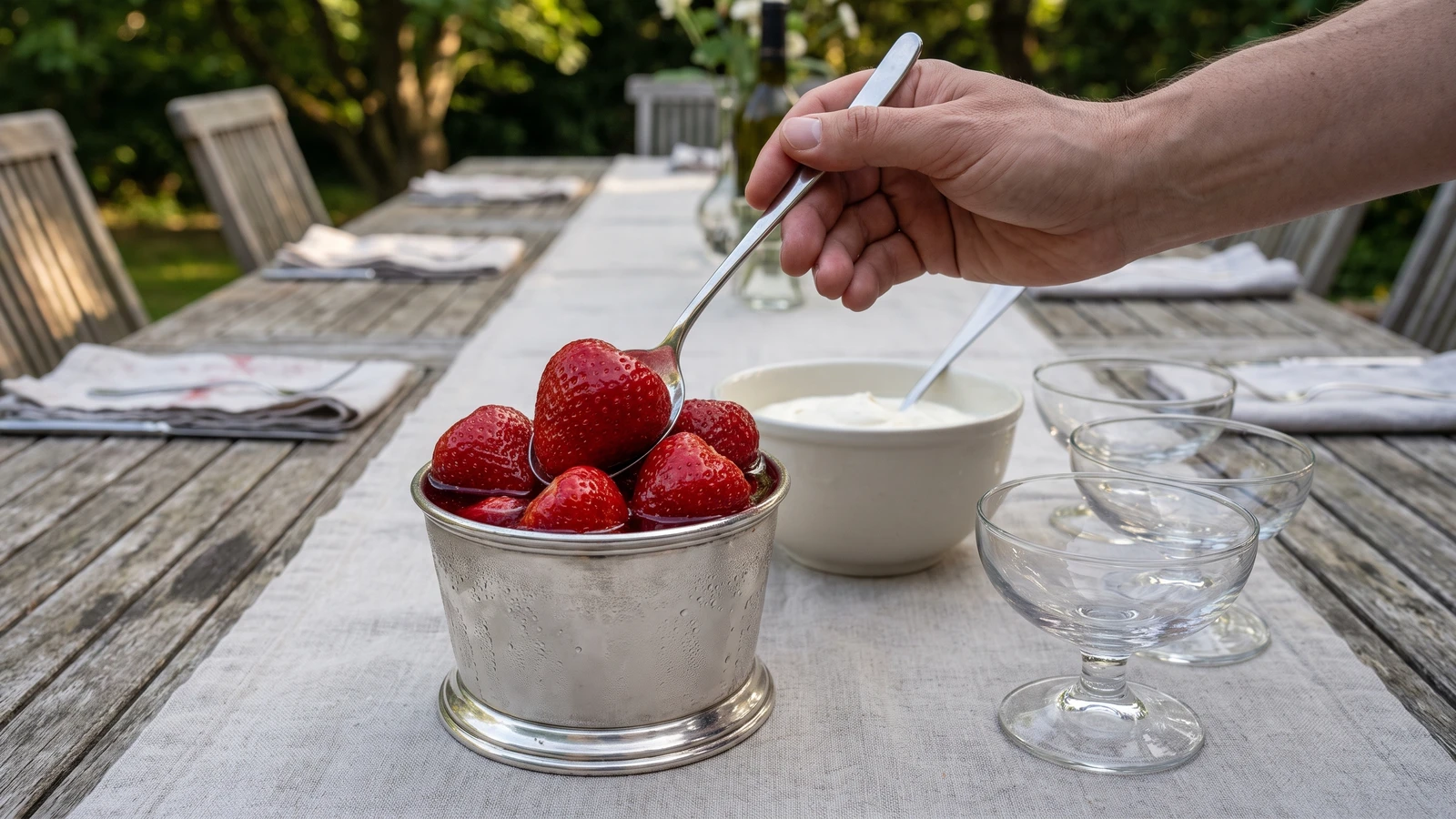
Ripe strawberries, kirsch, orange, and sugar meet in a brief maceration, with vanilla Chantilly served alongside: a grand dining-room fruit dessert whose whole discipline is knowing when to stop.
Fraises Wilhelmine (strawberries macerated with kirsch and orange, served with vanilla Chantilly) teaches restraint. The one true thing is this: the fruit must already be magnificent. Sugar can draw out its perfume and kirsch can deepen it, but neither can put summer back into a pale, hard berry.
The original entry assumed a cold pantry where a cook could judge “some fine, large strawberries” by sight, a timbale waiting for service, and crème Chantilly (vanilla-sweetened whipped cream) prepared at another station. For four people at home, the vague quantities become measured proportions, a chilled serving bowl replaces the silver timbale if necessary, and you whip the Chantilly while the berries rest. The grand vessel and separate station were brigade scaffolding. The brief maceration, whole ripe berries, and Chantilly handed separately are the dish, so they stay.
Don't let the berries lounge in their liquor all afternoon. The maceration should glaze and perfume them, not collapse them into a compote. Stop while each berry still stands firm and the kirsch-orange syrup only lightly pools beneath it.
The real home of Fraises Wilhelmine is the French grand-hotel dining room rather than a regional farmhouse table, and its royal name honors Queen Wilhelmina of the Netherlands. It entered the canon among the named fruit preparations that distinguished exceptional produce with a few exact flavorings rather than elaborate cookery. Its defining separation is deliberate: kirsch and orange season the strawberries, while vanilla Chantilly is offered alongside and never folded through them.
Quantity
4 cups (950 ml / 600 g)
rinsed, thoroughly dried, and hulled
Quantity
1/4 cup (60 ml / 30 g)
sifted
Quantity
3 tablespoons (45 ml / 45 g)
strained
Quantity
3 tablespoons (45 ml / 42 g)
Quantity
1 cup (240 ml / 240 g)
Quantity
2 tablespoons (30 ml / 15 g)
sifted
Quantity
1 teaspoon (5 ml / 5 g)
Quantity
2 tablespoons (30 ml / 30 g)
kept cold for rescuing overwhipped Chantilly
| Ingredient | Quantity |
|---|---|
| large ripe strawberriesrinsed, thoroughly dried, and hulled | 4 cups (950 ml / 600 g) |
| powdered sugarsifted | 1/4 cup (60 ml / 30 g) |
| fresh orange juicestrained | 3 tablespoons (45 ml / 45 g) |
| kirsch | 3 tablespoons (45 ml / 42 g) |
| cold heavy cream | 1 cup (240 ml / 240 g) |
| powdered sugar for the Chantillysifted | 2 tablespoons (30 ml / 15 g) |
| pure vanilla extract | 1 teaspoon (5 ml / 5 g) |
| additional cold heavy cream (optional)kept cold for rescuing overwhipped Chantilly | 2 tablespoons (30 ml / 30 g) |
Use strawberries that smell ripe before the box is opened, with red shoulders and firm, unbruised flesh. Rinse them briefly before hulling, then dry every surface carefully and remove the green caps without cutting deeply into the fruit. Keep the berries whole. Water left clinging to them dilutes the kirsch-orange liquor, while exposed cut flesh softens too quickly.
Whisk the 1/4 cup powdered sugar with the strained orange juice and kirsch in a wide nonreactive bowl until the sugar has dissolved. The liquor should taste brightly of orange first, then carry the dry cherry warmth of kirsch, with enough sweetness to round the fruit but not turn it into confectionery.
Add the whole strawberries and turn them gently with a large spoon until every berry is glossed. Cover and refrigerate for 30 to 40 minutes, turning them once halfway through. Stop when the fruit has released a little ruby juice but remains firm and distinct. If the berries begin to soften or surrender too much liquid, lift them out immediately and chill them separately. Ça se rattrape: reserve the syrup and spoon only a little over the fruit at service.
Put the cold cream, 2 tablespoons powdered sugar, and vanilla into a chilled bowl. Whisk until the crème Chantilly forms soft, rounded peaks that hold their shape but still bend at the tip. Stop there. If it turns grainy from overwhipping, don't discard it; add the optional cold cream one teaspoon at a time and fold gently until smooth again.
Using a slotted spoon, pile the strawberries generously in a chilled timbale or deep serving bowl. Spoon over enough macerating syrup to lacquer them and leave a shallow pool beneath, reserving any excess for another use. Bring the vanilla Chantilly in its own cold bowl so each guest takes cream with the fruit. Serve at once. À table!
1 serving (about 245g)
Culinary guides, cultural storytelling, and the editorial depth that makes cooking meaningful.
Discover Culinary ExplorerChef Juliette
Cold roast chicken, ciseled lettuce, and a shining coat of homemade mayonnaise, arranged with capers, olives, anchovies, eggs, and lettuce hearts, then tossed at the table as the canon intends.

Chef Juliette
Cold roast or poached chicken with fine ribbons of lettuce, dressed at the final moment with oil and vinegar: a composed salad whose freshness depends entirely on timing.

Chef Juliette
Five leaves, one living rule: laitue, romaine, chicorée, mâche, or pissenlit must be washed, dried, and dressed only as they go to the table, while every leaf still carries its light vinaigrette.

Chef Juliette
Salade de Betteraves proves that baking, not boiling, is the whole argument: concentrated garnet sweetness, tender baked onion, sharp mustard, and herbs cut into a weeknight salad worth making ahead.