
Chef Juliette
Various Almond Preparations
Five almond preparations, one discipline: remove the skins cleanly, dry every kernel through, then cut, toast, or cloak it in pale caramel without letting its fragrant oils escape.
A cooking platform built around craft, culture, and the stories behind what we eat.
Created by Chef Juliette
Based on No. 2662, Pudding Malakoff, from Le Guide Culinaire (1907) by Auguste Escoffier
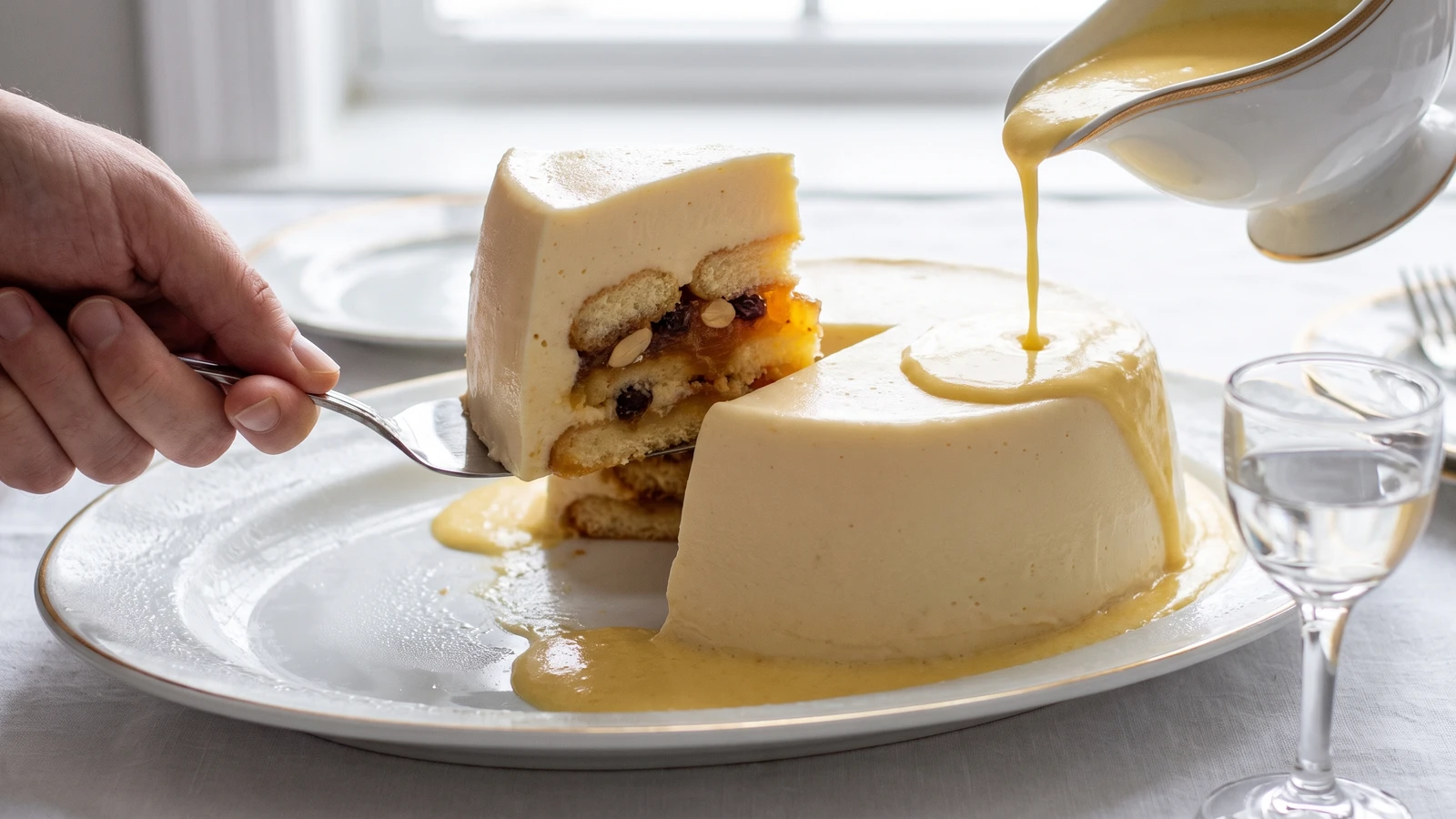
A cold moulded pudding of kirsch-soaked biscuits, apple-pear marmalade, plump raisins, almonds, candied orange, and trembling cream custard, served with a ribboning kirsch sabayon.
Pouding Malakoff (a chilled custard-and-biscuit pudding) teaches the discipline of temperature. Its crème anglaise collée (gelatin-set English custard) must be cool enough to carry the fruit and biscuits, yet fluid enough to settle around them without gaps. Pour it warm and the biscuits float; let it set in the bowl and it cannot form the mould. That narrow, manageable moment is the dish.
The original kitchen assumed separate pastry hands, quart measures of custard, raw cream arriving with daily turnover, sliced stale biscuit, and a professional Charlotte mould. At home, the one-pint-to-one-quart proportion becomes one cup of pasteurized heavy cream to about two cups of custard. The cream stays uncooked, as intended, while crisp dry ladyfingers replace the stale sheet biscuit and a two-quart straight-sided mould replaces brigade equipment. Separate hands were scaffolding and can go. The apple-pear marmalade, saturated biscuits, layered fruit, and cold sabayon are the dish and must stay. One cook, one stove, one evening.
When the custard begins to coat the spatula like loose cream, start layering. If it thickens too far, warm the bowl briefly over tepid water; if it remains thin, give it another few minutes over ice. Ça se rattrape. Catch that texture and the rest is generous assembly.
Pouding Malakoff belongs to the Parisian grand-kitchen repertoire of cold entremets, where moulded custards, preserved fruit, biscuits, and liqueur were assembled for formal service. Its name reflects the French capture of the Malakoff redoubt during the Crimean War, one of several public victories that moved onto menus as celebratory names. It should not be confused with the Austrian Malakofftorte: this French preparation is a gelatin-set pudding layered with apple and pear marmalade, then served with sabayon.
Quantity
1 teaspoon (5 ml / 4 g)
for the mould
Quantity
2¼ teaspoons (11 ml / 7 g)
Quantity
¼ cup (60 ml / 60 g)
for blooming the gelatin
Quantity
1½ cups (360 ml / 370 g)
Quantity
5 (about 90 g)
for the custard
Quantity
⅓ cup (80 ml / 67 g)
for the custard
Quantity
1 cup (240 ml / 240 g)
Quantity
2 medium (about 400 g before peeling)
peeled, cored, and diced
Quantity
2 medium (about 360 g before peeling)
peeled, cored, and diced
Quantity
2 tablespoons (30 ml / 28 g)
Quantity
¼ cup (60 ml / 50 g)
for the fruit
Quantity
½ cup (120 ml / 120 g)
for the syrup
Quantity
¼ cup (60 ml / 50 g)
for the syrup
Quantity
¼ cup (60 ml / 40 g)
Quantity
¼ cup (60 ml / 40 g)
Quantity
½ cup (120 ml / 55 g)
Quantity
⅓ cup (80 ml / 55 g)
cut into small dice
Quantity
24 (about 190 g)
Quantity
½ cup (120 ml / 110 g)
for soaking the biscuits
Quantity
4 (about 72 g)
for the sabayon
Quantity
⅓ cup (80 ml / 67 g)
for the sabayon
Quantity
3 tablespoons (45 ml / 45 g)
for the sabayon
Quantity
3 tablespoons (45 ml / 42 g)
for the sabayon
Quantity
1 tablespoon (15 ml / 15 g)
only if needed to rescue the sabayon
| Ingredient | Quantity |
|---|---|
| neutral oilfor the mould | 1 teaspoon (5 ml / 4 g) |
| powdered gelatin | 2¼ teaspoons (11 ml / 7 g) |
| cold waterfor blooming the gelatin | ¼ cup (60 ml / 60 g) |
| whole milk | 1½ cups (360 ml / 370 g) |
| large egg yolksfor the custard | 5 (about 90 g) |
| caster sugarfor the custard | ⅓ cup (80 ml / 67 g) |
| cold pasteurized heavy cream | 1 cup (240 ml / 240 g) |
| tart applespeeled, cored, and diced | 2 medium (about 400 g before peeling) |
| ripe but firm pearspeeled, cored, and diced | 2 medium (about 360 g before peeling) |
| unsalted butter | 2 tablespoons (30 ml / 28 g) |
| caster sugarfor the fruit | ¼ cup (60 ml / 50 g) |
| waterfor the syrup | ½ cup (120 ml / 120 g) |
| caster sugarfor the syrup | ¼ cup (60 ml / 50 g) |
| dried currants | ¼ cup (60 ml / 40 g) |
| sultanas | ¼ cup (60 ml / 40 g) |
| fresh slivered almonds | ½ cup (120 ml / 55 g) |
| candied orange rindcut into small dice | ⅓ cup (80 ml / 55 g) |
| crisp dry ladyfingers | 24 (about 190 g) |
| pure kirschfor soaking the biscuits | ½ cup (120 ml / 110 g) |
| large egg yolksfor the sabayon | 4 (about 72 g) |
| caster sugarfor the sabayon | ⅓ cup (80 ml / 67 g) |
| waterfor the sabayon | 3 tablespoons (45 ml / 45 g) |
| pure kirschfor the sabayon | 3 tablespoons (45 ml / 42 g) |
| ice water (optional)only if needed to rescue the sabayon | 1 tablespoon (15 ml / 15 g) |
Melt the butter in a wide saucepan over medium heat. Add the diced apples, pears, and sugar, then cook for 20 to 25 minutes, stirring more often as the fruit softens. Crush some of the pieces against the pan while leaving others distinct. The marmalade is ready when a spoon drawn across the pan leaves a clean path and no watery juice runs into it. A loose compote will make the pudding slide apart, so keep cooking until it is thick and spreadable. Transfer it to a shallow dish and cool completely.
Warm the water and sugar just until the sugar dissolves, then let the syrup become tepid. Add the currants and sultanas and leave them for 30 minutes, until swollen and supple. Drain them thoroughly and blot away the surface syrup. They should be plump, not wet, because spare syrup would dilute the custard between the layers.
Sprinkle the gelatin evenly over the cold water and leave it to bloom for 5 minutes. Heat the milk in a saucepan until small bubbles gather at the edge. Whisk the five yolks with the custard sugar until smooth, then pour in the hot milk gradually while whisking. Return everything to low heat and stir constantly with a flexible spatula until the crème anglaise reaches 180 to 183°F (82 to 84°C) and coats the spatula in an even film. Do not let it boil. If tiny curds appear, pull the pan from the heat, whisk in 2 tablespoons of the measured cold cream, and strain immediately. Ça se rattrape. Stir the bloomed gelatin into the hot custard until completely dissolved, then pass the custard through a fine sieve.
Set the bowl of custard over an ice bath and stir steadily, scraping the sides, until it is cool and has the body of loose pouring cream. Stir in the remaining pasteurized heavy cream without whipping it. This preserves the book's proportion of one part fresh cream to approximately two parts custard. Continue stirring over ice until the mixture coats a spoon but still pours in a continuous ribbon. If it sets too far, hold the bowl over tepid water and stir just until fluid; if it is still thin, return it to the ice for a few minutes. This texture decides the pudding.
Brush the inside of the mould with the thinnest possible film of neutral oil. Pour in a half-inch layer of the cream custard and chill it for 10 to 15 minutes, just until tacky. Put the soaking kirsch in a shallow dish and turn each ladyfinger through it briefly, saturating the biscuit without leaving it to collapse. Arrange a close layer of biscuits over the custard, cutting pieces to fill the gaps. Coat the biscuits generously with half the cold apple-pear marmalade, then scatter over half the currants, sultanas, almonds, and candied orange rind. Cover with another layer of custard. Repeat the soaked biscuits, marmalade, fruit, almonds, and orange rind, then finish with the remaining custard. If the custard firms while you work, loosen it over tepid water for a few seconds rather than forcing it into lumps.
Tap the mould gently against a folded towel to settle the custard into every gap. Cover and refrigerate for at least 6 hours, preferably overnight. Do not freeze it. Gelatin sets by patient chilling, and freezing gives the custard a wet, brittle texture when it thaws.
Put the four sabayon yolks, sugar, water, and kirsch in a heatproof bowl. Set it over a saucepan of barely simmering water, making certain the bowl does not touch the water, and whisk without stopping until the mixture triples in volume, reaches 160°F (71°C), and falls from the whisk in ribbons that remain visible for several seconds. If the edge becomes grainy, lift the bowl off the heat at once and whisk in the ice water a teaspoon at a time. Ça se rattrape. Set the bowl over fresh ice and continue whisking until the sabayon is cold, light, and softly ribboning. Refrigerate it for no longer than 1 hour.
Dip the mould in warm water for 5 seconds, dry the outside, and invert it onto a chilled serving platter. If it holds fast, return it to the water for another 2 seconds; too long will melt the outer custard. Lift the mould straight upward. Spoon some of the cold kirsch sabayon around the base and offer the rest at the table, letting each portion receive a generous ribbon. À table!
1 serving (about 285g)
Culinary guides, cultural storytelling, and the editorial depth that makes cooking meaningful.
Discover Culinary ExplorerChef Juliette
Five almond preparations, one discipline: remove the skins cleanly, dry every kernel through, then cut, toast, or cloak it in pale caramel without letting its fragrant oils escape.

Chef Juliette
A pastry pantry lesson in one tray: filberts warmed only until their red skins release, rubbed clean, cooled, and chopped into a fragrant mise-en-place for cakes, creams, pralines, and petits fours.

Chef Juliette
The smallest pâtisserie discipline decides whether a cake leaves its mould intact: clarified butter in every corner, followed by the lightest veil of dry flour or fécule.

Chef Juliette
Four whites, one spotless bowl, and a patient change of speed: whisk gently until loosened, then briskly to glossy stiffness, with powdered sugar waiting if the foam begins to granulate.