
Chef Juliette
Various Almond Preparations
Five almond preparations, one discipline: remove the skins cleanly, dry every kernel through, then cut, toast, or cloak it in pale caramel without letting its fragrant oils escape.
A cooking platform built around craft, culture, and the stories behind what we eat.
Created by Chef Juliette
Based on No. 2661, Pudding Diplomate aux Fruits, from Le Guide Culinaire (1907) by Auguste Escoffier
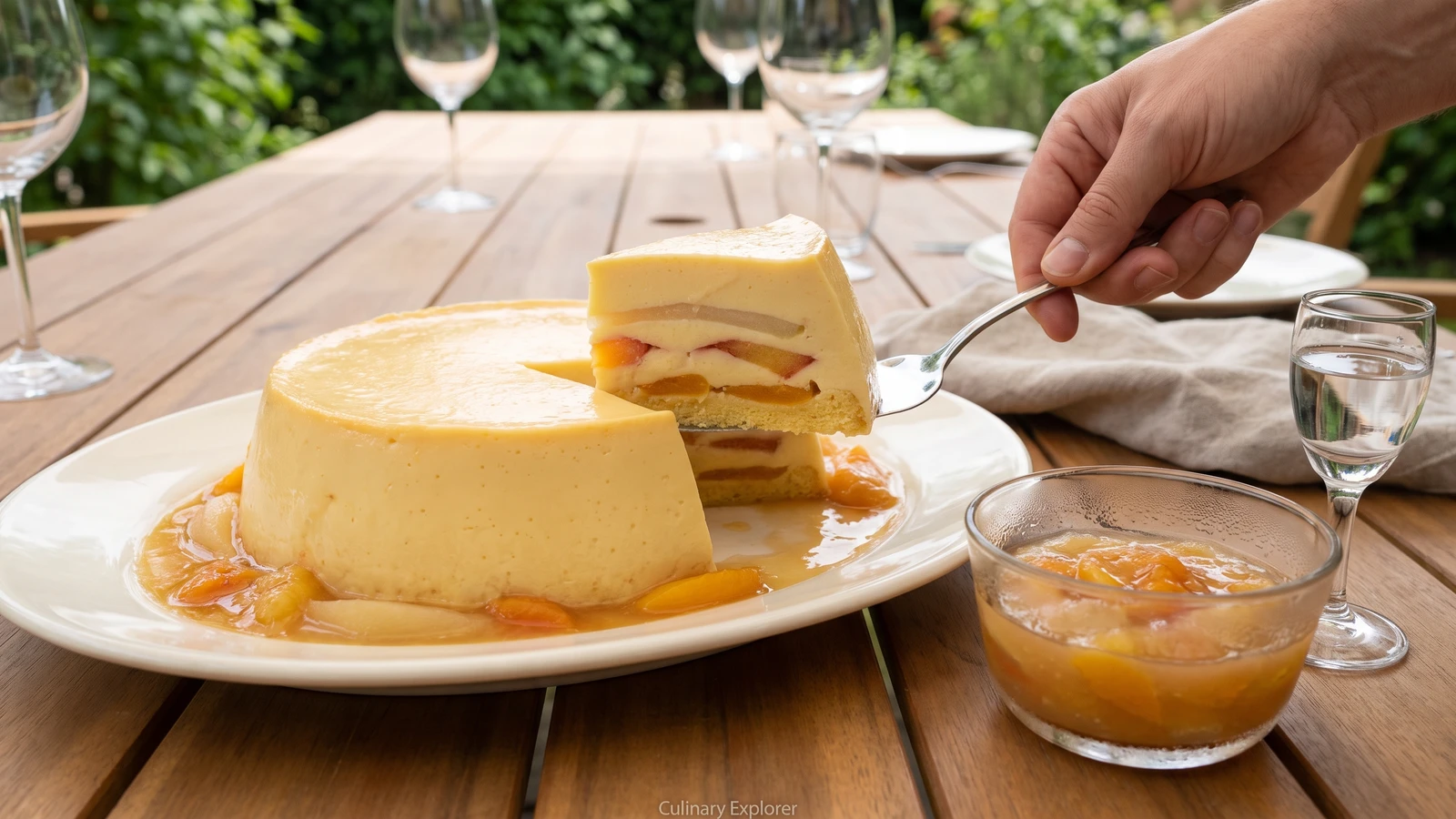
A tender Diplomate of brioche custard layered with kirsch-scented pear, peach, and apricot, thinly sliced so the warm pudding turns out neatly beside its very cold fruit compote.
Pudding Diplomate aux Fruits (fruit-layered brioche custard pudding) teaches one precise lesson: fruit inside a mould must be sliced thin enough for custard and brioche to lock around it. A thick peach slice becomes a skid when the pudding is turned out. Thin slices settle into the crumb, perfume the custard, and stay exactly where you put them.
The original entry assumed a pastry station that already knew the base Diplomate, a large mould for a full dining room, and bowls of stewed fruit waiting cold in the larder. Here it becomes one 1.5 L mould for six, with day-old brioche, a simple egg-and-milk custard, and a small mixed compote cooked in one saucepan. The elaborate decoration and brigade quantity are scaffolding and can go. The Kirsch maceration, alternating layers, gentle bain-marie, and very cold fruit around the base are the dish and must stay. One cook, one stove, one evening.
Turned out properly, the Diplomate is pale gold and tender, with pear ivory, peach blush, and apricot gold running through every slice. The custard must poach gently, but the decisive work happens earlier. Slice the fruit thin, and the mould will do the rest.
Pudding Diplomate belongs to the Parisian moulded-dessert repertoire, where cooks took the thrift of cabinet pudding, fine bread, eggs, milk, and fruit, then gave it a clean outline and the perfume of liqueur. It moved readily from grand kitchens to bourgeois dining rooms because its real work is gentle poaching rather than ornament, while fresh fruit followed the market and preserved fruit carried the pudding between seasons. The diplomatic name signals grandeur rather than a documented inventor; the practical heart is still yesterday's brioche made generous again.
Quantity
1 tablespoon (15 ml / 14 g)
softened, for the mould
Quantity
about 8 cups (1.9 L / 225 g)
crusts trimmed and cut into 6 mm slices
Quantity
1 small (about 1/2 cup / 120 g prepared)
peeled, cored, and thinly sliced
Quantity
1 small (about 1/2 cup / 120 g prepared)
peeled, pitted, and thinly sliced
Quantity
2 (about 1/3 cup / 70 g prepared)
peeled, pitted, and thinly sliced
Quantity
3 tablespoons (45 ml / 22 g)
Quantity
2 tablespoons (30 ml / 28 g)
Quantity
2 cups (480 ml / 495 g)
Quantity
1
split lengthwise
Quantity
4
Quantity
2
Quantity
1/3 cup (80 ml / 67 g)
Quantity
1/4 teaspoon (1.25 ml / 1.5 g)
Quantity
1 medium (about 3/4 cup / 160 g prepared)
peeled, cored, and diced
Quantity
1 large (about 3/4 cup / 150 g prepared)
peeled, pitted, and diced
Quantity
4 (about 2/3 cup / 140 g prepared)
peeled, pitted, and quartered
Quantity
1/4 cup (60 ml / 50 g)
Quantity
1/4 cup (60 ml / 60 g)
Quantity
1 tablespoon (15 ml / 15 g)
| Ingredient | Quantity |
|---|---|
| unsalted buttersoftened, for the mould | 1 tablespoon (15 ml / 14 g) |
| day-old briochecrusts trimmed and cut into 6 mm slices | about 8 cups (1.9 L / 225 g) |
| ripe pearpeeled, cored, and thinly sliced | 1 small (about 1/2 cup / 120 g prepared) |
| ripe peachpeeled, pitted, and thinly sliced | 1 small (about 1/2 cup / 120 g prepared) |
| ripe apricotspeeled, pitted, and thinly sliced | 2 (about 1/3 cup / 70 g prepared) |
| powdered sugar | 3 tablespoons (45 ml / 22 g) |
| Kirsch | 2 tablespoons (30 ml / 28 g) |
| whole milk | 2 cups (480 ml / 495 g) |
| vanilla beansplit lengthwise | 1 |
| large eggs | 4 |
| large egg yolks | 2 |
| granulated sugar | 1/3 cup (80 ml / 67 g) |
| fine sea salt | 1/4 teaspoon (1.25 ml / 1.5 g) |
| ripe pear for the cold fruit surroundpeeled, cored, and diced | 1 medium (about 3/4 cup / 160 g prepared) |
| ripe peach for the cold fruit surroundpeeled, pitted, and diced | 1 large (about 3/4 cup / 150 g prepared) |
| ripe apricots for the cold fruit surroundpeeled, pitted, and quartered | 4 (about 2/3 cup / 140 g prepared) |
| granulated sugar for the cold fruit surround | 1/4 cup (60 ml / 50 g) |
| water | 1/4 cup (60 ml / 60 g) |
| fresh lemon juice | 1 tablespoon (15 ml / 15 g) |
Put the diced compote pear, sugar, water, and lemon juice in a small saucepan. Cover and hold at a gentle simmer for 4 minutes, then add the apricots for 2 minutes and the peach for the final minute. The fruit should be tender but still recognizable. Transfer it with its syrup to a shallow bowl, set that bowl over ice water for 15 minutes, then refrigerate while the pudding cooks. If very ripe fruit collapses, crush it lightly into a loose compote rather than discarding it; it will still make the proper cold surround.
Slice the pear, peach, and apricots no thicker than 3 mm. Thick slices become slippery shelves inside the custard, so shave down any piece that bends the layer beneath it. Toss the fruit gently with the powdered sugar and Kirsch, then leave it for 30 minutes, turning once. Two tablespoons is the honest home measure for the source's half port wine-glass. Drain through a fine sieve and reserve every drop of the fragrant syrup.
Heat the oven to 160°C / 325°F. Butter a 1.5 L charlotte mould generously and press a buttered parchment round into its base. Fit brioche over the bottom and sides in one close layer, trimming pieces so they meet without heavy overlaps, then cut the remaining brioche into rounds or patches for the inner layers. Elaborate fruit patterns on the mould were pastry-station scaffolding; a sound brioche lining gives one cook the same clean release.
Warm the milk and vanilla bean until tiny bubbles gather at the pan's edge, then cover and infuse for 10 minutes. Whisk the eggs, yolks, granulated sugar, and salt just until smooth, not foamy. Remove the vanilla bean and pour the warm milk into the eggs gradually while whisking. If fine cooked flecks appear, stop and strain the custard immediately into a clean jug; ça se rattrape while the curds are small.
Lay brioche over the lined base, trickle it with a little reserved Kirsch syrup, and cover it with a single level layer of macerated fruit. Keep the fruit just clear of the mould's sides. Repeat with brioche, syrup, and fruit, finishing with brioche and leaving 1 cm of headroom. Pour in the custard in three additions, pausing 2 minutes between each so it reaches every crumb, then press the surface gently and rest it for 15 minutes. If a fruit layer shifts, lift the brioche and fill the hollow with an offcut before baking.
Cover the mould with buttered parchment and foil, then set it on a folded kitchen towel inside a deep roasting pan. Pour in hot water to reach halfway up the mould; this bain-marie, the water bath, lets the custard set without scrambling at the edges. Bake for 60 to 75 minutes, until the centre quivers only slightly and reaches about 80°C / 175°F. If the water boils or the pudding begins to swell, replace some water with warm water and lower the oven to 150°C / 300°F. Catch it there and the custard remains smooth.
Lift the mould from the bain-marie, uncover it, and rest the pudding for 20 minutes so the custard finishes setting. Run a thin knife around the rim and invert it onto an ivory serving platter. If it clings, don't shake it; wrap the mould in a warm damp towel for 20 seconds and try again. Spoon the very cold mixed-fruit compote around the base, keeping the crown visible, and serve the pudding slightly warm or at room temperature. À table!
1 serving (about 305g)
Culinary guides, cultural storytelling, and the editorial depth that makes cooking meaningful.
Discover Culinary ExplorerChef Juliette
Five almond preparations, one discipline: remove the skins cleanly, dry every kernel through, then cut, toast, or cloak it in pale caramel without letting its fragrant oils escape.

Chef Juliette
A pastry pantry lesson in one tray: filberts warmed only until their red skins release, rubbed clean, cooled, and chopped into a fragrant mise-en-place for cakes, creams, pralines, and petits fours.

Chef Juliette
The smallest pâtisserie discipline decides whether a cake leaves its mould intact: clarified butter in every corner, followed by the lightest veil of dry flour or fécule.

Chef Juliette
Four whites, one spotless bowl, and a patient change of speed: whisk gently until loosened, then briskly to glossy stiffness, with powdered sugar waiting if the foam begins to granulate.