
Chef Juliette
Various Almond Preparations
Five almond preparations, one discipline: remove the skins cleanly, dry every kernel through, then cut, toast, or cloak it in pale caramel without letting its fragrant oils escape.
A cooking platform built around craft, culture, and the stories behind what we eat.
Created by Chef Juliette
Based on No. 2653, The Garnish and Accompaniments of Jellies, from Le Guide Culinaire (1907) by Auguste Escoffier
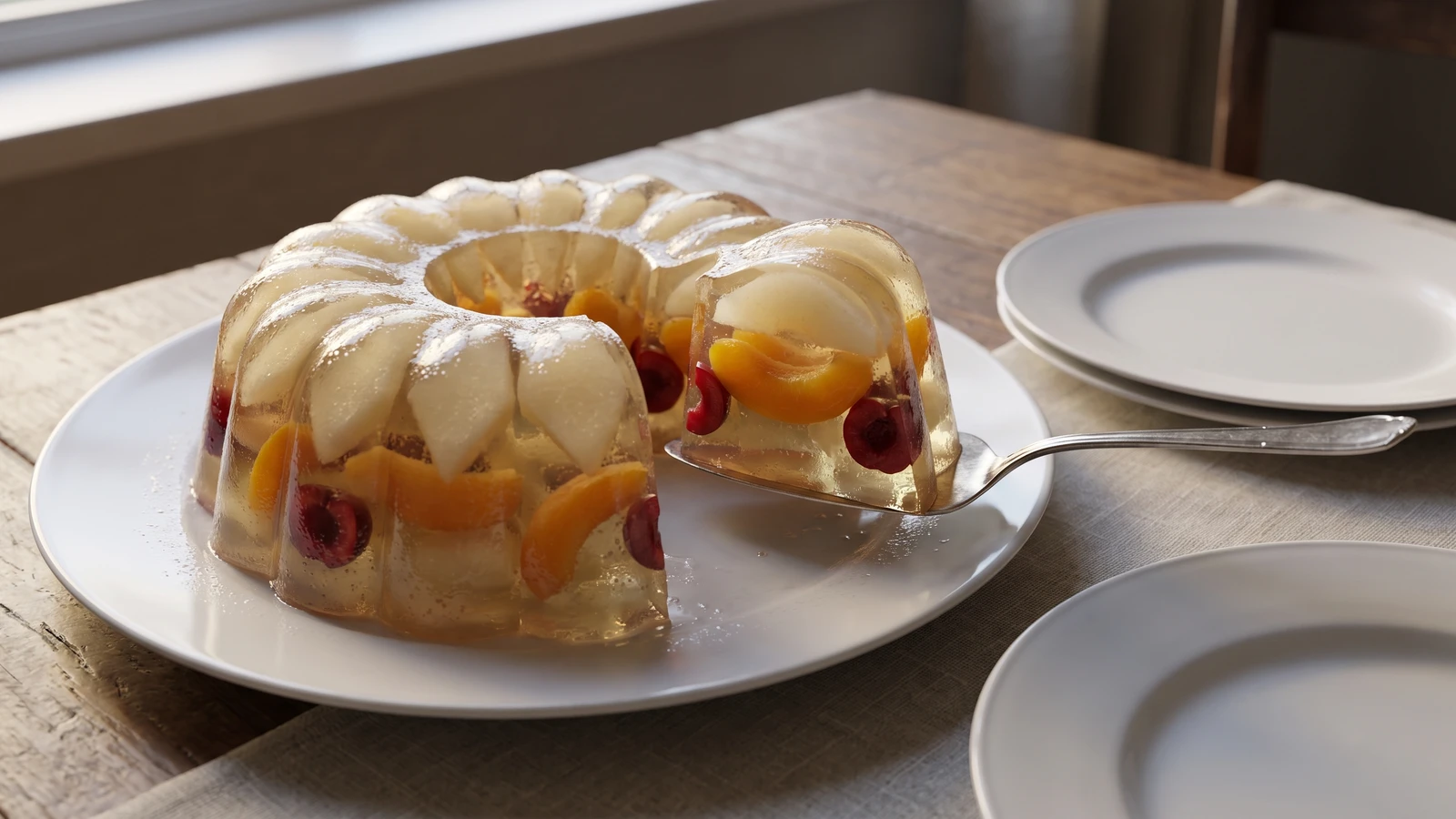
Clear grape jelly, pale pear diamonds, amber apricot crescents, and red cherries set in a deliberate pattern: a cold French dessert whose beauty depends on patience, contrast, and perfectly dry fruit.
Suédoise de fruits (fruit-patterned jelly) teaches the difference between fruit suspended at random and a garnish that becomes the dessert. The one true thing to know before touching a pan is this: every piece of fruit must be cooked, cold, and dry, and the jelly must be just thick enough to hold it. Otherwise the colors bleed, the pattern floats, and you have a pleasant fruit jelly, but not a Suédoise.
The old entry didn't need a saucier, a stock never off the fire, or a salamander. Its brigade luxuries were a finished clear jelly waiting in the pastry kitchen, a cold room, trays of molds, and a hand free to set layer after layer. It names no jelly flavor, so this home version uses clear white grape juice, measured gelatin, a bowl of ice, and one modest mold. The duplicate molds and constant attendance were scaffolding and can go. Contrasted stewed fruit, shaped and symmetrically distributed through the jelly, is the dish and must stay. One cook, one stove, one quiet evening, then the refrigerator finishes the work.
The pear will be pale, the apricot amber, and the cherries red against clear gold. The decisive step is cooling the jelly to a loose, syrupy set before layering. Pour it too fluid and the fruit moves; let it set solid in the bowl and it won't pour. If either happens, ça se rattrape, and the method tells you when to chill or gently warm it.
Suédoise de fruits belongs to the classical French entremets table, particularly the molded dessert service of Parisian grand kitchens and bourgeois dining rooms, rather than to any single French province. The distinction in the canon is exact: ordinary jelly goes out plain, while the name Suédoise is earned when separately stewed, variously shaped fruits are distributed symmetrically with their colors contrasted. As the preparation traveled to home tables, a paring knife and refrigerator replaced batteries of aspic cutters and a dedicated cold room, but the deliberate geometry remained.
Quantity
2 cups (480 ml / 480 g)
Quantity
½ cup (120 ml / 100 g)
Quantity
2 tablespoons (30 ml / 30 g)
divided
Quantity
1 small (about 5 oz / 140 g)
peeled, cored, and sliced ⅛ inch (3 mm) thick
Quantity
8 (about 2 oz / 60 g)
Quantity
16 (about 4 oz / 115 g drained)
drained
Quantity
3 cups (720 ml / 720 g)
chilled and divided
Quantity
1 tablespoon plus 1½ teaspoons (22 ml / 14 g)
| Ingredient | Quantity |
|---|---|
| water | 2 cups (480 ml / 480 g) |
| granulated sugar | ½ cup (120 ml / 100 g) |
| fresh lemon juicedivided | 2 tablespoons (30 ml / 30 g) |
| small firm pearpeeled, cored, and sliced ⅛ inch (3 mm) thick | 1 small (about 5 oz / 140 g) |
| dried apricots | 8 (about 2 oz / 60 g) |
| jarred pitted sour cherries in light syrupdrained | 16 (about 4 oz / 115 g drained) |
| clear white grape juicechilled and divided | 3 cups (720 ml / 720 g) |
| unflavored powdered gelatin | 1 tablespoon plus 1½ teaspoons (22 ml / 14 g) |
Combine the water, sugar, and 1 tablespoon (15 ml / 15 g) of the lemon juice in a small saucepan and bring them to a bare simmer. Cut the pear slices into neat diamonds, then poach them for 3 to 5 minutes, just until translucent at the edges but still firm enough to hold their shape. Lift them out with a slotted spoon. Poach the apricots for 6 to 8 minutes until supple, remove them, and cut each into two crescents when cool enough to handle. Slip the cherries into the syrup last for only 30 seconds, then lift them out before their skins split. Working from pale fruit to dark keeps the colors distinct.
Spread each fruit separately on a clean cloth or paper towel and let it cool completely. Blot both sides carefully, then refrigerate the pieces uncovered while making the jelly. This is the principle inside the method: wet or warm fruit melts the jelly where it touches, loosens the set, and carries color into the clear spaces. If a cherry continues to weep syrup, blot it again and keep it apart from the pear until assembly. Save the poaching syrup for another use, but don't add it to the jelly because its fruit pigments will muddy the pattern.
Pour ½ cup (120 ml / 120 g) of the cold grape juice into a bowl and sprinkle the gelatin evenly over the surface. Leave it for 10 minutes to swell. Warm 1 cup (240 ml / 240 g) of the remaining juice over low heat until hot but nowhere near a simmer, remove it from the heat, and stir in the swollen gelatin until completely dissolved. Add the remaining 1½ cups (360 ml / 360 g) grape juice and the final tablespoon (15 ml / 15 g) of lemon juice, then strain through a fine sieve. If grains remain, return the mixture to the lowest heat only until they disappear. Don't boil it. Ça se rattrape while it is merely grainy; boiling risks a weak, dull jelly.
Set the bowl of jelly over an ice bath and stir slowly until the liquid begins to thicken, clinging to the spoon like a light syrup but still pouring freely. Rinse the mold with cold water and shake it well, leaving only a fine damp film. Pour in a shallow layer of jelly and refrigerate it for 8 to 12 minutes, until tacky and softly set rather than firm. If the jelly in the bowl begins setting around the edge, lift it from the ice and place it briefly over warm water, stirring until smooth again.
Blot the fruit once more. Arrange cherry halves, apricot crescents, and pear diamonds over the tacky jelly in a balanced pattern, remembering that the bottom of the mold will become the top. Alternate the colors and leave clear jelly visible between the pieces. Spoon over just enough thickened jelly to cover the fruit without disturbing it, then chill for about 10 minutes. If the pieces float or slide, the jelly is too fluid. Lift them back into position, chill the jelly for another 5 minutes, and try again. Ça se rattrape.
Continue with thin layers of jelly and fruit, chilling each layer only until tacky before adding the next. Place some fruit close to the sides so the contrasting shapes remain visible after unmolding, but don't crowd the mold; the clear spaces are part of the design. Keep the colors deliberately separated rather than dropping everything in together. Finish with plain jelly so the base sits level, warming the bowl briefly over warm water whenever the remaining jelly becomes too firm to pour.
Refrigerate the filled mold undisturbed for at least 6 hours, preferably overnight. Once the surface has set, cover it without letting the covering touch the jelly. The long chill is part of the structure, not empty waiting; it allows every layer to join into one cleanly sliceable dessert.
Dip the mold into warm water for 5 to 8 seconds, keeping the water below the rim. Dry the outside, place a cold serving plate over the mold, and invert both together with confidence. If the Suédoise does not release, repeat the warm dip for 2 seconds at a time. Leaving it submerged too long melts the design at the edges. Serve it cold and plain, with no cream or sauce competing with the fruit pattern. The garnish is already the accompaniment. À table!
1 serving (about 150g)
Culinary guides, cultural storytelling, and the editorial depth that makes cooking meaningful.
Discover Culinary ExplorerChef Juliette
Five almond preparations, one discipline: remove the skins cleanly, dry every kernel through, then cut, toast, or cloak it in pale caramel without letting its fragrant oils escape.

Chef Juliette
A pastry pantry lesson in one tray: filberts warmed only until their red skins release, rubbed clean, cooled, and chopped into a fragrant mise-en-place for cakes, creams, pralines, and petits fours.

Chef Juliette
The smallest pâtisserie discipline decides whether a cake leaves its mould intact: clarified butter in every corner, followed by the lightest veil of dry flour or fécule.

Chef Juliette
Four whites, one spotless bowl, and a patient change of speed: whisk gently until loosened, then briskly to glossy stiffness, with powdered sugar waiting if the foam begins to granulate.