
Chef Juliette
Various Almond Preparations
Five almond preparations, one discipline: remove the skins cleanly, dry every kernel through, then cut, toast, or cloak it in pale caramel without letting its fragrant oils escape.
A cooking platform built around craft, culture, and the stories behind what we eat.
Created by Chef Juliette
Based on No. 2650, Jellies, from Le Guide Culinaire (1907) by Auguste Escoffier
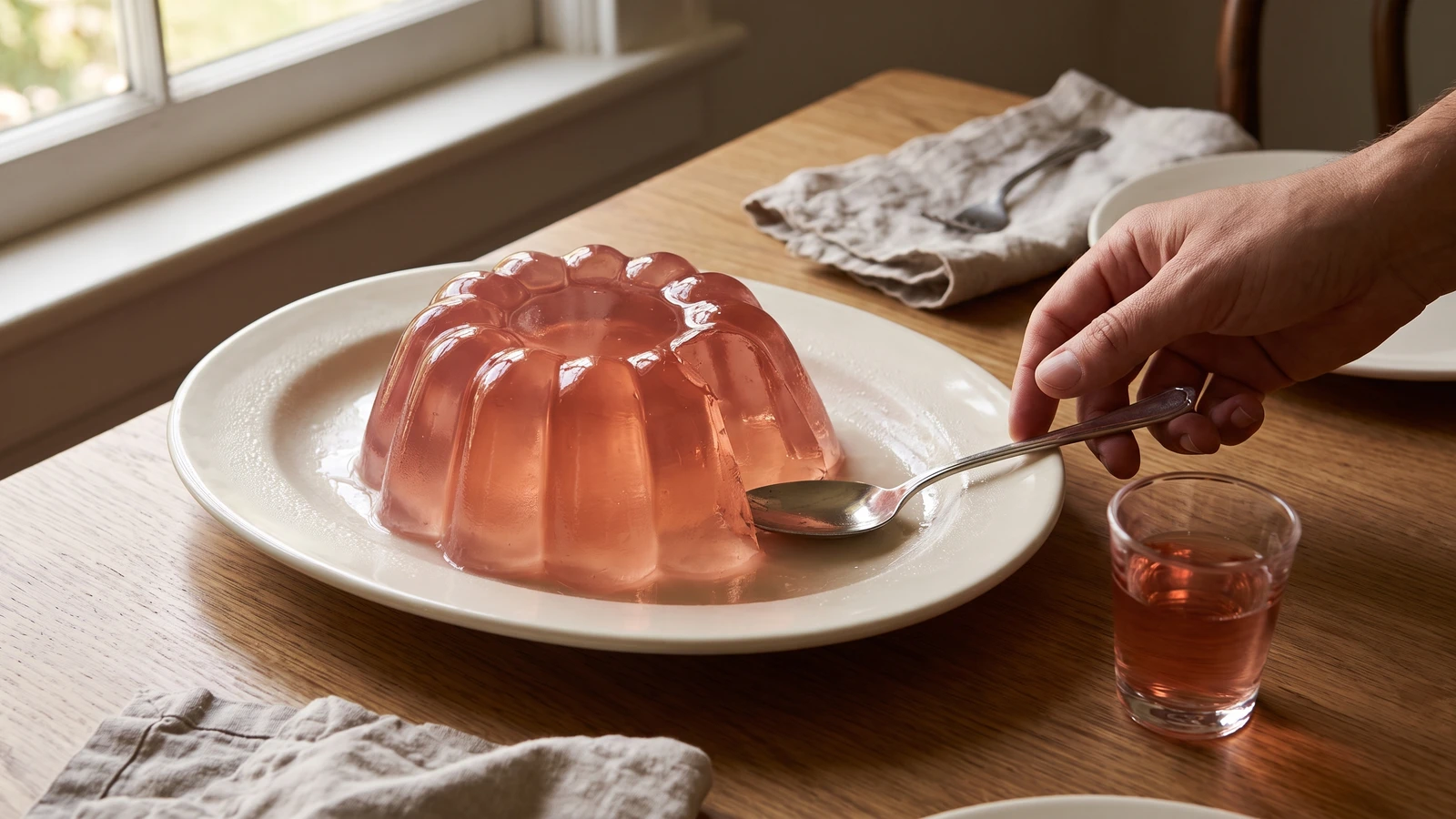
Two classical families, wine or liqueur and clear fruit, meet on one exact leaf-gelatin base, yielding a jewel-bright dessert that trembles softly, unmoulds cleanly, and waits calmly for company.
Gelées de dessert teach one exact lesson: gelatin must be fully bloomed and gently dissolved in hot syrup, but it must never boil. Get that right and both classical families open at once, wine or liqueur in one direction, clear fruit in the other. C'est la même grammaire: a measured base, a clean flavouring, a patient cold set.
The old formula assumed calf's foot boiled for its fine gelatin, a stockpot occupied for most of a day, and kitchen hands available to watch, strain, test, and clarify it. That extraction is brigade scaffolding. For one cook, one stove, one evening, weighed 200-bloom leaf gelatin is the honest equivalent: clear, predictable, and ready to dissolve in minutes. I have scaled the mixture to one 1 litre mould or six glasses. What hasn't changed is the dish itself: dissolve gently, protect the wine or fruit's perfume, then give the gelée enough cold time to set.
A proper gelée catches the light, trembles when the platter moves, and yields cleanly to a spoon without bouncing like rubber. Before the pan goes on, weigh the gelatin. Packets and sheet sizes vary; grams decide the set.
At the Parisian grand table and in bourgeois dining rooms across France, sweet gelées belonged among the entremets, where moulded preparations of wine, liqueur, or strained fruit juice showed a cook's control of clarity and set. Classical kitchens organized them into two working families, wine or liqueur and fruit, both resting on gelatin dissolved in water, so the shape was presentation rather than identity. For generations calf's foot supplied the finest setting liquor, but prepared leaf gelatin carried the same method from the brigade stockpot to the home refrigerator without changing its intent.
Quantity
7 sheets (14 g)
Quantity
4 cups (960 ml / 960 g)
Quantity
2 tablespoons (30 ml / 30 g)
strained
Quantity
1 sheet (2 g)
Quantity
1½ cups (360 ml / 360 g)
Quantity
¾ cup (180 ml / 150 g)
Quantity
2¼ cups (540 ml / about 535 g)
Quantity
3¼ cups (780 ml / 780 g)
Quantity
½ cup (120 ml / 100 g)
Quantity
½ cup (120 ml / about 120 g)
Quantity
1½ cups (360 ml / 360 g)
Quantity
½ cup (120 ml / 100 g)
Quantity
2¼ cups (540 ml / about 545 g)
strained until clear
| Ingredient | Quantity |
|---|---|
| 200-bloom leaf gelatin | 7 sheets (14 g) |
| cold soaking water, discarded after use | 4 cups (960 ml / 960 g) |
| fresh lemon juicestrained | 2 tablespoons (30 ml / 30 g) |
| 200-bloom leaf gelatin, for rescue if needed (optional) | 1 sheet (2 g) |
| cold water, for the wine gelée (optional) | 1½ cups (360 ml / 360 g) |
| granulated sugar, for the wine gelée (optional) | ¾ cup (180 ml / 150 g) |
| dry white or rosé wine, for the wine gelée (optional) | 2¼ cups (540 ml / about 535 g) |
| cold water, for the liqueur gelée (optional) | 3¼ cups (780 ml / 780 g) |
| granulated sugar, for the liqueur gelée (optional) | ½ cup (120 ml / 100 g) |
| kirsch or orange liqueur, for the liqueur gelée (optional) | ½ cup (120 ml / about 120 g) |
| cold water, for the fruit gelée (optional) | 1½ cups (360 ml / 360 g) |
| granulated sugar, for the fruit gelée (optional) | ½ cup (120 ml / 100 g) |
| unsweetened clear fruit juice, for the fruit gelée (optional)strained until clear | 2¼ cups (540 ml / about 545 g) |
Choose only one branch: wine, liqueur, or fruit. Measure the water, sugar, and flavouring listed for that branch, then set the other branch ingredients aside; each path makes the same finished volume and meets the same 14 g gelatin base. Rinse a 1 litre mould or six 150 ml glasses with cold water and drain them without drying.
Separate the seven gelatin sheets and submerge them in 3 cups of the cold soaking water, keeping the remaining cup clean for a possible rescue. Leave them for 5 to 10 minutes, until every sheet is completely flexible and no hard centre remains. Lift them out and squeeze gently. A half-bloomed sheet leaves stubborn threads in the syrup, so if a centre still feels rigid, return it to the water for another minute.
Put the water and sugar from your chosen branch into a 2 litre saucepan. Heat gently, stirring only until the sugar disappears, then bring the syrup just to a bare simmer. Remove the pan from the heat and let it stand for 2 minutes. You need the syrup hot enough to dissolve gelatin, not boiling hard enough to weaken it.
Add the squeezed gelatin to the hot syrup and stir slowly until the liquid is completely clear. From the moment the gelatin enters, do not let the mixture boil. If fine strands remain, return the pan to the gentlest heat for a few seconds while stirring, then lift it off as soon as they disappear. Ça se rattrape. If the mixture accidentally boils hard, chill a spoonful over ice for 10 minutes; if it remains watery, bloom the optional 2 g sheet in the reserved soaking water, squeeze it, and dissolve it into the warm mixture off the heat.
Let the syrup cool until just warm, about 45°C. Slowly stir in the wine, liqueur, or strained fruit juice from your chosen branch, followed by the lemon juice. Adding the flavouring now preserves the perfume that a brigade's long boiling would squander. If very cold liquid makes gelatin ribbons form, set the bowl over barely warm water and stir until clear again; ça se rattrape. Do not return it to direct heat.
Pass the mixture through a fine-mesh sieve lightly dampened with cold water, without pressing. Pour it slowly down the side of the prepared mould or glasses so you don't trap bubbles. If froth gathers on top, touch it with the corner of a clean paper towel and lift it away. Chill uncovered for 30 minutes, then cover once the surface is cool and slightly tacky.
Chill the gelée for at least 6 hours, preferably overnight, until it trembles as one piece when moved. Glasses can go straight to the table. To release a mould, dip its outside in warm water for 5 to 8 seconds, dry it, cover it with the chilled platter, and invert with one decisive movement. If it clings, repeat the dip for 3 seconds; if the edge softens, return it to the refrigerator for 20 minutes. If the set proves too tender to stand, spoon it into chilled glasses and serve with confidence. Never apologize at your own table. À table!
1 serving (about 175g)
Culinary guides, cultural storytelling, and the editorial depth that makes cooking meaningful.
Discover Culinary ExplorerChef Juliette
Five almond preparations, one discipline: remove the skins cleanly, dry every kernel through, then cut, toast, or cloak it in pale caramel without letting its fragrant oils escape.

Chef Juliette
A pastry pantry lesson in one tray: filberts warmed only until their red skins release, rubbed clean, cooled, and chopped into a fragrant mise-en-place for cakes, creams, pralines, and petits fours.

Chef Juliette
The smallest pâtisserie discipline decides whether a cake leaves its mould intact: clarified butter in every corner, followed by the lightest veil of dry flour or fécule.

Chef Juliette
Four whites, one spotless bowl, and a patient change of speed: whisk gently until loosened, then briskly to glossy stiffness, with powdered sugar waiting if the foam begins to granulate.